A tray or plate that is cracked, lost, or has changed shape
Call promptly rather than waiting for a routine visit. Tell us whether you still have it. Keep broken pieces, and resist fixing it with glue, heat, or bending, which can make matters worse.


A cloudy tray, a film that will not rinse off, or floss that snags on a bonded wire: cleanliness is often the first sign a retainer needs attention. From Rockwood, book a check of fit and condition, learn a care routine for your design, and plan for loss or damage.
Few people think about hygiene when they picture a retainer, yet it shapes how well the appliance works and how long it lasts. The retainer itself is there to help keep teeth in the positions gained through orthodontics. It might lift out each day, or it might be a wire bonded behind a few teeth that stays put. Either way, the design and routine you follow should suit your mouth, not just your preferences.
Build-up, odours, and cloudiness tend to appear gradually, while cracks and changes in fit can show up overnight. Both deserve a look at the appliance and at the teeth it holds. If a replacement is needed, it has to be made for your teeth as they are now, which matters if you have had fillings or crowns, or if something has shifted.
Let us know which retainer you wear and what you have noticed, and bring it to the appointment. If an orthodontist still keeps an eye on your retention, mention them so we can coordinate. We can then discuss assessment, practical options, and whether they or a specialist should be included in the plan.
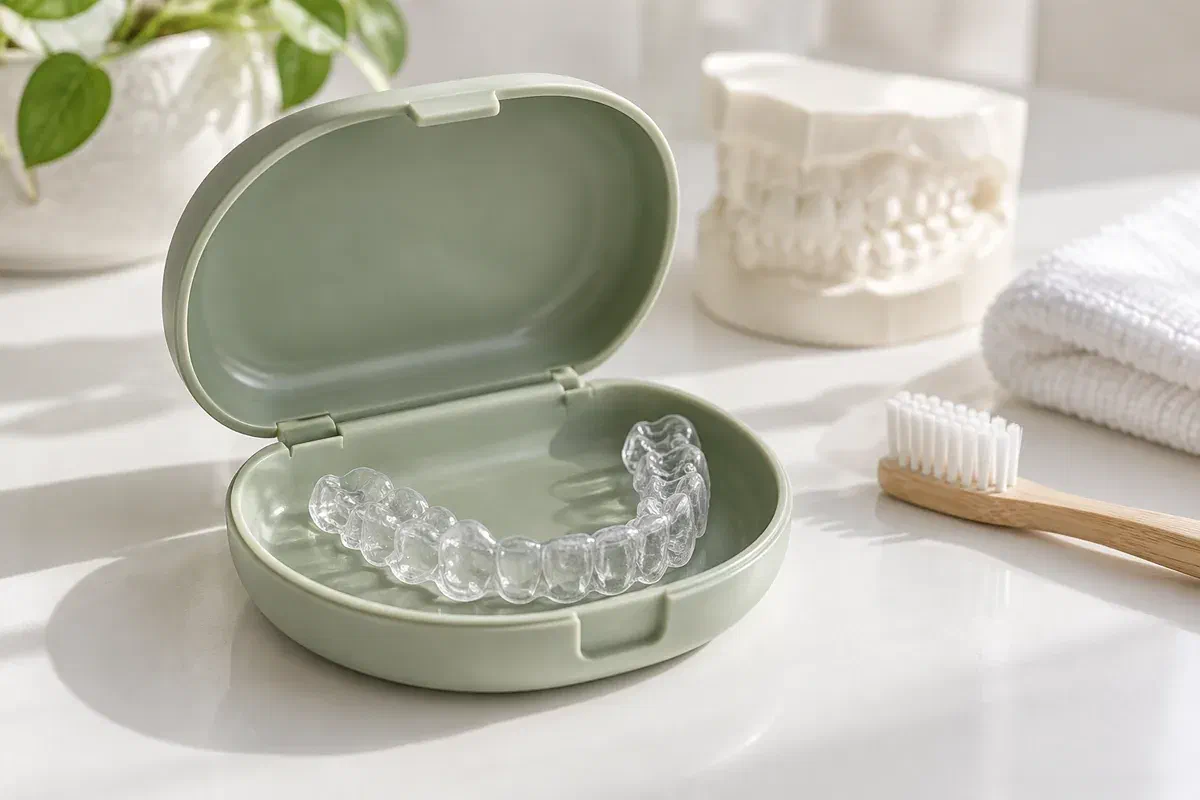
Describe your appliance and what has changed. Include when it started, any tenderness, and an honest picture of how often you wear and clean it.
Call promptly rather than waiting for a routine visit. Tell us whether you still have it. Keep broken pieces, and resist fixing it with glue, heat, or bending, which can make matters worse.
Persistent build-up, a lifted section, a sharp edge, or a tooth that seems to have moved should all be raised. Wires bonded behind teeth still need professional review. Partial attachment does not mean every tooth is still supported.
Ask if you are unsure how long to wear the retainer each day, how to clean it, or how it relates to a night guard or sports mouthguard. Bring them all along. Each serves a different purpose and should not be swapped without specific advice.
A retainer that will not settle into place or causes pain should never be forced. Ask for an assessment and interim guidance.
Retention is one part of holding an orthodontic result. The design recommended for you depends on the positions to be maintained, your bite, how easily the area can be cleaned, and other individual factors. Some plans use a bonded wire with a removable retainer, each serving a role you should understand.
Ease of cleaning deserves real weight in that decision, and the fitting appointment is where the routine is set. Learn to insert and remove the appliance confidently, recognise how snug it should feel, and know which changes to report. With clear instructions, you are less likely to try a fix of your own.
Patient information: British Orthodontic Society — types of orthodontic retainer
Ask how the proposed design will affect your daily hygiene, and why it has been recommended. Share your preferences and hear the clinical reasoning. Comparisons online cannot account for your teeth or your habits.
Before you leave, the appliance is tried in and its use demonstrated. With a removable retainer, practise putting it in and lifting it out before you go. Mention pressure, rough patches, or questions so the advice is based on your experience.
Know who to contact if the retainer is lost, damaged, or no longer fits, how reviews are arranged, and whether fees could come up for a repair or a remake. Planning ahead makes a problem easier to deal with promptly.
The visit could be a fit and condition check, records for a new retainer, or an assessment of a bonded wire. Ask what yours involves and whether a return visit is likely.
Explain when treatment ended, who provided it, the retention prescribed, and how you currently clean the appliance. Bring it with any instructions. Mention new fillings, crowns, injuries, or fit changes before a replacement is considered.
The clinician checks tooth positions, gum health around any bonded wire, and the appliance's surface and fit. If teeth have moved, discuss whether keeping the present position is reasonable. A retainer review should not become a quiet assumption about further orthodontic treatment.
Sometimes a better cleaning routine is enough; sometimes a new appliance is appropriate. If so, you will hear its purpose, limits, care, and estimate, and records will be taken. Ask what to do until it is ready and whether your orthodontist should be consulted.
When a new retainer is provided, its seating is checked and you are shown how to wear and clean it. Cover storage and review timing too. For a bonded wire, ask for a hands-on demonstration of cleaning around it. Confirm who to contact.
The right products and methods depend on your retainer's material and design. Something recommended for another appliance could harm yours, so ask first.
Use the brush, cleaner, and water temperature you were shown. Hot water and improvised chemical soaks can warp or weaken the material. Brush and floss your teeth as usual, and ask for tips or tools if a bonded wire makes an area hard to clean.
When it is out of your mouth, it belongs in its case, away from heat, pets, and small children. Clean the case regularly too. Napkins and loose bags are common causes of loss. Bring the case to reviews.
Tell the clinic overseeing your retention if a removable retainer cracks, becomes hard to clean, or stops seating, or if a bonded wire loosens. Do not bend, cut, or glue it. Ask whether to keep wearing it and how soon to be seen.
Patient information: British Orthodontic Society — retainer handling and patient instructions
Bring the appliance along. Its surface and fit can tell the clinician a great deal.
Contact our Bronte Street practice about cleaning concerns, fit problems, or a replacement. Share where you had orthodontic treatment and whether that provider still reviews your retainer.
The choice of appliance, whether it can be repaired, records, and fees all follow from the assessment. Get in touch promptly if a retainer is lost, broken, or not fitting well.
