

Illustrative patient discussing follow-up and retention with a dental clinician
Cosmetic Dentistry

Post-Orthodontic Retention in Brampton

Your teenager's braces are off, and now there is a retainer to keep track of between school, practices and sleepovers. For households in Brampton, we can talk through wear, cleaning, fit checks and what to do when the case comes home empty.

For parents and teens

Braces off, retainer in, and a new habit to build

Parents often expect the end of braces to mean fewer appointments and less to manage. In practice, a new responsibility arrives: the retainer. Retention is the care that follows active orthodontic treatment, covering the appliance, the wear schedule, cleaning, follow-up visits and a plan for when something is lost or broken.

Teeth can drift after braces come off, and they can keep shifting into adulthood. So retention tends to be a long-term job, not a short wind-down. The clinician who treated your child should explain the prescribed hours and when they will be reviewed. Changes belong in that discussion, not at the kitchen table.

When a family from Brampton books with us, we ask you to bring the retainer, its case and any written instructions. If an orthodontist elsewhere did the treatment, tell us who handles follow-up. We can discuss the care needed, sort out who is responsible, and say when the orthodontist or another specialist should stay involved.

Book a family retention visit
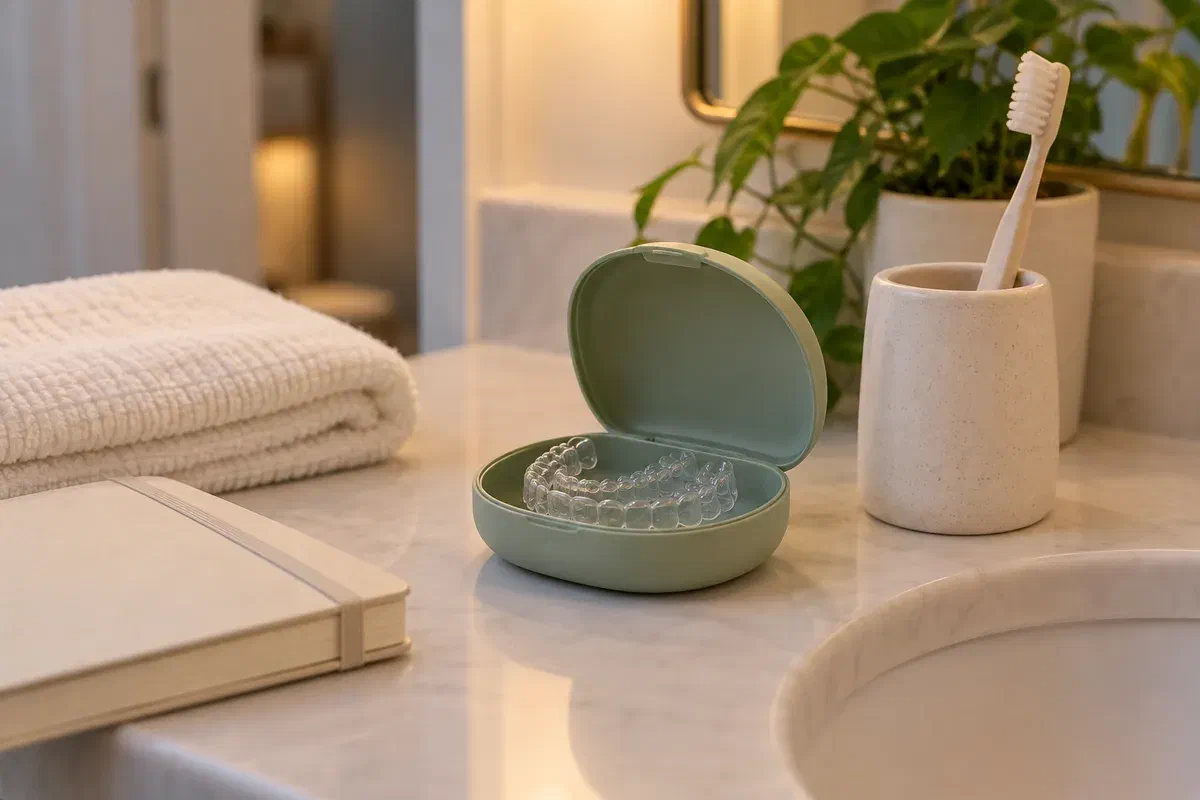
Illustrative evening retainer-care arrangement with a case, toothbrush, towel, and notebook
Family pressure points

Where teen retention usually wobbles

The handover from braces to retainer is not always crisp. Ask whether there is a gap between debonding and fitting, so nobody at home is left guessing what to wear.

Nobody wrote down the plan

At the final appointment, ask whether movement has ended and which appliance comes next. Get the hours, the fitting date and the first follow-up on paper, ideally with a copy for your teen. A smile in the mirror is not a substitute for instructions.

School, sports and sleepovers

Busy schedules make it easy for a retainer to stay in a backpack or end up in a cafeteria bin. If wear is slipping, raise it early. Ask how to fit the prescribed routine around real life rather than letting it quietly fade.

Unclear who to call

Your child's orthodontist and family dentist may each assume the other is checking the retainer. Ask both offices who reviews it and who replaces it. Confirm the answer so a lost appliance does not bounce between phone lines.

Keep the number for whoever manages retention somewhere the whole household can find it. Call promptly about a lost, cracked, loose or poorly fitting retainer instead of waiting for the next visit.

Why the plan is worth the effort

Protecting the time and care already invested

A clear retention conversation helps your teen understand what the appliance is for and what they are responsible for. When the reason makes sense, the habit is easier to own. That still matters a year or two later, when the braces feel like a long time ago.

Family life changes and the plan should keep pace. A sports injury, a broken retainer, new dental work or a move may all prompt a review. Knowing exactly who to contact keeps you from making it up as you go.

Patient information: American Association of Orthodontists — retention as part of orthodontic treatment

A clear end to active treatment

Ask the orthodontist how they judged that treatment was finished and which retention starts now. Talk about any compromise in the result you agreed to. Retention should come with its own instructions, not an assumption that the last appliance can do the job forever.

A routine a teenager can manage

Confirm the wear hours for a removable retainer and how to care for a bonded wire, if there is one. Let your teen ask questions too. A routine sticks better when the person wearing the appliance knows why and how to report a problem.

A plan for the inevitable lost case

Find out which reviews are recommended and whether replacement or repair costs were part of the original agreement. Keep contact details with the instructions. A clear process stops a missing retainer from becoming weeks without one.

What the visit covers

Setting up retention as a family

Retention is best planned before braces come off and revisited as things change. These steps show the conversation in outline, tailored to your child's treatment and appliances.

  1. Hear how treatment finished

    Ask whether the alignment goals have been checked and whether any concern is still open. Find out if anything needs separate care. The clinician can explain why active movement is ending and which positions the retainer will hold.

  2. Choose the retainer and plan the gap

    Review the retainer type, or combination, and the scans or impressions it requires. Ask what your teen should wear until it is ready. If other dental work is coming up, ask how that and the appliance fit will be coordinated.

  3. Let your teen practise in the chair

    At the fitting, ask for a demonstration of putting the retainer in, taking it out and cleaning it. Confirm the hours, when it should come out and which signs mean you should call. Talk through sports, school lunches and sleepovers before you leave.

  4. Set up reviews and contacts

    Ask who checks fit, any bonded wire and tooth position over time. Note the next appointment and what happens when included follow-up ends. If care is moving to a different office, confirm that office has agreed to take it on.

At home

Simple systems help teens keep the routine

Follow the schedule the treating clinician set. Retention lasts best as a routine everyone understands, with a clear response when an appliance or circumstance changes.

Give the case a home

Agree on one spot for the case, and a rule that the retainer goes in the case, never a napkin. Pack it for tournaments, camps and nights at a friend's. Check with the clinician before reducing wear, even if your teen's teeth look fine.

Bring it to every review

Fit is hard to judge without the appliance. Encourage your teen to describe tightness, rubbing or changes they notice, and keep regular dental visits. Ask how any bonded wire is being checked and cleaned as part of routine care.

Report breakage without home fixes

Call whoever manages retention and say which appliance is affected. Ask what to wear while waiting. Please do not swap in old aligners, trim the plastic or bend a wire unless the treating clinician has given a specific instruction.

Patient information: British Orthodontic Society — continuing care after braces

After a check-up

Keep going, replace it, or take a closer look

Ask what is being decided and why. Holding teeth in place and starting new treatment are different goals, even when both begin with a retainer that suddenly feels tight.

When fit and findings still look good

Stick with the current plan

The clinician may recommend carrying on with planned follow-up. Ask whether anything changes and when to come back. A good check does not mean your teen can stop wearing the retainer or switch to fewer hours on their own.

When the appliance has worn, broken or gone missing

A new or repaired retainer

Loss, damage, new dental work or difficulty handling the appliance can lead to a replacement or redesign. Ask what the change addresses and what records are needed. Confirm what to wear in the meantime so the gap stays short.

When teeth or gums have changed

Further assessment

If teeth have moved, the bite feels different or the gums look unhealthy, more assessment may be needed before a new retainer is made. Ask whether keeping the current position is the right aim or whether another treatment discussion is worthwhile. A specialist may be involved.

Questions from parents

Teens, retainers and real life

These answers focus on helping a young person keep up retention, from busy days to lost appliances.

(905) 876-4488
How can I tell if my teen is really wearing the retainer?
A retainer that feels very tight or does not seat easily after a break can be a sign of missed wear. The simplest approach is a shared routine, such as the retainer going in at the same time each night. Mention any concern at the next review.
The retainer was thrown out with a school lunch. What now?
Call the office managing retention promptly and explain which appliance is missing. Ask whether there is another prescribed appliance to wear in the meantime. Avoid using an old or ill-fitting retainer without advice.
Should a removable retainer be worn during sports?
Ask the treating clinician. A retainer is not a mouthguard, and for contact sports a properly fitted mouthguard is commonly recommended. Your clinician can explain how the two should be managed.
Our dog chewed the retainer. Can it still be used?
Probably not without a check. Even small bite marks can affect fit or leave sharp edges. Keep the pieces, contact the office managing retention, and ask what your teen should wear while a replacement is considered.
When should we ask about retention if a younger child is starting braces?
At the start. Ask what retainer is likely, how long wear is expected, what reviews follow and what fees apply. Ask again as treatment winds down so the transition is planned rather than rushed.
Can we line up retainer checks with the family's dental visits from Brampton?
Often, yes. Let us know when booking that a retainer check is needed and bring the appliance. If it has broken, call before coming in so we can advise whether to keep the booked time or be seen sooner.
Teen retention for Brampton households

Make the retainer as routine as brushing

Arrange a family retention visit at our Bronte Street practice. Bring the appliance, its case and any instructions, and we will review questions, appropriate follow-up and who is responsible for each part of your child's care.

Wear schedules and review needs vary. Contact us promptly about lost, broken or poorly fitting retainers, and confirm any change in provider explicitly.

Visit Milton Dental Clinic
Unit 1, 342 Bronte St. S, Milton, ON L9T 5B7
Get directions Clinic hours
Monday–Thursday
11am–7pm
Friday–Sunday
By appointment only

Areas we serve

  • Milton
  • Oakville
  • Mississauga
  • Georgetown
  • Halton Hills
  • Acton
  • Campbellville
  • Brampton
  • Burlington
  • Puslinch
  • Rockwood
  • Erin
  • Caledon
  • Etobicoke
  • Old Milton
  • Bronte Meadows
  • Timberlea
  • Dorset Park
  • Dempsey
  • Clarke
  • Beaty
  • Coates
  • Harrison
  • Scott
  • Willmott
  • Ford
  • Bowes
  • Cobden
  • Walker
  • Mountain View
  • Milton Heights
  • Hawthorne Village
  • Valley View
  • Fallingbrook
  • Nassagaweya
  • Trafalgar
  • Esquesing
  • Nelson
  • Brookville
  • Moffat
  • Glen Williams
  • Norval
  • Limehouse
  • Stewarttown
  • Ashgrove
  • Hornby
  • Silver Creek
  • Speyside
  • Scotch Block
  • North Oakville
  • River Oaks
  • Glen Abbey
  • West Oak Trails
  • Palermo
  • Bronte Creek
  • College Park
  • Joshua Creek
  • Uptown Core
  • Preserve
  • Iroquois Ridge
  • Lisgar
  • Meadowvale
  • Meadowvale Village
  • Churchill Meadows
  • Erin Mills
  • Central Erin Mills
  • Streetsville
  • East Credit
  • Creditview
  • Heartland
  • Sheridan
  • Mount Pleasant
  • Credit Valley
  • Huttonville
  • Churchville
  • Springbrook
  • Northwest Brampton
  • Bram West
  • Fletcher's Meadow
  • Fletcher's Creek South
  • Alton Village
  • Orchard
  • Millcroft
  • Headon Forest
  • Tansley
  • Brant Hills
  • Tyandaga
  • Kilbride
  • Lowville
  • Aberfoyle
  • Morriston
  • Arkell
  • Hillsburgh
  • Freelton
  • Carlisle
  • Waterdown
  • Flamborough
  • Mountsberg

How can we help?

Milton Dental Clinic

Have a question about your smile? Choose the option that works best for you.

For urgent dental concerns, please call.
Messages are reviewed during clinic hours.