

Illustrative patient discussing follow-up and retention with a dental clinician
Cosmetic Dentistry

Post-Orthodontic Retention in Caledon

Worn patches, tiny cracks or a split along the edge of your retainer can be a clue that you clench or grind at night. From Bolton or elsewhere in Caledon, have the appliance and your teeth looked at, and plan retention that accounts for those habits.

Clenching, grinding and retainers

Bite marks on the plastic

Sometimes the retainer tells the story first. Scuffed surfaces, thinning over the back teeth or a crack that keeps returning can hint at clenching or grinding during sleep. That matters for retention, which is the ongoing care after orthodontics: the appliance you wear, its schedule, cleaning, fit reviews and what happens when it breaks or goes missing.

Teeth can move after active treatment ends and continue to shift through adulthood, so retention is typically long-term. A retainer that is wearing out quickly can leave gaps in that care. Rather than changing your schedule or the appliance on your own, ask your clinician to look at both the retainer and what is causing the wear.

If you are coming from Caledon, bring every retainer you own, including damaged ones, plus any written instructions. Tell us who did your orthodontics, who follows up, and whether you have ever been told you grind. We can discuss the care involved, who is responsible, and when an orthodontist or other specialist should be consulted.

Have a worn retainer assessed
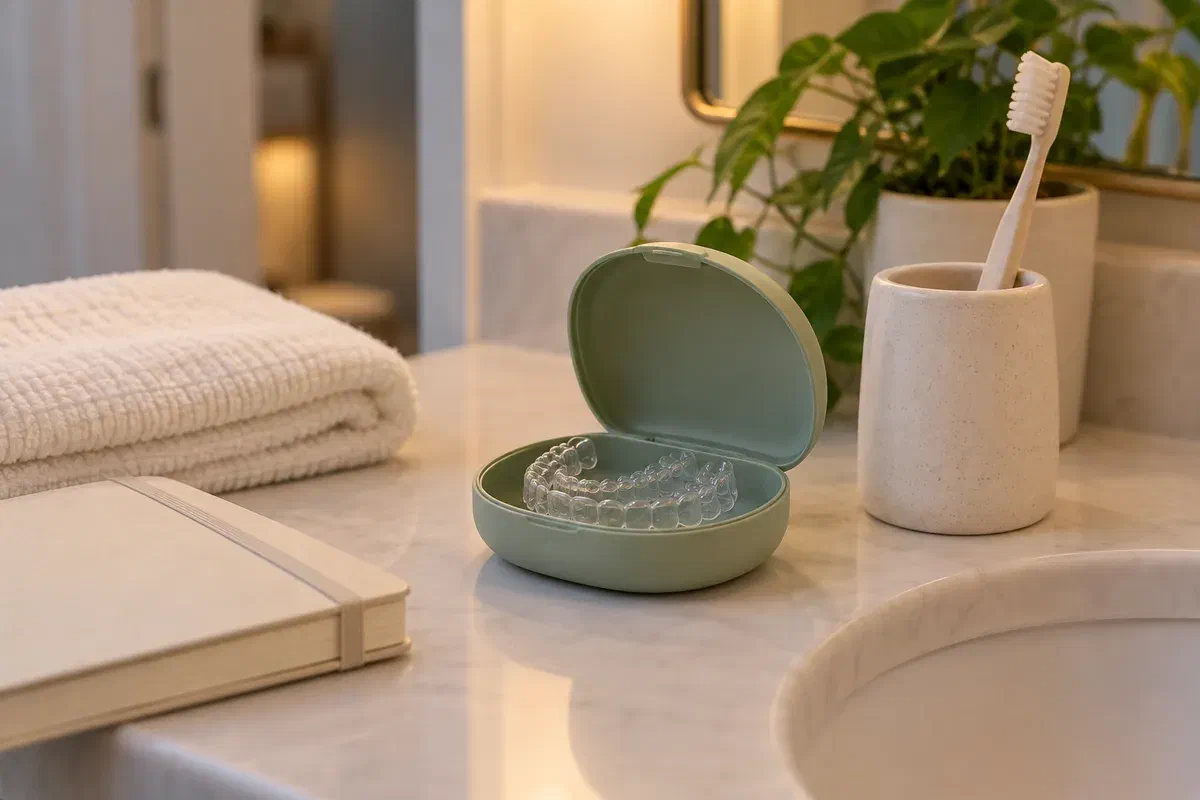
Illustrative evening retainer-care arrangement with a case, toothbrush, towel, and notebook
What wear can signal

Three issues hiding behind a damaged retainer

A worn or cracked appliance is rarely just bad luck. If you are still finishing treatment, ask whether there will be a wait before your retainer is ready and what to wear until it arrives.

A plan that never mentioned habits

When treatment is finishing, confirm that movement is complete and which retainer follows, and mention any clenching you are aware of. Get the hours, fitting date and first review in writing. Habits are easier to plan around when they are raised early.

Wear dropping because the retainer is uncomfortable

A rough, cracked or thin retainer can feel unpleasant enough that people stop wearing it. Morning jaw tightness can make it worse. Mention the discomfort and ask how to keep within your prescribed plan while the cause is looked at.

Unclear who handles grinding and retention

Your orthodontist may manage the retainer while your dentist sees signs of grinding at checkups. Ask each office what it will look after. Confirm the arrangement so neither issue is left waiting on the other.

A cracked, worn-through, loose or ill-fitting retainer should be reported soon rather than worn until it fails. Ask the office managing retention what to do in the meantime.

Why it is worth looking into

Retention that holds up to how you actually sleep

Understanding retention means knowing what the appliance is meant to do and what is expected of you. If night-time habits are wearing it down, that understanding also includes recognising the signs and raising them, rather than replacing appliance after appliance without asking why.

Your situation can change. New dental work, a damaged appliance, stress that affects clenching or a move may all call for another look at the plan. A clear contact helps you respond without making your own changes to how the retainer is used.

Patient information: American Association of Orthodontists — retention as part of orthodontic treatment

Clarity about where treatment ended

Ask how your clinician confirmed that active treatment was complete and which retention began. Discuss any accepted limitation in the result. That baseline makes it easier to see later whether wear on the teeth or appliance is changing things.

Instructions that consider your habits

Confirm the wear hours for any removable appliance and how a fixed wire should be looked after. If you clench, ask whether that changes anything about your retention. A routine designed with your habits in mind is easier to stick to.

A plan for repeat damage

Find out how often reviews are suggested and whether replacements were included in your agreement. Ask what happens if appliances keep breaking. A clear process stops repeated damage from turning into long stretches without a working retainer.

How we approach it

Look at the appliance, the teeth and the cause

Retention is best planned before treatment ends and revisited whenever an appliance is wearing unexpectedly. These steps outline the discussion, shaped to your history and the retainers you bring.

  1. Go back to the end of treatment

    Discuss whether the alignment goals were assessed and whether anything was left unresolved. Some concerns may call for separate care. From there, the clinician can describe the positions retention is meant to maintain and look at the wear pattern on your appliance.

  2. Decide on the right appliance

    Talk about whether your current retainer type still suits, or whether a different design or combination might be considered, along with any scans needed. Ask what to wear in the meantime. Mention any crowns or fillings on the horizon so their timing can be planned.

  3. Practise handling and inspecting it

    At fitting, ask for a demonstration of inserting, removing and cleaning your design, and how to spot early cracks. Confirm the hours and the signs that should prompt a call. Mention any morning jaw discomfort so it can be noted.

  4. Set up reviews and responsibilities

    Agree on who checks the retainer's condition and fit, any fixed wire and tooth position over the years. Ask how grinding, if present, will be monitored and by whom. If your care is transferring, confirm the new clinician has accepted it.

Looking after a hard-working retainer

Inspect it, wear it, and report damage early

Your schedule comes from the clinician managing retention. It tends to work best as a routine you understand, with a clear next step whenever the appliance shows wear or your circumstances change.

Check it when you clean it

While rinsing and cleaning the retainer, look for thinning, cracks or rough edges. Keep it in its case when it is out and away from heat. Ask before reducing wear, even if the appliance feels uncomfortable.

Bring damaged ones to reviews

Worn appliances help a clinician understand what is happening, so bring old and current retainers. Describe any jaw tightness, morning soreness or change in fit, and keep regular dental appointments. Ask how a fixed wire is being checked.

Don't sand, glue or reshape it

If the retainer cracks or breaks, contact the office managing retention and describe the damage. Ask what to wear in the meantime. Avoid gluing, sanding or trimming the plastic, or bending a wire, unless the treating clinician has said to.

Patient information: British Orthodontic Society — continuing care after braces

What may come next

Continue, change the design, or assess further

Ask what the recommendation rests on. Keeping teeth where they are and moving them again are separate aims, even when both begin with a retainer that keeps cracking.

When the appliance is coping and fit is good

Keep the current arrangement

If wear is modest and the fit remains suitable, you may continue with planned follow-up. Ask whether anything should change and when you will be seen again. A reassuring check is not a reason to stop or cut back.

When damage or wear keeps recurring

Replace or redesign the appliance

Repeated cracks, thinning or new dental work may lead to a replacement or a different design. Ask what the change aims to solve and which records are needed. Confirm interim instructions so your retention does not lapse.

When grinding or other changes are evident

Assess the teeth, bite or jaw

If teeth have shifted, the bite feels different, or there are signs of grinding on the teeth themselves, more assessment may come first. Ask whether holding the current position is appropriate or whether another treatment conversation is warranted. A specialist may be involved.

Caledon retainer questions

When night-time habits meet retention

These answers focus on clenching, grinding and retainer wear, plus a few practical points.

(905) 876-4488
I grind my teeth at night. Can my retainer double as a night guard?
Not necessarily. Retainers and night guards are designed for different purposes. Ask your clinician whether your current appliance is appropriate given your habits, and whether something else should be considered.
Why does my retainer have thin spots or small holes?
Repeated pressure from clenching or grinding can wear through some materials over time. Normal ageing of the appliance may also play a part. Bring it to a review so the pattern can be assessed.
My jaw is sore in the morning. Could the retainer be the cause?
It might be related, or it might have another cause altogether. Mention it to your dentist so your teeth, jaw and appliance can be examined. Persistent or worsening pain deserves prompt attention.
Can I wear a night guard and a retainer together?
That depends on your appliances and treatment, so ask the clinician how the two should be used. Do not stack devices or switch between them without advice from the clinician managing your care.
Should I mention grinding at my retention review even if I'm not sure I do it?
Yes. Describe what you notice, such as jaw tightness, worn retainer surfaces or a partner hearing grinding. The clinician can look for signs and advise whether anything changes in your plan.
Coming from Caledon, how can I avoid an extra trip for a cracked retainer?
Call first and describe the damage. Bring every appliance, including old or broken ones, to the visit so fit, wear and any need for replacement can be considered at the same appointment.
Retention support for Caledon

Find out why the retainer is wearing out

Arrange an assessment at our Bronte Street practice, and come with your current and damaged retainers plus any instructions. We will discuss your questions, suitable follow-up and which clinician looks after each part of your care.

Retention and night-time habits differ for everyone. Contact us promptly about cracked, lost or ill-fitting appliances, and confirm any change in provider clearly.

Visit Milton Dental Clinic
Unit 1, 342 Bronte St. S, Milton, ON L9T 5B7
Get directions Clinic hours
Monday–Thursday
11am–7pm
Friday–Sunday
By appointment only

Areas we serve

  • Milton
  • Oakville
  • Mississauga
  • Georgetown
  • Halton Hills
  • Acton
  • Campbellville
  • Brampton
  • Burlington
  • Puslinch
  • Rockwood
  • Erin
  • Caledon
  • Etobicoke
  • Old Milton
  • Bronte Meadows
  • Timberlea
  • Dorset Park
  • Dempsey
  • Clarke
  • Beaty
  • Coates
  • Harrison
  • Scott
  • Willmott
  • Ford
  • Bowes
  • Cobden
  • Walker
  • Mountain View
  • Milton Heights
  • Hawthorne Village
  • Valley View
  • Fallingbrook
  • Nassagaweya
  • Trafalgar
  • Esquesing
  • Nelson
  • Brookville
  • Moffat
  • Glen Williams
  • Norval
  • Limehouse
  • Stewarttown
  • Ashgrove
  • Hornby
  • Silver Creek
  • Speyside
  • Scotch Block
  • North Oakville
  • River Oaks
  • Glen Abbey
  • West Oak Trails
  • Palermo
  • Bronte Creek
  • College Park
  • Joshua Creek
  • Uptown Core
  • Preserve
  • Iroquois Ridge
  • Lisgar
  • Meadowvale
  • Meadowvale Village
  • Churchill Meadows
  • Erin Mills
  • Central Erin Mills
  • Streetsville
  • East Credit
  • Creditview
  • Heartland
  • Sheridan
  • Mount Pleasant
  • Credit Valley
  • Huttonville
  • Churchville
  • Springbrook
  • Northwest Brampton
  • Bram West
  • Fletcher's Meadow
  • Fletcher's Creek South
  • Alton Village
  • Orchard
  • Millcroft
  • Headon Forest
  • Tansley
  • Brant Hills
  • Tyandaga
  • Kilbride
  • Lowville
  • Aberfoyle
  • Morriston
  • Arkell
  • Hillsburgh
  • Freelton
  • Carlisle
  • Waterdown
  • Flamborough
  • Mountsberg

How can we help?

Milton Dental Clinic

Have a question about your smile? Choose the option that works best for you.

For urgent dental concerns, please call.
Messages are reviewed during clinic hours.