

Illustrative patient discussing follow-up and retention with a dental clinician
Cosmetic Dentistry

Post-Orthodontic Retention in Erin

The follow-up visits included with your orthodontic treatment have run out, but the retainer is still part of your life. From Erin or Hillsburgh, set up the long-term side of retention: who checks it, how often, and what signals mean it is time to call.

The long stretch of retention

Follow-ups over. Retention isn't.

Orthodontic treatment often comes with a set number of follow-up appointments. When the last one passes, it can feel like the file is closed. Retention carries on regardless. It is the long-term care that helps teeth stay where braces or aligners placed them: the appliance, the wear schedule, cleaning, reviews and knowing what to do if a retainer breaks or disappears.

The reason is not administrative. Teeth can shift in the period after treatment and keep changing slowly through adult life, so retention is generally an ongoing commitment. The schedule you follow should still come from a clinician, and changes to it should be discussed with whoever now holds responsibility for your care.

For households in Erin, we suggest treating the end of included follow-up as a checkpoint. Bring your appliances and any written instructions, and tell us who did your treatment. We can talk about what ongoing care looks like, which parts we can take on, and when the original orthodontist or a specialist should stay involved.

Set up long-term retention care
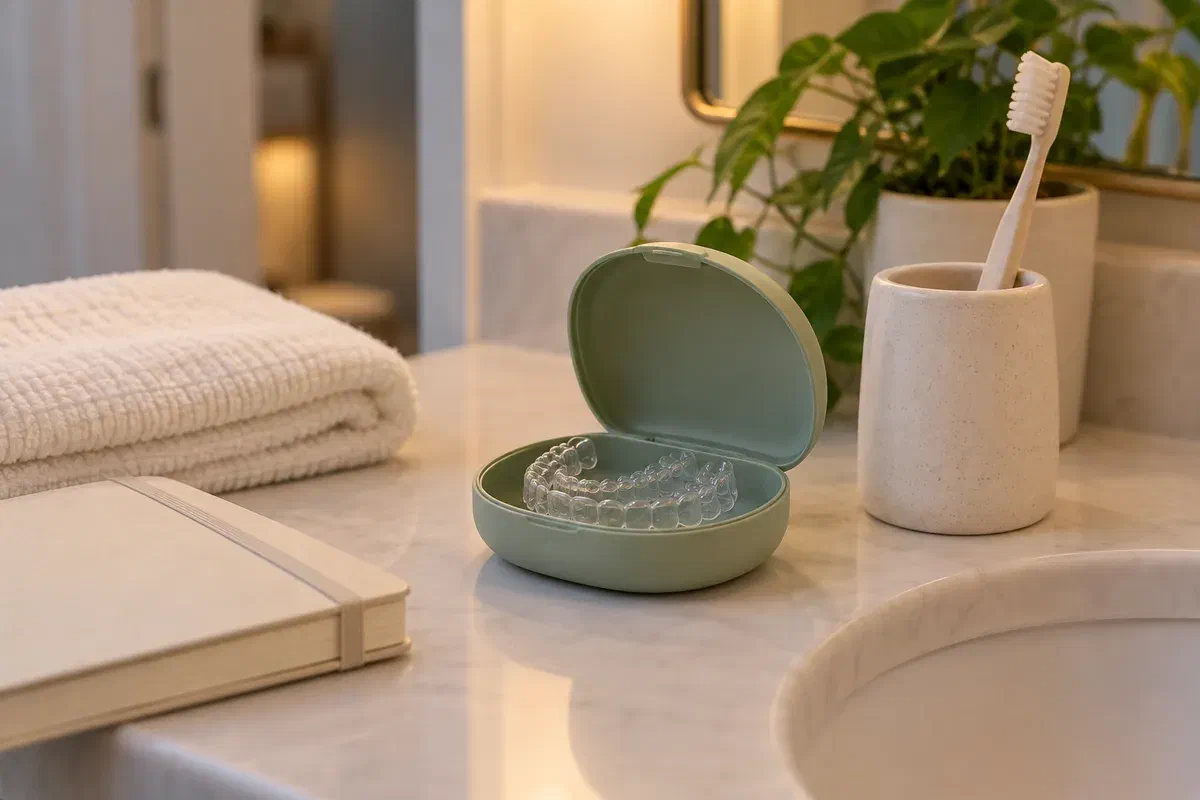
Illustrative evening retainer-care arrangement with a case, toothbrush, towel, and notebook
After follow-up ends

What tends to drift without scheduled visits

Without regular appointments, small changes go unnoticed. If you are still finishing treatment, ask now about any interval between the last active appliance and the retainer, so you are not deciding alone.

Forgetting what the instructions were

Years in, it is easy to lose track of the original schedule. If you are near the end of treatment, ask for the appliance, hours, fitting and review plan in writing. If you are already past that, ask your treating office for a copy.

Wear quietly shrinking

Without check-ups as a reminder, nightly wear can become every other night, then weekends. Changes in work, family or comfort often drive it. Bring it up honestly and ask what is appropriate, rather than letting the schedule erode by default.

No one formally responsible

Once included visits end, your orthodontist may assume your dentist will watch the retainer, and your dentist may assume otherwise. Ask who reviews it from now on. A clear answer prevents years without anyone checking.

Keep a contact for retention problems even after formal follow-up ends. Reach out promptly about a lost, cracked, loose or ill-fitting appliance, without waiting for a routine visit.

Why long-term planning pays off

Small checks that protect years of work

Revisiting retention when follow-up ends restates what the appliance is doing and what your role is now that formal check-ins have stopped. That understanding is easy to lose after a few years, which is exactly when changes can begin without being noticed.

The plan should also keep up with your life. New restorations, a worn retainer, changes in gum health or a move can each justify a review. Knowing who to call means you are not guessing years later how to adapt instructions you barely remember.

Patient information: American Association of Orthodontists — retention as part of orthodontic treatment

A recorded finish line

Ask, or check your records, for how the clinician judged that active treatment was done and which retention followed. Note any accepted limitation in the result. That reference point helps a future clinician see whether anything has changed.

A routine that lasts beyond the first year

Confirm the current wear hours for any removable appliance and how a fixed wire should be cared for. Ask whether those instructions are still appropriate. A routine you understand is one you are more likely to sustain over many years.

A plan for later reviews and costs

Ask how often checks are suggested from here and what fees apply now that included visits are over. Find out whether replacements are covered. Keeping that information with your case avoids long gaps when something breaks.

Setting up ongoing care

Turning a closed file into a working plan

Retention is ideally planned before treatment ends, then carried forward. When included follow-up finishes, these steps help re-establish a plan, tailored to your history and appliances.

  1. Review the starting point

    Talk through how your treatment finished and whether any concerns were left open, using records if available. Separate issues may need their own care. With that context, the clinician can set out what positions retention aims to hold over the long term.

  2. Check the appliances you have

    We look at the retainers you bring and discuss whether they still suit, or whether replacement and new records might be needed. Ask what to wear in the meantime, and flag any crown or bonding you have in mind so it can be fitted around the appliance.

  3. Refresh how you use and clean it

    After years of wear, handling habits can drift. Ask for a quick refresher on inserting, removing and cleaning your design. Confirm the hours and the signs, such as tightness or a loose wire, that should prompt contact.

  4. Agree on long-term reviews

    Settle who will check fit, any fixed wire and tooth position from now on, and roughly how often. Ask how the arrangement differs from the follow-up you had before. If responsibility is moving to us, we will confirm that clearly.

Years two, five and beyond

Retention as a habit, not an appointment

The schedule should come from the clinician managing your retention. Long-term success usually depends on a routine you understand and a clear step to take when an appliance or circumstance changes.

Protect the routine through life changes

Keep the case and supplies where your evening habits happen, and take a travel case on trips. When work or family routines shift, plan for the retainer rather than letting it drop. Ask before reducing wear.

Book a review, even when nothing seems wrong

Regular checks catch issues you may not notice. Bring every appliance, mention any change in comfort or how teeth look, and keep ordinary dental visits. Ask how a fixed wire is being examined and cleaned.

Ask before patching up a problem

If an appliance cracks, loosens or disappears, contact the office now managing retention and describe what happened. They can advise on interim wear. Avoid reverting to old aligners, cutting plastic or adjusting wire without guidance.

Patient information: British Orthodontic Society — continuing care after braces

Long-term review outcomes

Continue, renew the appliance, or investigate

Ask what is guiding the recommendation. Maintaining positions and planning new movement are separate aims, even if both begin with a retainer you have been wearing for years.

When fit and findings are still suitable

Continue with periodic checks

You may be advised to keep going as you are, with reviews spaced appropriately. Ask whether anything changes and when to return. A reassuring check after years of wear does not, by itself, mean retention can end.

When age, damage or dental work affect it

Renew or repair the appliance

Older retainers can wear, crack or lose their fit, and new restorations may change how they seat. Ask what a replacement would achieve, which records are needed and what it costs. Get clear interim instructions.

When positions or oral health have shifted

Investigate changes in teeth or gums

If teeth, the bite or gums have changed over the years, further assessment may be needed first. Ask whether holding the current position is appropriate or whether a broader treatment discussion is warranted. A specialist may be recommended.

Long-term retention in Erin

Questions for the years after treatment

These answers focus on retention once included orthodontic follow-up is finished.

(905) 876-4488
My included retainer appointments have ended. Do I still need checks?
Generally, yes. The end of an included follow-up period is about scheduling, not about whether teeth still need maintaining. Ask who will review your retention from now on, and keep wearing your appliance as prescribed in the meantime.
What signs between visits mean I should book a retainer check?
A retainer that feels tight, rocks, cracks, or no longer seats fully is worth a check, as is a fixed wire that feels rough or loose. Changes in how your front teeth line up are also worth mentioning.
Who keeps my retention records once my orthodontic file closes?
Ask your orthodontic office how long records are kept and how to request copies. If another clinician is taking over retention, ask whether relevant records can be shared with them.
Will my wear hours change as the years go by?
They may or may not. Any change should come from a clinician who has reviewed your teeth and appliances, not from the passage of time alone. Ask at your next review.
How do I know when a retainer is due for replacement?
There is no fixed timeline for every appliance. Wear, cracks, discolouration that will not clean, or a poorer fit can all be reasons to discuss replacement. Bring it to reviews so its condition can be assessed.
Can long-term retainer reviews be scheduled sensibly from Erin?
Yes. Many people line up a retention check with their regular dental visit. Mention it when booking, bring every appliance, and call ahead if something breaks so we can advise on timing.
Retention planning for Erin

Give the long haul a clear plan

Book a long-term retention review with our Bronte Street team. Bring your appliances and any old instructions, and we will discuss your questions, a sensible review schedule and who is now responsible for each part of your care.

Long-term needs differ from person to person. Contact us promptly about lost, damaged or ill-fitting retainers, and confirm any change of provider explicitly.

Visit Milton Dental Clinic
Unit 1, 342 Bronte St. S, Milton, ON L9T 5B7
Get directions Clinic hours
Monday–Thursday
11am–7pm
Friday–Sunday
By appointment only

Areas we serve

  • Milton
  • Oakville
  • Mississauga
  • Georgetown
  • Halton Hills
  • Acton
  • Campbellville
  • Brampton
  • Burlington
  • Puslinch
  • Rockwood
  • Erin
  • Caledon
  • Etobicoke
  • Old Milton
  • Bronte Meadows
  • Timberlea
  • Dorset Park
  • Dempsey
  • Clarke
  • Beaty
  • Coates
  • Harrison
  • Scott
  • Willmott
  • Ford
  • Bowes
  • Cobden
  • Walker
  • Mountain View
  • Milton Heights
  • Hawthorne Village
  • Valley View
  • Fallingbrook
  • Nassagaweya
  • Trafalgar
  • Esquesing
  • Nelson
  • Brookville
  • Moffat
  • Glen Williams
  • Norval
  • Limehouse
  • Stewarttown
  • Ashgrove
  • Hornby
  • Silver Creek
  • Speyside
  • Scotch Block
  • North Oakville
  • River Oaks
  • Glen Abbey
  • West Oak Trails
  • Palermo
  • Bronte Creek
  • College Park
  • Joshua Creek
  • Uptown Core
  • Preserve
  • Iroquois Ridge
  • Lisgar
  • Meadowvale
  • Meadowvale Village
  • Churchill Meadows
  • Erin Mills
  • Central Erin Mills
  • Streetsville
  • East Credit
  • Creditview
  • Heartland
  • Sheridan
  • Mount Pleasant
  • Credit Valley
  • Huttonville
  • Churchville
  • Springbrook
  • Northwest Brampton
  • Bram West
  • Fletcher's Meadow
  • Fletcher's Creek South
  • Alton Village
  • Orchard
  • Millcroft
  • Headon Forest
  • Tansley
  • Brant Hills
  • Tyandaga
  • Kilbride
  • Lowville
  • Aberfoyle
  • Morriston
  • Arkell
  • Hillsburgh
  • Freelton
  • Carlisle
  • Waterdown
  • Flamborough
  • Mountsberg

How can we help?

Milton Dental Clinic

Have a question about your smile? Choose the option that works best for you.

For urgent dental concerns, please call.
Messages are reviewed during clinic hours.