

Illustrative patient discussing follow-up and retention with a dental clinician
Cosmetic Dentistry

Post-Orthodontic Retention in Old Milton

Braces from years ago, a retainer tucked in a drawer, and front teeth that no longer line up quite the way they did. From Old Milton, close to our Bronte Street practice, you can review where retention stands now and what sensible next steps look like.

Retention, years later

What happened to the retainer you were given?

Plenty of adults finished orthodontics as teenagers, wore a retainer faithfully for a while, and then let it drift out of the nightly routine. Retention is the long tail of that treatment: the appliances, habits and reviews meant to help teeth keep the positions braces or aligners moved them into.

Tooth positions can keep changing well after treatment ends, and throughout adult life. That is why retention is generally seen as ongoing rather than a single last visit. The schedule you follow should come from a clinician who has looked at your teeth recently, and it should be reviewed with them rather than adjusted on your own.

Coming from Old Milton, bring every retainer you still own, even ones that no longer seem to fit, and any paperwork you kept. Tell us who did the original orthodontic work if you know. We can talk through current needs, what we can take on, and when the treating orthodontist or another specialist ought to be involved.

Ask about an older retainer
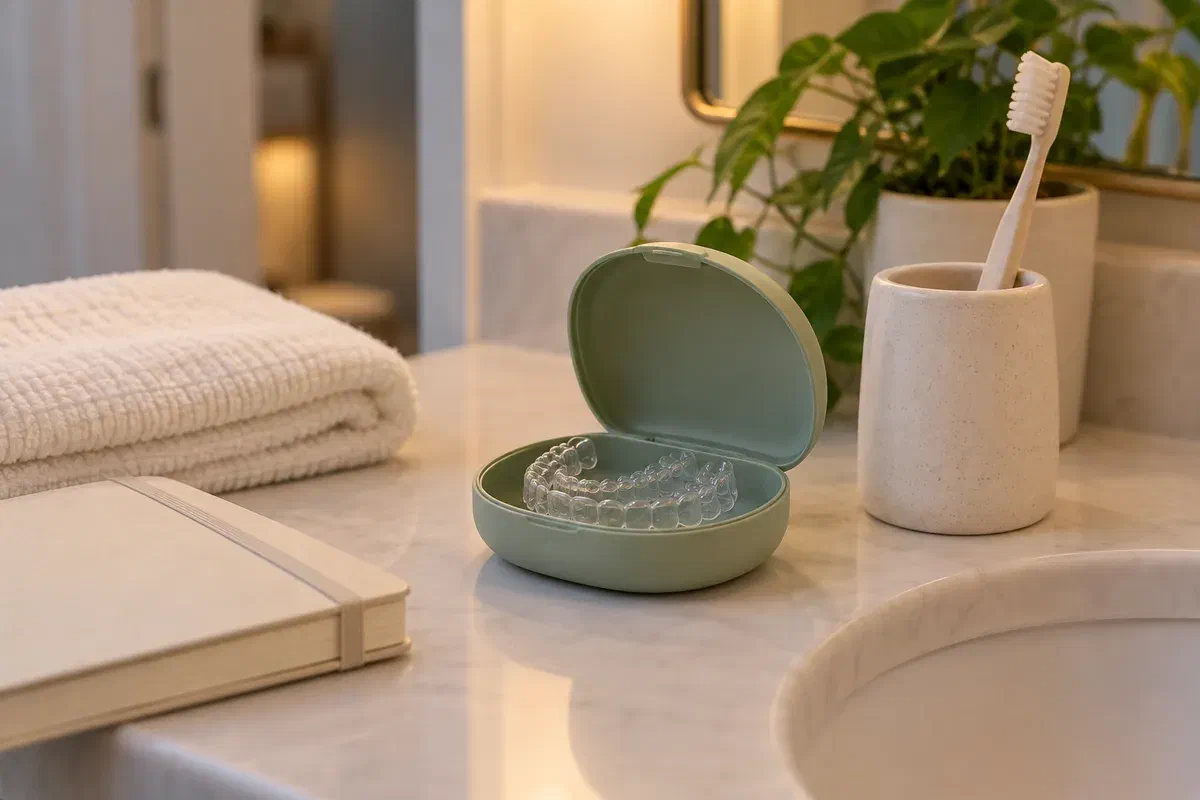
Illustrative evening retainer-care arrangement with a case, toothbrush, towel, and notebook
Common situations

Three ways retention can slip out of view

Retention problems usually start quietly. Often there was never a firm handover from the last active appliance to the retainer, and wear decisions ended up being made by guesswork.

Instructions that were vague from the start

If you are still in treatment, ask whether movement is truly finished and which appliance follows. Pin down the hours, the fitting and the first review. Taking off brackets or reaching the final aligner is not the same thing as receiving retention instructions.

A habit that faded over the years

Moving house, a new baby, night shifts or one lost case can loosen even a careful routine. Rather than hoping the teeth will behave, mention the obstacle. Ask how to handle it inside your prescribed plan, and whether an old appliance should be reassessed before you wear it again.

No one sure who is responsible

Years after treatment, the original orthodontist may have retired, moved or closed your file. Ask who now reviews your retainer and manages concerns. General dental care and retention follow-up can sit with different people, so get a clear answer instead of an assumption.

Whoever manages your retention should give you a way to report a lost, broken, loose or ill-fitting appliance. Use it when the problem appears, not months later at a routine visit.

The value of revisiting the plan

An updated plan beats an old habit

Talking about retention again resets expectations. It explains what your appliance is meant to do now and which parts of the job fall to you. That is useful even when you feel your teeth are fine and the braces are something from another decade.

Your plan also needs to fit the life you have today. A new crown, a worn or cracked retainer, or a family move can all be reasons for a review. Knowing exactly whom to contact means you do not have to invent your own version of the instructions you were given years ago.

Patient information: American Association of Orthodontists — retention as part of orthodontic treatment

Clarity about what is being held

For current treatment, ask how the clinician decides that movement is complete. For past treatment, ask how today's positions compare with what you remember and whether any accepted limitation was noted. Holding teeth in place deserves its own instructions, separate from earlier appliances.

A routine that suits this stage of life

Confirm the wear hours for a removable retainer and how a bonded wire should be cared for. If what you hear differs from your old instructions, ask why. Routines last longer when their reason is plain and you know how to raise a difficulty.

Steps for reviews and surprises

Ask which check-ups are recommended and whether repairs or replacements carry fees. Keep the clinic's contact details with your appliance. A clear process stops a cracked tray or loose wire from becoming a long gap in the care you meant to keep up.

What a retention review involves

Four conversations, one clear plan

Ideally retention is planned before active treatment ends, but it can be revisited at any point. Here is how the discussion usually unfolds, shaped around your history and the appliances you bring.

  1. Compare where things are with where they ended

    Talk through whether the original goals were reached and whether anything has changed or still bothers you. Ask which concerns need separate attention. The clinician can explain what positions retention should aim to maintain and whether that aim is still realistic.

  2. Decide on the appliance and the interim

    Review whether your current retainer is still suitable, or which new type or combination is proposed, and what scans or impressions are required. Ask what to do until it arrives. Where other dental work is planned, check how timing and fit will be coordinated.

  3. Rehearse the routine at fitting

    Ask to see how to insert, remove and clean the appliance you have been given. Note the wear hours, when it should come out and the warning signs that justify a call. Raise any foreseeable trouble, such as dexterity or travel, before leaving.

  4. Settle the ongoing arrangement

    Find out who will check fit, the integrity of any bonded wire and changes in position over the years. Clarify when you will next be seen and what happens after any included follow-up runs out. If another office will take over, confirm that it has agreed to.

Day-to-day retention

Small, regular habits; questions when anything changes

Let the treating clinician set the schedule. Retention tends to last best as a routine you understand, paired with a clear response when the appliance or your circumstances change.

Make wear part of the evening

Keep the case and cleaning kit where you get ready for bed. Plan ahead for travel, a night at a relative's or an early start. Check with your clinician before trimming the hours, even when nothing looks different or someone you know wears theirs less.

Let the clinician see the appliance

Bring the retainer to the reviews you are asked to attend, since fit is hard to judge without it. Mention changes in comfort, how it seats and how your teeth look. Keep your regular dental visits and ask how any bonded wire is being cleaned and checked.

Report problems promptly

If an appliance breaks or goes missing, contact the clinic in charge of your retention and name the affected device. Ask what to wear meanwhile. Please do not force an old retainer into place, cut plastic or adjust a wire without specific advice.

Patient information: British Orthodontic Society — continuing care after braces

Possible outcomes of a review

Keep going, adjust the appliance, or look deeper

Ask which choice is on the table and why. Maintaining current positions and planning new movement are separate goals, even though both often start with a retainer that feels wrong.

If the appliance and findings still suit you

Stay with the current routine

You may be advised to keep doing what you are doing, with follow-up planned. Confirm whether any detail changes and when to return. A reassuring visit is not, on its own, a signal that you can stop wearing the retainer or cut back.

If the device or your needs have changed

Repair or replace the retainer

Wear, damage, dental work or difficulty handling an appliance can all lead to a rethink. Ask what a new retainer would fix and which records it needs. Get clear interim instructions so a replacement does not leave a gap in maintenance.

If teeth, bite or gums look different

Assess tooth movement or oral health

Where positions, the bite or gum health have changed, a fuller assessment may be needed before any new retainer is made. Ask whether holding the present position is reasonable or whether further treatment is worth discussing. A specialist opinion may be offered.

Old Milton retention questions

Questions about retainers you have had for a while

These answers focus on retention as it plays out over years, including older appliances, changing providers and new dental work.

(905) 876-4488
I found my teenage retainer. Is it safe to start wearing it again?
Do not force it. Teeth may have moved since you last wore it, and pushing a poorly fitting appliance into place can be uncomfortable or unhelpful. Bring it to a review so a clinician can check the fit and advise whether it, or something new, is appropriate.
Why are my lower front teeth crowding years after braces?
Teeth can shift throughout life, and reduced retainer wear is one common reason for change. Other factors may also play a part. An examination can help explain what is happening and whether retention, monitoring or another treatment discussion makes sense.
Can a retainer wear out even if I look after it?
Yes. Removable appliances can crack, warp or loosen with use, and bonded wires can come unstuck. Bring your retainer to reviews so wear can be spotted, and ask how often replacement is usually considered for your type of appliance.
My orthodontist has retired. Who reviews my retention now?
Ask whether records can be transferred, and look for a clinician willing to take on retention follow-up. Make sure they understand which appliances you use. Until a new arrangement is in place, keep to the clear instructions you already have.
Should I mention my retainer before getting a new filling or crown?
Yes. Tell both the clinician doing the restoration and whoever manages retention. Ask whether the change in tooth shape could affect the fit and how a new appliance would be timed. Bring the retainer if asked, and avoid forcing it on afterward.
I live in Old Milton now. Can I move my retention checks closer to home?
Convenience matters, but the first step is a clear handover. If you would like our Bronte Street practice to take on retention checks, we can talk about it and confirm the arrangement with your current provider before anything changes.
Near Milton's historic downtown

Bring the old retainer, the questions, and the paperwork

Arrange a visit at our Bronte Street practice to look at where retention stands. Bring your appliances and any instructions so we can review fit, discuss suitable follow-up and agree on who is responsible for each part of your care.

Retention needs differ for each person. Ask promptly about a lost, broken or ill-fitting appliance, and make any change of provider explicit.

Visit Milton Dental Clinic
Unit 1, 342 Bronte St. S, Milton, ON L9T 5B7
Get directions Clinic hours
Monday–Thursday
11am–7pm
Friday–Sunday
By appointment only

Areas we serve

  • Milton
  • Oakville
  • Mississauga
  • Georgetown
  • Halton Hills
  • Acton
  • Campbellville
  • Brampton
  • Burlington
  • Puslinch
  • Rockwood
  • Erin
  • Caledon
  • Etobicoke
  • Old Milton
  • Bronte Meadows
  • Timberlea
  • Dorset Park
  • Dempsey
  • Clarke
  • Beaty
  • Coates
  • Harrison
  • Scott
  • Willmott
  • Ford
  • Bowes
  • Cobden
  • Walker
  • Mountain View
  • Milton Heights
  • Hawthorne Village
  • Valley View
  • Fallingbrook
  • Nassagaweya
  • Trafalgar
  • Esquesing
  • Nelson
  • Brookville
  • Moffat
  • Glen Williams
  • Norval
  • Limehouse
  • Stewarttown
  • Ashgrove
  • Hornby
  • Silver Creek
  • Speyside
  • Scotch Block
  • North Oakville
  • River Oaks
  • Glen Abbey
  • West Oak Trails
  • Palermo
  • Bronte Creek
  • College Park
  • Joshua Creek
  • Uptown Core
  • Preserve
  • Iroquois Ridge
  • Lisgar
  • Meadowvale
  • Meadowvale Village
  • Churchill Meadows
  • Erin Mills
  • Central Erin Mills
  • Streetsville
  • East Credit
  • Creditview
  • Heartland
  • Sheridan
  • Mount Pleasant
  • Credit Valley
  • Huttonville
  • Churchville
  • Springbrook
  • Northwest Brampton
  • Bram West
  • Fletcher's Meadow
  • Fletcher's Creek South
  • Alton Village
  • Orchard
  • Millcroft
  • Headon Forest
  • Tansley
  • Brant Hills
  • Tyandaga
  • Kilbride
  • Lowville
  • Aberfoyle
  • Morriston
  • Arkell
  • Hillsburgh
  • Freelton
  • Carlisle
  • Waterdown
  • Flamborough
  • Mountsberg

How can we help?

Milton Dental Clinic

Have a question about your smile? Choose the option that works best for you.

For urgent dental concerns, please call.
Messages are reviewed during clinic hours.