

Illustrative patient discussing follow-up and retention with a dental clinician
Cosmetic Dentistry

Post-Orthodontic Retention in Rockwood

Planning bonding, a crown or whitening now that your teeth are straight? Each can affect how a retainer fits. From Rockwood, we can help you sequence cosmetic or restorative work with your retention plan so neither undoes the other.

Retention plus new dental work

Straight teeth, next plans, and a retainer in the middle

Once alignment is finished, many people turn to the next improvement: reshaping a chipped edge, replacing an old filling, or brightening the colour. Those plans sit alongside retention, which is the long-term care that helps teeth hold their new positions. Retention includes the appliance, the wear schedule, cleaning, reviews and a plan for loss or damage.

A change in a tooth's shape can change how a retainer seats, and teeth can move after treatment and throughout life. That is why the two plans need to talk to each other. The wear schedule should remain the one your clinician prescribed, and any adjustment around new dental work should be agreed with them in advance.

If you are coming from Rockwood, bring your retainers, instructions and details of the work you are considering. Tell us who did your orthodontics and who manages follow-up. We can talk through the order of treatment, who is responsible for each piece, and when the orthodontist or a specialist should weigh in.

Coordinate new work with retention
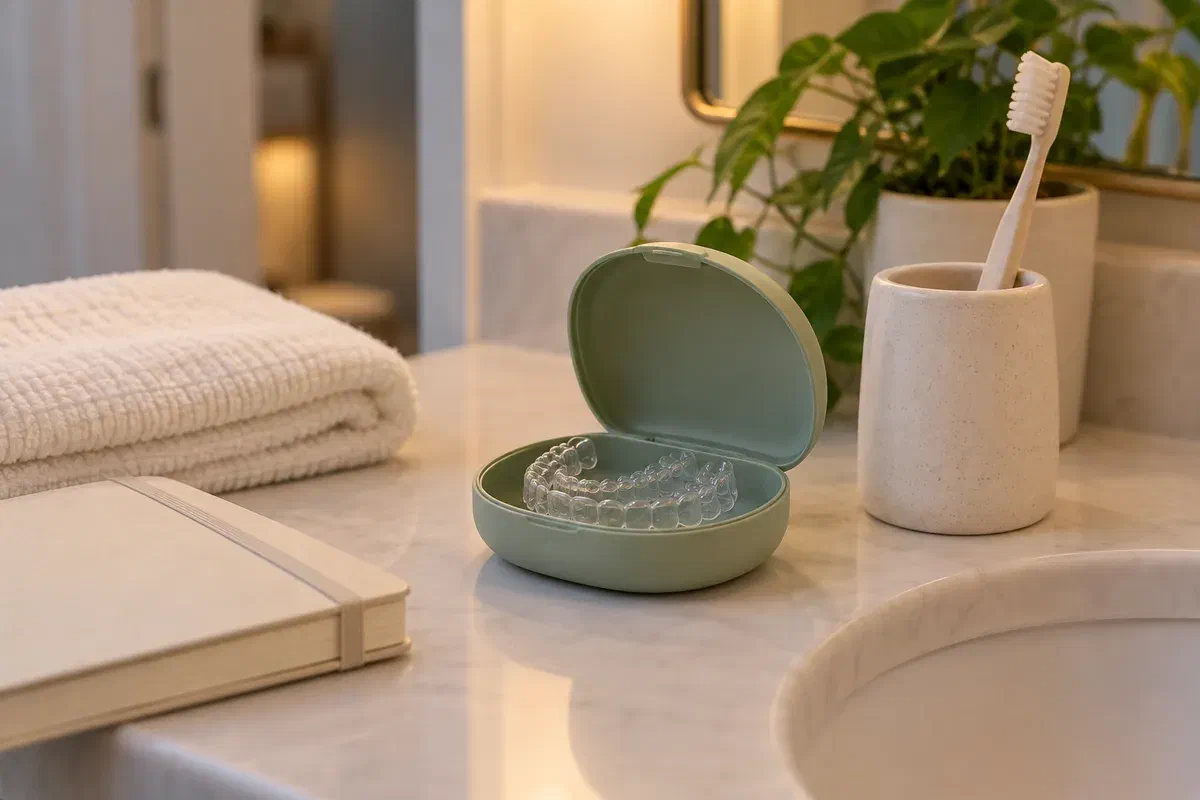
Illustrative evening retainer-care arrangement with a case, toothbrush, towel, and notebook
Coordination problems to avoid

When one plan forgets the other

Most issues come from treatment happening in the wrong order or without everyone informed. At the end of active treatment, also confirm whether there is a wait before your retainer is ready.

Starting restorative work before retention is settled

Ask whether active movement is finished and which retainer you will be wearing before booking cosmetic or restorative work. Get the schedule, fitting date and first review in writing. Knowing the retention plan first makes the rest easier to sequence.

Wear slipping around appointments

Sensitivity after a procedure, a temporary crown or uncertainty about fit can make people leave the retainer out. Ask in advance how to manage wear around each appointment rather than skipping nights on your own judgment.

Two clinicians, each unaware

If one office does your orthodontic follow-up and another the restorative work, each may assume the other knows. Tell both. Confirm who will check the retainer after the new work is complete.

If a retainer feels different after any dental work, report it rather than pressing it into place. The same applies to an appliance that is lost, cracked or loose.

Why sequencing matters

Protecting alignment and the new work together

A clear retention plan tells you what your appliance does and what your responsibilities are. When new dental work is planned, it also helps everyone see how a change in tooth shape might affect fit. That awareness is useful long after treatment ends, every time a restoration is considered.

Plans need to adapt as treatment continues. A crown, new bonding, a damaged retainer or a move may each call for a review. When you know who to contact, you are not left deciding alone whether an appliance still fits after new work.

Patient information: American Association of Orthodontists — retention as part of orthodontic treatment

A known endpoint for alignment

Ask how your clinician determined that movement was complete and which retention began. Talk about any accepted limitation in the result, especially if cosmetic work is meant to address it. That record guides how later treatment is planned.

A routine that survives new treatment

Confirm the wear hours for a removable appliance and how to care for a bonded wire, and ask how both apply around procedures. If instructions change after new work, ask why. A routine you understand is easier to keep through a busy treatment phase.

A plan for fit changes and replacements

Ask whether a retainer may need replacing after restorative work and how that would be timed and charged. Keep contact details for both offices together. A clear process keeps a new crown from leading to a stretch with no working retainer.

Putting both plans together

Retention first, then the rest in order

Retention is best discussed before active treatment ends, then revisited whenever new work is planned. These steps describe the coordination conversation, adjusted to your treatment and appliances.

  1. Confirm the orthodontic result

    Review whether the alignment goals were checked and whether any concern remains that cosmetic or restorative care is meant to address. Ask which issues need separate treatment. The clinician can describe what positions retention is protecting.

  2. Sequence the work and the appliance

    Discuss whether the retainer should be made before or after planned work, and which records are needed. Ask what to wear in the interim. Agree how changes in tooth shape will be handled so the appliance and new work fit together.

  3. Learn how to wear it around procedures

    At fitting, ask for a demonstration of handling and cleaning your design. Confirm daily hours, when the retainer should come out for treatment and the signs that should prompt a call, such as a changed fit after a procedure.

  4. Assign follow-up after the work is done

    Agree on who will check the retainer once restorative work is complete, and who monitors any fixed wire and tooth position after that. Ask what happens when included follow-up ends. Confirm any transfer of responsibility in writing.

Through the treatment phase

Keep wearing, keep everyone informed

The wear schedule comes from your treating clinician. Retention holds up best as a familiar routine with a clear response when an appliance or a tooth's shape changes.

Stay consistent between procedures

Keep the case and cleaning supplies where you use them, and plan ahead for appointment days. If a procedure makes the area tender, ask what to do rather than leaving the retainer out. Check before reducing wear.

Bring the retainer to restorative visits if asked

Some clinicians may want to check fit after new work. Describe any change in seating or comfort, and keep up regular dental care. Ask how any fixed wire will be protected and cleaned during treatment.

Don't adjust it to fit new work

If the retainer no longer seats after a procedure, or breaks, contact the clinic managing retention. Ask what to wear meanwhile. Please avoid reshaping plastic, filing it down or bending a wire without specific instruction.

Patient information: British Orthodontic Society — continuing care after braces

How retention may adjust

Three outcomes when new work is planned

Find out what is driving the recommendation. Holding teeth in place and moving them again are different aims, even when both arise from a question about a new crown or bonding.

When new work won't affect the fit

Keep the existing retainer

If the planned change does not alter the surfaces the retainer rests on, you may continue as before. Confirm with both clinicians and ask when your next retention check is due. A good fit now is not a reason to stop wearing it.

When a tooth's shape has changed

Make a new retainer after the work

A crown, veneer or bonding can change how an appliance seats, so a replacement may be timed after the work. Ask what records are needed and what to wear in between. Confirm who will provide the new retainer.

When positions or gum health have changed

Reassess before going further

If teeth, the bite or gums have changed, assessment may be needed before both the new work and the next retainer. Ask whether holding the current position suits your goals or whether another treatment discussion is warranted. A specialist may be consulted.

Retention and restorative work

Planning new dental work while wearing a retainer

These answers focus on how cosmetic and restorative treatment can fit with your retention plan.

(905) 876-4488
Can I whiten my teeth while I'm still wearing a retainer?
Ask both your retention clinician and the dentist providing whitening. A retainer is not a whitening tray unless your clinician has specifically said it can be used that way, and a bonded wire may affect the plan.
Will bonding or veneers change how my retainer fits?
They can, because they alter the shape of the tooth surface. Tell the clinician planning the work about your retainer so the timing and any need for a new appliance can be discussed in advance.
Do I need a new retainer after getting a crown?
Possibly. A crown may change how the appliance seats. Bring the retainer to the relevant appointments if asked, and avoid forcing it on afterward. Your clinician can advise whether a replacement is needed.
Should restorative work happen before or after my retainer is made?
It depends on the work and your treatment. Ask both clinicians to agree on the sequence. Sometimes it makes sense to complete changes first and make the retainer afterward, but that decision belongs to them.
My bonded wire is near a tooth that needs a filling. Will that be a problem?
Tell the dentist about the wire before treatment. They can plan around it and check that it is intact afterward. If the wire is disturbed, contact the clinic managing retention for advice.
Can cosmetic visits and retainer checks be combined from Rockwood?
Often they can be planned together. Mention both when booking and bring the retainer. If something breaks between visits, call first so we can advise on timing.
Rockwood smile planning

Plan the next step without undoing the last one

Arrange a coordination visit with our Bronte Street team. With your retainer, instructions and ideas for new work in hand, we can go over sequencing, suitable follow-up and which clinician handles each part of your care.

Every retention and restorative plan is individual. Contact us promptly if a retainer no longer fits after dental work, or is lost or broken, and confirm any change of provider explicitly.

Visit Milton Dental Clinic
Unit 1, 342 Bronte St. S, Milton, ON L9T 5B7
Get directions Clinic hours
Monday–Thursday
11am–7pm
Friday–Sunday
By appointment only

Areas we serve

  • Milton
  • Oakville
  • Mississauga
  • Georgetown
  • Halton Hills
  • Acton
  • Campbellville
  • Brampton
  • Burlington
  • Puslinch
  • Rockwood
  • Erin
  • Caledon
  • Etobicoke
  • Old Milton
  • Bronte Meadows
  • Timberlea
  • Dorset Park
  • Dempsey
  • Clarke
  • Beaty
  • Coates
  • Harrison
  • Scott
  • Willmott
  • Ford
  • Bowes
  • Cobden
  • Walker
  • Mountain View
  • Milton Heights
  • Hawthorne Village
  • Valley View
  • Fallingbrook
  • Nassagaweya
  • Trafalgar
  • Esquesing
  • Nelson
  • Brookville
  • Moffat
  • Glen Williams
  • Norval
  • Limehouse
  • Stewarttown
  • Ashgrove
  • Hornby
  • Silver Creek
  • Speyside
  • Scotch Block
  • North Oakville
  • River Oaks
  • Glen Abbey
  • West Oak Trails
  • Palermo
  • Bronte Creek
  • College Park
  • Joshua Creek
  • Uptown Core
  • Preserve
  • Iroquois Ridge
  • Lisgar
  • Meadowvale
  • Meadowvale Village
  • Churchill Meadows
  • Erin Mills
  • Central Erin Mills
  • Streetsville
  • East Credit
  • Creditview
  • Heartland
  • Sheridan
  • Mount Pleasant
  • Credit Valley
  • Huttonville
  • Churchville
  • Springbrook
  • Northwest Brampton
  • Bram West
  • Fletcher's Meadow
  • Fletcher's Creek South
  • Alton Village
  • Orchard
  • Millcroft
  • Headon Forest
  • Tansley
  • Brant Hills
  • Tyandaga
  • Kilbride
  • Lowville
  • Aberfoyle
  • Morriston
  • Arkell
  • Hillsburgh
  • Freelton
  • Carlisle
  • Waterdown
  • Flamborough
  • Mountsberg

How can we help?

Milton Dental Clinic

Have a question about your smile? Choose the option that works best for you.

For urgent dental concerns, please call.
Messages are reviewed during clinic hours.