

Illustrative patient and clinician discussing a tooth model before restorative planning
Cosmetic Dentistry

Pre-Restorative Tooth Alignment

Before a crown, bridge, implant restoration, or bonding is planned, tooth position may deserve a closer look. Discuss pre-restorative tooth alignment in Milton to understand whether movement could support the proposed restoration and how the stages of care would be coordinated.

A closer look at pre-restorative alignment

Plan where the teeth need to be before deciding how to restore them.

Pre-restorative tooth alignment means considering orthodontic movement as part of a wider plan to repair or replace teeth. The aim may involve the position of a tooth, the distribution of a space, or the way teeth meet before a restoration is designed. It is a coordinated planning question, not a separate cosmetic add-on.

Moving teeth first may be helpful in selected situations, but it is not necessary before every crown, bridge, implant, or filling. The benefit should be explained in relation to the proposed restoration. Ask what movement would change and what the alternatives would mean for the teeth involved.

At Milton Dental Clinic, bring information about any restorative proposal already discussed. We can review the assessment needed and whether orthodontic or other specialist input would be useful. The intended final restoration should inform the alignment discussion from the beginning.

Discuss alignment before restorative work
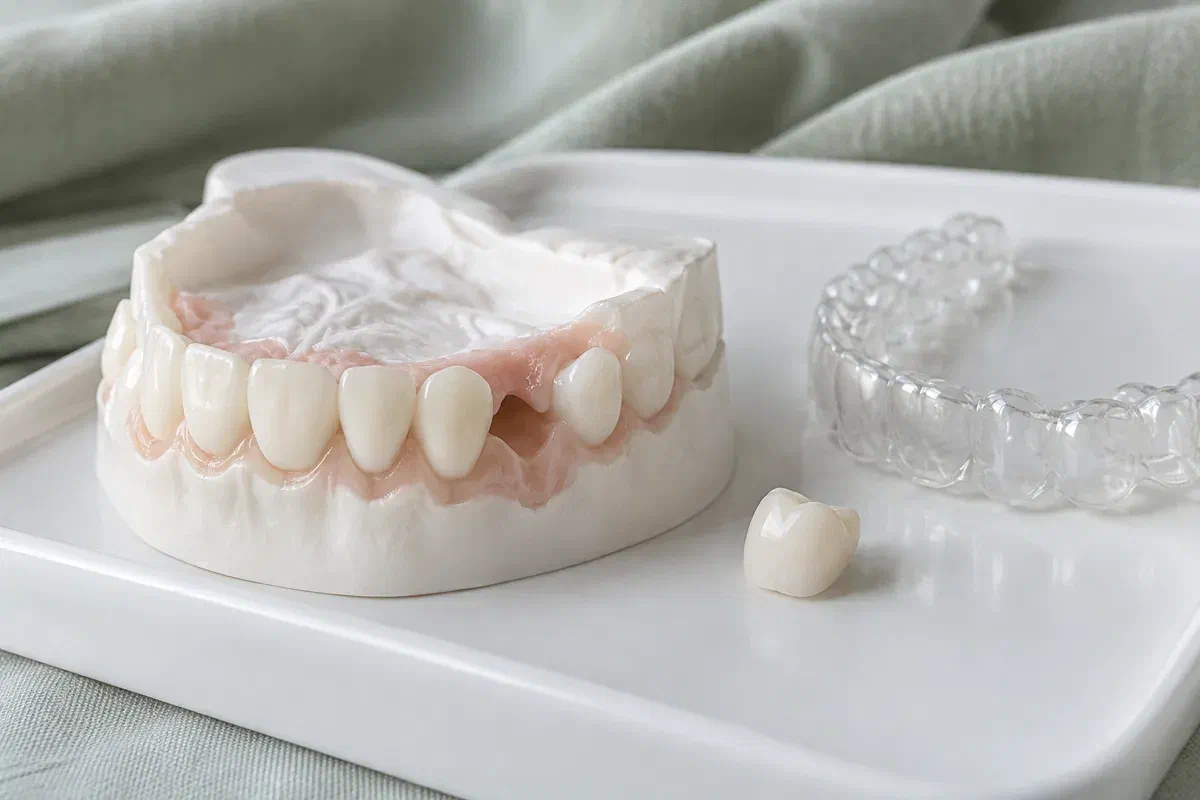
Illustrative tooth model, ceramic crown sample, and clear aligner on a consultation tray
Where position may affect the plan

Look at the space and relationships around the tooth being restored.

The question is whether a change in position would make a meaningful difference to the proposed care. Your examination and records help the clinicians assess that possibility.

A space for replacing a missing tooth

A gap may not have the shape or distribution needed for the restoration being considered. Ask whether the neighbouring teeth and roots need assessment before a replacement is planned. The visible width of a gap does not establish every requirement for an implant or bridge.

Tooth positions affecting a crown or bonding proposal

If a tooth is tilted, rotated, worn, or unusually shaped, ask how position affects the restorative options. Movement and restorative reshaping accomplish different things. The team should explain whether combining them offers a reasoned benefit in your particular situation.

Several treatments with an unclear sequence

You may have separate recommendations for orthodontics, gum care, and restorations. Ask how they fit together and who is coordinating them. A clear sequence helps avoid assuming that each appointment can proceed without considering the stage of the other treatment.

An existing dental implant does not move like a natural tooth. Tell the team about implants and all planned restorations before an orthodontic proposal is developed.

What coordinated planning can clarify

Give every stage a role in the same overall plan.

The potential value of alignment is its contribution to the restorative goal. Ask whether the proposed movement would change available space, tooth relationships, or the design being considered. The explanation should be specific enough for you to understand why an additional stage is being recommended.

The discussion should also include the added commitment. Orthodontic movement introduces its own appointments, responsibilities, risks, costs, and retention needs. Compare those implications with an appropriate plan that does not involve movement before deciding which approach fits your priorities.

Patient information: British Dental Journal — principles of interdisciplinary orthodontic and restorative treatment

A shared target for tooth positions and restoration design

Ask how the clinicians will agree on the desired endpoint before treatment starts. The orthodontic goal should relate to the planned restoration rather than simply making the teeth look straighter. Clarify what needs to be reviewed before the restorative stage can proceed.

A clearer understanding of alternatives

Ask what the restoration would involve if the teeth were left in their current positions. Discuss the benefits, limitations, and maintenance implications of each approach. A combined plan should be justified by the findings rather than presented as automatically superior.

A practical sequence with defined responsibilities

Know who provides each stage, who reviews progress, and whom to contact about a problem between appointments. Ask how information will be shared. Coordination matters particularly when the orthodontic and restorative care take place at different practices.

Planning the sequence

Work back from the restorative goal to the assessment and movement required.

A combined plan can involve several clinicians and more than one review. Ask what information is needed before committing and which decisions remain provisional.

  1. Review the restorative concern and your priorities

    Discuss the tooth or space being treated, earlier recommendations, symptoms, and what matters to you about the result. Bring relevant records or estimates. Explain practical constraints so the team can discuss the full sequence rather than only the first procedure.

  2. Assess the teeth, supporting tissues, and records

    The clinicians consider current oral health and the relationships relevant to the proposed care. Further records may be needed to understand space, roots, or the bite. Ask whether decay, gum disease, or another issue should be managed before movement begins.

  3. Agree on the intended positions and treatment stages

    Discuss the proposed movement, appliance options, alternatives, limitations, and risks. Clarify how the restoration is expected to fit the final arrangement. If specialist input is recommended, ask what question it should answer and who will integrate the advice.

  4. Review readiness before the restorative stage

    The endpoint of movement should be assessed against the shared plan. Ask how positions will be maintained while the restoration is prepared and fitted. Confirm whether new records or a further planning discussion are needed before irreversible restorative work proceeds.

Between alignment and restoration

Keep the handover clear and the teeth under the agreed care.

The interval between treatment stages deserves instructions of its own. Ask what to wear, which appointments to keep, and how the team will respond if the plan changes.

Follow appliance and retention instructions

Use the prescribed appliance as directed and report damage or fit changes. Do not stop wearing it because the intended movement appears complete. Ask how positions will be managed while you wait for a restoration or a review by another clinician.

Tell the team about changes before procedures happen

A new filling, crown, extraction, or other intervention can affect the sequence or appliance fit. Keep the clinicians informed about care planned elsewhere. If an appointment changes, ask whether the timing affects another stage rather than simply moving it independently.

Confirm the maintenance plan after the restoration

Ask how retention will accommodate the final tooth shape and who will check it. Review cleaning and follow-up for the restoration as well as the orthodontic result. The end of the restorative appointment should leave you knowing how both parts will be maintained.

Comparing approaches

Choose the sequence for a reason, with its limits understood.

The assessment may support combined treatment, a restorative approach alone, or further specialist review. Ask what each choice would mean for the tooth and your overall care.

When position is important to the restorative goal

Orthodontic movement before the planned restoration

A coordinated movement plan may be considered when changing the arrangement offers a meaningful benefit. Ask what endpoint is required, how it will be checked, and how retention will bridge the stages. The proposed restoration should remain part of the discussion throughout.

When current positions allow an appropriate approach

A restorative plan without preceding movement

It may be reasonable to restore the tooth without orthodontic treatment. Ask what preparation, appearance, function, and maintenance would involve. Compare the implications directly with the combined option rather than assuming an extra stage is always necessary.

When findings or complexity need another view

Further assessment or a different overall plan

A specialist opinion or additional oral-health treatment may be needed before the sequence is settled. Ask which uncertainty needs resolving and what can safely wait. You can take time to understand an elective combined proposal before agreeing to it.

Pre-restorative alignment questions

Ask how movement contributes to the restoration you are considering.

These questions help make the connection between stages clear before treatment begins.

(905) 876-4488
Does every dental implant plan need orthodontic alignment first?
No. The available space, neighbouring teeth, roots, and other clinical findings need assessment. Ask whether movement would contribute to your particular implant-restoration plan and what the alternatives involve. The recommendation should follow the findings rather than a general rule.
Can pre-restorative alignment move an implant that is already present?
An established dental implant does not move like a natural tooth. Its position must be considered when planning movement around it. Tell the team about existing implants before records or appliances are used to develop the orthodontic proposal.
Who decides where teeth should finish before a planned bridge?
The clinicians responsible for the orthodontic and restorative stages should coordinate the intended endpoint. Ask who is leading that discussion and how readiness will be reviewed. A shared plan helps connect tooth positions with the restoration being designed.
Will aligning a tooth before a crown guarantee that less tooth is removed?
No. Ask what benefit is expected in your case and what preparation would be needed with each option. The answer depends on tooth condition, position, and the restorative goal. A combined approach should not be accepted on a guaranteed tissue-saving claim.
What happens if restorative work is delayed after alignment?
Contact the clinicians involved and ask how the positions should be maintained during the delay. Confirm the appliance, wear instructions, and any review needed. Do not stop the prescribed routine or assume an old tray is an adequate substitute.
Can I discuss the full cost before starting alignment for restorative work?
Yes. Ask for the stages, providers, estimates, and possible separate charges to be explained. Include records, orthodontic reviews, restorations, and retention in the discussion. Clarify which elements are confirmed and which depend on later findings.
Pre-restorative tooth alignment in Milton

Bring the restoration plan and ask how tooth position fits into it.

Arrange a discussion at our Bronte Street practice about alignment before restorative care. We can explain the assessment, coordination, and possible specialist input needed to make the next decision clear.

The need for movement and the treatment sequence depend on individual assessment. No particular appliance, specialist service, or outcome is assumed.

Visit Milton Dental Clinic
Unit 1, 342 Bronte St. S, Milton, ON L9T 5B7
Get directions Clinic hours
Monday–Thursday
11am–7pm
Friday–Sunday
By appointment only

How can we help?

Milton Dental Clinic

Have a question about your smile? Choose the option that works best for you.

For urgent dental concerns, please call.
Messages are reviewed during clinic hours.