

Illustrative patient and clinician discussing a tooth model before restorative planning
Cosmetic Dentistry

Pre-Restorative Tooth Alignment in Burlington

Holding two proposals for the same tooth, one with orthodontics first and one without, can leave you unsure which to trust. From Burlington, bring both to us and we can talk through what moving teeth would change for the crown, bridge, implant or bonding involved.

Comparing two proposals

Set the plans side by side and look for the reason behind each.

One dentist suggests aligning a few teeth before a new crown. Another proposes going straight to the restoration. Both may be reasonable. Pre-restorative tooth alignment is the planning step that decides whether moving teeth would genuinely help the restoration, by changing a tooth’s angle, the spread of a space or the way the bite meets.

The deciding factor is the restoration, not a preference for straighter teeth. Many restorations are done perfectly well without any movement. A recommendation to add orthodontics should come with a specific explanation of what it achieves, and with a description of how the tooth would be treated if you chose not to move it.

Second opinions are welcome, including for people making the trip from Burlington. Bring the written proposals, any X-rays you can obtain and a list of what confused you. Our team can review what each plan assumes, what assessment is still missing and whether specialist input would settle the question. Your intended final restoration anchors that review.

Get a second look at a combined plan
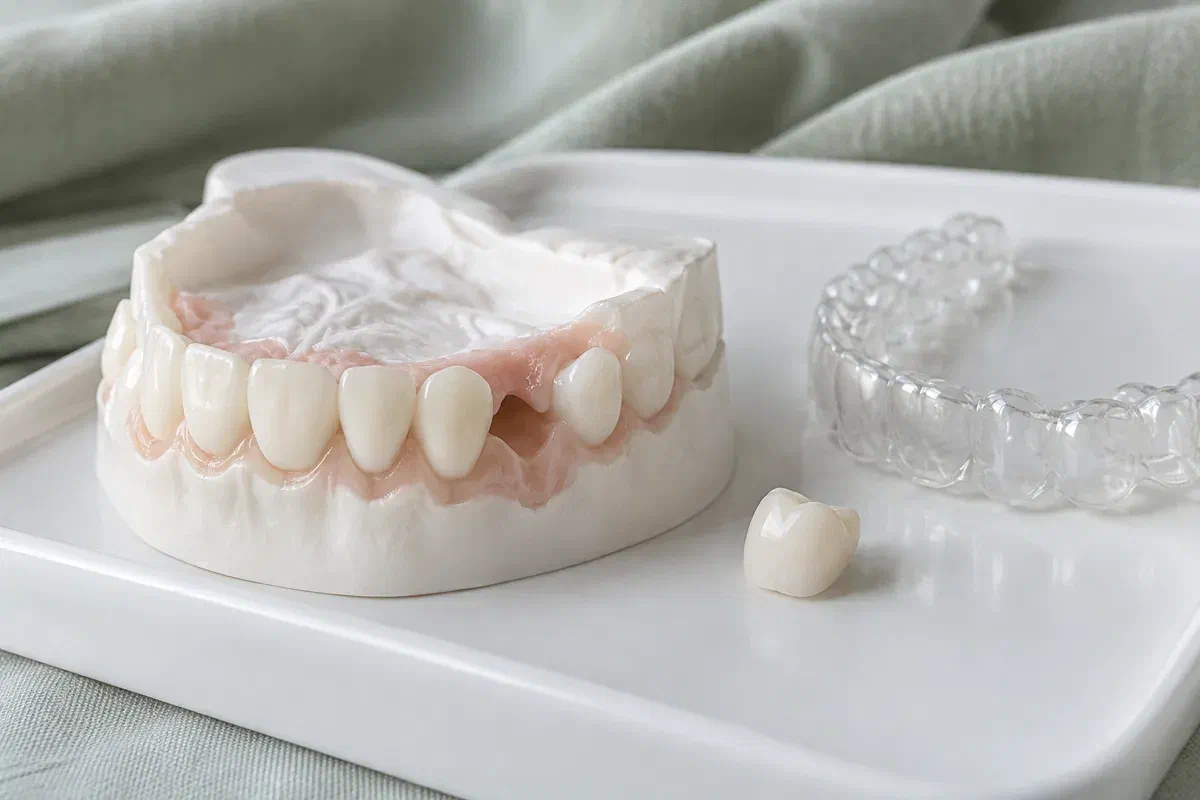
Illustrative tooth model, ceramic crown sample, and clear aligner on a consultation tray
Questions a comparison should answer

Where tooth position may change what is possible

A different position only matters if it would alter your care. Clinical examination and records show whether that applies, and are often what separate two proposals.

Room for a replacement tooth

A space may be uneven or narrower than a bridge or implant crown would ideally need. The roots and teeth beside it should be assessed, not just the gap you can see. Two clinicians may weigh those findings differently, so ask each what they measured.

A tooth whose angle affects a crown or bonding

Tilting, rotation or wear can influence how much a tooth is shaped or built up. Movement and reshaping do different jobs. Ask why one plan includes both and the other does not, and what each would mean for the tooth over time.

Multiple steps with no agreed order

Gum treatment, orthodontics and restorations may appear on separate pieces of paper. Find out how they relate and who is coordinating them. Without a shared sequence, one appointment can unintentionally undo or complicate another.

A dental implant is fixed in the jaw and does not respond to orthodontic movement. Tell us about every implant and planned restoration before an alignment proposal is put together.

What a joined-up plan gives you

Clarity about why each stage is there

Alignment is worthwhile when it serves the restorative goal. When you compare proposals, look for a plain account of what movement would change: the room available, how the teeth relate, or the restoration’s design. A plan without that explanation is harder to judge, however detailed it looks.

It also matters what the extra stage costs you in time and effort. Orthodontics carries appointments, home care, possible risks, fees and a period of retention. Set these against the plan that leaves teeth in place before deciding which priorities matter most to you.

Patient information: British Dental Journal — principles of interdisciplinary orthodontic and restorative treatment

A finishing position everyone has agreed

The clinicians should define where teeth need to end up for the restoration, before treatment starts. That endpoint is about function and design rather than a straighter look. Know what will be checked before the restorative stage goes ahead.

Both routes explained in full

Understand how the tooth would be restored without movement, including benefits, limits and upkeep. Comparing the two plans on the same terms helps you see whether the combined approach is justified by findings or simply by habit.

Named people for every stage

Know who carries out each step, who reviews progress and whom to call if a problem arises. Where care is split between offices, ask how notes, images and updates will travel between the clinicians involved.

Reviewing a plan with us

Test each step against the restoration it leads to.

A combined plan may draw in several clinicians and reviews. Before agreeing, learn what information is needed and which decisions are still provisional.

  1. Share the proposals and your concerns

    Tell us about the tooth or space, the plans you have been offered, any symptoms and what matters to you in the result. Bring copies of records and estimates. Mention time or budget limits so the whole sequence is discussed, not just its first step.

  2. Examine and gather records

    We assess your current oral health and the relationships relevant to each proposal. Further records may be needed to understand the space, root positions or the bite. Decay or gum disease may need to be addressed before movement is considered in either plan.

  3. Agree target positions and the order of care

    Discuss the movement suggested, appliance types, alternatives, limitations and risks. See how the restoration would fit the final arrangement. If a specialist opinion is advised, clarify the question it should answer and who will fold the advice into one plan.

  4. Assess readiness for the restoration

    When movement is complete, results are compared with the shared target. Ask how teeth will be held in position while the restoration is made. A fresh set of records or another planning conversation may come before any irreversible preparation.

Bridging the two stages

Stable teeth make for a smoother handover.

The pause between alignment and restoration needs instructions of its own. Find out what to wear, which appointments to keep and what happens if dates change.

Follow the retention plan closely

Wear the appliance as directed and report damage or changes in fit. Teeth that seem settled can still relapse if wear stops. Ask how positions will be maintained while you wait for the restoration or for a review by another clinician.

Report work planned elsewhere

A filling, extraction or crown at another office can alter the sequence or the fit of an appliance. Keep each clinician up to date. If one appointment is rescheduled, check whether that affects the timing of another stage.

Understand care for both results

Once the restoration is in, retention may need adjusting to its shape, so ask who will check it. Review cleaning and follow-up for the restoration alongside the aligned teeth. You should leave knowing how each part will be maintained.

The choices on the table

Three approaches, compared on the same terms

Depending on the assessment, combined treatment, restoration alone or a further opinion may be appropriate. Ask what each would mean for the tooth and for your mouth overall.

When position meaningfully affects the restoration

Align, then restore

Movement first may be proposed where it offers a clear benefit to the final work. Ask about the endpoint required, how it will be checked and how retention will hold the result between stages. The restoration should remain the reference point.

When current positions are suitable

Restore without moving teeth

A restoration alone can be a sound choice. Learn what preparation, appearance, function and upkeep would involve. Compare these details directly with the combined plan rather than assuming the version with more steps is the better one.

When the two plans cannot yet be reconciled

Get further input before choosing

A specialist opinion or other oral-health care may be needed before the sequence is settled. Identify what remains uncertain and what can safely wait. Taking time to consider an elective combined proposal is entirely reasonable.

Burlington second-opinion questions

What to ask when two dentists disagree

These answers can help you compare proposals and understand how the stages connect.

(905) 876-4488
Is it normal to receive different advice about alignment before a crown?
Yes. Clinicians can weigh the same findings differently, especially when movement is optional. Ask each to explain what the extra stage would change and what would happen without it, so you can compare their reasoning.
Can I request my X-rays and records to share with another clinic?
You can ask your dental office for copies of your records, and many offices will share them on request. Having them available can reduce repeated imaging and help a second clinician understand what has already been assessed.
What if I decline the orthodontic stage?
Ask what restorative options would remain and what their limitations would be. Declining an elective stage should not stop you from receiving appropriate restorative care. The clinicians can explain how the plan would change.
Can the orthodontic and restorative care take place at different practices?
Yes, and this is common. The important part is coordination. Ask who will define the endpoint, how information will be shared and who to contact if something changes between visits.
Does an implant always need teeth moved around it beforehand?
Not at all. Whether movement would help depends on the space, roots and neighbouring teeth. Many implant restorations proceed without it. Ask what your examination shows and what the alternatives involve.
How can I tell whether a combined plan is justified for me?
Look for a specific explanation linking movement to the restoration, such as a change in space or tooth angle. A plan described only as better or more complete deserves more questions before you agree.
From Burlington to Bronte Street

Bring both plans, and we will help you weigh them.

Book a consultation at our Bronte Street practice to review a restorative proposal that includes alignment. We can explain the assessment, the coordination involved and any specialist input that might help you decide.

Whether movement is needed, and the order of treatment, depends on individual assessment. No particular appliance, specialist or outcome is assumed.

Visit Milton Dental Clinic
Unit 1, 342 Bronte St. S, Milton, ON L9T 5B7
Get directions Clinic hours
Monday–Thursday
11am–7pm
Friday–Sunday
By appointment only

Areas we serve

  • Milton
  • Oakville
  • Mississauga
  • Georgetown
  • Halton Hills
  • Acton
  • Campbellville
  • Brampton
  • Burlington
  • Puslinch
  • Rockwood
  • Erin
  • Caledon
  • Etobicoke
  • Old Milton
  • Bronte Meadows
  • Timberlea
  • Dorset Park
  • Dempsey
  • Clarke
  • Beaty
  • Coates
  • Harrison
  • Scott
  • Willmott
  • Ford
  • Bowes
  • Cobden
  • Walker
  • Mountain View
  • Milton Heights
  • Hawthorne Village
  • Valley View
  • Fallingbrook
  • Nassagaweya
  • Trafalgar
  • Esquesing
  • Nelson
  • Brookville
  • Moffat
  • Glen Williams
  • Norval
  • Limehouse
  • Stewarttown
  • Ashgrove
  • Hornby
  • Silver Creek
  • Speyside
  • Scotch Block
  • North Oakville
  • River Oaks
  • Glen Abbey
  • West Oak Trails
  • Palermo
  • Bronte Creek
  • College Park
  • Joshua Creek
  • Uptown Core
  • Preserve
  • Iroquois Ridge
  • Lisgar
  • Meadowvale
  • Meadowvale Village
  • Churchill Meadows
  • Erin Mills
  • Central Erin Mills
  • Streetsville
  • East Credit
  • Creditview
  • Heartland
  • Sheridan
  • Mount Pleasant
  • Credit Valley
  • Huttonville
  • Churchville
  • Springbrook
  • Northwest Brampton
  • Bram West
  • Fletcher's Meadow
  • Fletcher's Creek South
  • Alton Village
  • Orchard
  • Millcroft
  • Headon Forest
  • Tansley
  • Brant Hills
  • Tyandaga
  • Kilbride
  • Lowville
  • Aberfoyle
  • Morriston
  • Arkell
  • Hillsburgh
  • Freelton
  • Carlisle
  • Waterdown
  • Flamborough
  • Mountsberg

How can we help?

Milton Dental Clinic

Have a question about your smile? Choose the option that works best for you.

For urgent dental concerns, please call.
Messages are reviewed during clinic hours.