

Illustrative patient and clinician discussing a tooth model before restorative planning
Cosmetic Dentistry

Pre-Restorative Tooth Alignment in Milton

A crown, bridge, implant restoration or bonding plan sometimes raises a question about where a tooth sits. Talk with our Milton team about whether moving selected teeth first could help the restoration you are considering, and how each stage would be organized from start to finish.

When a restoration plan mentions braces

Sometimes the first step toward a crown is a small change in position.

It can be surprising to hear orthodontics come up during a conversation about a crown, bridge or implant. Pre-restorative tooth alignment simply means looking at whether moving certain teeth would help the restoration that follows. The focus might be a tilted tooth, a gap that has shifted over time, or the way upper and lower teeth come together.

That step is optional in many cases and unnecessary in plenty of others. Most crowns, fillings and bridges are completed with the teeth left exactly where they are. When movement is suggested, you deserve a clear reason tied to the restoration itself, along with an honest picture of what would happen if nothing were moved.

For Milton households already juggling school runs and work shifts, it helps to bring any earlier treatment proposals to the first visit. Our team can look at what assessment is still needed and whether an orthodontic or other specialist opinion makes sense. The planned final restoration guides the whole discussion.

Ask about alignment before a restoration
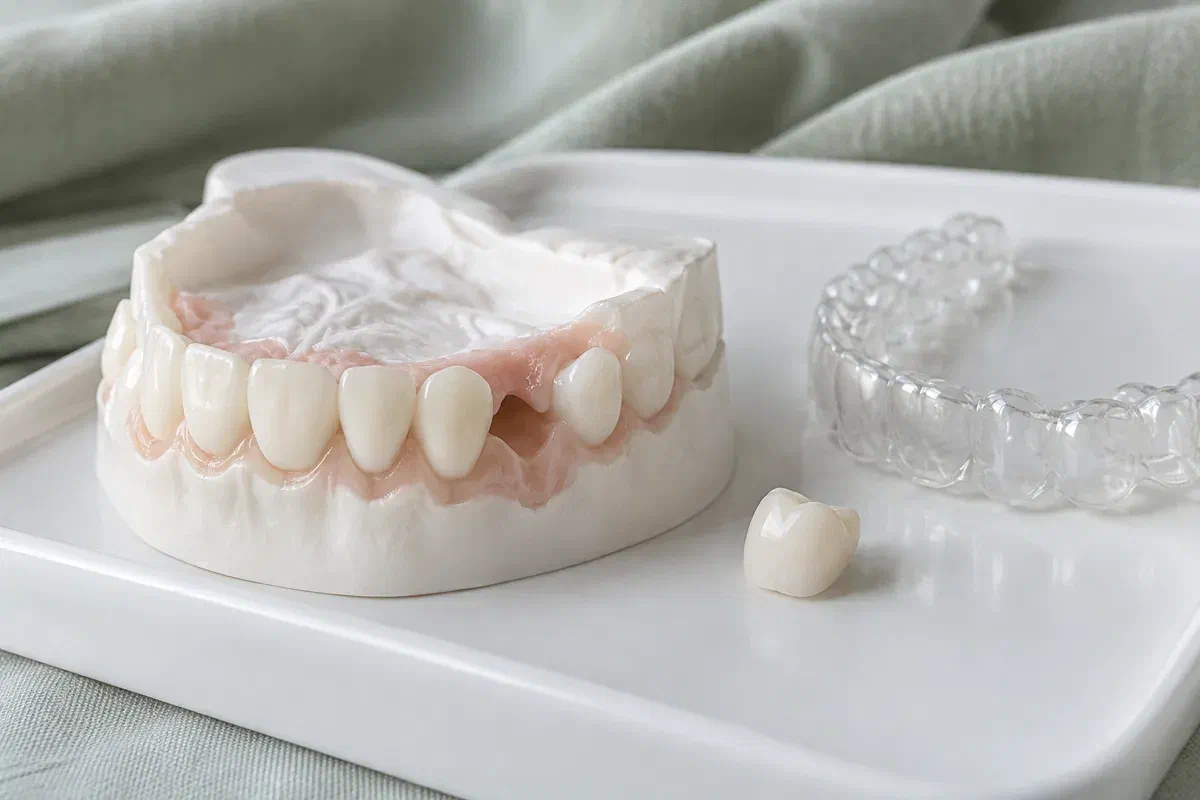
Illustrative tooth model, ceramic crown sample, and clear aligner on a consultation tray
Signs position could matter

A tooth’s neighbours can shape what a restoration is able to do.

Not every crooked tooth affects a restorative plan. The useful question is whether a different position would change the care you need, and an examination with records helps answer it.

A gap that has narrowed or shifted

After a tooth is lost, nearby teeth can drift or tip into the space. The opening you see in the mirror may not suit an implant crown or bridge as it stands. Roots and neighbouring teeth need a proper look, because the width of a gap alone never tells the whole story.

A crooked tooth that is due for a crown or bonding

Rotation, tilting or unusual wear can limit how a crown or bonded restoration is shaped. Reshaping a tooth and moving it are two different tools with different effects. Your dentist should explain whether using both would offer a real advantage for that particular tooth.

Several recommendations with no clear order

Perhaps you have heard about gum treatment, orthodontics and new restorations at different visits. It is fair to want to know which comes first and who keeps track of the whole picture. Each appointment works better when it accounts for what the other treatments still need.

Dental implants are fixed in bone and cannot be shifted the way natural teeth can. Mention any implants and every restoration you have planned before orthodontic options are worked out.

Why coordination helps

One plan, several stages, a single destination.

Alignment earns its place only when it supports the restoration. A good explanation will tell you whether movement would change the room available, how teeth relate to each other, or the design of the crown or bridge. If that link feels vague, request more detail before agreeing to an extra stage of care.

Moving teeth also adds work on your side. There are extra visits, responsibilities at home, possible risks, added costs and a period of retention afterwards. Weigh all of that against a suitable plan that leaves the teeth in place, then decide which one fits your priorities.

Patient information: British Dental Journal — principles of interdisciplinary orthodontic and restorative treatment

An agreed finishing point

Before anything starts, the clinicians involved should settle on where the teeth need to end up for the restoration to work. Straighter is not automatically the goal. You should also know what will be checked before the restorative appointment can be booked.

An honest comparison of options

Find out what restoring the tooth in its current position would involve. Each route carries its own benefits, limits and upkeep. A combined approach needs to be justified by what the examination found, not presented as the better choice by default.

Clear roles from start to finish

You should know who handles each stage, who checks progress and who to call if something goes wrong between visits. When orthodontic and restorative care happen at separate offices, find out how records and updates will pass between them.

How planning unfolds

Start with the restoration you want, then work backwards.

Combined care may involve more than one clinician and several reviews along the way. Learn what information is needed before you commit and which parts of the plan could still change.

  1. Talk through the tooth and what you hope for

    Share which tooth or space concerns you, any earlier advice, symptoms you have noticed and what matters most to you in the outcome. Bring past records or estimates if you have them. Mention schedule or budget limits so the full sequence can be discussed, not just step one.

  2. Examine teeth, gums and records

    The clinicians look at your current oral health and the tooth relationships that affect the planned work. Additional records may be taken to understand space, root positions or your bite. Any decay or gum disease may need attention before movement is considered.

  3. Settle on target positions and stages

    Go over the proposed movement, appliance choices, alternatives, limitations and risks. You should understand how the restoration will fit the finished arrangement. If a specialist is recommended, find out what question they are being asked and who will bring their advice into the plan.

  4. Check readiness before restorative work

    When movement ends, the result is compared with the agreed plan. Confirm how the teeth will be held in place while the restoration is made and fitted. Updated records or another planning talk may be needed before any irreversible preparation of a tooth begins.

The gap between stages

Hold the teeth steady while the next step is prepared.

The weeks between finishing movement and starting a restoration need their own instructions. Know what to wear, which visits to keep and what happens if the timeline shifts.

Keep wearing what was prescribed

Wear your retainer or appliance exactly as directed and report any cracks or changes in fit. Teeth that look finished can still shift if wear stops early. Check how positions will be protected while you wait for the restoration or another clinician’s review.

Share news about other dental work

A new filling, extraction or crown done elsewhere may change the plan or the fit of an appliance. Let everyone involved know about care booked at other offices. When an appointment is rescheduled, confirm whether the change affects another stage too.

Know how both results will be maintained

Retention may need adjusting once the final tooth shape is in place, so ask who will check it. Go over cleaning and follow-up for the new restoration alongside the orthodontic result. You should leave the final visit clear on how to look after both.

Weighing your options

Three possible routes, each with a reason behind it.

Your assessment might point to combined treatment, restoration on its own, or more investigation first. Ask what each would mean for the tooth and for your mouth as a whole.

When position affects the result

Moving teeth, then restoring

Coordinated movement may be suggested when repositioning teeth offers a clear benefit to the restoration. Ask about the target positions, how they will be confirmed and how retention connects the two stages. The final restoration should stay in view throughout.

When the current arrangement works

Restoring teeth where they are

Restoring a tooth without orthodontics is often a sensible option. Find out what preparation, appearance, function and upkeep would look like. Compare those details directly with the combined plan, rather than assuming an extra stage must be better.

When questions remain unanswered

Pausing for more information

A specialist opinion or other treatment, such as gum care, may need to come before any sequence is decided. Clarify what is still uncertain and what can safely wait. An elective combined plan can be considered at your own pace before you agree.

Common questions in Milton

What people ask before moving teeth for a restoration

These answers can help you see how each stage links to the next.

(905) 876-4488
Is pre-restorative alignment the same as getting braces to straighten my smile?
Not quite. The goal is to place selected teeth where a planned restoration can work well, which may differ from a purely cosmetic result. Some teeth may not move at all. Ask how the movement relates to the crown, bridge or implant you are considering.
Could clear aligners be used for this kind of movement?
Possibly, depending on the movement needed and your clinical findings. Fixed braces or another appliance may suit some situations better. Discuss the options, their limits and what each one would ask of you from day to day.
Will I need a temporary tooth while a gap is being adjusted?
It depends on where the space is and how the plan is arranged. Some people want a temporary replacement for appearance while a front gap is being managed. Ask whether one is possible with your appliance and how it would be looked after.
Does an implant plan always involve moving teeth first?
No. Assessment of the space, nearby teeth and roots decides whether movement would help, and many implant restorations go ahead without it. Ask what your own findings show and what the alternatives would involve for you.
Who sets the target for where my teeth should finish?
The dentists handling the orthodontic and restorative stages should agree on it together. Ask who leads that conversation and how readiness will be judged. A shared target keeps tooth positions and restoration design pointing the same way.
How are costs explained when treatment happens in stages?
Request that each stage, each provider and the estimate for each be set out, along with any charges that may come later. Records, orthodontic reviews, restorations and retainers all belong in that conversation. Some figures may depend on later findings.
Plan your Milton visit

Bring your restoration plan and we will talk about tooth position.

Book a conversation at our Bronte Street practice about whether alignment should come before restorative work. We can outline the assessment, coordination and any specialist input that would help you decide.

Whether teeth need moving, and in what order treatment happens, depends on an individual assessment. No specific appliance, specialist or result is assumed.

Visit Milton Dental Clinic
Unit 1, 342 Bronte St. S, Milton, ON L9T 5B7
Get directions Clinic hours
Monday–Thursday
11am–7pm
Friday–Sunday
By appointment only

Areas we serve

  • Milton
  • Oakville
  • Mississauga
  • Georgetown
  • Halton Hills
  • Acton
  • Campbellville
  • Brampton
  • Burlington
  • Puslinch
  • Rockwood
  • Erin
  • Caledon
  • Etobicoke
  • Old Milton
  • Bronte Meadows
  • Timberlea
  • Dorset Park
  • Dempsey
  • Clarke
  • Beaty
  • Coates
  • Harrison
  • Scott
  • Willmott
  • Ford
  • Bowes
  • Cobden
  • Walker
  • Mountain View
  • Milton Heights
  • Hawthorne Village
  • Valley View
  • Fallingbrook
  • Nassagaweya
  • Trafalgar
  • Esquesing
  • Nelson
  • Brookville
  • Moffat
  • Glen Williams
  • Norval
  • Limehouse
  • Stewarttown
  • Ashgrove
  • Hornby
  • Silver Creek
  • Speyside
  • Scotch Block
  • North Oakville
  • River Oaks
  • Glen Abbey
  • West Oak Trails
  • Palermo
  • Bronte Creek
  • College Park
  • Joshua Creek
  • Uptown Core
  • Preserve
  • Iroquois Ridge
  • Lisgar
  • Meadowvale
  • Meadowvale Village
  • Churchill Meadows
  • Erin Mills
  • Central Erin Mills
  • Streetsville
  • East Credit
  • Creditview
  • Heartland
  • Sheridan
  • Mount Pleasant
  • Credit Valley
  • Huttonville
  • Churchville
  • Springbrook
  • Northwest Brampton
  • Bram West
  • Fletcher's Meadow
  • Fletcher's Creek South
  • Alton Village
  • Orchard
  • Millcroft
  • Headon Forest
  • Tansley
  • Brant Hills
  • Tyandaga
  • Kilbride
  • Lowville
  • Aberfoyle
  • Morriston
  • Arkell
  • Hillsburgh
  • Freelton
  • Carlisle
  • Waterdown
  • Flamborough
  • Mountsberg

How can we help?

Milton Dental Clinic

Have a question about your smile? Choose the option that works best for you.

For urgent dental concerns, please call.
Messages are reviewed during clinic hours.