

Illustrative patient and clinician discussing a tooth model before restorative planning
Cosmetic Dentistry

Pre-Restorative Tooth Alignment in Mississauga

A molar that has leaned into an old gap, or a front tooth turned slightly out of line, can make a new crown or bridge harder to design. Visiting from Mississauga, you can explore with us whether uprighting or shifting that tooth would help, and how the stages would fit together.

The leaning tooth problem

Floss snagging on a tilted molar is often the first clue.

You notice food catching in the same spot, or floss shredding beside a back tooth that seems to lean. Then a dentist mentions that the tooth would need a bridge or crown, and possibly some straightening first. That second idea is what pre-restorative alignment covers: checking whether a small change in position would give the restoration a better setting.

Leaning or rotated teeth are common, and most of them are restored without being moved. Repositioning becomes relevant only when the angle, the space or the bite would otherwise limit a sound restoration. Any recommendation should spell out that limit, and should include what the restoration would look like if you left the tooth alone.

Coming from Mississauga, you may already have a regular dentist or an orthodontist involved. Bring their notes and any imaging. We can look at what has been assessed, what still needs checking and whether a specialist opinion would help. The restoration you are aiming for stays at the centre of that discussion.

Explore alignment for a tilted tooth
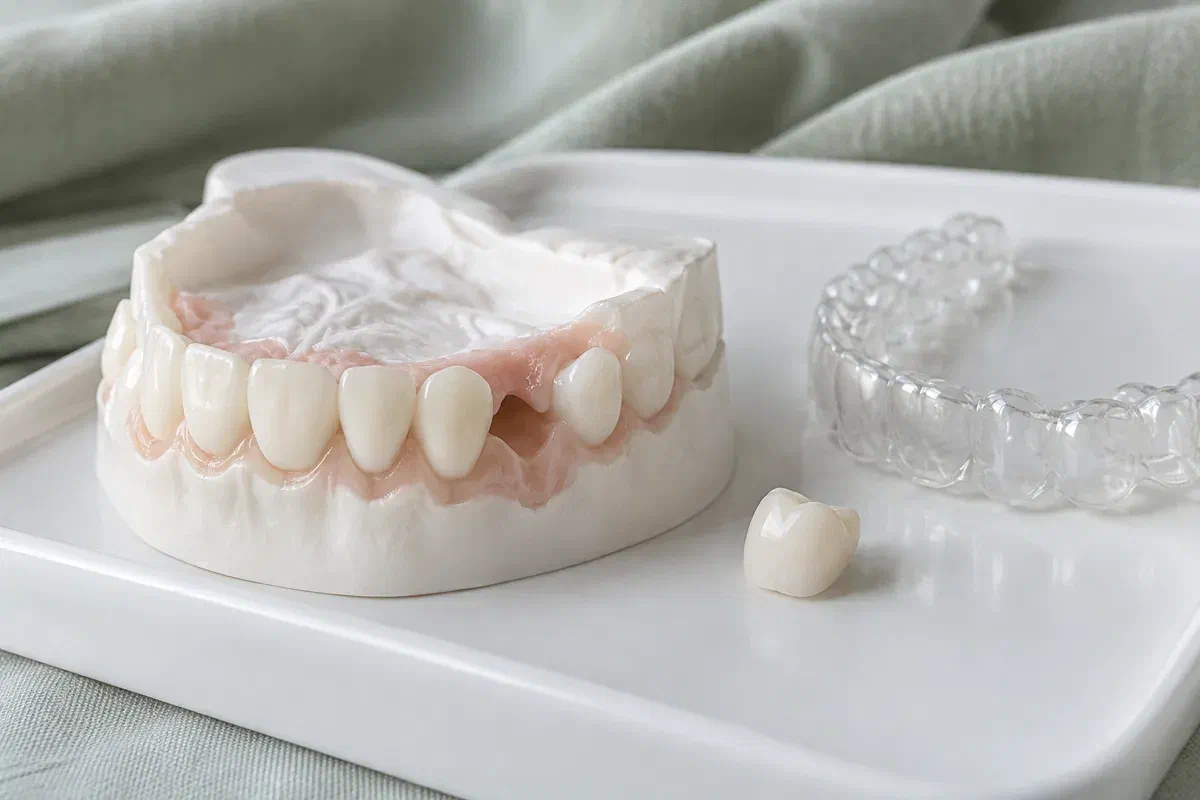
Illustrative tooth model, ceramic crown sample, and clear aligner on a consultation tray
How position gets in the way

Angle, space and bite each tell part of the story.

What matters is whether moving a tooth would change the restorative care you need. A careful examination and suitable records help clinicians decide.

A gap the neighbours have leaned into

When a tooth is lost, the one behind it often tips forward. That can leave a space that is narrow near the gum and uneven along its length. Before a bridge or implant crown is designed, the surrounding roots and teeth need assessment beyond what a quick look can show.

A rotated or tipped tooth that needs a crown or bonding

A tooth turned on its axis or tipped sideways can be awkward to restore evenly. Moving the tooth and reshaping its surface accomplish different things. Your clinician should tell you whether doing both would provide a reasoned advantage over one alone.

Treatments recommended in isolation

A gum treatment here, an orthodontic consultation there and a crown estimate somewhere else can leave the order unclear. Find out how the steps relate and who is keeping them aligned. Each appointment should take the others into account.

Implants do not respond to orthodontic forces, because they are anchored directly in bone. Tell the team about any implants and all planned restorations before movement is proposed.

Why the planning matters

A clear purpose for every appointment

Movement makes sense when it improves the restorative result. The explanation you receive should describe whether repositioning would change space, tooth angle, bite contact or the design of the crown or bridge. If the benefit is described only in general terms, ask for something more concrete.

Orthodontics is a commitment in its own right. Expect added visits, daily care of an appliance, possible risks, extra fees and a stage of retention afterwards. Compare all of that with a suitable restorative plan that leaves teeth where they are, then choose what aligns with your goals.

Patient information: British Dental Journal — principles of interdisciplinary orthodontic and restorative treatment

A common endpoint for movement and design

The clinicians should agree, before anything begins, on where the tooth needs to finish for the restoration to work. That target relates to function and design, not to a generally straighter appearance. Confirm what will be checked before restoration goes ahead.

A realistic picture of the alternatives

Learn how the tooth would be restored if it stayed where it is, with the benefits, limits and maintenance of that route. A plan that includes movement should be supported by the findings, and not offered as superior by default.

Defined roles across offices

Know who delivers each stage, who reviews progress and whom to call between visits. When an orthodontist and a restorative dentist practise in different locations, ask how they will exchange records and keep each other informed.

What the planning involves

Decide on the crown or bridge, then plan the movement around it.

Combined treatment may involve several clinicians and checkpoints. Ask what information is needed before you commit and which decisions could still change.

  1. Share the concern and your priorities

    Describe the tooth or space, previous recommendations, symptoms and what you most want from the result. Bring records or estimates you have been given. Mention any limits on time or cost so the sequence can be discussed as a whole.

  2. Assess teeth, gums and imaging

    Your current oral health and the relationships relevant to the restoration are examined. Further records may help clarify space, root angles or the bite. Decay or gum disease may need treatment before any movement is planned.

  3. Plan the movement and the restoration together

    Review the proposed movement, appliance options, alternatives, limitations and risks. Understand how the restoration will fit the final position. If specialist input is suggested, find out what it should answer and who will integrate it into the plan.

  4. Check the result before restoring

    At the end of movement, the tooth position is compared with the agreed target. Ask how it will be held while the restoration is made and fitted. New records or a further planning talk may be needed before irreversible work starts.

After movement, before the crown

Keep the tooth where it was guided to.

The interval between stages calls for specific instructions. Know what appliance to wear, which appointments to keep and how changes to the timeline will be handled.

Wear retention as directed

Use the retainer or appliance on the schedule you were given and report any damage or change in fit. A tooth that looks upright can drift back if retention lapses. Ask how its position will be maintained until the restoration or another clinician’s review.

Update everyone about other procedures

Fillings, extractions or crowns planned elsewhere may change the sequence or affect an appliance. Keep all your clinicians informed. If an appointment is moved, ask whether that shifts the timing of another stage.

Plan maintenance for the finished work

Retention may need adapting to the shape of the new restoration, so ask who will check it. Go over cleaning and follow-up for both the restoration and the aligned tooth. You should leave the last appointment clear on ongoing care.

Routes to compare

Upright it, restore it as it is, or look further?

The assessment may support combined care, a restoration alone or further review. Find out what each choice would mean for the tooth and for your overall oral health.

When its angle limits the restoration

Move the tooth before restoring it

Repositioning may be considered when it offers a meaningful benefit for the planned crown or bridge. Ask what endpoint is needed, how it will be confirmed and how retention will bridge the gap between stages. The restoration should guide every decision.

When the current angle can be managed

Restore the tooth in its present position

Restoring without orthodontic movement is often reasonable. Learn what preparation, appearance, function and upkeep this would involve. Weigh it directly against the combined route instead of assuming an extra stage must be worthwhile.

When the situation is more complex

Ask for more assessment

Specialist advice or other treatment may be needed before a sequence is agreed. Clarify which questions are open and what can safely wait. An elective combined plan can be considered over time before you commit.

Mississauga questions

Practical answers about moving a tooth before restoring it

These questions can help make each stage, and the link between them, easier to understand.

(905) 876-4488
Can a single tilted molar be uprighted without braces on every tooth?
Sometimes a limited appliance can address one area, but the right approach depends on your bite and the movement needed. Ask the clinicians which teeth would be involved and why, and what a limited approach could and could not achieve.
Will moving a tooth make it easier to keep clean afterwards?
It may help in some cases, but this should not be assumed. Cleaning access depends on the final position, the restoration and your home routine. Ask how the planned result is expected to affect flossing and maintenance around the tooth.
Is some soreness normal when teeth are being moved?
Mild tenderness is common for a short time after an appliance is fitted or adjusted. Ask what to expect with the appliance proposed and how to manage it. Contact the clinic about pain that is severe, persistent or accompanied by swelling.
How will my orthodontist and restorative dentist stay in contact?
Ask both offices how they plan to share records, images and progress notes. It helps to know who is responsible for confirming the endpoint and who you should call with questions between appointments.
Does moving a tooth before a crown mean less of it is drilled away?
Not necessarily. Your dentist can describe the preparation likely with and without movement, but the answer depends on the tooth’s condition, position and the restorative goal. Treat any guaranteed saving with caution.
Who pays attention to the plan if the crown is delayed for months?
Ask at the outset who monitors retention during any delay and how often reviews should happen. Keep wearing the prescribed appliance and do not substitute an older retainer without advice.
Arranging care from Mississauga

Show us the tooth, and the plan you have been given.

Arrange a discussion at our Bronte Street practice about whether moving a tooth should come before your crown, bridge or implant. We can explain the assessment and coordination needed, and when specialist input may help.

Whether a tooth should be moved, and when, depends on individual assessment. No specific appliance, specialist service or result is assumed.

Visit Milton Dental Clinic
Unit 1, 342 Bronte St. S, Milton, ON L9T 5B7
Get directions Clinic hours
Monday–Thursday
11am–7pm
Friday–Sunday
By appointment only

Areas we serve

  • Milton
  • Oakville
  • Mississauga
  • Georgetown
  • Halton Hills
  • Acton
  • Campbellville
  • Brampton
  • Burlington
  • Puslinch
  • Rockwood
  • Erin
  • Caledon
  • Etobicoke
  • Old Milton
  • Bronte Meadows
  • Timberlea
  • Dorset Park
  • Dempsey
  • Clarke
  • Beaty
  • Coates
  • Harrison
  • Scott
  • Willmott
  • Ford
  • Bowes
  • Cobden
  • Walker
  • Mountain View
  • Milton Heights
  • Hawthorne Village
  • Valley View
  • Fallingbrook
  • Nassagaweya
  • Trafalgar
  • Esquesing
  • Nelson
  • Brookville
  • Moffat
  • Glen Williams
  • Norval
  • Limehouse
  • Stewarttown
  • Ashgrove
  • Hornby
  • Silver Creek
  • Speyside
  • Scotch Block
  • North Oakville
  • River Oaks
  • Glen Abbey
  • West Oak Trails
  • Palermo
  • Bronte Creek
  • College Park
  • Joshua Creek
  • Uptown Core
  • Preserve
  • Iroquois Ridge
  • Lisgar
  • Meadowvale
  • Meadowvale Village
  • Churchill Meadows
  • Erin Mills
  • Central Erin Mills
  • Streetsville
  • East Credit
  • Creditview
  • Heartland
  • Sheridan
  • Mount Pleasant
  • Credit Valley
  • Huttonville
  • Churchville
  • Springbrook
  • Northwest Brampton
  • Bram West
  • Fletcher's Meadow
  • Fletcher's Creek South
  • Alton Village
  • Orchard
  • Millcroft
  • Headon Forest
  • Tansley
  • Brant Hills
  • Tyandaga
  • Kilbride
  • Lowville
  • Aberfoyle
  • Morriston
  • Arkell
  • Hillsburgh
  • Freelton
  • Carlisle
  • Waterdown
  • Flamborough
  • Mountsberg

How can we help?

Milton Dental Clinic

Have a question about your smile? Choose the option that works best for you.

For urgent dental concerns, please call.
Messages are reviewed during clinic hours.