

Illustrative patient discussing surface staining with a dental hygiene clinician
Cosmetic Dentistry

Professional Stain Removal in Caledon

Stain removal, whitening or a check of a particular tooth: picking the wrong one first can mean extra trips and an outcome that misses the point. For anyone coming from Bolton or elsewhere in Caledon, a professional stain-removal visit helps you choose, starting with what the colour actually is.

Deciding from Caledon

Three possible fixes. Which one comes first?

People rarely book a visit with the words “professional stain removal” in mind. More often they say their teeth look yellow, dull or uneven and ask what can be done. A cleaning is often the sensible opening move, because it clears suitable external stain and shows what is left. It does not bleach the natural shade and does not treat anything inside a tooth.

That first step also narrows the choices. Once surface film from coffee, tea or tobacco is gone, any remaining colour can be read more clearly: a natural shade, an older filling, early decay, or a single tooth that has darkened from within. Each points toward a different next step.

Tell us what you would like to change and how much it matters to you, and mention any sensitivity. We can explain what a cleaning is likely to achieve, what the options after it might be, and whether the dentist should examine a tooth before anything cosmetic. You decide with the facts in front of you.

Talk through your options
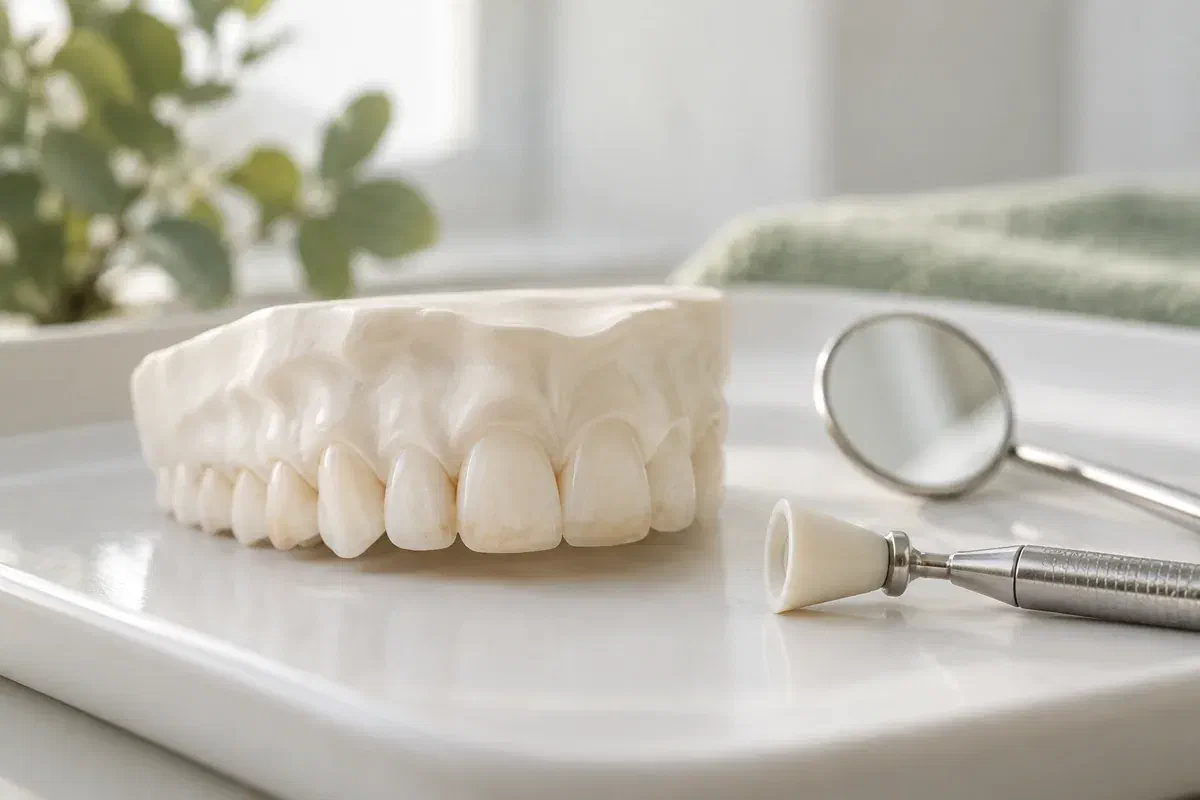
Illustrative teaching model with subtle surface marks beside dental cleaning instruments
Reading the clues

Spread, location and history point the way.

Note whether the colour covers many teeth, one, or areas around restorations and the gums. Any recent changes in habits, products, medicines or comfort help narrow things down.

Widespread surface marks

A pattern across several teeth often fits staining from drinks, food or tobacco. Mention your habits without hesitation. The clinician can say whether a cleaning is likely to help and how much colour it may lift, then suggest ways to slow its return.

Colour gathered at dental work or the gums

Marks at a filling, crown or gum margin may be stain or something that changes the plan, such as a gap or decay. Describe any roughness, sensitivity or food trapping. The dentist may need to see the area before cleaning is chosen.

One tooth on its own

A single darker tooth suggests a different story. Mention old knocks, root canal treatment or recent change. Internal colour will not respond to cleaning, which makes an examination the logical first choice.

If a prescribed rinse or medicine might be involved, mention it. Stopping a prescription without advice is not recommended; ask the prescriber or dental team how to handle the staining alongside the treatment.

Why cleaning often comes first

Clear the surface, then see what is left.

For reachable external stain, a suitable cleaning can improve how teeth look in a single visit. It does not change the shade beneath, and some marks may remain. Knowing in advance which parts should respond helps you judge whether a further option is worth pursuing.

Starting here also brings health questions to the surface. Clean-looking teeth can still have gum inflammation or decay that needs care, and it makes sense to know about those first. If the clinician spots something, ask whether the dentist should see it, or whether a fuller hygiene appointment is worth booking, before you make any cosmetic decision.

Patient information: American Dental Association — external and internal tooth discolouration

A better basis for any further choice

Learning whether colour is external, internal or linked to a restoration makes the decision about whitening or other work far clearer. The team can point out anything needing a second look. Bleaching or replacement should never be automatic.

A gentle approach suited to your mouth

Mention tender teeth, gum recession, implants, crowns or bonding. These guide which instruments and polishing materials suit you. The aim is appropriate care, not the harshest polish.

Guidance that may make further treatment unnecessary

Discuss which habits feed the staining and which changes you are likely to keep over months, not days. Ask for help with brushing along the gums and cleaning between teeth, since those are where stain often returns first. Sometimes a cleaning plus better habits is all that is needed.

The visit, in four parts

Listen. Look. Clean. Decide.

Depending on your concern, stain removal may happen at a hygiene appointment or after an examination. Ask when booking what your visit will include.

  1. Explain your goal

    Describe what you would like to change and how long it has bothered you. Mention sensitivity, rinses, toothpaste, tobacco, recent dental work and any whitening or abrasive products already tried.

  2. Assess the colour and its source

    The clinician checks the teeth, restorations and gums involved. You can ask how much of the colour looks cleanable and what needs a closer look. Tartar, gum changes or possible decay can alter the plan.

  3. Clean the surfaces that will respond

    Instruments and polishing materials are chosen for your surfaces and findings. Say if anything is uncomfortable or you would like a pause. The clinician picks any specific technique, including air polishing, only after assessment.

  4. Weigh up the next step together

    Review which stains came off and what colour remains. Ask whether the rest is natural shade, internal colour or a separate finding. Decide whether to stop there, discuss whitening, or arrange an examination.

After you decide

Whatever comes next, keep the basics steady.

Follow any instructions from your visit. A good routine and attention to staining habits support any later choice better than abrasive products.

Keep up the recommended routine

Brush with fluoride toothpaste and clean between your teeth as shown. Ask for a demonstration if a spot is tricky. Avoid scraping or heavy scrubbing on any remaining mark.

Adjust staining habits where you can

Ask which changes would help most and which you can realistically keep, whether that is a glass of water after coffee or fewer cups of tea late in the day. If you smoke and want to cut down, ask where to find help. Some staining will return gradually, which is normal.

Follow up on colour or symptoms that persist

If a tooth stays darker or sensitivity continues, ask for an assessment rather than more polishing. Mention pain, roughness or a filling that feels different. Next steps should follow the finding.

Patient information: NHS — everyday tooth and interdental cleaning

The three options side by side

What each one is for

Ask what type of colour change you have and what each option can realistically do. Some concerns need more information before choosing.

Usually the first step for outer stain

Professional cleaning or polishing

Surface care can clear external marks and show your natural colour. Ask about its limits and whether broader hygiene care is needed. The result should be compared with your own shade, not a whitening target.

If the natural shade still bothers you

Teeth whitening

After a cleaning, ask whether bleaching suits you if you would like teeth lighter. Fillings, crowns, sensitivity and the cause of colour are all part of that conversation. Whitening and stain removal are distinct.

If the mark has another cause

Dental examination

Sometimes the first visit should not be a cosmetic one at all. One tooth turning grey, a filling margin that has shifted in colour, or a mark that comes with tenderness calls for investigation by the dentist. Once the cause is known, the options can range from simply monitoring it to repairing the tooth. Appearance alone does not determine the procedure.

Patient information: Canadian Dental Association — surface whiteners and bleaching

Caledon questions

Making the right choice about tooth colour

Answers that may help you decide where to begin with a colour concern.

(905) 876-4488
Should I start with a cleaning or go straight to whitening?
A cleaning often comes first, because removing surface stain shows your real shade and may be all you need. Whether whitening is suitable can then be discussed with clearer information.
How will I know whether my discolouration is on the surface or inside the tooth?
The clinician can usually tell from the pattern, your history and an examination. Widespread marks are often external; a single darker tooth more often has an internal cause.
Can stain removal and a check-up be booked together?
Often they can. Ask when you call whether your hygiene visit can include the stain concern, or whether an examination should be scheduled at the same time.
Is there any downside to having my teeth professionally cleaned for stains?
Some people notice brief sensitivity afterward, and some marks may not come off at all. Restorations and exposed roots also need suitable handling. Mention any concerns beforehand so the clinician can adapt the approach to your mouth.
What if I decide I'm happy after the cleaning?
That is a perfectly good outcome. The team can suggest home care to slow new staining and a sensible interval for hygiene visits.
Can I plan the whole process from Caledon in as few trips as possible?
Mention that when you call. The team can suggest how to group a cleaning, an examination and any follow-up so travel is kept to what is needed.
Visiting from Caledon

Start with the question, not the treatment.

Ring our Bronte Street practice and tell us what you would like to change about your teeth. We can suggest whether a hygiene visit, an examination or both is the best place to begin.

Each outcome hinges on where the colour comes from and which surfaces are involved. We won't promise a shade, a method or a device before seeing your teeth.

Visit Milton Dental Clinic
Unit 1, 342 Bronte St. S, Milton, ON L9T 5B7
Get directions Clinic hours
Monday–Thursday
11am–7pm
Friday–Sunday
By appointment only

Areas we serve

  • Milton
  • Oakville
  • Mississauga
  • Georgetown
  • Halton Hills
  • Acton
  • Campbellville
  • Brampton
  • Burlington
  • Puslinch
  • Rockwood
  • Erin
  • Caledon
  • Etobicoke
  • Old Milton
  • Bronte Meadows
  • Timberlea
  • Dorset Park
  • Dempsey
  • Clarke
  • Beaty
  • Coates
  • Harrison
  • Scott
  • Willmott
  • Ford
  • Bowes
  • Cobden
  • Walker
  • Mountain View
  • Milton Heights
  • Hawthorne Village
  • Valley View
  • Fallingbrook
  • Nassagaweya
  • Trafalgar
  • Esquesing
  • Nelson
  • Brookville
  • Moffat
  • Glen Williams
  • Norval
  • Limehouse
  • Stewarttown
  • Ashgrove
  • Hornby
  • Silver Creek
  • Speyside
  • Scotch Block
  • North Oakville
  • River Oaks
  • Glen Abbey
  • West Oak Trails
  • Palermo
  • Bronte Creek
  • College Park
  • Joshua Creek
  • Uptown Core
  • Preserve
  • Iroquois Ridge
  • Lisgar
  • Meadowvale
  • Meadowvale Village
  • Churchill Meadows
  • Erin Mills
  • Central Erin Mills
  • Streetsville
  • East Credit
  • Creditview
  • Heartland
  • Sheridan
  • Mount Pleasant
  • Credit Valley
  • Huttonville
  • Churchville
  • Springbrook
  • Northwest Brampton
  • Bram West
  • Fletcher's Meadow
  • Fletcher's Creek South
  • Alton Village
  • Orchard
  • Millcroft
  • Headon Forest
  • Tansley
  • Brant Hills
  • Tyandaga
  • Kilbride
  • Lowville
  • Aberfoyle
  • Morriston
  • Arkell
  • Hillsburgh
  • Freelton
  • Carlisle
  • Waterdown
  • Flamborough
  • Mountsberg

How can we help?

Milton Dental Clinic

Have a question about your smile? Choose the option that works best for you.

For urgent dental concerns, please call.
Messages are reviewed during clinic hours.