

Illustrative patient discussing surface staining with a dental hygiene clinician
Cosmetic Dentistry

Professional Stain Removal in Erin

A professional cleaning can lift surface stain in one appointment, but what keeps teeth looking fresh is the routine at home afterward. For people coming from Erin or Hillsburgh, a stain-removal visit pairs a suitable cleaning with practical habits that make the result last longer between trips.

Erin stain removal

The cleaning takes an hour. The routine lasts all year.

Plenty of people leave a cleaning pleased and then watch the same brown film creep back by spring. Stain that sits on the outer surface can usually be cleaned by a hygiene clinician, and that is what professional stain removal does. It is not bleaching, and it does not address a problem inside a tooth. What happens next, at home, decides how long the result holds.

Before planning a routine, it is worth confirming that the marks are stain at all. A shadow at a filling, a dark pit that could be decay, a tooth that has always been a deeper shade, or one tooth darkening from within will not respond to better brushing.

During the appointment, mention the habits you suspect, the products you use and any sensitivity. We can explain what the cleaning is likely to lift, show you where stain tends to build in your mouth, and suggest realistic changes. If anything needs the dentist's attention, we will say so.

Ask about lasting results
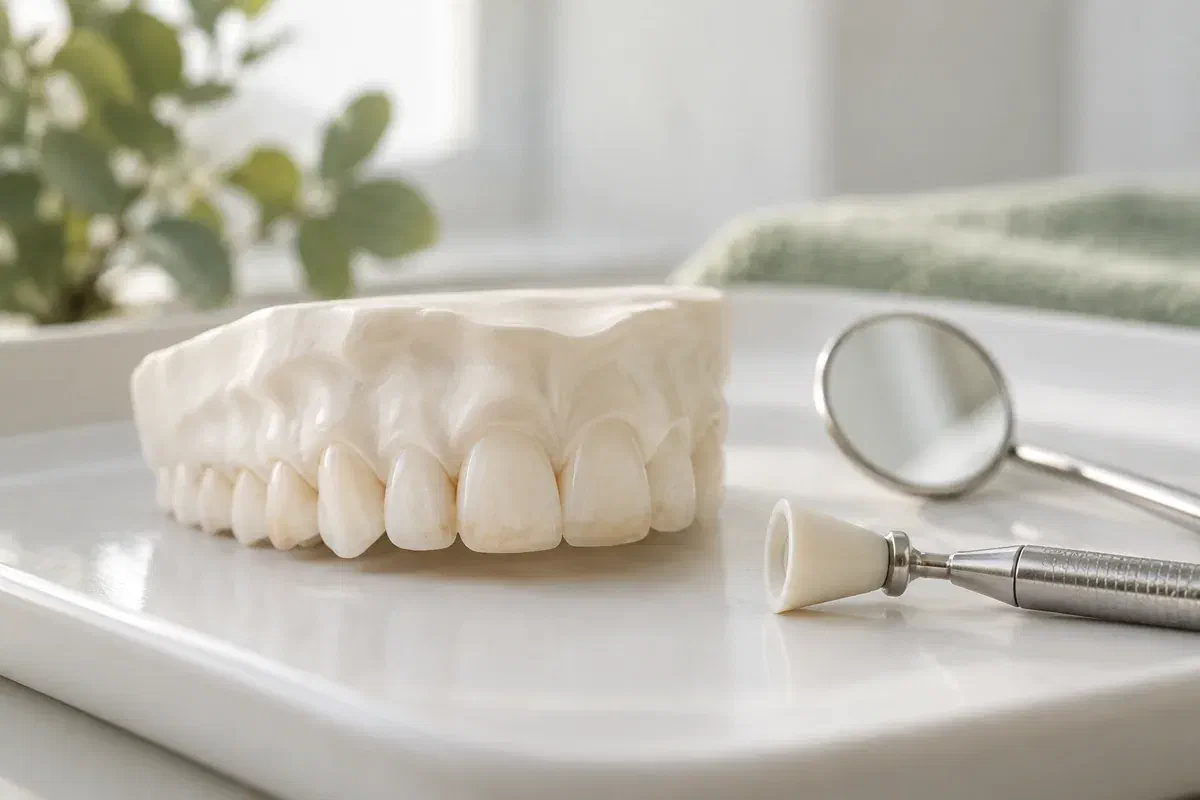
Illustrative teaching model with subtle surface marks beside dental cleaning instruments
Why stain comes back

Habits, hiding spots and a few other causes

Mention whether staining returns across many teeth, on one, or around fillings and gums. Changes to diet, products, medicines or comfort are helpful to share.

Daily drinks, food and tobacco

Morning coffee, steeped tea, red wine, berries and tobacco can all rebuild surface stain. Be open about them; it helps the clinician tailor advice. They can confirm the pattern looks external and suggest which change might help most.

Areas the brush keeps missing

Stain often returns along the gumline, between teeth and around fillings or crowns. Point out spots that feel rough, collect food or are sensitive. Some are simply hard to reach; others, such as a worn filling edge, need the dentist.

A tooth that darkens no matter what

When one tooth stays darker however well you look after it, think back to any knock it took or a root canal it had, and tell the team. Colour that starts inside a tooth is not a routine problem and will not clean away. An examination is the better next step.

Staining linked to a prescribed rinse or medicine can be discussed at the visit. Do not stop the product without guidance; ask the prescriber or dental team how to keep the treatment going while managing the marks.

What the visit can give you

A fresh start, and a plan to keep it

Where external stain is the concern, a suitable cleaning can freshen the surfaces noticeably. Your natural shade stays the same, and a few marks may remain. Ask which parts of your concern should respond so you know what the routine is protecting.

Because stain collects where plaque does, the visit can also highlight gum and tooth health. A clean appearance does not on its own show that gums are healthy or that decay is absent. Ask whether an examination or more hygiene care would help.

Patient information: American Dental Association — external and internal tooth discolouration

A map of where stain builds up

Seeing exactly where marks gather makes home care more effective. The team can also point out whether colour is surface stain, internal or related to a restoration, and flag anything needing another look.

A cleaning suited to your teeth

Tell the clinician about sensitivity, gum recession, implants, crowns or bonding. These guide the instruments and polishing materials chosen. Appropriate care protects enamel and gums better than an aggressive polish.

Simple habits you can actually keep

Discuss small swaps, rinsing with water, the timing of drinks, and your brushing and between-teeth technique. Ask the team to watch how you brush for a minute and suggest one or two adjustments, rather than a long list you will forget. Steady, gentle habits look after gums as well as appearance.

How the appointment goes

Clean, then coach

Most of the time the cleaning sits inside a regular hygiene appointment, though sometimes the dentist examines you first. When you call, ask what the visit will include and mention that you would like some time for home-care coaching at the end.

  1. Talk about habits and history

    Point to the stains that bother you and how quickly they return. Mention sensitivity, products, tobacco, recent dental work and any whitening or abrasive pastes you have used.

  2. Find the stain and anything else

    Teeth, fillings and gums are checked together, because stain, tartar and early gum problems often share the same spots. You are welcome to ask which marks should lift and which ones the dentist ought to see. Signs of decay or inflamed gums can change what the visit includes.

  3. Clean the surfaces

    Tools and polishing products are matched to your surfaces and findings. Tell the clinician if anything is uncomfortable or you want a pause. Techniques such as air polishing are chosen only after assessment.

  4. Learn the routine that fits you

    Review which stains lifted and what colour remains. Ask whether the rest is natural, internal or something else. Get a quick demonstration of brushing and between-teeth cleaning for the areas that stain most.

Your routine at home

Gentle and consistent beats hard and occasional.

Follow any specific advice from your visit. A few dependable habits will do more to slow new staining than any abrasive product.

Brush twice a day, lightly but thoroughly

Use a fluoride toothpaste and angle the bristles toward the gumline, then clean between teeth with floss or interdental brushes. Light pressure is enough. Scraping or scrubbing at a mark only risks damage.

Small changes around staining drinks

Ask whether rinsing with water after coffee or tea, or using a straw for iced drinks, could help. If you smoke, ask about support with cutting down. Some new stain will form over time, and that is normal.

Check in if something changes

If a tooth darkens, sensitivity develops, or a filling feels different, arrange an assessment rather than another polish. Describe any pain or roughness. The next step should follow what is found.

Patient information: NHS — everyday tooth and interdental cleaning

Other routes to consider

When the routine is not the whole answer

Ask whether your concern is surface stain, natural shade or something else, and what each option can reasonably do. Some concerns need more information first.

For outer stain that keeps returning

Regular professional cleaning

Periodic cleaning can address external marks that home care cannot fully prevent. Ask about a sensible interval based on your findings, not just appearance. Compare results with your natural colour.

When clean teeth still look darker than you'd like

Whitening, if your shade is the issue

If your natural shade bothers you after stain is removed, ask whether bleaching is suitable. Fillings, crowns and sensitivity are part of that discussion. It is a separate treatment with its own planning.

When a mark won't behave like stain

An examination for a tooth or filling

Better brushing will never fix a single tooth that is darkening from within, a filling edge that keeps changing, or a mark that comes with an ache. Those call for the dentist to take a proper look. Afterward, you can talk through whether to monitor it, repair it or consider something else. Appearance alone is not enough to decide.

Patient information: Canadian Dental Association — surface whiteners and bleaching

Erin questions

Keeping teeth fresh between visits

Answers that may help you make a stain-removal appointment last longer.

(905) 876-4488
Does an electric toothbrush help prevent stains?
Some people find an electric brush makes thorough cleaning easier, but technique matters most. Ask the team whether one would suit you and how to use it gently.
Should I brush right after drinking coffee?
Rinsing with water afterward is a simple step. Ask the team about timing, especially if you have enamel wear or sensitivity, since advice can vary from person to person.
Do straws really reduce staining from drinks?
A straw may reduce contact between some drinks and your front teeth, particularly iced coffee or tea. It is one small option among several, and good daily cleaning still matters more than any single trick.
Why do stains come back faster between my bottom front teeth?
That area often collects plaque and tartar, which can pick up stain. Ask the clinician to show you how to clean there, and whether tartar is part of the picture.
How can I tell if a new mark is stain or something else?
Stain usually builds gradually across surfaces. A spot that appears suddenly, feels rough, or comes with sensitivity should be checked. When in doubt, ask the team.
Coming from Erin, how often is it worth having a cleaning for stains?
That depends on your gum health, habits and how quickly stain returns. Ask the team for an interval based on your findings, and mention that you would like to keep trips well planned.
Booking from Erin

Leave with clean teeth and a routine that works.

Phone our Bronte Street practice to describe your staining and the habits you think play a part. We can explain what a hygiene visit can lift, what home care might help, and whether the dentist should examine anything first.

How long results last depends on your habits, surfaces and the cause of discolouration. We do not promise a particular shade or method.

Visit Milton Dental Clinic
Unit 1, 342 Bronte St. S, Milton, ON L9T 5B7
Get directions Clinic hours
Monday–Thursday
11am–7pm
Friday–Sunday
By appointment only

Areas we serve

  • Milton
  • Oakville
  • Mississauga
  • Georgetown
  • Halton Hills
  • Acton
  • Campbellville
  • Brampton
  • Burlington
  • Puslinch
  • Rockwood
  • Erin
  • Caledon
  • Etobicoke
  • Old Milton
  • Bronte Meadows
  • Timberlea
  • Dorset Park
  • Dempsey
  • Clarke
  • Beaty
  • Coates
  • Harrison
  • Scott
  • Willmott
  • Ford
  • Bowes
  • Cobden
  • Walker
  • Mountain View
  • Milton Heights
  • Hawthorne Village
  • Valley View
  • Fallingbrook
  • Nassagaweya
  • Trafalgar
  • Esquesing
  • Nelson
  • Brookville
  • Moffat
  • Glen Williams
  • Norval
  • Limehouse
  • Stewarttown
  • Ashgrove
  • Hornby
  • Silver Creek
  • Speyside
  • Scotch Block
  • North Oakville
  • River Oaks
  • Glen Abbey
  • West Oak Trails
  • Palermo
  • Bronte Creek
  • College Park
  • Joshua Creek
  • Uptown Core
  • Preserve
  • Iroquois Ridge
  • Lisgar
  • Meadowvale
  • Meadowvale Village
  • Churchill Meadows
  • Erin Mills
  • Central Erin Mills
  • Streetsville
  • East Credit
  • Creditview
  • Heartland
  • Sheridan
  • Mount Pleasant
  • Credit Valley
  • Huttonville
  • Churchville
  • Springbrook
  • Northwest Brampton
  • Bram West
  • Fletcher's Meadow
  • Fletcher's Creek South
  • Alton Village
  • Orchard
  • Millcroft
  • Headon Forest
  • Tansley
  • Brant Hills
  • Tyandaga
  • Kilbride
  • Lowville
  • Aberfoyle
  • Morriston
  • Arkell
  • Hillsburgh
  • Freelton
  • Carlisle
  • Waterdown
  • Flamborough
  • Mountsberg

How can we help?

Milton Dental Clinic

Have a question about your smile? Choose the option that works best for you.

For urgent dental concerns, please call.
Messages are reviewed during clinic hours.