Sensitive or sore teeth
Cold sensitivity, an ache, exposed roots or a tooth that feels unusual should be checked first. A dental issue may need treatment before whitening. Ask how a home routine would manage sensitivity if it appears.


Much of a supervised whitening course can happen in your own bathroom, so the routine has to be clear before you leave. For people in Erin and Hillsburgh, an assessment covers suitability first, then the home steps and what to do when questions come up.
With take-home whitening, most of the work happens between appointments: loading trays, wearing them for the agreed time, cleaning and storing everything properly. Professional whitening, in this sense, is a bleaching approach a dentist prescribes and oversees to lighten natural teeth. Polishing away surface stain is a separate step.
A good routine only helps if whitening suits you in the first place. Starting shade, sensitivity and dental work all count, and crowns, fillings and veneers do not change colour. People also respond differently, even when they follow the same routine.
If you are coming from Erin, tell us about your day so the routine can fit around it, and bring any products you have tried. We will explain the assessment, whether take-home or in-office methods are offered, their limits, and the instructions and side effects involved.
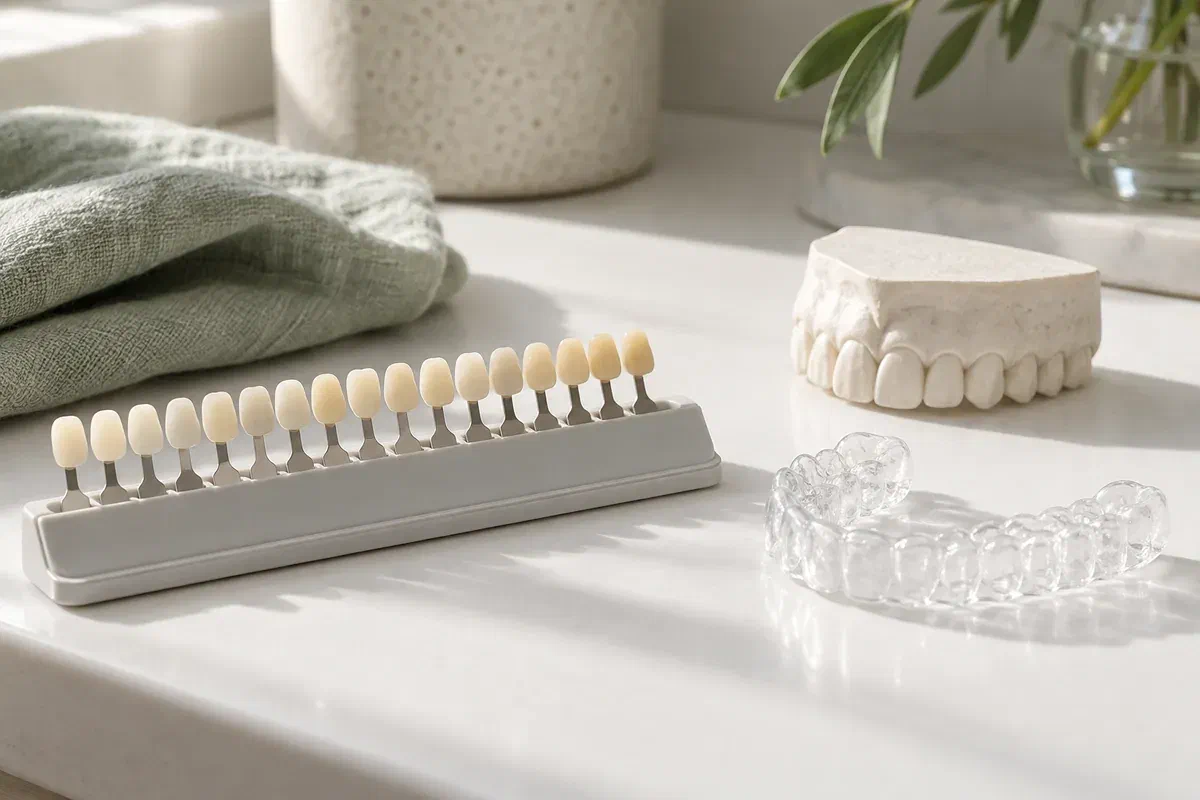
Describe what you want to change and anything about comfort, dental work or past whitening. Those details decide whether a home course makes sense, and whether anything else needs attention before trays are even discussed.
Cold sensitivity, an ache, exposed roots or a tooth that feels unusual should be checked first. A dental issue may need treatment before whitening. Ask how a home routine would manage sensitivity if it appears.
Crowns, veneers and fillings stay their own colour. Ask how they compare with your teeth and whether whitening could make a difference stand out. Changing them is a separate decision, not part of the routine.
Share the result you want and any date involved. Ask what is realistic for your starting colour and how consistently you would need to follow the routine. Exact shades and fixed completion dates cannot honestly be promised.
A single tooth that darkened after a knock or root canal treatment may need its own assessment. Mention it before starting trays meant for the whole smile.
The value of a dentist-supervised home course lies in the preparation. Your discolouration is assessed, your teeth and gums are checked for suitability, and you learn what the product can realistically change before the first night of wear.
You also have a number to call. If sensitivity, gum irritation or uneven colour appears partway through, ask what to do. The response should depend on your product and findings rather than an improvised change in gel amount or wear time.
Your starting colour is noted, and you agree on a change worth aiming for. Ask when the result will be reviewed. Natural differences between teeth may remain even after a noticeable improvement.
Ask to practise loading and seating your trays before leaving. Confirm how long to wear them, how to clean and store them, and when to return. Instructions from a past kit are no substitute.
If bonding or a new crown might follow, discuss the order before you begin. Ask when the shade for that work should be chosen and whether whitening could change your plans. Deciding the sequence early keeps a home course from clashing with later dental work.
The steps depend on the method offered and your exam findings. Ask what each visit covers, the costs involved and what is included before starting.
Explain what you want to change, past whitening and any reactions. Health conditions, medicines and dental history are reviewed. Pregnancy or breastfeeding should be mentioned, since postponing elective whitening may be advised.
Teeth, gums and restorations are checked for the cause of the colour change and any care needed first. Sensitivity is discussed. A cleaning might be suggested, or a single tooth might need investigation before trays are considered.
If a take-home method suits you, trays are fitted and the routine is demonstrated, along with the likely range of change, side effects and alternatives. If in-office treatment is discussed instead, confirm what it involves; no laser is assumed.
Call with any concerns during the course and attend your follow-up. The result is discussed before anything else is added. If a restoration now looks out of place, its condition and options are reviewed rather than replacement assumed.
Extra gel or longer sessions do not give a better result. Keep your written routine and our phone number with your trays.
Use the amount of product and wear time you practised, and clean and store trays as directed. Don’t mix in other products or extend sessions to speed things up. If a tray cracks or a step becomes unclear, phone before continuing.
Temporary sensitivity or irritation where gel touches the gums can happen. Ask what to do for your symptoms, including whether to skip sessions and come in. Strong or lasting pain should be reviewed.
Whitening is not permanent, and colour may slowly return. Keep regular dental visits and ask what affects your teeth’s appearance. Any future course should rest on current findings, not simply reuse the same trays and schedule.
Patient information: American Dental Association — whitening effects and adverse reactions
These are general answers. Always follow the directions given for your own product, and use your consultation to ask about anything unclear.
Arrange a consultation at our Bronte Street practice. Suitability, sensitivity and dental work are reviewed first, and if a home course suits you, the routine is explained and practised before you take it home.
Each person responds differently, and results fade with time. Suitability, method, fees and any need to delay are confirmed individually.
