

Illustrative patient and clinician discussing a tooth shade guide
Cosmetic Dentistry

Professional Teeth Whitening in Georgetown

You whitened once and liked it, but the brightness has faded. If you are in Georgetown and wondering about a repeat course, start with a fresh look at your teeth, gums and dental work rather than reaching for the old trays.

Second time around

Faded

Brightness from whitening tends to soften over months or years, and that is normal. Before repeating anything, it helps to remember what professional whitening is: a supervised bleaching approach, guided by a dentist, that lightens natural teeth. Removing surface stain through polishing is a separate thing, and sometimes that alone explains the change.

A lot can shift between courses. New fillings or a crown may have been placed, gums may have changed, and sensitivity can appear where there was none. Natural teeth respond individually each time, while restorations stay the colour they were made.

From Georgetown, bring your old instructions or product name if you still have them, and tell us how the first course went. We can review the assessment, the options available now and their limits, so you understand side effects and directions afresh.

Ask about a repeat whitening course
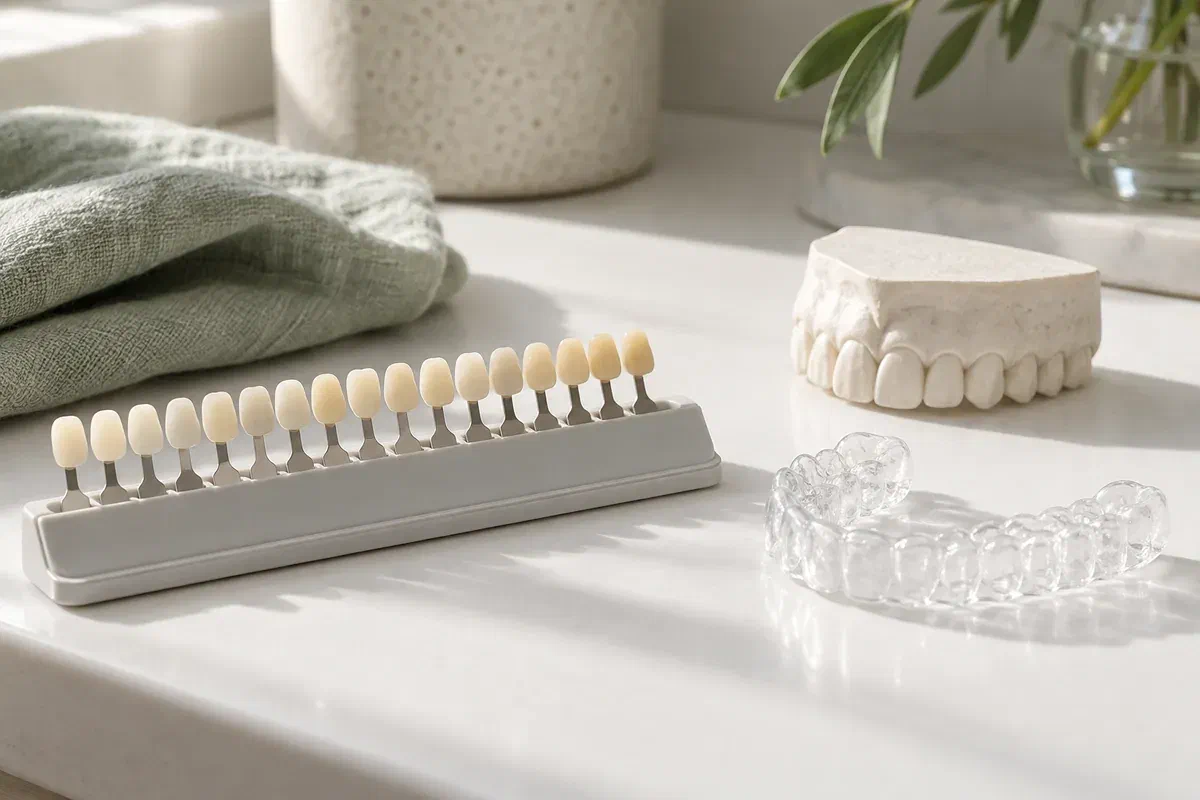
Illustrative natural tooth shade samples, a clear dental tray, and tooth model
What may have changed since last time

Your mouth today, not the one from your last course

Tell the clinician what you would like to change now and anything new about comfort, dental work or products used since. Those updates decide whether another course is sensible.

New sensitivity or a fresh problem

Twinges with cold, an aching tooth, gum recession or a tooth that feels different may have developed since your last course. The cause should be checked first. Ask whether other care is needed and how sensitivity would be handled this time.

Dental work placed after you whitened

Fillings, crowns or veneers added since then were probably matched to your whitened teeth. Ask how they compare now and whether whitening again would affect that match. Changing them is a separate decision.

Wanting to be brighter than before

Some people hope a second course will go further than the first. Share what you are hoping for and ask what is realistic from your current shade. No plan should promise a set number of shades or a firm date.

If one tooth has darkened on its own, perhaps after a knock or a root canal, it may need a different assessment from whole-smile whitening. Mention it before using your old product again.

Why reassess before repeating

A repeat course deserves the same care as the first.

What supervision offers on a second round is a current picture. The clinician can look again at why your colour has changed, whether your teeth and gums are still suitable for bleaching, and what a renewed course might reasonably achieve.

It also gives you a contact while treatment runs. If sensitivity, gum irritation or patchy colour shows up, ask what to do. Advice should follow the product you are using now and today’s findings, not your memory of what worked years ago.

A new baseline

Record your shade as it is today and agree on what change would be worthwhile. Ask how progress will be checked and when to judge the outcome. A little variation between teeth is normal even after a clear improvement.

Up-to-date instructions

Products and recommendations can change. Ask which approach is advised now, why it suits you and how many visits it needs. Confirm application, timing, storage and follow-up rather than relying on old notes.

Restorations considered in the plan

If bonding or a crown is part of your future plans, talk about order before starting. Ask when shade selection should happen and whether your plan could change after whitening, so the decisions line up.

Planning a repeat course

Check what’s changed, then decide.

Steps depend on the method we offer now and your current findings. Ask about appointment scope, fees and what is included before arranging treatment.

  1. Compare then and now

    Describe your first whitening course, how your teeth reacted and what you want this time. Update us on health, medicines and any dental work since. If you are pregnant or breastfeeding, mention it; elective whitening may be better left for later.

  2. Look for new causes

    Teeth, gums and restorations are examined to understand the change and whether anything needs care first. Sensitivity is discussed. A cleaning may restore some brightness on its own, or one tooth may need separate attention.

  3. Confirm the method and refit if needed

    The approach is explained with its likely response, side effects and alternatives. Old trays may no longer fit well after dental work, so ask whether new ones or a check is needed. For chairside treatment, confirm what is involved; no laser is assumed.

  4. Review, then pause

    Share concerns during the course and attend your review. Discuss the result before adding more. If newer dental work now looks out of step, its condition and options can be assessed without assuming it needs replacing.

During your Georgetown course

This time, follow this time’s instructions.

More gel or more frequent use does not give a better result. Keep your current directions and our phone number handy throughout.

Leave the old routine behind

Use the amount, schedule and handling you have just been given, even if they differ from last time. Avoid mixing in leftover product or extending the course yourself. Damaged trays or unclear steps are a reason to call before continuing.

Notice and report discomfort

Sensitivity or gum irritation can happen again, or for the first time. Ask what to do for your symptoms, including whether to stop and be seen. Pain that is significant or does not ease should be reviewed.

Plan for gradual change

Colour can drift back over time, which is why whitening is not a permanent fix. Keep regular dental visits and ask what affects your teeth’s appearance. How often to whiten should depend on findings, not on a calendar.

Patient information: American Dental Association — whitening effects and adverse reactions

If the brightness has faded

Repeating is one option. There are others.

What suits you depends on why the colour has changed and on your current oral health. Ask why a recommendation fits your findings and what the alternatives would involve.

When natural teeth are suitable for lightening again

Another supervised whitening course

Depending on suitability and availability, the clinician may discuss a dentist-supervised method at home or in the chair. Review its directions, limits and side effects. The choice should reflect your teeth now, not the most dramatic result possible.

When surface stain explains some of the fading

A cleaning before deciding

Professional cleaning may remove suitable surface stain without altering your natural shade, and that may be enough. Ask whether to review your teeth afterwards before committing to bleaching again. The two treatments do different jobs.

When repeating won’t address the concern

A different plan, or none

Newer restorations, one dark tooth or a developmental colour difference may need a separate discussion. Ask about what an alternative involves and how it is maintained. Choosing to stay with a healthy natural shade is also fine.

Repeat whitening questions

Whitening again: what people want to know

These are general answers. A consultation compares the result you want with what your teeth show today and what another course can do.

(905) 876-4488
I whitened a few years ago. Can I just repeat the same course?
Not without a fresh assessment. Your teeth, gums and dental work may have changed since. The clinician can explain whether another course suits you and whether the method or instructions should be different.
Can I reuse my old whitening trays?
Have them checked first. Dental work or small changes in your teeth can affect fit, and a poorly fitting tray can let product reach the gums. Ask whether they are still suitable or need replacing.
Why does whitening seem to fade faster for some people?
Natural tooth colour, diet, habits such as coffee, tea or smoking, and the cause of the original discolouration can all play a part. Ask which factors are most relevant for you.
Is a short touch-up safer than a full repeat course?
It depends on your findings and the product. Ask the clinician what is appropriate and follow the directions you are given. Don’t design a touch-up schedule on your own.
If my teeth darken again, will newer fillings look out of place?
Possibly. Fillings matched to whitened teeth keep their colour while natural teeth may change. Discuss how this could affect your smile before deciding whether to whiten again.
How often is it reasonable to whiten?
There is no fixed rule. Any repeat course should depend on your current findings, sensitivity and the product’s instructions. The clinician can talk about what makes sense for your teeth.
Whitening again, from Georgetown

Start with today’s teeth.

Book a whitening review at our Bronte Street practice. We will check suitability, newer dental work and sensitivity, discuss the approaches available now and explain what should be assessed before another course.

Whitening never lasts indefinitely, and responses differ. Suitability, method, fees and any reason to hold off depend on a current, individual assessment.

Visit Milton Dental Clinic
Unit 1, 342 Bronte St. S, Milton, ON L9T 5B7
Get directions Clinic hours
Monday–Thursday
11am–7pm
Friday–Sunday
By appointment only

Areas we serve

  • Milton
  • Oakville
  • Mississauga
  • Georgetown
  • Halton Hills
  • Acton
  • Campbellville
  • Brampton
  • Burlington
  • Puslinch
  • Rockwood
  • Erin
  • Caledon
  • Etobicoke
  • Old Milton
  • Bronte Meadows
  • Timberlea
  • Dorset Park
  • Dempsey
  • Clarke
  • Beaty
  • Coates
  • Harrison
  • Scott
  • Willmott
  • Ford
  • Bowes
  • Cobden
  • Walker
  • Mountain View
  • Milton Heights
  • Hawthorne Village
  • Valley View
  • Fallingbrook
  • Nassagaweya
  • Trafalgar
  • Esquesing
  • Nelson
  • Brookville
  • Moffat
  • Glen Williams
  • Norval
  • Limehouse
  • Stewarttown
  • Ashgrove
  • Hornby
  • Silver Creek
  • Speyside
  • Scotch Block
  • North Oakville
  • River Oaks
  • Glen Abbey
  • West Oak Trails
  • Palermo
  • Bronte Creek
  • College Park
  • Joshua Creek
  • Uptown Core
  • Preserve
  • Iroquois Ridge
  • Lisgar
  • Meadowvale
  • Meadowvale Village
  • Churchill Meadows
  • Erin Mills
  • Central Erin Mills
  • Streetsville
  • East Credit
  • Creditview
  • Heartland
  • Sheridan
  • Mount Pleasant
  • Credit Valley
  • Huttonville
  • Churchville
  • Springbrook
  • Northwest Brampton
  • Bram West
  • Fletcher's Meadow
  • Fletcher's Creek South
  • Alton Village
  • Orchard
  • Millcroft
  • Headon Forest
  • Tansley
  • Brant Hills
  • Tyandaga
  • Kilbride
  • Lowville
  • Aberfoyle
  • Morriston
  • Arkell
  • Hillsburgh
  • Freelton
  • Carlisle
  • Waterdown
  • Flamborough
  • Mountsberg

How can we help?

Milton Dental Clinic

Have a question about your smile? Choose the option that works best for you.

For urgent dental concerns, please call.
Messages are reviewed during clinic hours.