

Illustrative patient and clinician discussing a tooth shade guide
Cosmetic Dentistry

Professional Teeth Whitening in Mississauga

Trays at home, a session in the chair, a light or no light: the choices can blur together. For people in Mississauga comparing whitening methods, an assessment explains which supervised approach suits your teeth and why, before anything is booked.

Comparing methods

Trays or chair time? The answer starts with your teeth.

People often arrive having read about several whitening methods and wanting to know which is best. The honest reply is that it depends. Professional whitening is a dentist-supervised bleaching approach intended to lighten natural teeth, and which version suits you follows from an exam. Polishing surface stain is a different service altogether.

Method matters less than the starting point. Natural shades vary, and the same product can give two people quite different changes. Crowns, fillings and veneers keep their colour whatever approach is used, and existing sensitivity can steer the choice.

From Meadowvale, Churchill Meadows or elsewhere in Mississauga, bring the options you have been weighing and anything you have used before. We can explain the assessment, which approaches we actually offer and their limits, so side effects and instructions are clear before you pick one.

Compare whitening approaches
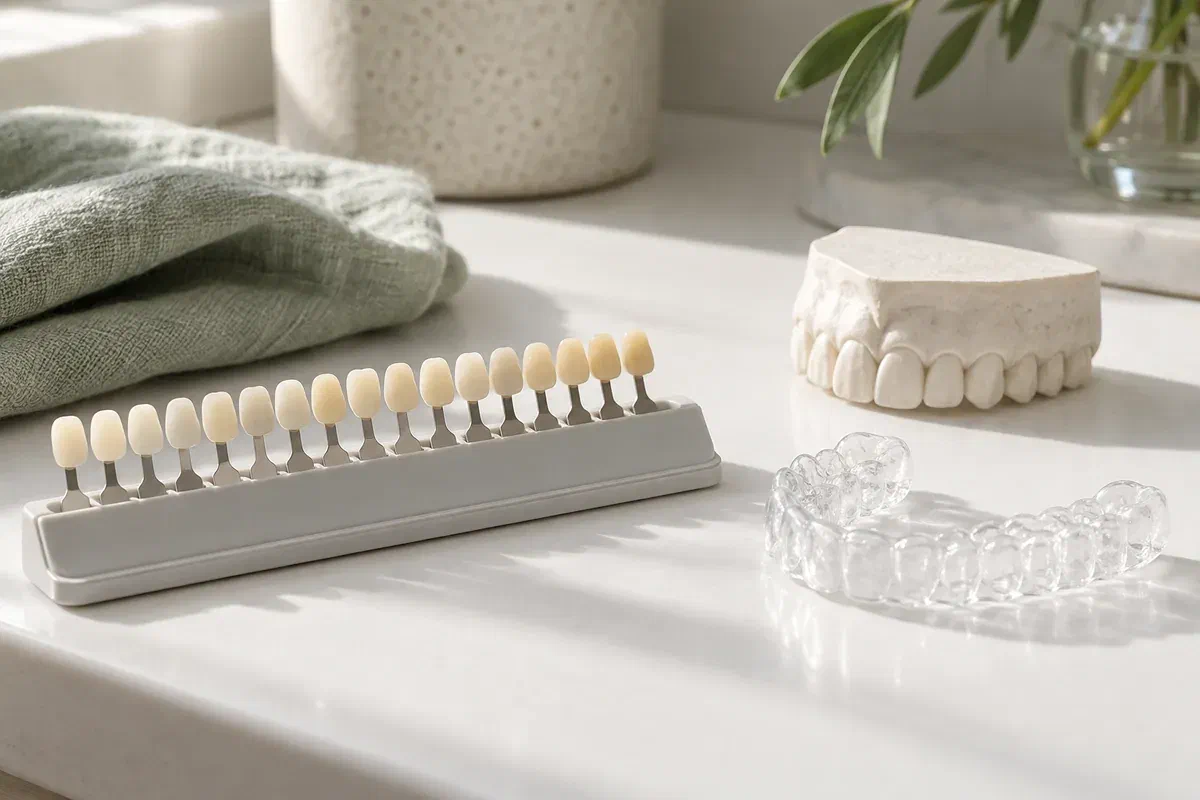
Illustrative natural tooth shade samples, a clear dental tray, and tooth model
What decides the method

Your findings narrow the options.

Let the clinician know what you want to change, how your teeth feel and what dental work or whitening you have had. These points often matter more than the product name.

Existing sensitivity or a dental problem

Cold sensitivity, pain, exposed roots or an unusual-feeling tooth can affect which approach is sensible and whether whitening should wait. Ask whether another issue needs care first and how each method would handle sensitivity.

Visible crowns, veneers or fillings

Restorations do not respond to bleaching, whichever method is chosen. Ask how they compare with your natural teeth and whether lightening could make the contrast more noticeable. Any change to dental work is a separate discussion.

How quickly, and how much

If you have a date or a particular shade in mind, share it. Ask what change is realistic from your starting colour with each method on offer. No approach should come with a promised number of shades or a guaranteed finish date.

A single tooth that has darkened following an injury or root canal treatment may call for a different assessment than whole-smile whitening. Raise it before choosing any method.

Supervision, whichever method

The method is chosen for you, not the other way round.

A dentist-supervised plan gives you reasons, not just a product. It considers what caused your discolouration, whether your mouth is healthy enough to bleach, and what the selected method can reasonably achieve given your exam.

Supervision continues once treatment begins. If you notice sensitivity, irritated gums or uneven colour, you can ask what to do. The response should come from the product’s directions and your findings, not from switching methods or changing strength on your own.

A baseline both of you can see

Agree on your starting shade and what change would be worthwhile. Ask how progress will be compared and when the final result should be judged. Teeth may still differ slightly from each other after a noticeable improvement.

Directions tailored to one approach

Ask which method is recommended, why it fits better than the alternatives and how many appointments it needs. Make sure application, timing, storage and follow-up are clear. Don’t assume another product’s instructions transfer.

Planning around other cosmetic treatment

If bonding or a replacement crown is under consideration, talk through the order first. Ask when shade selection should take place and whether whitening could alter the plan. Coordinating the steps keeps them from working against each other.

How a method gets chosen

First the exam, then the options, then the follow-up.

Steps vary with the approach we offer and your findings. Ask what each appointment includes, what the fees are and what is covered before treatment is arranged.

  1. Explain your goals and what you have tried

    Tell the clinician which methods you have read about, what you have used and whether it caused discomfort. Your medical background, current medications and dental work matter too. If you are expecting or nursing, it is reasonable to ask about postponing a cosmetic course.

  2. Assess the cause and your dental health

    The clinician examines teeth, gums and restorations to understand the colour change and whether other care is needed first. Sensitivity is discussed. Ask whether cleaning alone might help, or whether one tooth needs separate investigation.

  3. Compare the methods that suit you

    Each suitable option is laid out with its likely response, side effects and trade-offs. Trays mean asking how they should sit and having someone show you the routine. A chairside method means asking what the appointment involves; a laser or branded system should not be presumed.

  4. Review progress together

    Mention anything that worries you mid-course, and keep the follow-up suggested for you. The result is discussed before more treatment is considered. Should a filling or crown look out of step afterwards, its condition and the choices are weighed rather than assuming replacement.

Once you’ve started

The method only works as directed.

Using more product or extra sessions does not improve whitening. Keep the instructions for your method and our contact details at hand throughout.

Stay with the method you agreed on

Use the amount, schedule and handling you were given. Avoid mixing in a second system or extending the course without advice. If trays don’t fit well, supplies are damaged or an instruction is unclear, ask the team before continuing.

Sensitivity and gum irritation

Either can occur for a while during whitening. Ask what response suits your product and symptoms, including when to stop and come in for a check. Significant or lingering pain needs attention and is not something to tolerate.

Results that change over time

Teeth can gradually take on colour again, whichever method was used. Regular checkups and cleanings still matter, and you can ask what affects your teeth’s appearance. A repeat course should be guided by current findings and instructions rather than copied from before.

Patient information: American Dental Association — whitening effects and adverse reactions

The wider set of choices

Sometimes the best method isn’t bleaching.

The right response depends on what has changed the colour and on your oral health. Ask how a recommendation fits your findings and what alternatives would mean for you.

When natural colour can be lightened appropriately

Take-home or in-office supervised whitening

Depending on suitability and what is offered, either method may be discussed. Review its instructions, limits and side effects. The choice should match your teeth and routine, not a claim about the most dramatic result.

When surface stain is part of the concern

Professional cleaning

A hygiene visit may lift some surface staining, though the tooth’s own shade stays put. It can be sensible to see how things look after that before picking a bleaching method. The two treatments aim at different problems.

When bleaching won’t address the real issue

Another kind of treatment, or none

Colour that comes from dental work, from one darkened tooth or from how the teeth formed may need its own discussion. Find out the commitment and upkeep behind each alternative. Keeping your healthy natural shade is a valid choice as well.

Method questions from Mississauga

What to ask when you’re choosing an approach

These answers are general. A consultation compares the methods that suit your teeth with the result you hope for and its practical limits.

(905) 876-4488
What is the difference between take-home trays and in-office whitening?
Take-home whitening uses trays and a product you apply as directed, while in-office whitening takes place during an appointment. Which suits you depends on your findings and what is offered. Ask the clinician to explain both for your situation.
Are dentist-supplied trays different from the ones in a store kit?
Trays supplied through a dental office are made for your teeth, and fit is checked. Ask how they should feel, how to load them and what to do if they rub or seem loose.
Do I need a special light for professional whitening to work?
No light or laser is required for every supervised approach. Ask which method is actually offered, what it involves and why it is recommended for you, rather than assuming a device is part of it.
How many appointments does supervised whitening usually take?
It depends on the method, your findings and any care needed first. Ask how many visits are planned, including the review. Knowing this early helps you fit appointments around work and family.
Can I switch methods partway through if I’m not seeing much change?
Don’t change methods or add a product on your own. Contact the clinic and attend the review recommended for you. The clinician can discuss your response and whether more whitening, or something else, makes sense.
What should I bring to a whitening consultation?
Bring the names of any products you have used, a note of reactions, details of medicines and any dental records you have. A photo showing the look you have in mind can also help the conversation.
Whitening consultations for Mississauga

Choose a method with your eyes open.

Arrange a visit to our Bronte Street practice to compare whitening approaches. We will review suitability, existing restorations and sensitivity, and explain what should be checked before any method begins.

No method gives a fixed or lasting result. Whether whitening suits you, which approach, what it costs and whether to wait are decided individually.

Visit Milton Dental Clinic
Unit 1, 342 Bronte St. S, Milton, ON L9T 5B7
Get directions Clinic hours
Monday–Thursday
11am–7pm
Friday–Sunday
By appointment only

Areas we serve

  • Milton
  • Oakville
  • Mississauga
  • Georgetown
  • Halton Hills
  • Acton
  • Campbellville
  • Brampton
  • Burlington
  • Puslinch
  • Rockwood
  • Erin
  • Caledon
  • Etobicoke
  • Old Milton
  • Bronte Meadows
  • Timberlea
  • Dorset Park
  • Dempsey
  • Clarke
  • Beaty
  • Coates
  • Harrison
  • Scott
  • Willmott
  • Ford
  • Bowes
  • Cobden
  • Walker
  • Mountain View
  • Milton Heights
  • Hawthorne Village
  • Valley View
  • Fallingbrook
  • Nassagaweya
  • Trafalgar
  • Esquesing
  • Nelson
  • Brookville
  • Moffat
  • Glen Williams
  • Norval
  • Limehouse
  • Stewarttown
  • Ashgrove
  • Hornby
  • Silver Creek
  • Speyside
  • Scotch Block
  • North Oakville
  • River Oaks
  • Glen Abbey
  • West Oak Trails
  • Palermo
  • Bronte Creek
  • College Park
  • Joshua Creek
  • Uptown Core
  • Preserve
  • Iroquois Ridge
  • Lisgar
  • Meadowvale
  • Meadowvale Village
  • Churchill Meadows
  • Erin Mills
  • Central Erin Mills
  • Streetsville
  • East Credit
  • Creditview
  • Heartland
  • Sheridan
  • Mount Pleasant
  • Credit Valley
  • Huttonville
  • Churchville
  • Springbrook
  • Northwest Brampton
  • Bram West
  • Fletcher's Meadow
  • Fletcher's Creek South
  • Alton Village
  • Orchard
  • Millcroft
  • Headon Forest
  • Tansley
  • Brant Hills
  • Tyandaga
  • Kilbride
  • Lowville
  • Aberfoyle
  • Morriston
  • Arkell
  • Hillsburgh
  • Freelton
  • Carlisle
  • Waterdown
  • Flamborough
  • Mountsberg

How can we help?

Milton Dental Clinic

Have a question about your smile? Choose the option that works best for you.

For urgent dental concerns, please call.
Messages are reviewed during clinic hours.