

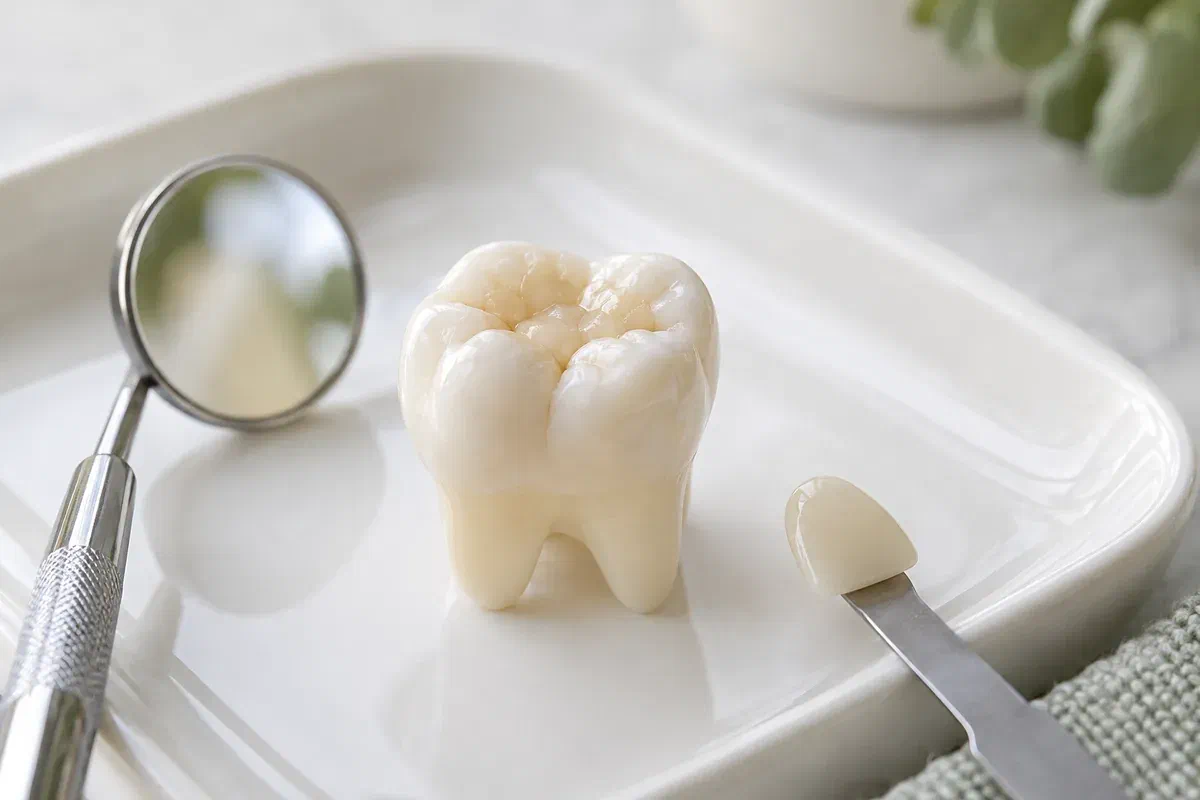
Illustrative patient and clinician reviewing a tooth model and shade samples
Cosmetic Dentistry

Replacement of Discoloured Fillings

A filling that looks darker deserves a review of its condition as well as its colour. Discuss replacement of discoloured fillings in Milton to understand whether cleaning, polishing, repair, monitoring, or a new restoration best fits the tooth and your appearance goals.

A closer look at discoloured fillings

Assess what the colour change means before removing the restoration.

A filling may become more noticeable because its surface has stained, its material has changed appearance, or the surrounding tooth colour is different. A dark edge can also need assessment for a defect or decay. Colour alone does not tell us whether the whole restoration needs replacement.

Replacing a filling involves removing existing material and may also sacrifice some tooth structure. That is why the discussion should include suitable less invasive options. Cleaning, polishing, a local repair, or monitoring may be reasonable in selected circumstances, depending on the examination and your priorities.

At Milton Dental Clinic, show us the area that concerns you and explain whether its appearance, comfort, or function has changed. We can review the tooth and restoration, discuss what the findings mean, and explain the purpose of any recommended treatment before you decide.

Discuss a discoloured filling
Illustrative molar teaching model with a slightly contrasting composite filling
What to mention at the assessment

Describe the colour change and anything else you have noticed.

The history helps distinguish a cosmetic concern from a restoration or tooth that needs care for another reason. Include symptoms even if your main reason for booking is appearance.

A filling that no longer blends with the tooth

Explain when the mismatch became noticeable and whether you have whitened your teeth since the filling was placed. Point out the surfaces that show when you smile. Ask whether the difference is superficial, within the restoration, or related to the tooth around it.

A dark margin, roughness, or food catching

Tell the clinician if an edge feels different or repeatedly traps food. A visible line needs interpretation alongside the restoration's fit and the tooth's condition. Do not assume every stained margin is decay, or that a painless restoration must be sound.

Sensitivity, pain, or a recent break

Describe what triggers the symptom and whether it lingers or affects biting. Mention any chipped area or earlier deep filling. These findings may change the treatment discussion and should be assessed before a purely cosmetic replacement is planned.

The dark appearance of a metal filling is not, by itself, evidence that it is failing or harmful. Discuss its condition and the implications of removal rather than assuming its colour requires replacement.

What a considered restoration review offers

Balance the appearance goal with the long-term needs of the tooth.

The aim is to understand the least invasive suitable response to the actual finding. If replacement is recommended, ask what it will achieve that polishing or repair cannot. If the existing restoration can reasonably remain, discuss its appearance and how it would be monitored.

A colour-matching conversation should also account for the natural tooth and any future cosmetic plans. There is no promise of an invisible restoration in every light or a permanent shade match. Materials, tooth structure, and maintenance all influence the result.

Patient information: FDI World Dental Federation — assessing repair and replacement of restorations

A reason for the proposed level of treatment

Ask whether the concern is surface appearance, a local defect, a larger restoration problem, or disease in the tooth. The explanation should connect the finding to the recommendation. You should know why the suggested work is needed rather than simply being told the filling is old.

An opportunity to preserve suitable existing material

Ask whether a local repair or refurbishment is feasible before accepting complete replacement. Not every restoration can be repaired successfully, but the option deserves consideration where appropriate. Discuss its limits and how the remaining filling would be followed.

A clearer discussion of shade and future care

Tell the clinician about planned whitening, bonding, or other visible restorations. Ask how those decisions affect timing and material selection. Review the maintenance expectations and the possibility of future repair, rather than judging the proposal only by the immediate colour change.

From assessment to a suitable repair

Explain the finding, agree on the approach, and check the finished restoration.

The procedure depends on whether the plan involves polishing, local repair, or complete replacement. Ask what is proposed and what might change if additional findings become visible during treatment.

  1. Review the restoration and relevant symptoms

    The dentist examines the tooth, margins, surrounding tissues, and bite as appropriate. Radiographs or other checks may be recommended for a specific question. Explain previous sensitivity, fractures, whitening, and the age of the restoration if you know it.

  2. Discuss the alternatives and expected appearance

    Review whether monitoring, polishing, repair, or replacement is suitable. Ask about material options, shade limits, risks, and costs. If the tooth is extensively weakened, a different restoration may need discussion rather than assuming another direct filling will be appropriate.

  3. Carry out the agreed treatment with appropriate comfort measures

    The dentist prepares the area according to the selected approach and material. Local anaesthetic may be used where needed. Tell the team if you are uncomfortable or need a pause. Any unexpected finding should be explained along with its implications for the plan.

  4. Check contour, contacts, and the bite

    The treated area is finished and checked for the intended function and fit. Ask about the appearance and any care instructions for the material used. Before leaving, clarify which symptoms should settle, which should prompt contact, and whether a review is recommended.

After polishing, repair, or replacement

Give the treated tooth ordinary care and report changes that do not settle.

Your instructions depend on the procedure and material. Follow the advice given at the visit rather than assuming every filling has the same restrictions or recovery.

Follow the immediate instructions for comfort and eating

If anaesthetic was used, take care while the area remains numb and follow the advice about eating. Ask when normal use is appropriate for the material placed. Contact the clinic if the bite feels noticeably high or uncomfortable instead of repeatedly testing it with hard foods.

Keep the tooth and its edges clean

Continue brushing and cleaning between teeth with the technique recommended for you. Ask for help if the area is difficult to reach or catches food. A restored tooth still needs preventive care; a new filling does not make it immune to decay.

Review persistent sensitivity or an appearance concern

Tell the clinic about symptoms that persist, worsen, or interfere with eating. If the shade concerns you, arrange a review to discuss the finding and options. Do not use abrasive tools or extra bleaching product to try to change the restoration yourself.

Choosing how much treatment is appropriate

A discoloured filling can lead to more than one reasonable recommendation.

Ask what each approach would achieve and what its tradeoffs are. The decision should account for tooth condition, restoration material, and your appearance priorities.

When the concern is superficial or the restoration is acceptable

Cleaning, polishing, or monitoring

A surface treatment may improve suitable staining without replacing the whole filling. Monitoring may also be reasonable when the restoration is sound and the appearance is acceptable to you. Ask what will be checked and which changes should prompt an earlier visit.

When a limited defect can be appropriately addressed

A local restoration repair

A repair may treat a specific area while retaining suitable existing material. Ask whether the location, material, and condition make this feasible. Discuss the expected appearance, limitations, and future checks rather than assuming repair is either always sufficient or always temporary.

When the findings justify more extensive work

Replacement or another restorative approach

A new filling or a different restoration may be recommended when the problem cannot appropriately be managed locally. Ask about the amount of remaining tooth, possible sensitivity, and alternatives. Complete removal should have a clear rationale beyond the restoration's age alone.

Patient information: FDA — considerations before removing an existing amalgam filling

Discoloured-filling questions

Ask about the condition beneath the colour concern.

These questions can help you compare cosmetic preferences with the implications of changing an existing restoration.

(905) 876-4488
Does a dark line around a filling always mean it must be replaced?
No. The margin and tooth need assessment to distinguish staining from a defect or decay. Ask what the examination shows and why a particular response is recommended. A photograph or colour change alone cannot determine the treatment.
Can polishing improve a discoloured composite filling without removing it?
Sometimes surface staining can be addressed with suitable professional refurbishment. Deeper colour changes or defects may need another approach. Ask whether the finding is superficial and what improvement is realistic before deciding on complete replacement.
Why might a filling look darker after I whitened my teeth?
Bleaching changes natural tooth colour differently from restorative material, so an existing filling may contrast more afterward. Arrange a review of its condition and appearance. A mismatch does not automatically mean the restoration has failed.
Should an old silver filling be removed just because it looks dark?
Colour alone is not a reason to assume a sound metal filling requires removal. Ask about its clinical condition, alternatives, and the implications of replacing it. Any recommendation should be based on your tooth and circumstances rather than a general claim about dark fillings.
Can replacing a discoloured filling remove additional healthy tooth structure?
It can, which is one reason suitable polishing or repair options should be considered. Ask why replacement is recommended and what the alternatives would achieve. Preserving the tooth matters alongside improving the appearance.
Should I discuss planned whitening before replacing a visible filling?
Yes. Tell the dentist about your colour goals before shade selection and treatment. Ask how the sequence should be coordinated and when the natural tooth colour should be reviewed. Do not begin additional whitening independently to make a new filling match.
Replacement of discoloured fillings in Milton

Bring the colour concern and ask what the tooth actually needs.

Arrange a review at our Bronte Street practice to discuss a visible or changing filling. We can explain the condition, appearance options, and reasons for monitoring, polishing, repairing, or replacing it.

Replacement is not automatic. The appropriate approach and expected shade match depend on examination, existing material, and remaining tooth structure.

Visit Milton Dental Clinic
Unit 1, 342 Bronte St. S, Milton, ON L9T 5B7
Get directions Clinic hours
Monday–Thursday
11am–7pm
Friday–Sunday
By appointment only

How can we help?

Milton Dental Clinic

Have a question about your smile? Choose the option that works best for you.

For urgent dental concerns, please call.
Messages are reviewed during clinic hours.