

Illustrative patient and clinician reviewing a tooth model and shade samples
Cosmetic Dentistry

Replacement of Discoloured Fillings in Georgetown

A good shade match depends on more than picking a colour tab. If you are coming from Georgetown, we start with the health of the old filling, then talk honestly about how closely a polish, repair, or new restoration can blend with the teeth around it.

Realistic shade expectations

Natural teeth are not one colour, and fillings never quite are either.

Enamel is translucent near the biting edge, warmer near the gum, and it reflects light in subtle ways. A filling that matched well on the day it was placed can drift as its surface picks up stain, as the material ages, or as the enamel around it changes. A dark seam at the border is a separate issue and may need checking for a gap or decay.

Before choosing a new shade, it is worth asking whether you need a new filling at all. Drilling out the old one removes material and can cost healthy tooth. A professional polish, a contained repair, or monitoring may be appropriate, depending on what the examination finds and how much the look bothers you.

Georgetown is the largest community in Halton Hills, and many people there plan appointments around work and school. Book a time that lets you talk through the concern without rushing. Show us the tooth, mention any sensitivity, and we will explain the findings and the reasons for any suggestion.

Talk about a better match
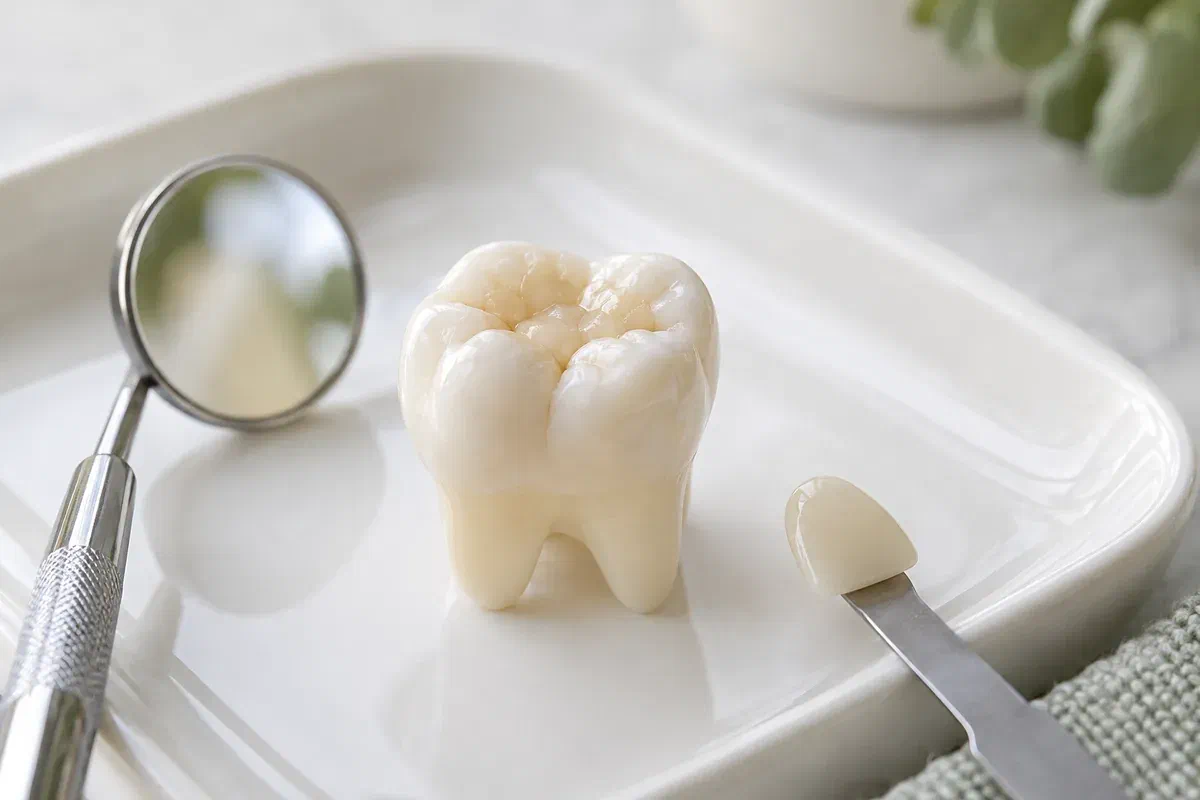
Illustrative molar teaching model with a slightly contrasting composite filling
Help us see what you see

Describe the mismatch in your own words.

Your observations help us tell a cosmetic concern apart from a restoration or tooth needing other care. Include any discomfort, since it changes the conversation.

Where and when the filling stands out

Tell us whether it bothers you in photos, in daylight, or under indoor light. Mention whitening since it was placed. This helps us understand whether the difference is surface stain, the material, the surrounding enamel, or simply how light hits that tooth.

A dark seam or a ridge you can feel

Mention food that collects or an edge that catches your tongue. A visible seam is interpreted along with fit and the tooth’s condition. Not every dark border is decay, and not every comfortable filling is intact.

Sensitivity, aching, or a chipped surface

Describe the trigger and whether discomfort fades quickly. Mention any break or earlier deep restoration. These findings come before shade and may change what treatment makes sense.

Silver fillings will always look dark next to enamel. That is not proof of failure or harm, so ask about condition and the trade-offs of removing one before deciding a tooth-coloured option is needed.

Honest colour planning

A match that looks natural, with limits you understand

We start from the least invasive suitable response. If replacement is proposed, ask what it offers that a polish or repair would not. If the current filling can stay, we discuss how it looks against your other teeth and how it will be checked.

Colour matching should account for your natural tooth and any plans to whiten or bond later. We do not promise a restoration that disappears under every light or keeps its shade for good. Material, remaining tooth, and upkeep all affect the long-term look.

Patient information: FDI World Dental Federation — assessing repair and replacement of restorations

A diagnosis behind the recommendation

We will say whether the issue is surface appearance, a local flaw, a broader restoration problem, or a concern in the tooth. Any suggestion should follow from that. Being told a filling looks old is not an adequate explanation.

Keeping sound material where possible

A localized repair or refurbishment can sometimes improve the look without full removal. It will not work for every filling, and we will explain the limits. If chosen, we describe how the remaining material will be followed.

Shade chosen with the bigger picture

If you are thinking about whitening, bonding, or other visible work, mention it now. It may affect timing and material. We also talk about maintenance and the chance of future polishing or touch-ups.

Inside the appointment

How we work toward a good blend

Steps vary for polishing, repair, or replacement. Ask which applies to you and how the plan may change if something unexpected becomes visible.

  1. Examine the filling in good light

    The dentist checks the tooth, its margins, nearby gums, and your bite as relevant. An X-ray or other check may be recommended for a specific question. Tell us about sensitivity, fractures, whitening, and the filling’s approximate age.

  2. Choose the approach and talk shade

    We compare monitoring, polishing, repair, and replacement for that tooth. Ask about materials, how close a match is realistic, risks, and costs. A heavily restored tooth might need a different type of restoration considered.

  3. Place or refine the restoration

    The area is prepared for the chosen method and material, with freezing if needed. Tell the team if you want a break. Should anything unexpected show up, we explain it and its effect on the plan before continuing.

  4. Compare the result with your teeth

    We contour and polish the surface, then check fit, contacts, and bite, and look at the shade with you. Ask about care for that material. Confirm which sensations should ease and whether we plan to see you for a review.

In the weeks that follow

Give the new surface time, and keep it clean.

What you need to do depends on the procedure and material. Follow the guidance from your visit, since fillings differ in their restrictions.

Be gentle while numb

If freezing was used, take care not to bite your lip or cheek, and follow the advice on eating. Ask when normal chewing is fine. A high-feeling bite needs our adjustment, not repeated testing on firm food.

Brush well and clean the edges

Continue brushing and cleaning between teeth as recommended. Mention any spot that traps food or is awkward to reach. Restored teeth can still decay, so daily prevention matters as much as ever.

Judge the shade after it settles

Teeth can look different right after treatment, so give it time before deciding about colour. If it still bothers you, book a review. Report sensitivity that persists, and avoid abrasive tools or bleaching products on the filling.

Ways to improve the blend

Three options, three different trade-offs

Consider what each would achieve and its drawbacks. Tooth condition, filling material, and your appearance priorities should guide the decision.

Superficial stain or an acceptable filling

Polish, clean, or monitor

Polishing may brighten surface stain without removing anything. Monitoring is sensible when the filling is sound and the look is acceptable. We will explain what to keep an eye on and which changes would justify coming in sooner.

A contained flaw on one surface

Repair to refresh one area

A repair can rebuild a small area and keep the rest of the existing filling. Whether it suits you depends on the defect and material. We discuss how well it may blend, its limits, and the follow-up it needs.

Findings that call for broader work

Replace, or consider another restoration

When a local fix is not enough, a replacement filling or another restoration may be suggested. Ask how much tooth would remain, whether sensitivity is likely, and what alternatives exist. The case for removal should go beyond age.

Patient information: FDA — considerations before removing an existing amalgam filling

Shade questions from Georgetown

What to expect from a colour match

Answers to help you set realistic expectations before changing a visible filling.

(905) 876-4488
Why does my filling look fine indoors but obvious in photos?
Camera flash and daylight show translucency and colour differently from indoor light. A filling may also reflect light differently from enamel. An examination helps tell whether the issue is the material, the surface, or the tooth.
How is the shade chosen for a new tooth-coloured filling?
The dentist compares your natural teeth with shade guides, usually before the tooth dries out during treatment. Ask how lighting and future whitening may affect the match, and what result is realistic.
Can a filling be adjusted if the shade is not quite right?
Sometimes surface finishing or a small addition can help; in other cases the options are limited. Ask at the time of treatment and again once things settle, and book a review if the colour concerns you.
Will my teeth look different after the filling is replaced?
The aim is a closer blend, but the result depends on the tooth, the material, and lighting. No match is guaranteed to be invisible. Ask what improvement is realistic for your situation.
Should a discoloured silver filling be swapped for a white one?
Only if there is a reason that makes sense for your tooth. A sound metal filling is not failing because it is dark. Ask about its condition, the alternatives, and what replacement would mean for the tooth.
Is it better to whiten first if I want my new filling to match?
Often the order matters, because bleaching does not lighten fillings. Talk to us about sequencing before starting. Avoid extra whitening on your own to try to match an existing or new restoration.
Georgetown shade consultations

See what a better match could look like.

Arrange an assessment at our Bronte Street practice for a filling that no longer blends in. We will check its condition and explain the options and what each can realistically achieve.

We will not assume replacement. The suitable option and the closeness of any match come down to the findings, the existing material, and how much natural tooth there is.

Visit Milton Dental Clinic
Unit 1, 342 Bronte St. S, Milton, ON L9T 5B7
Get directions Clinic hours
Monday–Thursday
11am–7pm
Friday–Sunday
By appointment only

Areas we serve

  • Milton
  • Oakville
  • Mississauga
  • Georgetown
  • Halton Hills
  • Acton
  • Campbellville
  • Brampton
  • Burlington
  • Puslinch
  • Rockwood
  • Erin
  • Caledon
  • Etobicoke
  • Old Milton
  • Bronte Meadows
  • Timberlea
  • Dorset Park
  • Dempsey
  • Clarke
  • Beaty
  • Coates
  • Harrison
  • Scott
  • Willmott
  • Ford
  • Bowes
  • Cobden
  • Walker
  • Mountain View
  • Milton Heights
  • Hawthorne Village
  • Valley View
  • Fallingbrook
  • Nassagaweya
  • Trafalgar
  • Esquesing
  • Nelson
  • Brookville
  • Moffat
  • Glen Williams
  • Norval
  • Limehouse
  • Stewarttown
  • Ashgrove
  • Hornby
  • Silver Creek
  • Speyside
  • Scotch Block
  • North Oakville
  • River Oaks
  • Glen Abbey
  • West Oak Trails
  • Palermo
  • Bronte Creek
  • College Park
  • Joshua Creek
  • Uptown Core
  • Preserve
  • Iroquois Ridge
  • Lisgar
  • Meadowvale
  • Meadowvale Village
  • Churchill Meadows
  • Erin Mills
  • Central Erin Mills
  • Streetsville
  • East Credit
  • Creditview
  • Heartland
  • Sheridan
  • Mount Pleasant
  • Credit Valley
  • Huttonville
  • Churchville
  • Springbrook
  • Northwest Brampton
  • Bram West
  • Fletcher's Meadow
  • Fletcher's Creek South
  • Alton Village
  • Orchard
  • Millcroft
  • Headon Forest
  • Tansley
  • Brant Hills
  • Tyandaga
  • Kilbride
  • Lowville
  • Aberfoyle
  • Morriston
  • Arkell
  • Hillsburgh
  • Freelton
  • Carlisle
  • Waterdown
  • Flamborough
  • Mountsberg

How can we help?

Milton Dental Clinic

Have a question about your smile? Choose the option that works best for you.

For urgent dental concerns, please call.
Messages are reviewed during clinic hours.