

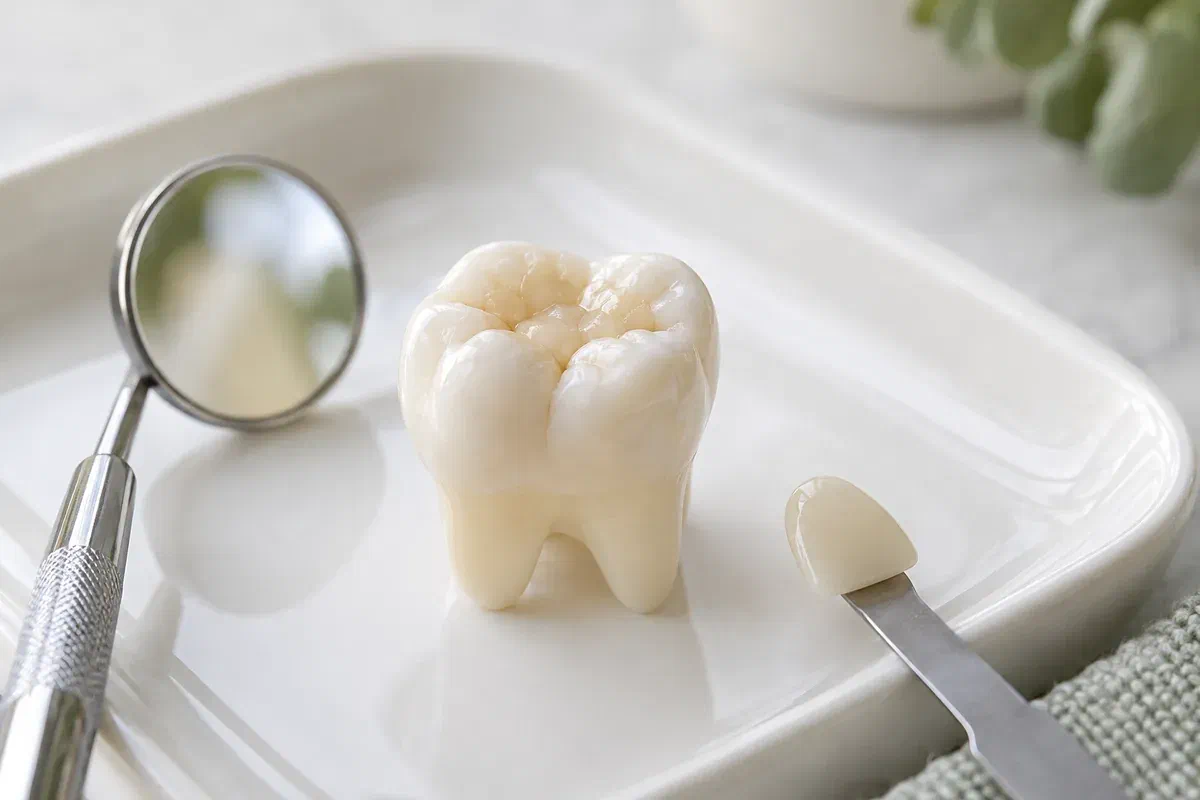
Illustrative patient and clinician reviewing a tooth model and shade samples
Cosmetic Dentistry

Replacement of Discoloured Fillings in Mississauga

Told a stained filling should come out, or wondering yourself? From Mississauga, you can have the restoration assessed and hear whether a repair, a polish, monitoring, or full replacement keeps the most tooth while meeting your cosmetic goals.

Repair or replace?

The smallest change that solves the problem is usually the place to start.

Every time a filling is drilled out, the cavity tends to end up a little larger than before. Over a lifetime, repeated replacements can leave a tooth weaker than it needs to be. That is why the question of what to do about a discoloured filling deserves more than a quick glance at its colour.

The colour itself can have several causes: stain on the surface, a material that has aged, enamel that has changed around it, or occasionally a defect or decay at the edge. Each points to a different response. Polishing, repairing one spot, monitoring, or replacing the whole filling can all be reasonable in the right situation.

For anyone making the trip from Mississauga, we keep the first appointment focused. Show us the filling, tell us what was recommended elsewhere if anything, and mention any symptoms. We explain the findings and the case for each option so you can weigh them before deciding.

Compare repair and replacement
Illustrative molar teaching model with a slightly contrasting composite filling
Information that shapes the decision

Three things we will ask about

Your answers help us tell an appearance concern from a filling or tooth that needs care for another reason. Symptoms matter here, even if you only came in about looks.

How visible the mismatch is

Show us when the filling catches the light in conversation or photos. Tell us how long it has looked this way and whether whitening came after it was placed. That timeline helps place the colour change on the surface, in the material, or in the tooth.

What the edge feels like

Report roughness, a step under your tongue, or floss that catches. These details are read alongside the fit of the filling and the condition of the tooth. A dark margin may be harmless stain, and a comfortable filling may still have a flaw.

Whether anything hurts

Describe triggers like cold or biting and whether the feeling lingers. Mention cracks, chips, or a deep filling in the past. These can change what treatment is appropriate and need assessment before any purely cosmetic plan.

Silver fillings are dark to begin with. Their colour does not, by itself, show that they are failing or unsafe, so ask about condition and the trade-offs of removal before choosing replacement.

The value of a measured approach

Keep more tooth for the years ahead.

We look for the least invasive option that properly deals with what is found. When replacement is suggested, it is fair to ask what it does that a polish or repair cannot. When the existing filling can remain, we talk about how it looks and how we will check it at future visits.

Any shade discussion should also consider your natural teeth and later cosmetic plans. Fillings cannot be promised to look invisible everywhere or to keep one shade permanently. Material, the remaining tooth, and maintenance all affect how the result holds up.

Patient information: FDI World Dental Federation — assessing repair and replacement of restorations

A recommendation with its reasons

You will hear whether the concern is surface appearance, a local flaw, a wider problem with the filling, or decay. That explanation should connect directly to what is proposed. Being told a filling is old is not, on its own, a reason to replace it.

Repair weighed fairly

A localized repair or refurbishment can sometimes keep sound material and protect tooth structure. It is not always possible, and we will explain why when it is not. If it is chosen, we describe its limits and how the remaining filling will be followed.

Future plans considered now

Let us know about whitening, bonding, or other visible work you might want. Those choices can change the best timing and material. We also discuss upkeep and the possibility of future repairs, not just how the tooth looks the day it is treated.

How we work through it

Find the cause, pick the approach, treat, then check.

The steps vary for polishing, repair, or full replacement. Ask what is planned and how the plan might shift if something new becomes visible during treatment.

  1. Look at the filling and its surroundings

    The dentist examines the tooth, the restoration edges, nearby gum tissue, and the bite as relevant. An X-ray or other test may be suggested to answer a particular question. Mention past sensitivity, fractures, whitening, and the filling’s rough age.

  2. Set out the options side by side

    We compare monitoring, polishing, repair, and replacement for your tooth. Ask about materials, shade expectations, risks, and fees. If a lot of the tooth has been lost, a different kind of restoration may need discussion before another filling.

  3. Do the agreed work

    The tooth is prepared according to the chosen approach and material, using freezing where needed. Tell us if you want to stop for a moment. If removing material reveals something unexpected, we explain it and what it means before continuing.

  4. Check the shape and the bite

    We finish the surface and check fit, contact with neighbouring teeth, and how you bite. Ask how the material should look and how to care for it. Before leaving, confirm which sensations should settle, which to call about, and whether a follow-up is planned.

Afterward

What to do in the first days, and what to watch.

Instructions depend on the procedure and the material. Follow the guidance from your visit rather than assuming all fillings come with the same limits.

Protect your lips and cheeks while numb

If freezing was used, avoid chewing until it wears off and follow the eating advice given. Ask when normal use is fine for the material. If the bite feels high, call us for an adjustment instead of grinding it in on hard foods.

Give the area your usual thorough cleaning

Brush and clean between teeth with the technique recommended for you. Ask for a demonstration if the spot is awkward or catches food. A repaired or replaced filling still needs daily prevention to keep decay away.

Speak up about sensitivity or shade concerns

Call us if discomfort lasts, worsens, or makes eating difficult. If you are unhappy with the colour once things settle, book a review. Do not try abrasive pastes, tools, or bleaching gel to change the restoration yourself.

From least to most involved

Options ranked by how much they change

Each choice offers different benefits and tradeoffs. Consider the tooth’s condition, the current material, and how strongly you feel about the appearance.

Least change: stain is superficial or the filling is still acceptable

Surface care or monitoring

Polishing may improve suitable surface stain with the filling left in place. Monitoring is reasonable when the restoration is sound and you are content with the look. We will tell you what to watch for between visits and when to come back early.

Moderate change: a limited defect can be handled locally

Repair of one section

Fixing one area keeps the rest of the filling and the tooth around it. Feasibility depends on where the defect sits and what the filling is made of. We explain the likely look, the limits of repair, and how it will be checked over time.

Most change: findings point to wider treatment

A replacement or alternative restoration

A new filling, or another type of restoration, may be advised when the problem is too extensive for a local fix. Ask how much tooth will remain, whether sensitivity is likely, and what the alternatives are. The reason should go beyond the filling’s age.

Patient information: FDA — considerations before removing an existing amalgam filling

Weighing your options

Questions to ask before a filling comes out

Use these to compare the cosmetic benefit of changing a filling with what it costs the tooth.

(905) 876-4488
What is the difference between repairing and replacing a filling?
A repair treats one part of the filling and keeps the rest, while replacement removes the whole restoration. Repair usually preserves more tooth but is not suitable for every defect. Ask which your examination supports and why.
Does each replacement make my tooth weaker?
Removing a filling can take some healthy tooth along with it, so repeated replacements may weaken a tooth over time. That is one reason we consider polishing or repair where suitable. Ask how much structure each option would keep.
Can I ask for a second opinion on a filling replacement?
Yes. Bring any notes or X-rays you have, and we will examine the tooth and explain our own findings. Ask what we see, which options fit, and the reasons behind them, so you can compare advice with confidence.
Is a darker composite filling always a sign it has failed?
No. Composite can stain or change tone while still being sound. The surface and margins need assessing to tell cosmetic change from a defect. Ask what was found before agreeing to remove it.
Can I have just the front fillings changed and leave the back ones?
Often, yes. Treatment can focus on the teeth that show when you smile, as long as the back fillings are sound. Ask whether any less visible fillings have findings that need attention for health reasons.
How do I plan visits from Mississauga if more than one filling is involved?
Ask at your assessment how the work could be grouped and how many appointments are likely. Where it is appropriate, nearby teeth may be treated together. We will also explain which steps should not be rushed.
Filling reviews for Mississauga

Before anything is drilled, know your options.

Arrange an assessment at our Bronte Street practice for a stained or discoloured filling. You will learn what the tooth shows, how much each option changes it, and why a particular one is suggested.

Replacement is one option among several. Which approach fits, and how close a shade we can reach, rests on what the examination shows, the type of filling already there, and how much tooth is left.

Visit Milton Dental Clinic
Unit 1, 342 Bronte St. S, Milton, ON L9T 5B7
Get directions Clinic hours
Monday–Thursday
11am–7pm
Friday–Sunday
By appointment only

Areas we serve

  • Milton
  • Oakville
  • Mississauga
  • Georgetown
  • Halton Hills
  • Acton
  • Campbellville
  • Brampton
  • Burlington
  • Puslinch
  • Rockwood
  • Erin
  • Caledon
  • Etobicoke
  • Old Milton
  • Bronte Meadows
  • Timberlea
  • Dorset Park
  • Dempsey
  • Clarke
  • Beaty
  • Coates
  • Harrison
  • Scott
  • Willmott
  • Ford
  • Bowes
  • Cobden
  • Walker
  • Mountain View
  • Milton Heights
  • Hawthorne Village
  • Valley View
  • Fallingbrook
  • Nassagaweya
  • Trafalgar
  • Esquesing
  • Nelson
  • Brookville
  • Moffat
  • Glen Williams
  • Norval
  • Limehouse
  • Stewarttown
  • Ashgrove
  • Hornby
  • Silver Creek
  • Speyside
  • Scotch Block
  • North Oakville
  • River Oaks
  • Glen Abbey
  • West Oak Trails
  • Palermo
  • Bronte Creek
  • College Park
  • Joshua Creek
  • Uptown Core
  • Preserve
  • Iroquois Ridge
  • Lisgar
  • Meadowvale
  • Meadowvale Village
  • Churchill Meadows
  • Erin Mills
  • Central Erin Mills
  • Streetsville
  • East Credit
  • Creditview
  • Heartland
  • Sheridan
  • Mount Pleasant
  • Credit Valley
  • Huttonville
  • Churchville
  • Springbrook
  • Northwest Brampton
  • Bram West
  • Fletcher's Meadow
  • Fletcher's Creek South
  • Alton Village
  • Orchard
  • Millcroft
  • Headon Forest
  • Tansley
  • Brant Hills
  • Tyandaga
  • Kilbride
  • Lowville
  • Aberfoyle
  • Morriston
  • Arkell
  • Hillsburgh
  • Freelton
  • Carlisle
  • Waterdown
  • Flamborough
  • Mountsberg

How can we help?

Milton Dental Clinic

Have a question about your smile? Choose the option that works best for you.

For urgent dental concerns, please call.
Messages are reviewed during clinic hours.