

Illustrative patient and clinician discussing a removable retainer and its protective case
Cosmetic Dentistry

Replacement Retainers in Acton

Lost a retainer more than once? That's often the moment people start asking about a backup. From Acton, we can check your teeth and current appliance, then talk through a replacement, whether a spare makes sense, and how to keep track of both.

Acton retainer planning

Replace it once, and plan for next time.

Losing a retainer the first time feels like bad luck. The second time, it starts to feel like a pattern, and the questions change. Is a spare worth having? Is there a better place to keep it? Would a different design help? Those are all fair things to raise when you book.

Before any of that, one basic point: a retainer keeps teeth where they are on the day it's made. Getting a new one, or two, does nothing to reverse movement that may have happened while you were without. If your alignment looks different, you can ask for that to be assessed before choosing what to make.

Calling from Acton, let us know how many times the retainer has gone missing or broken and how long you've been without it this time. Mention whether a spare or the old appliance is still around. Exact product names and dates aren't needed; a rough history gives the clinician plenty to work with.

Ask about a replacement and a spare
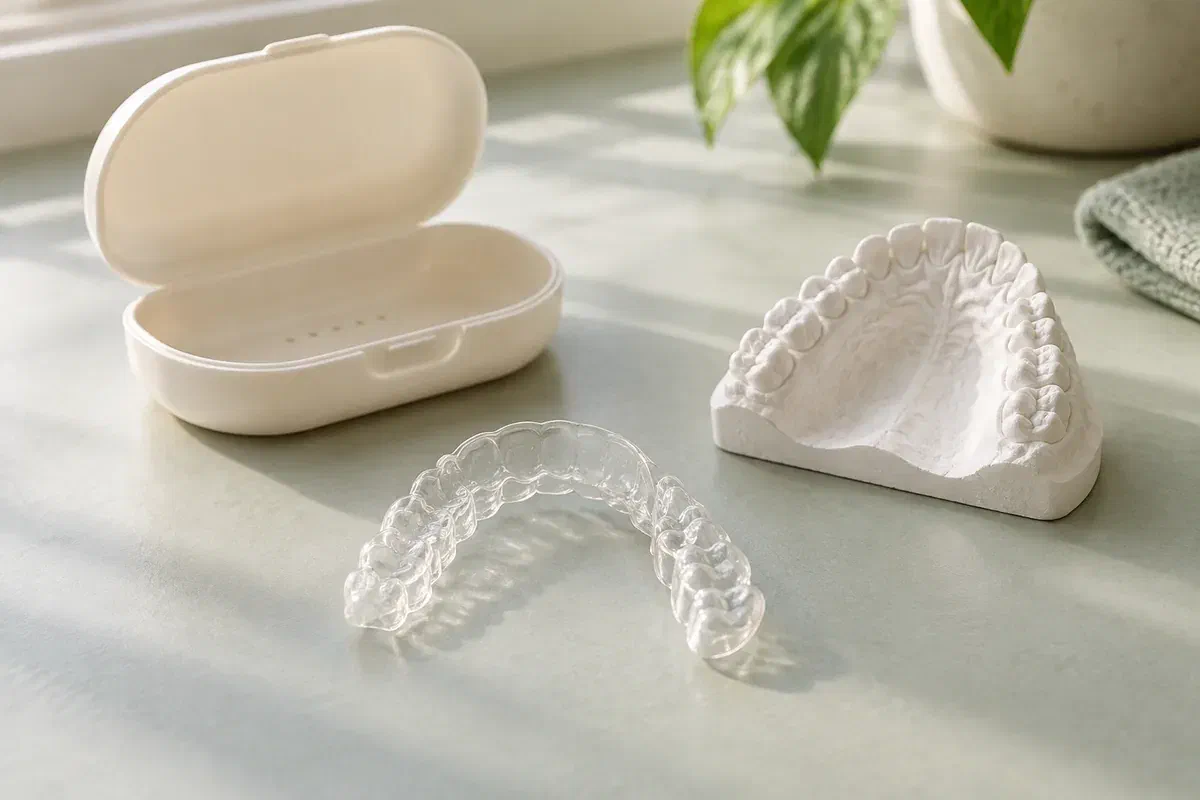
Illustrative clear upper retainer beside a protective case and dental cast
What's happened this time

Each kind of problem comes with its own first step.

Describe whether the retainer is missing, damaged or fitting poorly, and which arch. Mention a bonded wire if you have one, plus any fillings or other dental work since the appliance was made.

Missing again

Get in touch promptly with us or the office that made the original, rather than waiting until a routine visit. We can tell you what to bring and how to manage in the meantime. Please don't assume a new retainer will be ready on the day.

Damaged beyond comfortable use

Bring the damaged appliance in its case and show where the problem is. If an edge scratches your tongue or cheek, mention that. Home repairs with glue, heat or tools can make the retainer harder to assess and less safe to wear.

Fitting differently than before

Explain when it changed and whether wear lapsed for a stretch. Avoid pressing a painful retainer into place. The clinician will look at whether the appliance or your teeth have changed, since that steers what is suggested.

Some people have a fixed wire bonded behind their front teeth as well as a removable retainer. If yours is loose or broken, mention it. It's assessed separately, and a new or spare removable retainer won't take its place.

Breaking the cycle

A replacement that comes with a better system

The value of the visit is a plan you can rely on: what the new retainer holds, how often to wear it, where it lives when it's out, and who reviews it. If a spare is part of that plan, you'll also know how to store and check it.

Look honestly at where previous retainers went. Restaurant napkins, the gym change room, a hotel bedside table, a pet's reach: these are familiar stories. We can suggest practical habits that suit your days, without implying that any approach removes the need for care.

Records that match your teeth today

Ask whether older records still fit your mouth or whether new ones are needed, particularly if you've been without a retainer for a while. Mention any restorations since your last appliance so the replacement can be planned accurately.

A view on alignment before you order

If you've noticed changes, raise them before a new retainer and any spare are agreed. Ask what the appliances would hold and whether an orthodontic opinion is worthwhile. Then decide with all the information in front of you.

A routine built around where losses happen

Ask for wear hours, cleaning instructions and review timing, and tell us when the last retainers disappeared. If you work shifts, travel or move between homes, say so. You should leave knowing exactly what to do and who to contact.

How it's arranged

Understand the losses, check the teeth, fit the new one.

Visits depend on your appliance and the findings. Ask how many appointments to expect, what the fees would be for a replacement and any spare, and how fitting works.

  1. Go over the retainer history

    Bring any remaining or damaged retainer and whatever orthodontic paperwork you have. If your treatment was done elsewhere, we can talk about requesting records. Describe how previous retainers were lost and any shifting you've noticed.

  2. Look at teeth, bite and the old appliance

    An exam shows where your teeth are now and whether a straightforward replacement will meet your needs. If a bonded wire has loosened, a filling is new, your gums are sore or you're rethinking alignment, this is when to say so.

  3. Decide on the retainer, a spare and records

    Discuss which design suits you and whether a spare is appropriate. Ask whether moulds or a scan will be taken and whether older files can't be used. Confirm the timeline and what to do until the appliances are ready.

  4. Fit, practise and set up storage

    At fitting, practise putting the retainer in and taking it out, and mention any pressure. Go over wear, cleaning and where each appliance should be kept. Ask what to do if either one seats differently at home.

Making it stick

Where the retainer lives matters as much as how it's cleaned.

Use the care sheet supplied with your new retainer. Materials vary in their needs, and the clinician who manages your retention will tell you how long to wear it.

Out of the mouth means into the case

Make it non-negotiable. Keep the case with you whenever you'll eat away from home. Never set the retainer on a napkin, a tray or a bedside table, and keep cases closed and away from pets.

Clean and rotate a spare as advised

Get clear guidance on cleaners, how warm the rinse water can be, and how to store a spare so it stays in good condition. Avoid heat. If you're told to try the spare periodically, follow that guidance, and report any change in fit.

Keep both under review

Bring your retainer, and any spare, to appointments when asked. If wear lapses, call to ask how to resume. Mention upcoming dental work, which might affect how either appliance fits afterward.

Patient information: British Orthodontic Society — continuing retention and appliance types

Options to discuss

Replace, review, or step back and look at alignment

Depending on what the clinician finds, the plan might be a new retainer, a check of the one you have, or a conversation about moving teeth. It should suit both your current teeth and your goals.

When the aim is to hold your present alignment

A new removable retainer, with or without a spare

Ask which design is recommended, why, and what the fee covers for one appliance or two. Discuss how a spare would be checked over time. Each new retainer should be fitted and confirmed in your mouth, not just handed over.

When yours might be salvageable

Assessment of an existing retainer

If you still have an older or damaged appliance, the clinician may need to see it before deciding on adjustment, repair or replacement. Ask what's possible for that material. Repair isn't always suitable, and home repairs should be mentioned.

When you'd like shifting corrected

A separate look at tooth movement

If you'd prefer your teeth moved back, discuss an orthodontic opinion before ordering appliances for today's position. Talk about the scope and any referral. Holding teeth and moving them call for separate decisions.

Spares and replacements

Questions from people who've lost a retainer before

Answers depend on your treatment history, your teeth now and the records available. Call with whatever you can remember.

(905) 876-4488
Should I keep my old retainer as a backup once I get a new one?
Ask the clinician. If the old appliance is in good condition and still fits, it might be useful, but a worn or poorly fitting retainer may not hold teeth properly. Bring it to your visit.
How should a spare retainer be stored?
Usually clean, dry and in its own case, away from heat and pets. Ask for specific advice for your material, and whether you should check its fit from time to time.
Is there anything that makes a retainer harder to lose?
No design is lose-proof, but habits help: a bright case, a fixed spot at home, and never wrapping it in a napkin. Tell us where previous retainers went missing so you can plan around those moments.
After a replacement, do I go back to wearing it all day?
Not automatically. Your wear schedule depends on your history, how long you were without a retainer and the clinician’s judgment. Ask for clear hours at the fitting, and don’t add or drop hours on your own afterward.
Will the new one feel tight after weeks without a retainer?
It may feel snug at first, particularly if your teeth were left unsupported for a while. Mention any lasting pressure, soreness or trouble removing it. Ordinary snugness and real pain are different, and the clinician can help you tell which is which.
Can a review from Acton be booked with my regular check-up?
Ask when you book. Combining a retainer check with a hygiene or other appointment may be possible, depending on what’s needed and the time available.
Retainer help for Acton

Lost it again? Let's make the next one easier to keep.

If your retainers keep going missing, or the latest one has broken or stopped fitting, call our Bronte Street practice. Bring any appliances and treatment notes you have, and we'll talk through fit, alignment, a possible spare and a storage routine that works.

The retainer design, whether a spare is appropriate, records, fees, timing and any orthodontic review are confirmed after assessment. Same-day supply isn't guaranteed.

Visit Milton Dental Clinic
Unit 1, 342 Bronte St. S, Milton, ON L9T 5B7
Get directions Clinic hours
Monday–Thursday
11am–7pm
Friday–Sunday
By appointment only

Areas we serve

  • Milton
  • Oakville
  • Mississauga
  • Georgetown
  • Halton Hills
  • Acton
  • Campbellville
  • Brampton
  • Burlington
  • Puslinch
  • Rockwood
  • Erin
  • Caledon
  • Etobicoke
  • Old Milton
  • Bronte Meadows
  • Timberlea
  • Dorset Park
  • Dempsey
  • Clarke
  • Beaty
  • Coates
  • Harrison
  • Scott
  • Willmott
  • Ford
  • Bowes
  • Cobden
  • Walker
  • Mountain View
  • Milton Heights
  • Hawthorne Village
  • Valley View
  • Fallingbrook
  • Nassagaweya
  • Trafalgar
  • Esquesing
  • Nelson
  • Brookville
  • Moffat
  • Glen Williams
  • Norval
  • Limehouse
  • Stewarttown
  • Ashgrove
  • Hornby
  • Silver Creek
  • Speyside
  • Scotch Block
  • North Oakville
  • River Oaks
  • Glen Abbey
  • West Oak Trails
  • Palermo
  • Bronte Creek
  • College Park
  • Joshua Creek
  • Uptown Core
  • Preserve
  • Iroquois Ridge
  • Lisgar
  • Meadowvale
  • Meadowvale Village
  • Churchill Meadows
  • Erin Mills
  • Central Erin Mills
  • Streetsville
  • East Credit
  • Creditview
  • Heartland
  • Sheridan
  • Mount Pleasant
  • Credit Valley
  • Huttonville
  • Churchville
  • Springbrook
  • Northwest Brampton
  • Bram West
  • Fletcher's Meadow
  • Fletcher's Creek South
  • Alton Village
  • Orchard
  • Millcroft
  • Headon Forest
  • Tansley
  • Brant Hills
  • Tyandaga
  • Kilbride
  • Lowville
  • Aberfoyle
  • Morriston
  • Arkell
  • Hillsburgh
  • Freelton
  • Carlisle
  • Waterdown
  • Flamborough
  • Mountsberg

How can we help?

Milton Dental Clinic

Have a question about your smile? Choose the option that works best for you.

For urgent dental concerns, please call.
Messages are reviewed during clinic hours.