Gone without a trace
If the retainer can't be found, contact us or the office that made it promptly. Don't wait for your routine check-up. Ask what you should bring and how to manage until you're seen, without counting on an immediate replacement.


A hairline crack, a snapped clasp or a wire bent out of shape doesn't always mean the retainer is finished, and glue won't tell you either way. From Burlington, bring the pieces in so the damage and your teeth can be assessed together.
Damage tends to happen in ordinary moments. The retainer slips off the counter, the dog finds the case, or a thin line in the plastic grows a little every time it goes in. The instinct is to patch it and carry on, but a home repair can leave sharp spots, change the fit, and make it harder for anyone to judge what's salvageable.
Even when replacement is the answer, it's worth understanding what a new appliance can and can't do. It holds teeth where they sit today; it doesn't reverse movement that has crept in. Think about whether your current alignment suits you, or whether you'd prefer an assessment of changes since treatment first.
When you call from Burlington, describe the break and roughly when the retainer last felt right. Put every piece in the case, even small fragments. You don't need to know what the appliance is called or who made it originally; the clinician can work that out with you.
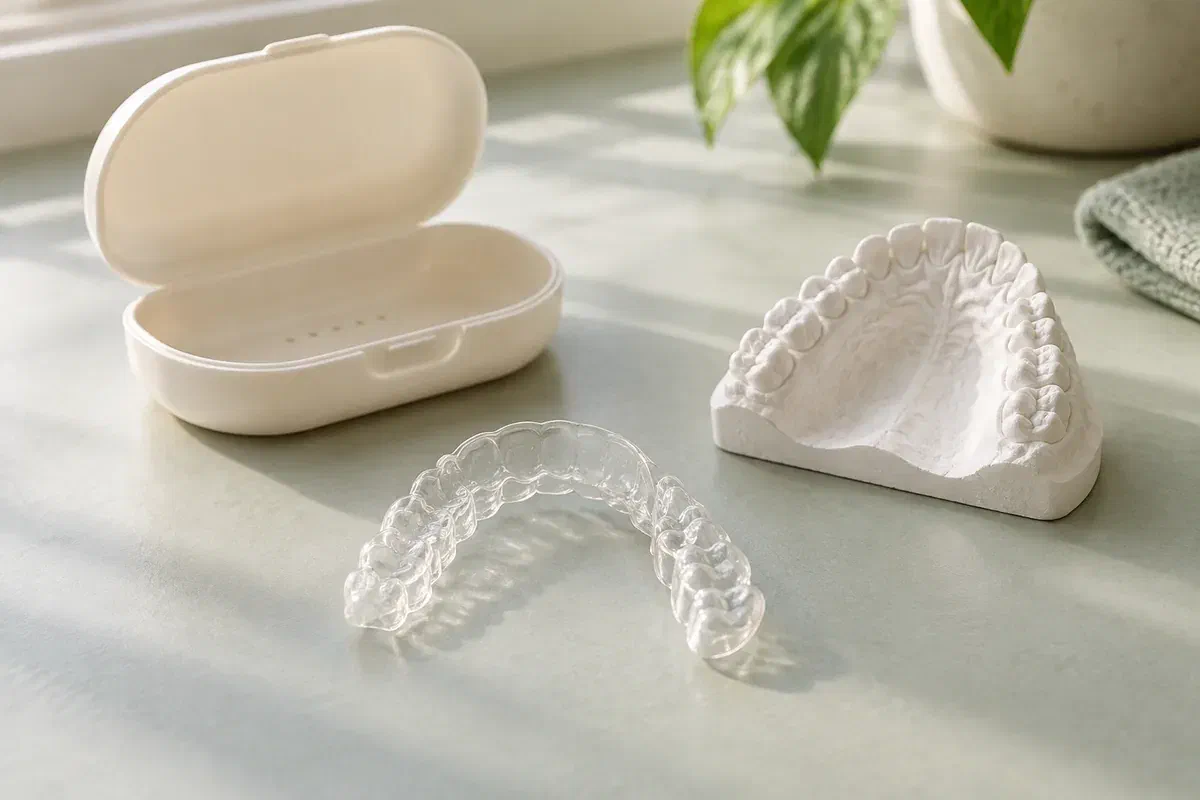
Tell us which arch it is, what happened, and whether a bonded wire is also in place. Recent fillings, crowns or other dental work are worth mentioning, too.
If the retainer can't be found, contact us or the office that made it promptly. Don't wait for your routine check-up. Ask what you should bring and how to manage until you're seen, without counting on an immediate replacement.
Save the pieces in the case and bring them. Show where the damage is and whether anything is scratching your gums. Glue, heat, trimming and wire-bending at home can create new hazards and get in the way of a proper assessment.
After a fall or a chewing incident, a retainer may still go in yet feel different. Explain what changed and when. Don't force it; the clinician must decide whether the appliance is distorted or the teeth have shifted before suggesting a next step.
If you wear a removable retainer and also have a wire bonded behind your teeth, mention both. Damage to the bonded wire needs its own look, and a new removable retainer doesn't address it.
An assessment does more than confirm that the retainer is broken. It tells you what positions the replacement or repaired appliance is meant to hold, how to wear it, and who will check it if something shifts. That keeps retention on track rather than starting over each time something breaks.
It also gives you a chance to look at how the damage happened. Pets, a habit of chewing on the retainer, storage in a pocket or a crowded bathroom counter are common culprits. We can talk about simple changes, knowing that any appliance still needs careful handling and regular wear.
Ask whether the original records still match your mouth or whether new ones are needed. List any dental work since the old retainer was made. That information guides how a new appliance is planned and how its fit is confirmed.
If something about your smile has changed and bothers you, mention it before agreeing to a new retainer. Ask what the appliance would maintain and whether an orthodontic opinion should come first. Then choose with full information.
Ask about wear hours, cleaning, storage and review for the design you receive. Describe where the last one got damaged. If your routine involves shift work, travel or two households, say so, and make sure you know who to call if the fit feels off.
Your appointments depend on the damage and the findings. Ask what visits to expect, what fees apply and how the replacement or repair will be fitted.
Bring the damaged appliance, any spare, and whatever information you have from earlier orthodontic treatment. If another clinic was involved, we can discuss requesting records. Mention any shifting you've noticed and what you'd like to preserve.
With the broken appliance beside your teeth, the clinician can usually see how the damage happened and whether simply replacing it is enough. Speak up if a bonded wire feels loose, a tooth has been restored recently, your gums are irritated or you're having second thoughts about your alignment.
Discuss whether a repair, adjustment or new retainer is appropriate and whether impressions or a scan are required. A previous file may not be usable. Confirm the expected process and what to do with the damaged appliance until then.
Whether it's a repaired appliance or a new one, try it in at the chair and practise taking it out again. Say where you feel pressure. Before leaving, confirm wear and care instructions, your next review, and what to do if it seats differently at home.
Follow the specific care instructions for your new appliance. Designs differ in how they should be handled, and your wear routine should be set by the clinician responsible for retention.
Put the retainer in its case the moment it comes out, and keep the case closed and out of reach of pets. Avoid leaving it on a bedside table, in a jacket pocket or wrapped in a napkin at a meal.
Ask which brushes and products suit the material, and which water temperature is safe. Hot water and harsh scrubbing can damage some designs. Check before using any soak or tablet sold for another purpose, and mention any cloudiness or roughness.
Report a new crack, a wobbly clasp or a change in fit at your next contact rather than waiting for it to fail. If you've missed wear, ask how to resume. Before other dental treatment, check whether the retainer will need a fit review afterward.
Patient information: British Orthodontic Society — continuing retention and appliance types
Answers depend on the damage, your earlier treatment, your current teeth and available records. Get in touch with what you know.
Cracked, chewed, bent or simply gone, a retainer problem is worth a call to our Bronte Street practice. Bring every piece you have and any treatment details, so we can look at the damage, your current alignment and a routine that protects the next one.
Repair or replacement, records, timing, fees and any orthodontic review are confirmed after assessment. Same-day supply is not guaranteed.
