

Illustrative patient and clinician discussing a removable retainer and its protective case
Cosmetic Dentistry

Replacement Retainers in Etobicoke

Coming in from Etobicoke for a replacement retainer works best with a little planning. A clear phone call up front, the right items in your bag and well-organised visits help keep the number of trips down while your fit and alignment are properly checked.

Planning the trip from Etobicoke

Make each visit count.

When the drive is longer, the phone call before your first appointment does a lot of work. Explaining what happened, what you still have and when the retainer last fit lets the team plan what to check and which records might be needed, so the visit isn't spent finding out you should have brought something.

It's worth being clear on one limit before you book. A replacement is made to hold the teeth you have now. It won't nudge back any drift that's already occurred. If something about your alignment has changed and bothers you, mention it on the call so the first appointment can cover that question too.

Coming from Etobicoke, pack the damaged or remaining retainer, its case and any orthodontic paperwork you can find. You don't need a full treatment history or the name of the appliance. A rough timeline and an honest account of recent wear are what the clinician will ask about first.

Plan a retainer visit by phone
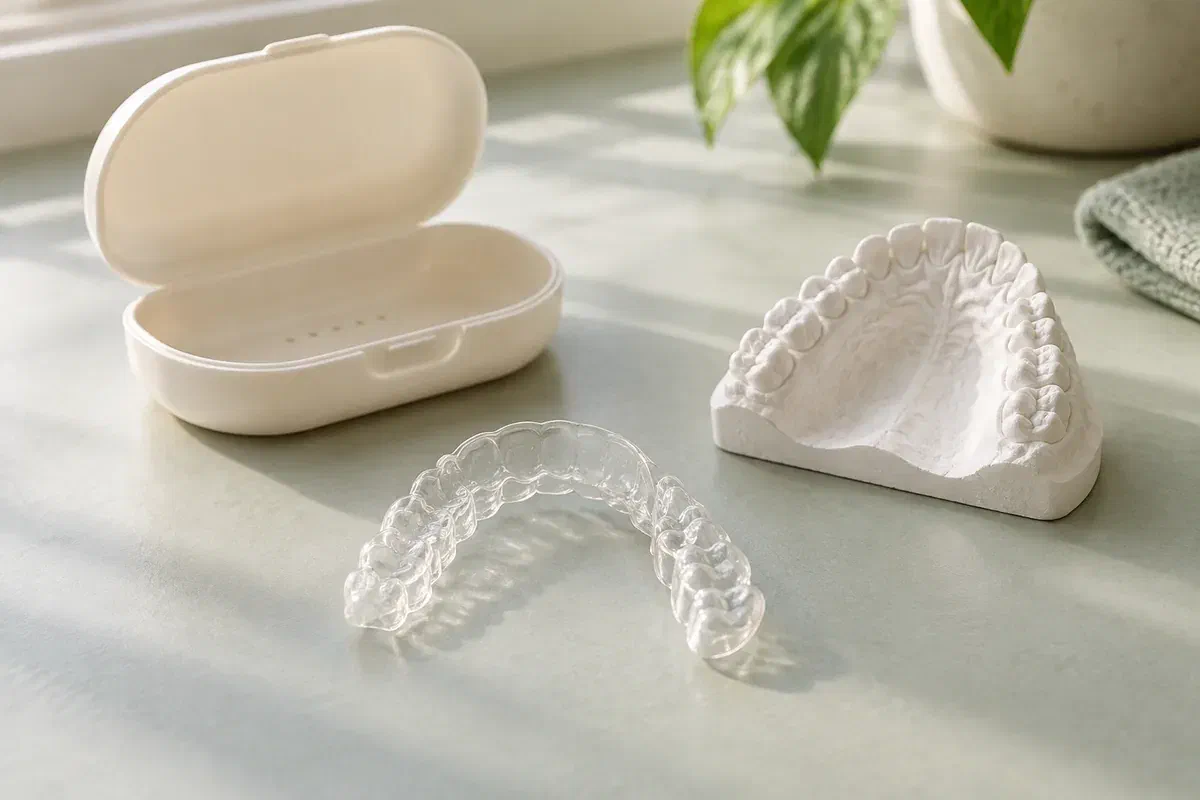
Illustrative clear upper retainer beside a protective case and dental cast
Describe it before you drive

Three situations, three slightly different preparations

On the phone, say whether the retainer is missing, damaged or fitting poorly, and which arch it is. Include whether you have a bonded wire and any dental treatment since the appliance was made.

You can't find it anywhere

Get in touch soon, either with us or with whoever made the retainer, rather than waiting until a routine visit. Ask what you'll need to bring so one trip covers as much as possible. A ready-made appliance on the day shouldn't be expected.

It cracked or the wire bent

Put every piece in the case and bring it along. Tell us where the damage is and whether an edge hurts. Avoid fixing it with glue, heat, a file or pliers; that can create sharp spots and make assessment less reliable.

It goes in, but not properly

Explain when the fit changed and whether you'd stopped wearing it for a time. Don't press it into place if it's painful. The clinician needs to see whether the retainer or the teeth have moved before deciding what to recommend.

Mention a bonded wire behind your front teeth if you have one. A loose fixed retainer is assessed separately, and a removable replacement won't correct it. Knowing in advance helps plan the visit.

Worth the trip

One plan you can follow from home

The goal isn't just to pick up a new retainer and leave. You should know what it's meant to hold, how many hours to wear it and how follow-up will work when you live further away. A clear plan means fewer surprise trips and more confidence between visits.

Tell us what made the old routine hard. A long commute, meals at work, or a retainer left at a relative's house are common stories. We can talk through practical adjustments, without pretending that a different appliance will make retention automatic.

Records matched to your mouth today

Ask whether older scans or impressions still apply or whether new ones should be taken while you're here. Mention fillings, crowns or bonding since your last retainer. That helps the clinician plan the appliance and its fitting efficiently.

A decision on drift made up front

If alignment has changed, raise it before a replacement is ordered. Ask what a new retainer would maintain and whether an orthodontic opinion would help. Deciding early avoids a retainer made for a position you later want to change.

Follow-up that suits the distance

Ask for wear hours, cleaning steps and storage advice, and discuss how reviews can be spaced sensibly. If you work long hours or travel, say so. Leave knowing when to call and when a visit is actually needed.

Visits, organised

How to keep the appointments to what's needed

The number of visits depends on your appliance and what the exam shows. Ask on the phone how many to expect, what fees apply and how fitting will be arranged.

  1. Prepare by phone

    Describe what happened, what you still have and who did your orthodontic treatment. If records exist at another office, we can discuss requesting them ahead of time. Note any changes in your alignment and what you want to keep.

  2. Assessment at the first visit

    Your teeth, bite and whatever is left of the retainer are examined so the clinician can judge whether a straightforward replacement will do. Because a second trip costs you more time, mention everything at once: a lifting fixed wire, recent fillings, soreness or alignment worries.

  3. Records taken in the same appointment where possible

    Once a design is chosen, the clinician will say whether fresh moulds or a digital scan of your teeth are required. Ask if that can happen during the first visit rather than on a separate trip. Confirm the timeline and what to do about retention until the fitting.

  4. A fitting that prepares you for home

    You'll practise inserting and removing the new retainer until it feels manageable, flagging any spot that presses. Cover wear, cleaning, the review plan and who to call. Ask which concerns can be handled by phone and which need you to come in.

Between visits

Care that cuts down on unplanned trips

Follow the instructions for your new retainer. Different materials need different care, and the clinician responsible for your retention will tell you how long to wear it each day.

Carry the case on long days

Keep the case with you at work and when eating out, and put the retainer straight into it. Napkins, desk drawers and jacket pockets are common places for it to go missing or get crushed.

Avoid heat and guesswork

Ask which cleaning products and water temperatures are safe. Keep the retainer away from hot water, dishwashers and warm cars. Check before using any soak, and mention odour or cloudiness when you next speak with us.

Call before you come in

If the fit changes or you miss wear, phone first to ask whether a visit is needed and how to restart. Bring the retainer to reviews. Mention any other dental treatment planned, since it may affect the fit.

Patient information: British Orthodontic Society — continuing retention and appliance types

What the visit may lead to

Choose the route once, with the facts in hand.

The exam may point toward your existing retainer, a replacement or a separate alignment conversation. The recommendation should reflect your teeth today and what you want.

When maintaining your current alignment is the aim

A new removable retainer

Clear or wire-and-acrylic designs may be discussed where suitable. Ask why a type is suggested, what the fee includes and how reviews will work from a distance. A new retainer still needs a proper fit check.

When it may be adjustable or repairable

Reviewing the retainer you have

Bring the appliance even if you think it's beyond saving; seeing it in person is what tells the clinician whether a small adjustment, a repair or a new retainer is the sensible choice. Many materials can't be mended reliably, and an earlier home fix changes the picture, so mention one.

When you'd rather correct the drift

Orthodontic input on movement

If you want teeth moved back, ask about an orthodontic opinion first so a retainer isn't made for a position you plan to change. Discuss the scope and any referral. Retention and correction are separate decisions.

Planning questions

What to ask when you're travelling in for a retainer

Answers depend on your earlier treatment, present alignment and available records. Call with what you know, even if it's incomplete.

(905) 876-4488
Can records and assessment happen at the same visit?
Often they can, depending on what the clinician finds and what records are needed. Ask when booking so the appointment can be planned with enough time. If more information is required first, we’ll explain why.
What should I pack for the first appointment?
Bring the damaged or remaining retainer in its case, any spare, and paperwork from your orthodontic treatment. A list of dental work since then helps. If you take medications, bring that information too.
Can a minor fit question be answered by phone?
Some questions can be talked through by phone, while others need an exam. Describe the problem clearly. If an in-person look is needed, we’ll explain why and help you plan the visit.
What if my new retainer feels wrong after I get home?
Stop wearing it if it’s painful and call us. Describe what you’re noticing, such as pressure in one area or difficulty removing it. We can advise whether an adjustment visit is needed.
Should I go to a closer clinic if something urgent happens?
For severe pain, swelling or an injury, seek prompt care nearby if that’s faster. Let us know afterward so your retention plan can be updated. A non-urgent fit issue can usually wait for a planned visit.
How can I reduce the number of trips from Etobicoke?
Share as much as possible when you call, bring everything requested and ask whether steps can be combined. The total number of visits still depends on what the assessment shows and the retainer chosen.
Retainer planning for Etobicoke

Call first. Then come in prepared.

A lost, damaged or ill-fitting retainer is easier to sort out when we hear about it before you set off. Describe your situation by phone, then bring the appliance and any treatment details to our Bronte Street practice. The visit can then go straight to checking fit, looking at alignment and building a routine you can manage at home.

Retainer design, records, number of visits, fees and any need for orthodontic input are confirmed after assessment. We can't guarantee same-day supply.

Visit Milton Dental Clinic
Unit 1, 342 Bronte St. S, Milton, ON L9T 5B7
Get directions Clinic hours
Monday–Thursday
11am–7pm
Friday–Sunday
By appointment only

Areas we serve

  • Milton
  • Oakville
  • Mississauga
  • Georgetown
  • Halton Hills
  • Acton
  • Campbellville
  • Brampton
  • Burlington
  • Puslinch
  • Rockwood
  • Erin
  • Caledon
  • Etobicoke
  • Old Milton
  • Bronte Meadows
  • Timberlea
  • Dorset Park
  • Dempsey
  • Clarke
  • Beaty
  • Coates
  • Harrison
  • Scott
  • Willmott
  • Ford
  • Bowes
  • Cobden
  • Walker
  • Mountain View
  • Milton Heights
  • Hawthorne Village
  • Valley View
  • Fallingbrook
  • Nassagaweya
  • Trafalgar
  • Esquesing
  • Nelson
  • Brookville
  • Moffat
  • Glen Williams
  • Norval
  • Limehouse
  • Stewarttown
  • Ashgrove
  • Hornby
  • Silver Creek
  • Speyside
  • Scotch Block
  • North Oakville
  • River Oaks
  • Glen Abbey
  • West Oak Trails
  • Palermo
  • Bronte Creek
  • College Park
  • Joshua Creek
  • Uptown Core
  • Preserve
  • Iroquois Ridge
  • Lisgar
  • Meadowvale
  • Meadowvale Village
  • Churchill Meadows
  • Erin Mills
  • Central Erin Mills
  • Streetsville
  • East Credit
  • Creditview
  • Heartland
  • Sheridan
  • Mount Pleasant
  • Credit Valley
  • Huttonville
  • Churchville
  • Springbrook
  • Northwest Brampton
  • Bram West
  • Fletcher's Meadow
  • Fletcher's Creek South
  • Alton Village
  • Orchard
  • Millcroft
  • Headon Forest
  • Tansley
  • Brant Hills
  • Tyandaga
  • Kilbride
  • Lowville
  • Aberfoyle
  • Morriston
  • Arkell
  • Hillsburgh
  • Freelton
  • Carlisle
  • Waterdown
  • Flamborough
  • Mountsberg

How can we help?

Milton Dental Clinic

Have a question about your smile? Choose the option that works best for you.

For urgent dental concerns, please call.
Messages are reviewed during clinic hours.