

Illustrative patient discussing an enamel colour concern with a dental clinician
Cosmetic Dentistry

Resin Infiltration for White Spots

White patches on enamel can have different causes and different treatment needs. Explore resin infiltration for white spots in Milton with an assessment of the marks, their condition, and whether a conservative approach could soften their appearance.

A closer look at resin infiltration

Understand the white spot before deciding how to soften its contrast.

Resin infiltration uses a fluid dental resin within suitable porous enamel lesions. It can change the way light passes through the affected area, reducing the contrast of some white spots against surrounding enamel. It is a professional dental procedure, with suitability determined by the type and condition of the lesion.

A white mark is a description of appearance, not a diagnosis. A patch noticed after braces and a mark present since a tooth erupted may have different explanations. The clinician needs to assess the surface, history, and oral health before discussing whether infiltration, preventive care, another treatment, or monitoring makes sense.

At Milton Dental Clinic, show us the areas that bother you and explain the change you hope to see. We can discuss what needs assessment and whether this approach is appropriate and available for your case. The goal is an informed choice, with realistic expectations about how much contrast may remain.

Discuss white spots on your teeth
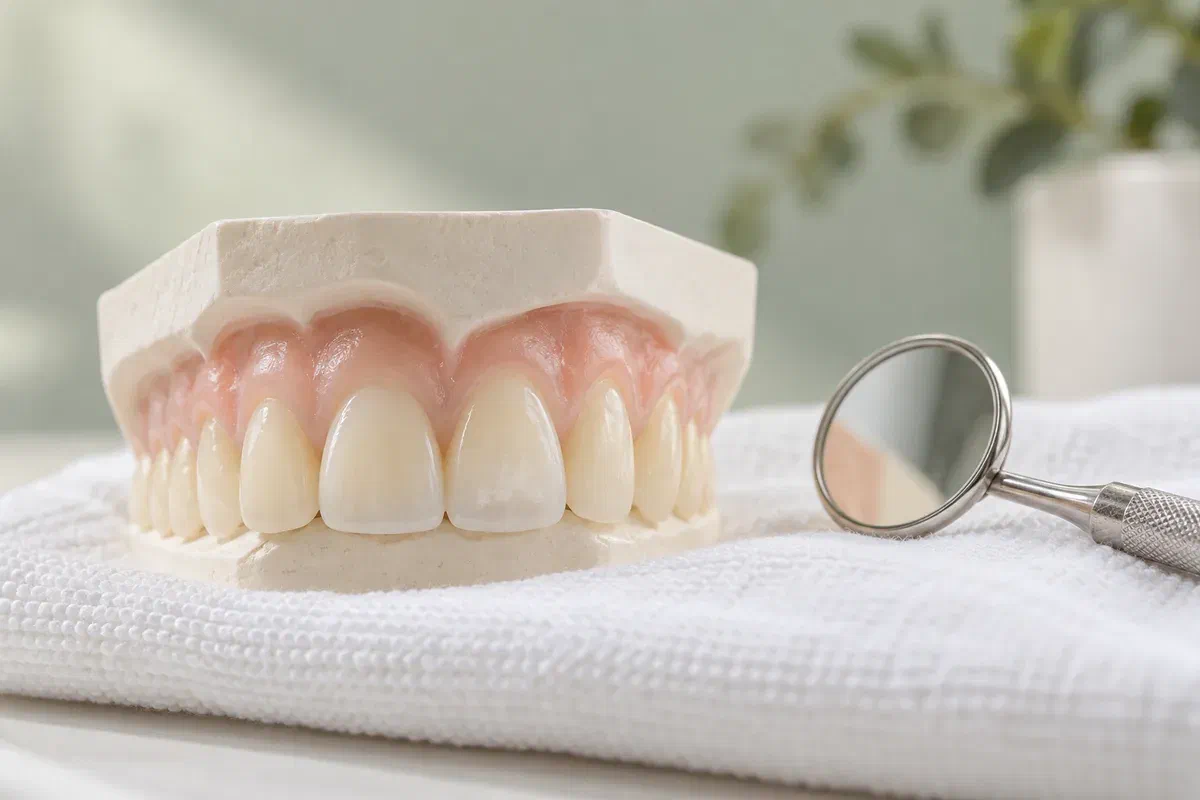
Illustrative dental teaching model with a subtle white enamel patch beside a dental mirror
Questions behind an enamel mark

Appearance and tooth health both deserve attention.

Explain when you first noticed the spot, whether it has changed, and any history of braces, sensitivity, or previous cosmetic treatment. A photograph alone cannot settle the diagnosis.

Marks noticed around former brackets

Ask whether the appearance reflects an enamel lesion and whether there are ongoing factors that need attention. Discuss preventive care as well as the cosmetic concern. A plan to reduce visible contrast should not leave you uncertain about the health of the affected surface.

Longstanding patches with an uneven shade

Tell the clinician whether the mark has always been present and whether similar areas occur on other teeth. Ask how the suspected cause affects the options. A treatment that helps one kind of white spot may not produce the same result in another.

A rough, broken, or sensitive area

Mention changes in texture, discomfort, or a visible defect rather than treating the concern as colour alone. Ask what further examination is needed and whether another form of care takes priority. Infiltration is not a universal replacement for repairing damaged tooth structure.

The proposed area must be assessed for suitability. Resin infiltration is used for selected lesions without a cavity in the surface; a visibly broken-down area needs a separate restorative decision.

What this approach may offer

Consider a focused change without assuming every mark will disappear.

For a suitable lesion, infiltration may offer an appearance-focused option before a larger covering restoration is considered. Ask what preparation is involved and how the recommendation compares with leaving the tooth as it is. Conservative care still needs an explanation of the procedure and its limitations.

Results vary between lesions. Clinical research has found complete masking in some areas and partial or little change in others. Your conversation should include what an improvement would mean to you, how it will be reviewed, and what happens if the remaining mark is still noticeable.

Patient information: Clinical study — variable masking of developmental and post-orthodontic lesions

A plan directed at the particular patch

Discuss which areas are suitable and which may need a different approach. Ask whether each tooth has the same diagnosis or whether the plan differs across the smile. This helps you understand why treatment might be limited to certain surfaces rather than applied everywhere.

A measured discussion of the likely appearance

Explain whether your priority is a less obvious outline, a more even photograph, or simply understanding the mark. Ask what can reasonably be anticipated for that lesion. Examples can help a conversation, but another person's outcome should not be treated as a prediction.

Space to compare the alternatives first

Ask how infiltration differs from remineralization, microabrasion, bonding, and whitening in your case. Compare preparation, expected benefit, maintenance, and cost. You can decide whether the likely change is worthwhile without being committed to a larger cosmetic treatment if you decline.

How infiltration is considered

Assess the lesion, explain the procedure, and agree on the review.

The exact treatment depends on the examination and the system selected. Ask what the appointment includes, how the tissues will be protected, and when you should assess the appearance.

  1. Review the history and examine the enamel

    Discuss how long the spots have been visible, earlier orthodontic care, and any products already tried. The clinician assesses their condition and possible cause. Ask whether preventive treatment or further investigation is needed before an elective appearance procedure can be considered.

  2. Choose the areas and discuss realistic limits

    Identify which teeth and surfaces are included in the proposed plan. Review the anticipated benefit, possible incomplete masking, alternatives, fees, and consent. Tell the clinician about allergies or reactions to dental materials and ask how these affect the recommendation.

  3. Prepare and treat suitable surfaces professionally

    When treatment is appropriate, the selected area is isolated and prepared before the resin is applied and hardened with a curing light. Ask for an explanation of the proposed steps and comfort measures. This is not a home treatment or a whitening product to self-apply.

  4. Finish the surface and arrange reassessment

    Discuss the immediate appearance and when it should be reviewed again. Ask what photographs or notes will be used to compare the change. If some contrast remains, arrange a considered discussion rather than assuming that additional preparation or another procedure is automatically required.

After treatment and between reviews

Keep caring for the enamel behind the cosmetic change.

Follow the instructions given for the procedure actually performed. An improvement in appearance does not replace routine dental care or the preventive plan recommended for your teeth.

Clarify the immediate instructions before leaving

Ask whether there are any short-term eating, drinking, cleaning, or product restrictions for your treatment. Write down the advice if that helps. Avoid borrowing a strict diet or aftercare routine from an unrelated whitening or bonding procedure you have seen online.

Continue the agreed prevention routine

Discuss brushing, cleaning between teeth, and any fluoride advice that applies to your situation. If the marks followed a period of difficult cleaning, ask for practical help with that routine. Cosmetic attention to an existing spot should sit alongside attention to ongoing risk.

Review changes without trying to scrub them away

Report a new rough area, discomfort, or a colour change that concerns you. Ask when the appearance is best reassessed and whether polishing or another step is appropriate. Do not use abrasive home remedies or attempt to remove a remaining patch yourself.

Patient information: Clinical follow-up — reviewing colour after white-spot infiltration

Choosing care for a white spot

Match the intervention to the lesion and your priorities.

Not every visible mark needs a cosmetic procedure. Ask what each option is intended to achieve, what it changes about the tooth, and what would be involved in leaving it under observation.

When the first priority is the enamel's condition

Prevention and monitoring

An oral-health plan may include preventive measures and review before or instead of an appearance treatment. Ask what change the clinician is monitoring and when another decision will be made. Improving health and completely removing a visible mark are not interchangeable outcomes.

When the diagnosis supports a focused procedure

Resin infiltration or another conservative surface approach

Discuss whether infiltration or a different surface treatment is suitable for the particular lesion. Ask about preparation and the likelihood of residual contrast. If several approaches are considered, their order and purpose should be explained before any irreversible step.

When the concern extends beyond suitable enamel porosity

A restorative option for a different type of defect

Bonding or another restoration may be discussed where the condition and goals support it. Compare the tooth preparation and future maintenance with the benefit expected. A more extensive restoration should not be the automatic response to a white mark that is simply noticeable.

White-spot infiltration questions

Ask about the mark you have, not just the treatment name.

The history, surface condition, and depth of an enamel lesion help shape the discussion. An examination is needed before an individual result or plan can be suggested.

(905) 876-4488
Does resin infiltration bleach the whole tooth around a white spot?
No. It is intended to work within suitable porous lesions and alter their appearance, rather than bleach the entire tooth. If general tooth shade is also a concern, discuss that separately so the purpose and order of any proposed treatments are clear.
Can a white spot from childhood respond differently from one noticed after braces?
Yes. Marks with different causes and structures can respond differently, which is why the history matters. Ask what the clinician thinks caused your patch and how that affects suitability. Complete disappearance cannot be assumed from another patient’s result.
Is infiltration appropriate if there is already a hole in the white area?
A broken-down surface requires an assessment of the defect and appropriate care. Infiltration for selected non-cavitated lesions should not be assumed to replace a needed restoration. Tell the clinician about texture changes, food trapping, or sensitivity as well as colour.
Will I need veneers if a white spot is only partly masked?
Not automatically. Review the remaining appearance, tooth health, and your preferences before considering another intervention. Ask about observation and other suitable options, including their preparation and maintenance. Additional cosmetic treatment is a separate decision requiring its own explanation.
Should I mention whitening plans before arranging white-spot infiltration?
Yes. Explain any previous bleaching and future shade goals before the procedure is planned. Ask whether whitening is suitable at all and how any combined approach would be sequenced. Do not start a separate product course without discussing its relationship to the plan.
Can the clinician promise that all my white spots will mask equally?
No. Individual lesions can differ even within the same smile. Discuss the expected range of change for each area and how incomplete improvement would be handled. Agree on the review process and avoid treating a perfectly uniform shade as a guaranteed outcome.
Resin infiltration for white spots in Milton

Start with an explanation of the enamel marks you see.

Arrange an assessment at our Bronte Street practice to discuss white spots, their likely cause, and the options appropriate to your teeth. Bring questions about contrast, prevention, preparation, and the result you would consider worthwhile.

Suitability and treatment availability require confirmation. Infiltration does not guarantee complete masking, and other care may be recommended after examination.

Visit Milton Dental Clinic
Unit 1, 342 Bronte St. S, Milton, ON L9T 5B7
Get directions Clinic hours
Monday–Thursday
11am–7pm
Friday–Sunday
By appointment only

How can we help?

Milton Dental Clinic

Have a question about your smile? Choose the option that works best for you.

For urgent dental concerns, please call.
Messages are reviewed during clinic hours.