

Illustrative patient discussing an enamel colour concern with a dental clinician
Cosmetic Dentistry

Resin Infiltration for White Spots in Georgetown

Resin infiltration can soften some white enamel spots, partly fade others and leave a few almost unchanged. Before deciding, it helps to know which outcome is likely for your marks and which one you would actually be happy with.

Setting the bar

A softer edge, not an eraser

Online before-and-after pictures tend to show the best cases, where a bright patch seems to vanish. Real results cover a wider range. Some lesions blend in almost completely, many improve partway, and some barely change at all. Knowing that before you start makes it much easier to decide whether treatment is worth it for you.

The procedure itself is straightforward to describe. For a suitable lesion with an unbroken surface, the enamel is prepared and a low-viscosity resin is drawn into its pores, then hardened with a light. Filling those pores alters how the patch scatters light, which can make it less conspicuous against the surrounding tooth.

What makes one mark respond better than another is mostly its cause, depth and condition, and that is what we look at first when someone books from Georgetown. After examining the teeth and hearing the history, we explain whether infiltration, prevention, a different approach or leaving things alone fits, and we describe how much of the spot may remain visible.

Get a realistic view of your spots
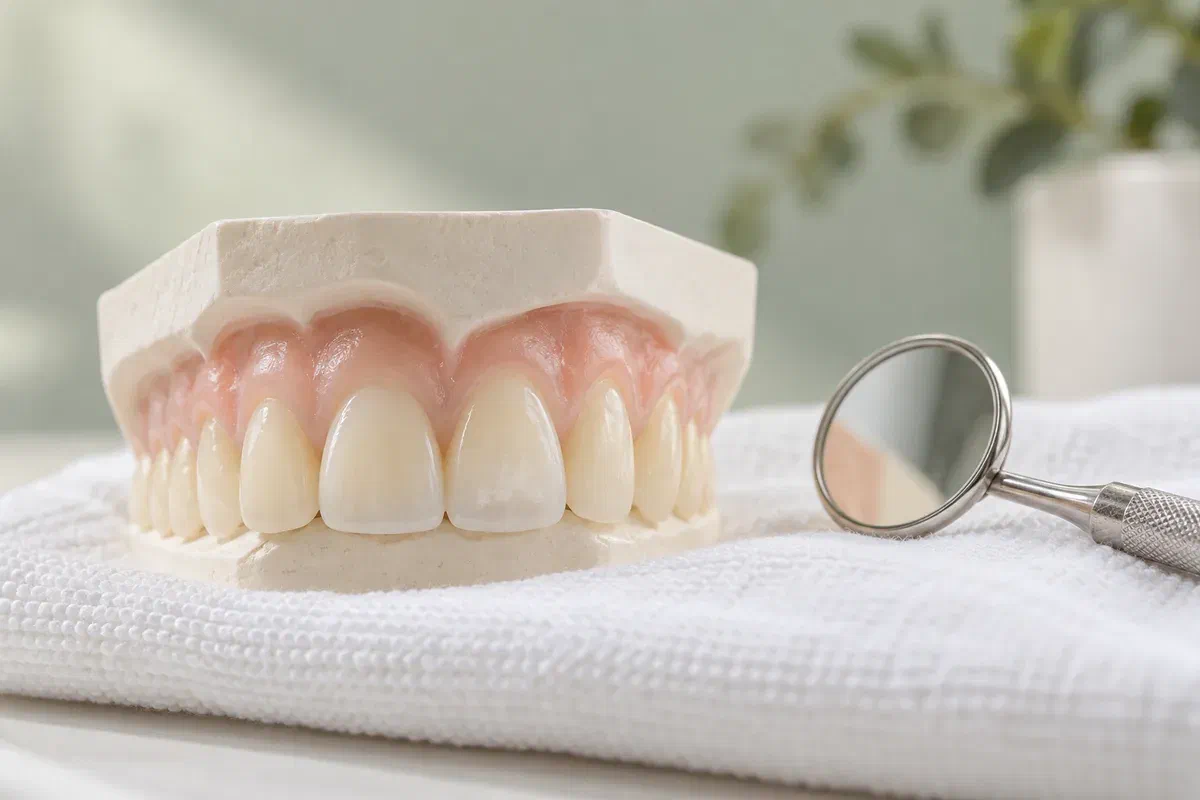
Illustrative dental teaching model with a subtle white enamel patch beside a dental mirror
Factors that shape the result

Why two white spots can respond so differently

Your history fills in what the mirror cannot. Mention when the mark first appeared, whether it has changed, and whether braces, sensitivity or past whitening play a part. Photos show what bothers you, but only an exam explains it.

Post-braces lesions near the gumline

Enamel that lost mineral around brackets is a common reason for white marks. Before thinking about how it looks, the clinician will check whether the process has stopped and what prevents it recurring. A cosmetic plan should never leave the health of that surface in question.

Marks formed while the tooth developed

Patches that were there from the start, or that repeat on several teeth, often have a different structure. That can affect how much infiltration helps. Your outlook for one of these may not match what a friend saw after braces.

Rough, chipped or sensitive patches

A texture change, a twinge or a visible break means the concern is more than colour. Further examination may be needed, and a repair might come first. Infiltration is not meant to restore enamel that has been lost.

Every proposed area is checked before treatment. Infiltration is used for selected lesions where the enamel surface has not broken into a cavity; a damaged surface needs a separate restorative plan.

Weighing the upside

When a partial improvement is still a good result

Many people find that a fainter, less sharply outlined spot is enough to stop them noticing it every day. For a suitable lesion, infiltration offers that kind of change before anything that covers the tooth is considered. Make sure the surface preparation, the comparison with no treatment and the procedure’s limits are all explained to you.

Clinical research backs up the mixed picture, with complete masking in some lesions and partial or minimal change in others. Decide in advance what you would count as a success, how the result will be compared at review, and what your options would be if a visible mark remains.

Patient information: Clinical study — variable masking of developmental and post-orthodontic lesions

A plan for each lesion, not the whole smile

One spot may be an excellent candidate while another nearby is not. The clinician can explain whether your marks share a diagnosis. That is usually why a plan targets particular surfaces instead of every tooth that looks uneven.

Your own definition of worthwhile

Maybe you want the edge softened, maybe you want photos to look more even, or maybe you mostly want to understand the mark. Say which. Then ask what that particular lesion can realistically offer, keeping in mind that showcase images belong to someone else.

Room to say no

Compare infiltration for your teeth with remineralization, microabrasion, bonding and whitening, looking at preparation, likely benefit, maintenance and fees. You can decide the expected change is not worth it, and that decision does not commit you to a larger cosmetic treatment.

From exam to verdict

The steps, with expectations built in

Exactly what happens depends on the findings and on which resin system the clinician uses. It is reasonable to ask what each appointment covers, how your gums and lips are protected and when you should judge the change.

  1. Examine and record the starting point

    Talk about how long the spots have been there, any orthodontic history and products you have used. The clinician assesses each lesion and its likely cause, and baseline photos may be taken. Prevention or further investigation may need to come first.

  2. Agree on a realistic target

    Choose the teeth and surfaces together. The likely benefit, the chance that a mark will only partly fade, alternatives, fees and consent are discussed openly. Mention any allergy or sensitivity to dental materials, since it may change the recommendation.

  3. Treat the selected areas

    If suitable, the tooth is isolated and the surface prepared before the resin is placed and cured with a light. The clinician will explain each step and the comfort options. It is a clinical procedure and not something to attempt at home with a whitening product.

  4. Compare the result fairly

    Look at the tooth right away, then again at an agreed review, using the baseline photos or notes. If some contrast remains, discuss it calmly before assuming that more preparation or a new procedure is required.

Keeping the gains

Look after the enamel around the change

Follow the instructions for the treatment you had. An improved appearance does not replace checkups or the preventive routine recommended for you.

Check the immediate instructions

Before you head home, ask whether anything should be avoided for a while, from certain foods and drinks to particular products or brushing habits. Jot it down if useful. Rules meant for whitening or bonding may not apply to your treatment.

Stick with daily prevention

Careful brushing near the gums, flossing and any fluoride advised for you help protect the enamel that was treated and the enamel that was not. If the marks formed during braces, ask for practical help with cleaning. Fewer new lesions means less to treat later.

Judge the result at the right time

Ask when the appearance is best reassessed rather than checking it under harsh light every day. Report any new roughness, discomfort or worrying colour change. Avoid abrasive remedies or trying to buff out what remains of a mark.

Patient information: Clinical follow-up — reviewing colour after white-spot infiltration

Georgetown choices

Match the effort to the payoff

A visible spot does not always justify a procedure. For each route, ask what it is supposed to achieve, what it changes about the tooth and what it would mean to simply keep an eye on it.

When the enamel needs support more than a makeover

Observation and prevention

A preventive plan with periodic review may come before an appearance treatment or replace it entirely. Ask what will be monitored and when a decision point arrives. A stable, healthy surface is a worthwhile outcome even if the mark is still visible.

When the lesion suits a focused step

Infiltration or a comparable conservative method

Whether infiltration or another surface treatment fits depends on the lesion. Ask about preparation and how likely leftover contrast is. If more than one method is planned, their order and reasons should be clear before any irreversible step.

When the concern extends past suitable porous enamel

Restoration when the defect is different

A damaged or uneven area may lead to a discussion of bonding or another restoration, if your goals and the tooth’s condition support it. Weigh the preparation and upkeep against the benefit. A noticeable mark on its own is not a reason for a bigger restoration.

Georgetown questions

What kind of result should I expect?

The lesion’s history, surface and depth guide the conversation. A personal plan or likely outcome can only be suggested after an examination.

(905) 876-4488
How do I decide whether a partial result is worth it?
Think about how often the mark bothers you now and whether a softer outline would change that. Discuss it with the clinician before treatment, and agree on how the change will be judged so the decision feels clear.
Are online before-and-after photos a fair guide?
They can show what is possible, but they tend to feature strong results. Lesions differ in cause and depth. Ask what range of change is realistic for your own marks.
Can a mark that only partly fades be treated again?
Ask the clinician what they would recommend if contrast remains. Options may include observation or another conservative approach. Any further treatment is a separate decision with its own explanation.
Does infiltration bleach the surrounding enamel?
No. It aims to change the appearance of suitable porous lesions rather than lighten the whole tooth. If overall shade is also a concern, raise it separately so the order of any treatments is clear.
Would a spot from childhood respond as well as one from braces?
Not necessarily. Marks with different origins and structures can respond differently. Ask what the clinician thinks caused yours and how that affects suitability and the likely result.
Do I need a veneer if infiltration does not fully work?
Not automatically. Review what remains, the tooth’s health and your preferences first. Observation and other conservative options can be discussed, and a veneer would be a separate decision with its own trade-offs.
Visiting from Georgetown

Know the likely result before you start

Set up a visit with us on Bronte Street so your white spots can be examined. You will learn their likely cause and hear frankly how much each might change. Ask about contrast, prevention, preparation and the outcome you would genuinely be pleased with.

Whether infiltration suits you, and whether it is available for your case, is confirmed after an exam. Some contrast may remain, and other care may be suggested.

Visit Milton Dental Clinic
Unit 1, 342 Bronte St. S, Milton, ON L9T 5B7
Get directions Clinic hours
Monday–Thursday
11am–7pm
Friday–Sunday
By appointment only

Areas we serve

  • Milton
  • Oakville
  • Mississauga
  • Georgetown
  • Halton Hills
  • Acton
  • Campbellville
  • Brampton
  • Burlington
  • Puslinch
  • Rockwood
  • Erin
  • Caledon
  • Etobicoke
  • Old Milton
  • Bronte Meadows
  • Timberlea
  • Dorset Park
  • Dempsey
  • Clarke
  • Beaty
  • Coates
  • Harrison
  • Scott
  • Willmott
  • Ford
  • Bowes
  • Cobden
  • Walker
  • Mountain View
  • Milton Heights
  • Hawthorne Village
  • Valley View
  • Fallingbrook
  • Nassagaweya
  • Trafalgar
  • Esquesing
  • Nelson
  • Brookville
  • Moffat
  • Glen Williams
  • Norval
  • Limehouse
  • Stewarttown
  • Ashgrove
  • Hornby
  • Silver Creek
  • Speyside
  • Scotch Block
  • North Oakville
  • River Oaks
  • Glen Abbey
  • West Oak Trails
  • Palermo
  • Bronte Creek
  • College Park
  • Joshua Creek
  • Uptown Core
  • Preserve
  • Iroquois Ridge
  • Lisgar
  • Meadowvale
  • Meadowvale Village
  • Churchill Meadows
  • Erin Mills
  • Central Erin Mills
  • Streetsville
  • East Credit
  • Creditview
  • Heartland
  • Sheridan
  • Mount Pleasant
  • Credit Valley
  • Huttonville
  • Churchville
  • Springbrook
  • Northwest Brampton
  • Bram West
  • Fletcher's Meadow
  • Fletcher's Creek South
  • Alton Village
  • Orchard
  • Millcroft
  • Headon Forest
  • Tansley
  • Brant Hills
  • Tyandaga
  • Kilbride
  • Lowville
  • Aberfoyle
  • Morriston
  • Arkell
  • Hillsburgh
  • Freelton
  • Carlisle
  • Waterdown
  • Flamborough
  • Mountsberg

How can we help?

Milton Dental Clinic

Have a question about your smile? Choose the option that works best for you.

For urgent dental concerns, please call.
Messages are reviewed during clinic hours.