

Illustrative patient discussing an enamel colour concern with a dental clinician
Cosmetic Dentistry

Resin Infiltration for White Spots in Milton

The braces come off, and chalky outlines are left where the brackets sat. Before choosing a fix, find out what those marks are, whether the enamel needs care first, and whether resin infiltration could make them less noticeable.

After the brackets come off

Those pale squares have a story worth hearing first

Plenty of teenagers and adults in Milton see their straightened smile for the first time and spot something unexpected: dull, chalky patches near the gumline or in the outline of a bracket. Often these reflect enamel that lost mineral while cleaning around the hardware was difficult. That history matters, because it shapes both the health conversation and the cosmetic one.

Resin infiltration is a professional procedure in which a very runny resin is drawn into suitable porous enamel. Filling those tiny spaces can alter how light travels through the patch, so some marks blend in more with the tooth around them. It is meant for selected lesions without a cavity, and not every white area qualifies.

So the first visit is about looking closely. We examine the surface, ask about the orthodontic years and current habits, and explain whether infiltration, prevention, a different treatment or simple monitoring fits. You leave with a clearer picture of what change is realistic and how much of the mark might still show.

Book a look at post-braces marks
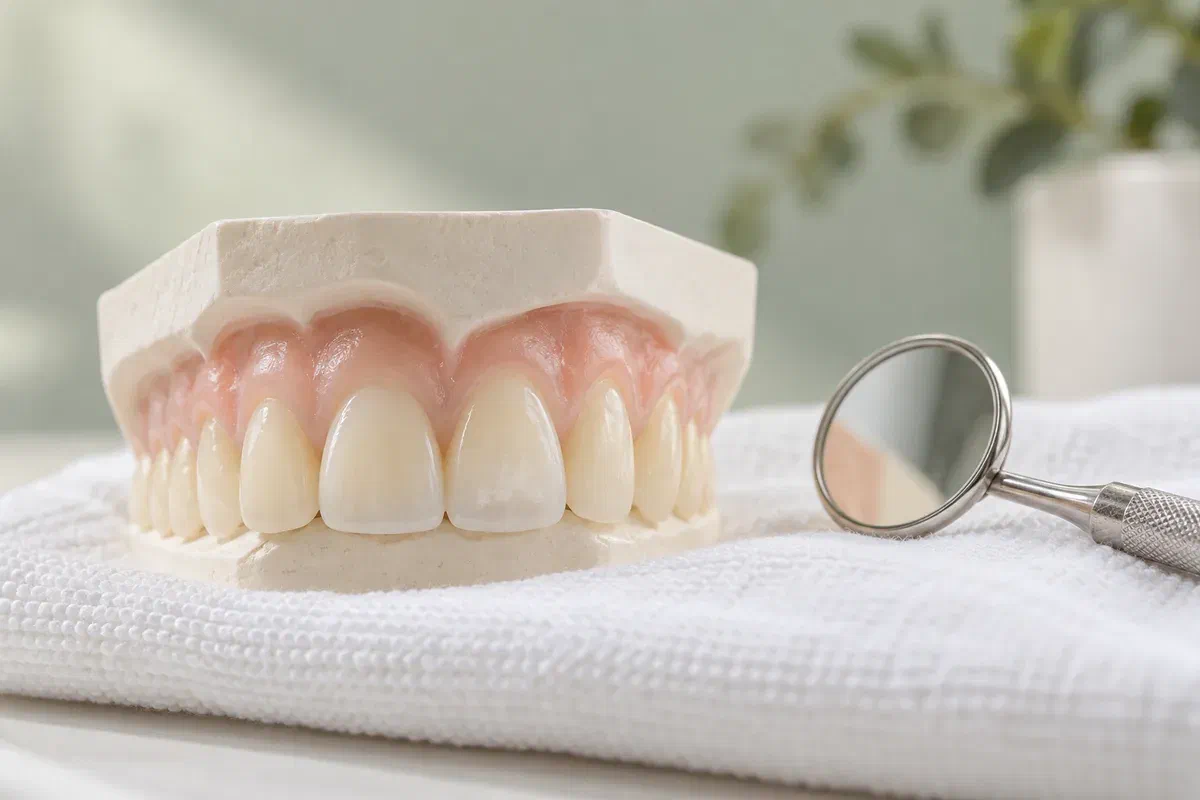
Illustrative dental teaching model with a subtle white enamel patch beside a dental mirror
What people bring in

Three kinds of white mark, three different conversations

Tell us when the patch appeared, whether it seems to be spreading, and whether braces, sensitivity or earlier whitening are part of the picture. A phone photo is a useful start, but an examination is what clarifies the cause.

Outlines where brackets used to sit

Ask whether the mark is an enamel lesion and whether anything is still feeding it, such as plaque that collects in the same place. Prevention belongs in the plan alongside appearance. Softening the look of a patch should never leave you unsure whether the surface underneath is healthy.

Spots that have been there for as long as you remember

Mention whether the mark showed up as the tooth came in and whether other teeth carry similar flecks. A developmental patch may behave quite differently from one linked to braces. The likely cause affects which options are reasonable and what sort of result to expect.

A patch that feels rough, chipped or tender

Describe any texture change, twinge or visible break instead of treating it as a colour issue. Ask what further assessment is needed and whether repair should come first. Infiltration does not stand in for rebuilding tooth structure that has broken down.

Every proposed area is checked for suitability first. Infiltration is reserved for selected lesions where the surface has not broken into a cavity; a damaged spot calls for a separate restorative discussion.

Why some people consider it

A smaller step that may soften contrast

When a lesion is suitable, infiltration can be an appearance-focused choice to discuss before anything that covers the tooth, such as bonding or a veneer. Ask what preparation the surface needs and how the idea compares with leaving the tooth alone. A conservative step still deserves a full explanation of what it involves and where it falls short.

Outcomes are not uniform. Studies report some marks masking completely while others improve only partly or barely change. It helps to say what a worthwhile improvement looks like to you, agree how the result will be reviewed, and talk through what would happen if a visible patch remains.

Patient information: Clinical study — variable masking of developmental and post-orthodontic lesions

Attention on the marks that bother you

Find out which areas look suitable and which might need something else. Ask whether every tooth shares the same diagnosis or whether the plan varies across your smile. That explains why treatment could be limited to a few surfaces instead of covering every front tooth.

An honest preview of the likely look

Say whether you want a fainter outline, smoother-looking photos or just an explanation of the mark. Ask what is reasonable for that specific lesion. Before-and-after images can support the discussion, but someone else’s result is not a forecast of yours.

Room to weigh the other routes

Ask how infiltration compares with remineralization, microabrasion, bonding and whitening for your teeth. Look at preparation, likely benefit, upkeep and fees side by side. Saying no to infiltration does not commit you to a bigger cosmetic treatment instead.

From first look to follow-up

How a Milton visit for white spots usually unfolds

Details depend on the examination and the material system chosen. Ask what the appointment covers, how your gums and lips are protected, and when the appearance should be judged.

  1. Talk through the history and examine the enamel

    Share how long the marks have been visible, when your orthodontic treatment ended and any products you have already used. The clinician checks the condition of each spot and its probable cause. Ask whether preventive care or more investigation should come before an elective cosmetic step.

  2. Agree on which teeth and what to expect

    Name the teeth and surfaces included in the plan. Go over the expected benefit, the chance of incomplete masking, alternatives, fees and consent. Mention any allergy or reaction to dental materials, and ask how that changes the recommendation.

  3. Treat the selected surfaces in the chair

    If treatment goes ahead, the area is isolated and prepared, then the resin is applied and set with a curing light. Ask to have each step and the comfort measures explained. This is a clinical procedure, not something sold for home use or brushed on like a whitening gel.

  4. Polish, then plan a second look

    Discuss how the tooth looks straight away and when it should be checked again. Ask what photos or notes will help compare the change. If some contrast is still there, set aside time to talk it over rather than assuming more preparation or another procedure must follow.

Once you are home

The enamel still needs the everyday routine

Follow the instructions for the treatment you actually received. A better-looking spot does not replace checkups, cleanings or the prevention plan set out for your teeth.

Confirm any short-term instructions in the room

Ask whether there is anything to avoid for a while with eating, drinking, brushing or products. Jot the advice down if that helps. Skip strict rules you may have read about for whitening or bonding, since those procedures differ from yours.

Keep the prevention habits going

Go over brushing, cleaning between teeth and any fluoride advice that applies to you. If the marks formed during a stretch when braces made cleaning hard, ask for hands-on tips. Caring for an existing spot should go together with lowering the chance of new ones.

Watch for change, but leave scrubbing alone

Let us know about a new rough area, discomfort or a colour shift that worries you. Ask when the appearance is best rechecked and whether polishing or another step makes sense. Do not reach for abrasive home remedies or try to wear down a leftover patch yourself.

Patient information: Clinical follow-up — reviewing colour after white-spot infiltration

Weighing the choices

Pick care that suits the lesion, not just the look

Some visible marks are best left alone and watched. For each option, ask what it aims to do, what it alters about the tooth and what observing it instead would involve.

When the enamel’s condition comes first

Strengthen, watch and wait

A prevention plan with periodic review may come before an appearance treatment, or replace it. Ask what the clinician is tracking and when the next decision point is. A healthier surface and a mark that has vanished are two separate goals.

When the diagnosis points to a targeted step

Infiltration or a similar light-touch treatment

Ask whether infiltration or a different surface method suits this particular lesion. Find out what preparation is involved and how likely it is that some contrast will remain. If more than one method is on the table, their order and purpose should be clear before any step that cannot be undone.

When the problem goes beyond suitable porous enamel

Bonding or repair when the defect is different

Bonding or another restoration may come up when the tooth’s condition and your goals call for it. Compare how much tooth is prepared and the upkeep involved with the benefit you expect. A white mark that is simply noticeable does not automatically call for a larger restoration.

Questions from Milton

What people ask once the braces are gone

The cause, surface and depth of an enamel lesion guide the discussion. Only an examination can support a personal plan or a sense of the likely result.

(905) 876-4488
How soon after braces come off can white spots be assessed?
They can be looked at whenever you notice them, and an early check helps separate active problems from settled marks. The clinician may suggest a period of prevention and observation before any cosmetic step. Ask why that timing is recommended for your teeth.
Could the marks fade on their own once brushing is easier?
Some lesions can change once cleaning improves, while others stay visible. Ask what the clinician sees and how the area will be tracked. A clear review plan is more useful than guessing from week to week in the mirror.
Does infiltration whiten the rest of my teeth too?
No. It targets suitable porous lesions and their appearance rather than lightening the whole tooth. If the overall shade also bothers you, raise it as a separate goal so the order and purpose of each treatment are clear.
My orthodontist mentioned the spots. Should I bring their notes?
If you have records or photos from the end of treatment, they can help. Share what you were told and when the marks first appeared. That background supports the assessment, though the examination here still guides any recommendation.
If a mark only partly fades, is a veneer the next step?
Not necessarily. Review the remaining look, the tooth’s health and your own preferences first. Ask about watching it, other conservative options and what each would involve. Any further cosmetic work is its own decision with its own explanation.
Is the treatment the same for a front tooth and a back tooth?
Suitability is decided lesion by lesion, and visible front-tooth marks are the usual focus of appearance treatment. Ask which surfaces are being considered and why. A spot elsewhere may need a different kind of care or simple monitoring.
White-spot assessment in Milton

Bring the marks, and your questions, to us

Book a visit at our Bronte Street practice to have the white spots examined, hear what likely caused them and go over options suited to your teeth. Ask about contrast, prevention, what preparation involves and what result would feel worthwhile to you.

Suitability and availability are confirmed after examination. Infiltration cannot guarantee a mark will disappear, and different care may be advised once the teeth are assessed.

Visit Milton Dental Clinic
Unit 1, 342 Bronte St. S, Milton, ON L9T 5B7
Get directions Clinic hours
Monday–Thursday
11am–7pm
Friday–Sunday
By appointment only

Areas we serve

  • Milton
  • Oakville
  • Mississauga
  • Georgetown
  • Halton Hills
  • Acton
  • Campbellville
  • Brampton
  • Burlington
  • Puslinch
  • Rockwood
  • Erin
  • Caledon
  • Etobicoke
  • Old Milton
  • Bronte Meadows
  • Timberlea
  • Dorset Park
  • Dempsey
  • Clarke
  • Beaty
  • Coates
  • Harrison
  • Scott
  • Willmott
  • Ford
  • Bowes
  • Cobden
  • Walker
  • Mountain View
  • Milton Heights
  • Hawthorne Village
  • Valley View
  • Fallingbrook
  • Nassagaweya
  • Trafalgar
  • Esquesing
  • Nelson
  • Brookville
  • Moffat
  • Glen Williams
  • Norval
  • Limehouse
  • Stewarttown
  • Ashgrove
  • Hornby
  • Silver Creek
  • Speyside
  • Scotch Block
  • North Oakville
  • River Oaks
  • Glen Abbey
  • West Oak Trails
  • Palermo
  • Bronte Creek
  • College Park
  • Joshua Creek
  • Uptown Core
  • Preserve
  • Iroquois Ridge
  • Lisgar
  • Meadowvale
  • Meadowvale Village
  • Churchill Meadows
  • Erin Mills
  • Central Erin Mills
  • Streetsville
  • East Credit
  • Creditview
  • Heartland
  • Sheridan
  • Mount Pleasant
  • Credit Valley
  • Huttonville
  • Churchville
  • Springbrook
  • Northwest Brampton
  • Bram West
  • Fletcher's Meadow
  • Fletcher's Creek South
  • Alton Village
  • Orchard
  • Millcroft
  • Headon Forest
  • Tansley
  • Brant Hills
  • Tyandaga
  • Kilbride
  • Lowville
  • Aberfoyle
  • Morriston
  • Arkell
  • Hillsburgh
  • Freelton
  • Carlisle
  • Waterdown
  • Flamborough
  • Mountsberg

How can we help?

Milton Dental Clinic

Have a question about your smile? Choose the option that works best for you.

For urgent dental concerns, please call.
Messages are reviewed during clinic hours.