

Illustrative patient discussing an enamel colour concern with a dental clinician
Cosmetic Dentistry

Resin Infiltration for White Spots in Old Milton

You have smiled around that pale fleck on a front tooth for twenty years. Deciding to do something about it now starts with an honest look at where it came from and whether resin infiltration could make it less striking.

A mark you grew up with

Why look at an old white spot now?

Sometimes it is a milestone photo, sometimes a new job, and sometimes you simply decide you are tired of angling your smile. A white mark that has been present since the tooth came in is often developmental rather than the result of recent decay, but that is something to confirm, not assume.

Resin infiltration places a low-viscosity resin inside suitable porous enamel. Once those microscopic gaps are filled, light can pass through the area more like it does through healthy enamel, which may lessen the contrast. How well that works depends on the lesion’s type, depth and condition, so results differ from one mark to the next.

Our Bronte Street practice is a short way from Milton’s historic downtown, and a first visit here is mostly conversation and careful examination. Point out what bothers you and describe the change you would like. We will explain whether infiltration, another approach or leaving the tooth as it is seems sensible, and how much of the fleck might stay visible.

Ask about a long-standing white mark
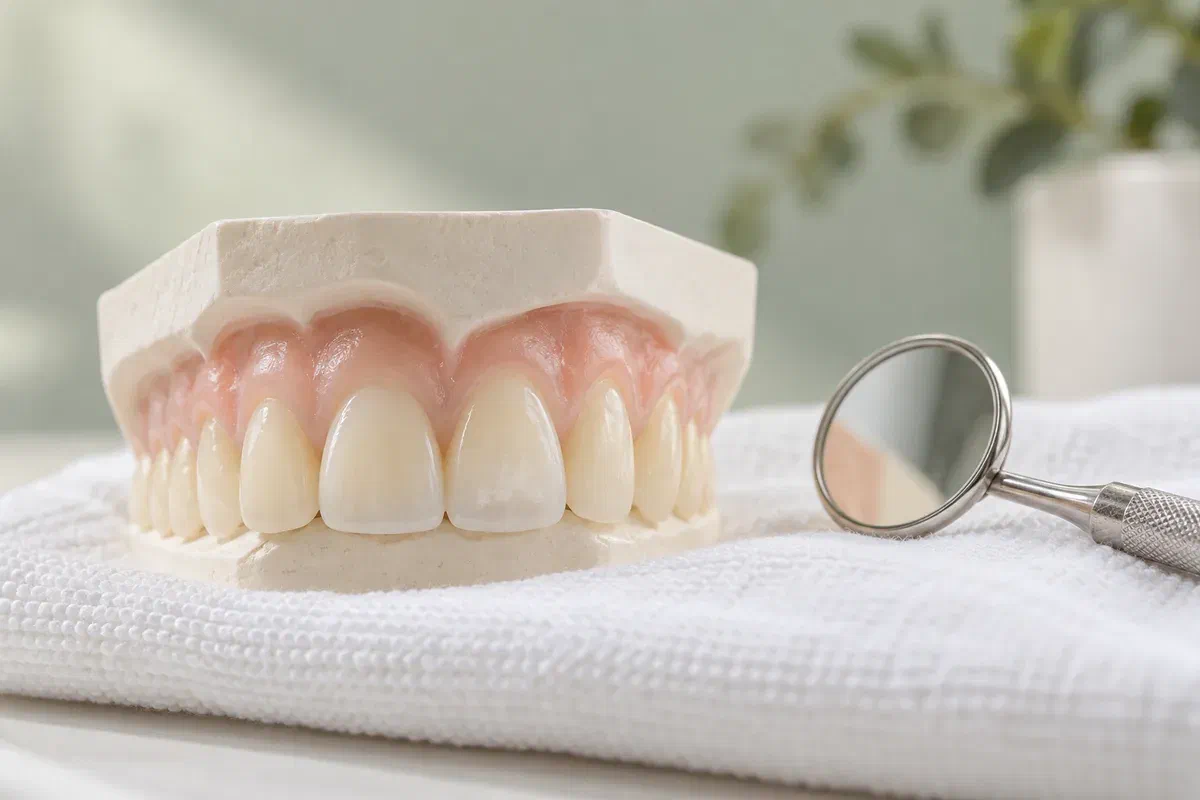
Illustrative dental teaching model with a subtle white enamel patch beside a dental mirror
Telling marks apart

Is it old, new or changing?

Mention roughly when you first noticed the spot, whether it looks different lately, and any history of braces, sensitivity or cosmetic work. Pictures help us understand your concern, but they cannot replace an exam.

Chalky areas near the gumline or old bracket sites

These may point to enamel that lost mineral during a period when plaque lingered. Ask whether that process has stopped and what keeps it from returning. Prevention matters here just as much as the look, so a cosmetic plan should come with a clear view of the surface’s health.

Flecks or clouds present since childhood

Say whether you have always had the mark and whether matching spots show up on other teeth. Ask how the probable cause shapes your options. A developmental patch and a post-orthodontic one can respond very differently to the same treatment.

An area with a rough edge, chip or twinge

Point out any texture change, sensitivity or visible damage. Ask whether more examination is needed and whether repair should take priority over appearance. Infiltration is not designed to rebuild enamel that has broken away.

Suitability is confirmed tooth by tooth. Infiltration is intended for selected lesions with an intact surface; where the enamel has broken down into a cavity, a restorative plan is discussed separately.

What it can and cannot do

Less contrast, possibly. A spotless tooth, not promised.

For a suitable lesion, infiltration offers a way to work on appearance before considering something that covers the tooth surface. Ask how much preparation is involved and how it measures up against doing nothing at all. Even a conservative procedure deserves a plain explanation of its steps and its limits.

Research on infiltration shows a spread of outcomes, with some marks masked fully and others improving partly or very little. Developmental marks in particular can be unpredictable. Decide in advance what would count as worthwhile for you, how the change will be judged and what the next conversation looks like if the fleck is still noticeable.

Patient information: Clinical study — variable masking of developmental and post-orthodontic lesions

Care aimed at specific spots

Learn which marks look suitable and which may call for a different approach. Ask whether each tooth has the same diagnosis or whether they vary. This is often why a plan includes only some surfaces rather than every visible fleck.

A grounded talk about the result

Explain whether you want the outline less obvious, a more even look in photos or simply to understand what the mark is. Ask what is realistic for that lesion. Example images can help, but they describe someone else’s teeth, not a prediction for yours.

Time to compare before committing

Ask how infiltration differs from microabrasion, bonding, remineralization and whitening for your particular mark. Weigh preparation, likely benefit, maintenance and fees. Declining one option leaves you free to stop there rather than move to a larger treatment.

The appointments, step by step

Examine, explain, treat if suitable, then review

What happens depends on what the exam shows and the system used. Ask what each appointment includes, how soft tissues are shielded and when the result is best assessed.

  1. Start with your history and a close look

    Tell the clinician how long the mark has been there, whether you had braces and what you have tried already. The enamel is examined for its condition and likely cause. Ask whether any preventive step or further investigation should come first.

  2. Settle the scope and the expectations

    Confirm which teeth and surfaces are part of the plan. Review the hoped-for change, the possibility that masking will be partial, other options, fees and consent. Mention any known reactions to dental materials and ask whether they affect the plan.

  3. Carry out the procedure on chosen surfaces

    Where treatment is appropriate, the tooth is isolated and its surface prepared, and then the resin is placed and hardened with a curing light. Ask what each stage involves and how comfort is managed. This is done by a clinician and is not a product to buy and apply yourself.

  4. Finish and book a check on the outcome

    Look at the result together and agree when it should be reviewed. Ask how photographs or notes will capture the before and after. If contrast remains, talk it through calmly instead of assuming that more preparation or a new procedure has to follow.

Looking after the treated tooth

A changed spot, the same daily care

Use the instructions given for your specific procedure. Looking better does not replace regular checkups or the prevention plan that suits your mouth.

Ask about short-term limits before you go

Find out whether there are temporary limits on food, drinks, brushing or products after your treatment. Write them down if you like. Avoid adopting rules meant for other procedures, such as whitening or bonding, that you may have come across online.

Stay with the prevention you agreed on

Review brushing, cleaning between teeth and any fluoride guidance relevant to you. If the marks date from a time when cleaning was hard, ask for practical pointers. Treating an existing spot works best alongside lowering the risk of new ones.

Report changes; do not scrub at them

Tell us about new roughness, discomfort or a colour change that bothers you. Ask when it is best to reassess the look and whether polishing or another step could help. Avoid gritty home remedies and never try to grind away a lingering mark.

Patient information: Clinical follow-up — reviewing colour after white-spot infiltration

Old Milton smiles, different paths

Choose by diagnosis, then by preference

A visible mark does not always need a procedure. For each option, ask what it is meant to achieve, how it changes the tooth and what simply observing it would involve.

When enamel health is the first concern

Leave it, protect it, review it

A care plan built around prevention and review may come before cosmetic work or instead of it. Ask what the clinician will watch for and when the next decision is due. Restoring health to a surface is not the same goal as making a mark disappear.

When the diagnosis suits a focused procedure

A minimal surface treatment such as infiltration

Discuss whether infiltration or a different surface technique fits this lesion. Ask about preparation and how likely leftover contrast is. Where several methods are considered, their sequence and purpose should be laid out before anything irreversible is done.

When the concern reaches past suitable porous enamel

Restoring a tooth with a different problem

Bonding or another restoration may be raised if the tooth’s condition and your aims support it. Weigh how much of the tooth is prepared and the long-term upkeep against the benefit. A larger restoration should not be the default answer to a mark that is merely visible.

Old Milton questions

Things worth asking about a lifelong mark

History, surface condition and lesion depth all feed into the discussion. A personal plan or likely result can only be suggested after an examination.

(905) 876-4488
Is a white fleck I’ve had since childhood a sign of decay?
Not necessarily. Many long-standing marks are developmental, but the surface still needs to be checked. Ask what the clinician sees and whether anything suggests active change. That answer shapes whether appearance treatment is a sensible next step.
Can an adult have resin infiltration, or is it mainly for teens?
Age alone does not decide it. The type and condition of the lesion matter more. Ask how your mark is assessed and whether it fits the indications. An adult with a suitable spot can discuss infiltration like anyone else.
Would a developmental spot respond the same as a post-braces mark?
Often not. Marks with different origins and structures can behave differently, so your history matters. Ask what the clinician believes caused yours and how that affects suitability, and avoid judging your outcome by someone else’s.
Is infiltration suitable if the spot has a small pit in it?
A surface that has broken down needs its own assessment and care. Infiltration for intact lesions is not a substitute for a needed repair. Mention any roughness, catching food or sensitivity as well as the colour.
Does my previous whitening affect what can be done?
Mention any past bleaching and your shade goals before planning. Ask whether further whitening is appropriate and how it would fit around infiltration. Hold off on starting a new product until the plan and its order are clear.
Will the treated area need to be redone in a few years?
Ask the clinician what is known about the stability of the result and how it will be monitored. Mention habits that could affect it, such as staining drinks. Regular checkups give a chance to review the tooth over time.
From Old Milton to Bronte Street

Have the fleck looked at, then decide

Book an assessment at our Bronte Street practice to talk about the white mark, its likely cause and the options that suit your teeth. Come with questions about contrast, prevention, preparation and the kind of change you would be glad to see.

Suitability and treatment availability are confirmed only after an exam. Infiltration may not mask a spot completely, and other care may be suggested.

Visit Milton Dental Clinic
Unit 1, 342 Bronte St. S, Milton, ON L9T 5B7
Get directions Clinic hours
Monday–Thursday
11am–7pm
Friday–Sunday
By appointment only

Areas we serve

  • Milton
  • Oakville
  • Mississauga
  • Georgetown
  • Halton Hills
  • Acton
  • Campbellville
  • Brampton
  • Burlington
  • Puslinch
  • Rockwood
  • Erin
  • Caledon
  • Etobicoke
  • Old Milton
  • Bronte Meadows
  • Timberlea
  • Dorset Park
  • Dempsey
  • Clarke
  • Beaty
  • Coates
  • Harrison
  • Scott
  • Willmott
  • Ford
  • Bowes
  • Cobden
  • Walker
  • Mountain View
  • Milton Heights
  • Hawthorne Village
  • Valley View
  • Fallingbrook
  • Nassagaweya
  • Trafalgar
  • Esquesing
  • Nelson
  • Brookville
  • Moffat
  • Glen Williams
  • Norval
  • Limehouse
  • Stewarttown
  • Ashgrove
  • Hornby
  • Silver Creek
  • Speyside
  • Scotch Block
  • North Oakville
  • River Oaks
  • Glen Abbey
  • West Oak Trails
  • Palermo
  • Bronte Creek
  • College Park
  • Joshua Creek
  • Uptown Core
  • Preserve
  • Iroquois Ridge
  • Lisgar
  • Meadowvale
  • Meadowvale Village
  • Churchill Meadows
  • Erin Mills
  • Central Erin Mills
  • Streetsville
  • East Credit
  • Creditview
  • Heartland
  • Sheridan
  • Mount Pleasant
  • Credit Valley
  • Huttonville
  • Churchville
  • Springbrook
  • Northwest Brampton
  • Bram West
  • Fletcher's Meadow
  • Fletcher's Creek South
  • Alton Village
  • Orchard
  • Millcroft
  • Headon Forest
  • Tansley
  • Brant Hills
  • Tyandaga
  • Kilbride
  • Lowville
  • Aberfoyle
  • Morriston
  • Arkell
  • Hillsburgh
  • Freelton
  • Carlisle
  • Waterdown
  • Flamborough
  • Mountsberg

How can we help?

Milton Dental Clinic

Have a question about your smile? Choose the option that works best for you.

For urgent dental concerns, please call.
Messages are reviewed during clinic hours.