

Illustrative patient and clinician discussing smile preferences with a mirror and shade guide
Cosmetic Dentistry

Smile Design

Your smile plan should begin with what matters to you. Explore smile design in Milton to discuss tooth shape, shade, alignment, oral health, and the practical choices behind a change that feels considered and personal.

A closer look at smile design

Begin with the smile you have and the changes that matter to you.

Smile design is a planning conversation about appearance, oral health, and the treatments that may help achieve a particular goal. It can consider the shape and colour of teeth, their positions, visible restorations, and how the smile works when you speak and bite. It is not a single procedure that everyone receives.

You may have one clear concern, such as a chipped edge, or only a sense that something looks uneven. Both are useful starting points. The discussion should identify what you want to change, what you want to keep, and which findings need attention before cosmetic choices can be made.

At Milton Dental Clinic, bring your questions and preferences without feeling that you need to select a treatment in advance. We can help separate the goal from the possible methods. A thoughtful plan leaves room for small changes, staged care, a second opinion, or a decision to keep your natural smile.

Start a smile-design conversation
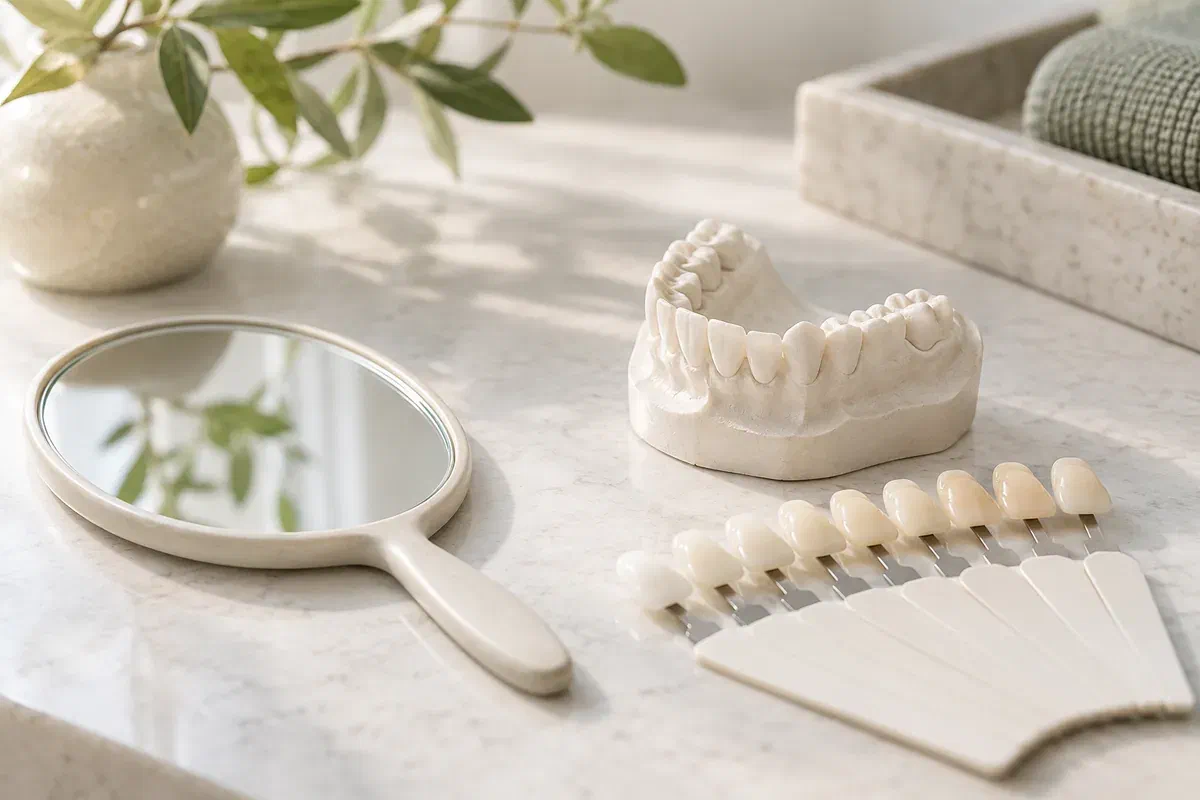
Illustrative consultation mirror, dental study cast, and natural tooth shade samples
Defining the starting point

Your priorities help give the assessment a direction.

Explain the features you notice in everyday life, not only in a close-up photograph. Tell us whether appearance, comfort, maintenance, or a particular event is prompting the conversation.

A few details that draw your attention

Point out the edge, shade difference, spacing, or restoration you would like to discuss. Ask whether a focused approach could address that concern. A small dissatisfaction does not automatically justify changing several healthy teeth or committing to a complete cosmetic treatment plan.

Appearance alongside bite or comfort concerns

Mention worn edges, chewing difficulty, sensitivity, or a tooth that feels different. Ask how these findings relate to the appearance you want to change. Planning should account for the way the teeth function rather than relying only on a proposed front-facing photograph.

Uncertainty about what would look natural

Describe what you like about your current smile as well as what you would change. Examples can help explain preferences, but another person's proportions or shade may not suit your teeth. Ask how the proposed result respects the features you want to preserve.

A design discussion is an opportunity to understand options. It should not be treated as consent for veneers, whitening, orthodontics, or any other procedure until the specific plan, risks, alternatives, and fees have been explained.

What careful planning adds

Turn a broad wish into choices you can understand.

A useful smile plan connects each proposed treatment to a specific concern. You should be able to explain why that step is included and what it is expected to change. If a recommendation feels larger than the original request, ask which findings justify the additional work.

Planning also makes the responsibilities visible before treatment begins. Appointments, preparation, maintenance, possible repairs, and future replacement can influence whether an option suits you. Discussing these early helps you weigh the appearance benefit alongside the time and care involved.

Shared priorities for the result

Agree on the features that matter most and any limits you want respected. You might prefer a modest shade change, to keep a familiar gap, or to avoid altering a sound tooth. Clear priorities help the clinician explain where the available options align with your preferences.

A sequence that has a reason

If the plan includes several kinds of care, ask how they relate and why one comes first. Clarify which decisions depend on earlier results. This gives you a way to review progress without assuming that every later stage must proceed exactly as first discussed.

A chance to compare the commitment

Ask for alternatives with their practical differences, including the choice of no elective treatment. Compare expected maintenance and the implications of tooth preparation rather than appearance alone. A plan that is easy to understand should also make its limits and uncertainties clear.

Building a smile plan

Move from your priorities to a plan that can be reviewed.

The records and appointments depend on the concerns and possible treatments. Ask what the consultation includes and whether additional assessment or specialist input may be needed.

  1. Listen to the change you have in mind

    Discuss the features that concern you, previous treatment, and what would make a result worthwhile. Mention your timeframe and comfort with different kinds of care. Bring photographs if useful for explaining preferences, while keeping the conversation grounded in your own teeth.

  2. Assess oral health and function

    The clinician examines the teeth, gums, restorations, and bite before making recommendations. Additional records are considered where appropriate. Ask which findings need treatment for health reasons and which proposals are elective, so those decisions do not become blurred together.

  3. Compare options and any proposed previews

    Review the suitable approaches, their preparation, limits, and expected upkeep. If photographs, models, or a mock-up are proposed, ask what they can demonstrate and what they cannot predict. No particular software, scanning system, or digital preview is assumed as part of every consultation.

  4. Agree on stages, responsibilities, and review points

    Confirm the selected treatment, consent process, fees, and appointments before care starts. If more than one clinician is involved, clarify each role. Ask when you can review the appearance and function, and how a changed preference or an unexpected finding would be handled.

Living with a planned change

Include the years after treatment in today's decision.

Smile design itself is planning; aftercare belongs to the procedures eventually chosen. Ask for a clear maintenance plan for each part instead of assuming that all cosmetic care has the same requirements.

Understand the care attached to each option

Discuss cleaning, review visits, and any appliances or product instructions relevant to the proposed treatment. If these routines would be difficult for you, say so before committing. The most appealing photograph is only one part of deciding whether a plan fits daily life.

Plan for review and possible future work

Ask how the result will be monitored and what may need attention over time. Discuss the possibility of repair or replacement where restorations are involved. Fees and longevity should be considered as estimates and responsibilities, not as a promise that nothing will change.

Report concerns rather than adapting around them

After treatment, tell the team if an edge feels rough, the bite feels different, or you are unsure about cleaning a new area. Explain appearance concerns at the agreed review. Ask for assessment rather than trying to file, polish, or adjust dental work yourself.

Patient information: British Orthodontic Society — long-term implications of restorative and alignment choices

Choosing the scope of change

There is no single treatment hidden inside the words smile design.

A recommendation may involve one focused step, a coordinated sequence, or no elective procedure. Ask how each option addresses the concern you identified at the start.

When the concern can be addressed locally

A limited change to a specific feature

Cleaning, whitening, edge repair, or another focused option may be discussed if suitable. Ask which treatment actually changes the feature you notice and what it leaves unchanged. A modest plan can be a valid choice when it matches the findings and your expectations.

When several factors influence the result

A coordinated alignment and restorative discussion

Tooth position, space, shade, and existing restorations may need to be considered together. Ask whether orthodontic or specialist input would help, and how the stages would be coordinated. The plan should explain the purpose of each intervention rather than simply bundle procedures.

When the commitment outweighs the desired change

Observation or keeping the features you value

You may decide that a healthy feature does not need altering after discussing the options. Ask what routine care or monitoring is appropriate. Choosing no cosmetic treatment can still follow a useful consultation that clarifies your oral health and answers your questions.

Smile-design questions

Make the planning conversation as specific as your priorities.

Ask about the decisions behind the proposed appearance, including how much treatment is involved and what you would need to maintain afterward.

(905) 876-4488
Does a smile-design appointment commit me to a set of veneers?
No. Planning should begin with your concerns and the examination, not a predetermined procedure. Ask about suitable alternatives and the implications of any tooth preparation. A decision about veneers requires its own explanation, consent, and consideration of future maintenance.
Can I ask for a smile design that keeps my small gap or uneven edge?
Yes. Explain the features that feel like part of your smile and which ones you want to retain. The clinician can discuss how those preferences relate to health and function. A plan should not assume that you want every natural variation removed.
Is a smile-design mock-up the same as a guaranteed final result?
No. If a mock-up or preview is proposed, ask what it represents and where it has limitations. It can support discussion about preferences, but the eventual result depends on the clinical findings, selected treatment, and practical constraints explained in your plan.
How can I compare two very different smile-design recommendations?
Ask each clinician to connect the proposed steps to your concerns and findings. Compare preparation, alternatives, risks, maintenance, and costs as well as appearance. Request clarification where the scope differs, and take time for another opinion if the decision remains unclear.
Can a smile-design plan be divided into stages that fit my budget?
Discuss that preference early. Ask which steps are priorities, which are optional, and whether their order affects the result. A staged plan needs to remain clinically appropriate, with clear expectations about the appearance and responsibilities between appointments.
What should I bring to explain my smile-design preferences?
Bring a short list of the features you would change and those you like, plus details of earlier treatment. Photographs can help illustrate preferences if you wish. Explain the reasons behind an example rather than expecting another person’s smile to be reproduced exactly.
Smile design in Milton

Tell us what you see. Together, clarify what is worth changing.

Arrange a discussion at our Bronte Street practice about the shape, shade, position, or overall appearance of your teeth. We can review the assessment needed and help you understand the choices behind a personal smile plan.

Treatment scope, records, previews, timing, and fees depend on assessment. No specific technology, procedure, or cosmetic result is guaranteed.

Visit Milton Dental Clinic
Unit 1, 342 Bronte St. S, Milton, ON L9T 5B7
Get directions Clinic hours
Monday–Thursday
11am–7pm
Friday–Sunday
By appointment only

How can we help?

Milton Dental Clinic

Have a question about your smile? Choose the option that works best for you.

For urgent dental concerns, please call.
Messages are reviewed during clinic hours.