

Illustrative patient and clinician discussing smile preferences with a mirror and shade guide
Cosmetic Dentistry

Smile Design in Acton

Some cosmetic options need nightly retainers, others regular polishing or eventual replacement. Smile design for people in Acton puts that upkeep on the table early, next to shade, shape, alignment and oral health, so the plan suits the way you actually live.

Thinking past the finish line

Which smile change could you live with for years?

Before-and-after pictures show the day treatment ends. They don't show the retainer on the bedside table, the night guard, the touch-up visits or the crown that may need replacing in time. Smile design brings those realities into the conversation alongside the look you'd like.

To do that well, the dentist first understands your mouth. Tooth colour, shape and position matter, as do existing restorations, the gums and your bite. Only then can the options be compared fairly, because the upkeep each one needs depends partly on what's already there.

From Acton, you can bring a clear goal or just a vague wish for change. Either is a fine starting point, and you don't need a treatment picked out. The plan might be small, staged, reviewed by another dentist or set aside altogether if the commitment doesn't feel right.

Compare options by upkeep
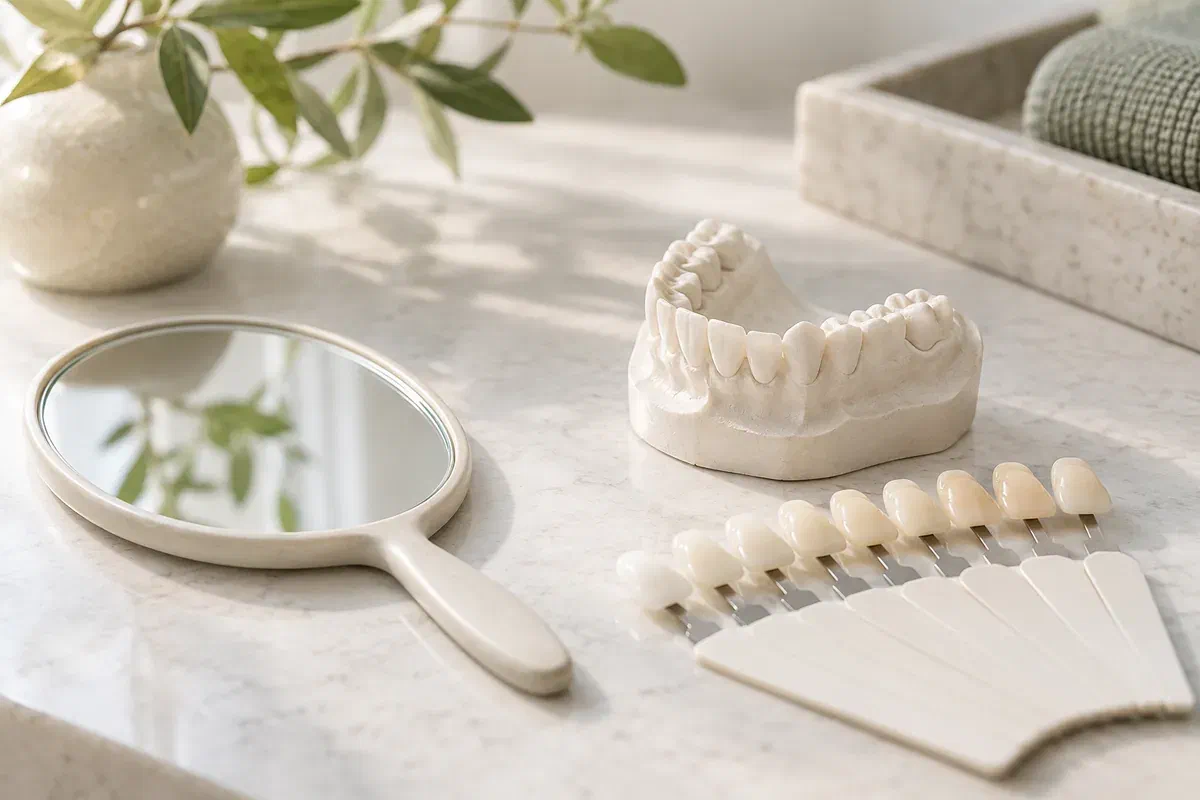
Illustrative consultation mirror, dental study cast, and natural tooth shade samples
Acton starting points

Begin with the concern, then count the commitment.

Explain how the concern affects you in everyday moments. Mention whether looks, comfort, maintenance or an event is behind your visit, and be honest about the routines you're likely to keep up.

One detail with an easy fix?

Point to the chip, stain, space or restoration you'd change. Ask what upkeep each possible fix would bring. A minor concern is seldom a reason to take on extensive work, especially work that alters healthy teeth and needs ongoing care.

Wear, grinding or sensitivity

Flattened edges, clenching, sensitivity or chewing that feels off can affect which options last. Mention them early. A plan that ignores how your teeth meet may look fine at first and need more maintenance or repair later on.

Wanting a result that ages well

Describe the parts of your smile you'd keep. Other people's results can show a style, though their proportions and shade may not suit you. Ask how a proposal would still look natural as your teeth and gums change with age.

A planning appointment explores possibilities. Treatment such as whitening, veneers, bonding or orthodontics needs its own clear explanation of steps, risks, alternatives and fees before you agree to anything.

What upfront planning shows

The real cost of a change includes the years after it.

Each step in a sound plan answers a concern you raised or a finding from the exam, and you should be able to say why it's there. That clarity matters even more when upkeep varies so much between options. If a plan has grown beyond your request, ask what was found to justify it.

Talking about maintenance early is the best way to avoid surprises. Visits, tooth preparation, cleaning routines, appliances, repairs and replacement differ widely. Knowing them helps you weigh a change in appearance against what it will ask of your time and habits for years.

Priorities that include upkeep

Agree on the features that matter and how much maintenance you're willing to take on. You might accept a smaller change for a simpler routine, keep a familiar gap, or leave sound teeth unaltered. That helps narrow the options quickly.

A sequence that's easy to follow

If more than one treatment is involved, ask how they link and which comes first. Some later choices depend on earlier results. Review points let you adjust rather than assuming every stage must go ahead exactly as planned.

Alternatives with their routines

Ask for each option's practical differences, including no elective treatment. Compare upkeep, the chance of repairs and how much natural tooth is affected. A trustworthy plan explains its limits and what's uncertain.

Planning in four stages

Goals, health, options, agreement

Not everyone needs the same records or the same number of appointments; that varies with what you'd like changed and which treatments come up. It's worth asking what the first consultation covers, and whether further assessment or a referral could become part of the plan.

  1. Describe the change and your routines

    Talk about what you'd alter, earlier dental work and what would make treatment feel worthwhile. Mention timing and which daily routines you'd realistically maintain. Photos can help explain a preference, with the focus kept on your teeth.

  2. Check health, wear and the bite

    Your teeth, gums, restorations and bite are examined before anything is recommended. Signs of grinding or wear can affect which options last. Health findings and elective suggestions are explained separately so neither gets lost.

  3. Compare options, upkeep included

    Review each suitable approach with its preparation, limits and ongoing care. If a mock-up, model or photographs are offered, ask what they can show and where they fall short. Previews aren't used for every patient.

  4. Agree on stages and maintenance

    Confirm treatment, consent, fees and the schedule before starting, along with the aftercare plan. If other clinicians are involved, clarify who does what. Ask when you'll review results and what happens if things change.

The everyday side

Retainers, guards and check-ups

Planning has no aftercare of its own. Each treatment that follows does, and the routines differ a great deal, so ask for specific maintenance guidance for every part of your plan.

Appliances and nightly habits

Orthodontic results usually need retainers, and some restorations are protected with a night guard. Ask what's involved, how long it's needed and what happens if it's skipped. If a routine isn't realistic for you, say so before deciding.

Review visits and repairs

Find out how often results should be checked and what tends to need attention. Bonding may need polishing or repair, and crowns or veneers can eventually need replacing. Fees and lifespans are estimates, not promises.

Small problems, quick calls

If an edge feels rough, a retainer stops fitting or your bite feels different, contact the team. Raise appearance questions at your review. Please don't adjust appliances or dental work yourself.

Patient information: British Orthodontic Society — long-term implications of restorative and alignment choices

Choosing a level of commitment

Light upkeep, more upkeep, or none

The recommendation might be one focused step, a coordinated sequence or no elective treatment at all. Ask how each option addresses your concern and what it will need from you afterward.

When one feature is the concern

A focused change with simple care

Cleaning, whitening, edge bonding or a similar targeted step may be discussed if suitable. Ask what it would change, what it would leave and what keeping it looking good involves. A modest plan can be the most sustainable choice.

When alignment and restorations interact

A combined plan with ongoing care

Position, spacing, shade and older work sometimes have to be planned together, often with retainers or guards afterward. You can ask if a referral for orthodontic advice would add anything, and how the stages would link. Every part of the plan still needs a reason you understand.

When the upkeep outweighs the benefit

Routine care and nothing more

After weighing it up, you may decide your healthy smile doesn't need changing. Ask what check-ups and cleaning make sense. A consultation that ends without cosmetic work can still leave you better informed.

Questions about upkeep

What you'll be looking after, and for how long

Ask about the reasoning behind each option, the treatment involved and the maintenance that follows.

(905) 876-4488
Do I have to wear a retainer forever after straightening?
Teeth can drift after orthodontic treatment, so retainers are usually recommended long term. Ask how often you’d wear one, how long it lasts and what replacing it involves before choosing alignment as part of your plan.
Which cosmetic options need the least maintenance?
It varies with your teeth, bite and habits. Whitening may need occasional top-ups, bonding can need polishing or repair, and restorations need routine checks. Ask the dentist to compare upkeep for the options that suit you.
Will I need a night guard after cosmetic work?
Sometimes, particularly if you grind or clench. A guard can help protect restorations and natural teeth. Ask whether it’s recommended in your case, how it’s made and cleaned, and how it fits with the rest of your aftercare routine.
How do veneers compare with bonding for upkeep?
They differ in preparation, durability, repair and replacement. Ask how much tooth each would involve, how each tends to wear and what maintenance looks like over the years. Planning doesn’t commit you to either, and for some concerns neither is the most suitable choice.
What happens if I can't keep up with the aftercare?
Tell the team before you commit, so the plan can favour simpler options if needed. If problems arise later, contact the clinic rather than adapting around them. Results can be affected when maintenance lapses, so an honest conversation at the start usually leads to a better fit.
Can I see a preview before committing to long-term upkeep?
A preview may be offered in some cases to support the discussion. Ask what it shows and where it’s limited. The final result still depends on findings, the treatment chosen and how well it’s looked after.
Smile design from Acton

Pick a change you'll still be happy to maintain.

Book a planning visit at our Bronte Street practice to go over shade, shape, alignment and the overall look of your smile. We'll explain what assessment would help and compare the upkeep that comes with each choice.

Treatment, records, previews, timing and fees depend on assessment. Long-term results vary, and no specific procedure or cosmetic outcome is guaranteed.

Visit Milton Dental Clinic
Unit 1, 342 Bronte St. S, Milton, ON L9T 5B7
Get directions Clinic hours
Monday–Thursday
11am–7pm
Friday–Sunday
By appointment only

Areas we serve

  • Milton
  • Oakville
  • Mississauga
  • Georgetown
  • Halton Hills
  • Acton
  • Campbellville
  • Brampton
  • Burlington
  • Puslinch
  • Rockwood
  • Erin
  • Caledon
  • Etobicoke
  • Old Milton
  • Bronte Meadows
  • Timberlea
  • Dorset Park
  • Dempsey
  • Clarke
  • Beaty
  • Coates
  • Harrison
  • Scott
  • Willmott
  • Ford
  • Bowes
  • Cobden
  • Walker
  • Mountain View
  • Milton Heights
  • Hawthorne Village
  • Valley View
  • Fallingbrook
  • Nassagaweya
  • Trafalgar
  • Esquesing
  • Nelson
  • Brookville
  • Moffat
  • Glen Williams
  • Norval
  • Limehouse
  • Stewarttown
  • Ashgrove
  • Hornby
  • Silver Creek
  • Speyside
  • Scotch Block
  • North Oakville
  • River Oaks
  • Glen Abbey
  • West Oak Trails
  • Palermo
  • Bronte Creek
  • College Park
  • Joshua Creek
  • Uptown Core
  • Preserve
  • Iroquois Ridge
  • Lisgar
  • Meadowvale
  • Meadowvale Village
  • Churchill Meadows
  • Erin Mills
  • Central Erin Mills
  • Streetsville
  • East Credit
  • Creditview
  • Heartland
  • Sheridan
  • Mount Pleasant
  • Credit Valley
  • Huttonville
  • Churchville
  • Springbrook
  • Northwest Brampton
  • Bram West
  • Fletcher's Meadow
  • Fletcher's Creek South
  • Alton Village
  • Orchard
  • Millcroft
  • Headon Forest
  • Tansley
  • Brant Hills
  • Tyandaga
  • Kilbride
  • Lowville
  • Aberfoyle
  • Morriston
  • Arkell
  • Hillsburgh
  • Freelton
  • Carlisle
  • Waterdown
  • Flamborough
  • Mountsberg

How can we help?

Milton Dental Clinic

Have a question about your smile? Choose the option that works best for you.

For urgent dental concerns, please call.
Messages are reviewed during clinic hours.