

Illustrative patient and clinician discussing smile preferences with a mirror and shade guide
Cosmetic Dentistry

Smile Design in Caledon

Straighten first, whiten first, or replace that old crown first? Smile design for households in Caledon works out the order, weighing shade, shape, position and gum health so that a multi-step change is sequenced with a reason behind every stage.

Getting the order right

Several changes, one sensible sequence

When more than one thing about your smile could change, the order matters. Whitening after a new crown can leave the crown looking darker. Restoring teeth before moving them can mean redoing work later. Smile design maps those relationships out before anything begins, so each stage builds on the last.

The map is drawn from a full assessment. Colour, outline and position of the teeth, existing restorations, gum health and the bite all influence which steps belong in the plan and in what order. There's no universal sequence, and sometimes the best plan turns out to have only one step.

From Bolton or one of Caledon's smaller villages, a longer plan also needs to fit around travel and family routines. You don't need to arrive with treatments chosen. We can talk through a single change, a staged approach, coordination with other clinicians, a second opinion or leaving things as they are.

Plan the order of your care
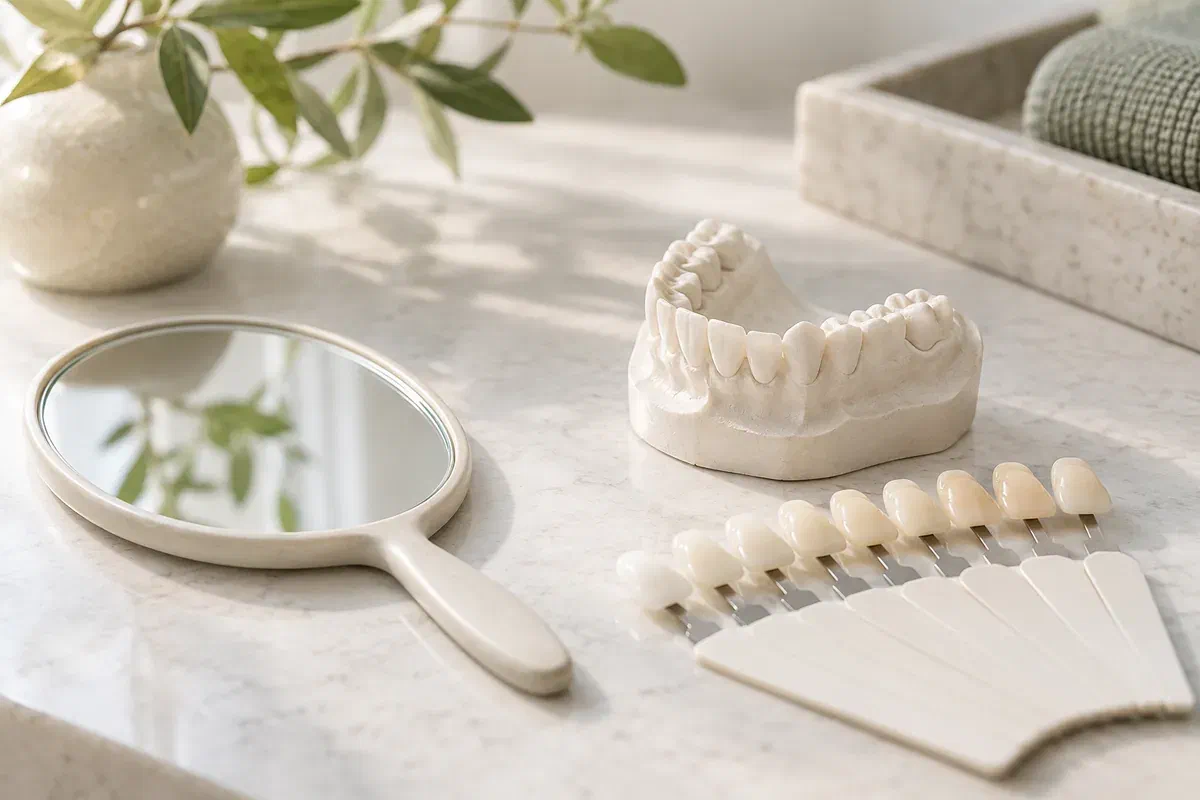
Illustrative consultation mirror, dental study cast, and natural tooth shade samples
Sorting what's involved

More than one thing on your mind?

List the features you'd like to change and when each one bothers you. Mention whether appearance, comfort, maintenance or an event is behind the visit, as that can affect which step comes first.

A main concern among several

You may notice crowding, a dull shade and an old filling all at once. Point out which bothers you most. Sometimes addressing the main concern on its own is enough, and having several wishes doesn't mean every healthy tooth needs work.

Bite and function in the sequence

Worn edges, sensitivity, chewing trouble or a bite that has shifted can change the order of care. Mention them early. A plan has to account for how teeth work together, since moving or restoring them affects function as well as appearance.

Keeping the result natural

Explain what you like about your smile and want to protect through every stage. Examples can help show a style, though another person's proportions or shade may not suit you. Ask how each stage would keep your smile looking like your own.

Mapping out a sequence isn't consent to any stage of it. Each treatment, whether orthodontic, whitening or restorative, needs its own explanation of steps, risks, alternatives and fees before you agree.

Why sequence matters

The right order saves rework.

In a well-ordered plan, every stage links back to a concern or a finding and has a reason for its position in the sequence. You should be able to say why one step comes before another. If the plan includes more than you asked about, ask which findings make the extra stages necessary.

A sequence also shows the total commitment. The number of appointments, any tooth preparation, appliances, home care, repairs and later replacement accumulate across stages. Seeing them laid out helps you weigh the overall change against the time, travel and maintenance it would take.

Priorities that steer the order

Agree on what matters most and which limits to keep. You may want a modest shade change, to keep a familiar gap, or to avoid preparing sound teeth. Those choices often decide which stages are included at all.

Dependencies you can see

Ask how each stage depends on the last. Shade is usually settled before new restorations are matched, and tooth movement often comes before reshaping. Knowing this lets you pause between stages and review rather than assume everything is fixed.

Shorter routes compared

Ask whether a simpler sequence could meet your main goal, including no elective treatment. Set the maintenance and the enamel each route would use against the change it delivers. An honest plan explains where later stages might change after earlier results.

Planning a staged change

Map it, check it, then begin.

Which records you'll need and how many visits are involved vary with the stages proposed. Ask what the consultation covers, and whether an orthodontist or other clinician would need to be part of the planning.

  1. List everything you'd like to change

    Go through each concern, your dental history and what would make the whole effort worthwhile. Mention any deadline and treatments you'd rather avoid. Photos can help explain a preference, while the plan stays anchored to your teeth.

  2. Assess health and the bite first

    The dentist examines teeth, gums, restorations and bite, and may recommend further records. Health findings are explained separately from cosmetic stages, since some health care may need to come before anything elective.

  3. Draft the sequence and compare options

    Review suitable approaches for each stage, along with how much preparation they need, what they can't achieve and how they're maintained. Where a model or trial mock-up is offered, ask what it represents and what it can't predict about later stages. No particular preview technology is used in every case.

  4. Coordinate roles and review points

    Confirm treatment, consent, fees and a schedule for each stage before starting. If an orthodontist or another dentist will be involved, agree who handles each part. Ask when you'll review progress and how a change at one stage would affect the rest.

Through every stage

Aftercare starts with stage one.

Smile design itself is planning, but a staged plan brings aftercare at each step, from aligner cleaning to retainers and restoration upkeep. Ask what each stage will need from you.

Care between stages

Ask about cleaning, appliance care and review visits for each stage. Your routine may change as the plan moves along. If any part sounds hard to manage alongside work or family life, say so before committing.

Long-term reviews

Find out how the finished result will be monitored, including retainers after tooth movement. Restorations may eventually need repair or replacement. Fees and longevity are estimates for each stage, not a promise that nothing will change.

Tell us about problems

Contact the team if an appliance stops fitting, an edge feels rough or your bite changes during treatment. Mention appearance concerns at the agreed review. Please don't adjust appliances or dental work yourself.

Patient information: British Orthodontic Society — long-term implications of restorative and alignment choices

Caledon smile-planning routes

One stage, several stages, or none

Depending on your list, the advice might be one well-chosen change, a chain of treatments in a deliberate order, or nothing elective at all. For every route, find out which of your concerns it answers, which it leaves alone and roughly how many months it would take.

When one change meets the main goal

A single, focused stage

Whitening, cleaning, edge repair or another targeted option may be enough. Ask how much of your list it would address and what would remain. A one-stage plan is a sound choice if it covers the concern that matters most.

When the stages depend on each other

Alignment, shade and restorations in order

Moving teeth, adjusting colour and replacing older restorations may need to follow a set order. Ask whether an orthodontist should plan alongside your dentist and how hand-offs would work. Each stage should have its own reason.

When the full plan isn't worth it to you

Monitoring instead of a sequence

After seeing the whole sequence, you may decide your healthy smile doesn't need it. Ask about check-ups and what to keep watching. A consultation without treatment can still clarify your options for the future.

Questions from Caledon

What comes first, and why?

Bring questions about how the stages link to your concerns, the amount of work each one adds and the upkeep you'd carry from one stage to the next.

(905) 876-4488
Should I whiten before or after getting a new crown?
Crowns don’t change colour with whitening, so whitening is often considered first, then the crown is matched to the new shade. Ask whether whitening is suitable for you and how long to wait before the crown is made.
Why straighten teeth before reshaping or restoring them?
Moving teeth first can mean less reshaping is needed afterward, and restorations placed later can be designed around the final positions. Ask whether this applies in your case and what alternatives exist.
Who coordinates the plan if more than one clinician is involved?
This should be agreed at the start. Ask who leads overall planning, how records are shared and who to contact with questions at each stage, so nothing falls between appointments.
Can I pause between stages?
Often, yes, though some stages work best without long gaps. Ask how your smile would look during a pause, whether retainers or temporaries are needed and whether delay would affect the outcome.
How long does a multi-stage smile plan usually take?
It varies widely with the treatments involved. Orthodontic stages tend to take the longest. Ask for an estimated timeline for each stage, keeping in mind that results can change the schedule.
Can I start with just one stage and decide on the rest later?
That may be possible. Ask whether doing one stage alone would limit later options, and how the result would look if you stopped there. A staged plan should still make clinical sense at every point.
Smile design for Caledon

Plan the whole route before the first step.

Bring your whole list to our Bronte Street practice, from shade and shape to alignment and older restorations. After examining your teeth, we can explain what further assessment might help and show how the stages of a personal plan could fit together around your calendar.

The stages, records, timeline and fees can only be confirmed once you've been assessed. We can't guarantee a particular sequence, technology or cosmetic outcome.

Visit Milton Dental Clinic
Unit 1, 342 Bronte St. S, Milton, ON L9T 5B7
Get directions Clinic hours
Monday–Thursday
11am–7pm
Friday–Sunday
By appointment only

Areas we serve

  • Milton
  • Oakville
  • Mississauga
  • Georgetown
  • Halton Hills
  • Acton
  • Campbellville
  • Brampton
  • Burlington
  • Puslinch
  • Rockwood
  • Erin
  • Caledon
  • Etobicoke
  • Old Milton
  • Bronte Meadows
  • Timberlea
  • Dorset Park
  • Dempsey
  • Clarke
  • Beaty
  • Coates
  • Harrison
  • Scott
  • Willmott
  • Ford
  • Bowes
  • Cobden
  • Walker
  • Mountain View
  • Milton Heights
  • Hawthorne Village
  • Valley View
  • Fallingbrook
  • Nassagaweya
  • Trafalgar
  • Esquesing
  • Nelson
  • Brookville
  • Moffat
  • Glen Williams
  • Norval
  • Limehouse
  • Stewarttown
  • Ashgrove
  • Hornby
  • Silver Creek
  • Speyside
  • Scotch Block
  • North Oakville
  • River Oaks
  • Glen Abbey
  • West Oak Trails
  • Palermo
  • Bronte Creek
  • College Park
  • Joshua Creek
  • Uptown Core
  • Preserve
  • Iroquois Ridge
  • Lisgar
  • Meadowvale
  • Meadowvale Village
  • Churchill Meadows
  • Erin Mills
  • Central Erin Mills
  • Streetsville
  • East Credit
  • Creditview
  • Heartland
  • Sheridan
  • Mount Pleasant
  • Credit Valley
  • Huttonville
  • Churchville
  • Springbrook
  • Northwest Brampton
  • Bram West
  • Fletcher's Meadow
  • Fletcher's Creek South
  • Alton Village
  • Orchard
  • Millcroft
  • Headon Forest
  • Tansley
  • Brant Hills
  • Tyandaga
  • Kilbride
  • Lowville
  • Aberfoyle
  • Morriston
  • Arkell
  • Hillsburgh
  • Freelton
  • Carlisle
  • Waterdown
  • Flamborough
  • Mountsberg

How can we help?

Milton Dental Clinic

Have a question about your smile? Choose the option that works best for you.

For urgent dental concerns, please call.
Messages are reviewed during clinic hours.