

Illustrative patient and clinician discussing smile preferences with a mirror and shade guide
Cosmetic Dentistry

Smile Design in Campbellville

Front teeth that have slowly worn shorter, edges gone flat or slightly ragged: often the look and the bite are the same problem. Smile design for Campbellville households examines both, with shade, shape, position and gum health weighed before anything changes.

When looks and wear overlap

Shorter, flatter, older-looking? Start with the bite.

Many people notice their front teeth seem shorter than in old photos, or that the edges have become uneven. That change is partly cosmetic and partly about how the teeth meet and wear. Smile design looks at both together before suggesting any way to restore length or shape.

The assessment is broad. Colour and outline, the position of each tooth, existing fillings and crowns, gum health and the pattern of wear all feed into the plan. Smile design is the thinking that comes before treatment, and it may point to something small, something staged or nothing yet.

Rural households around Campbellville often prefer to group appointments and know the full picture in advance. Bring your questions and any concerns about wear or comfort. You don't need to choose a treatment first, and keeping your teeth as they are while monitoring them is a real option.

Talk about wear and appearance
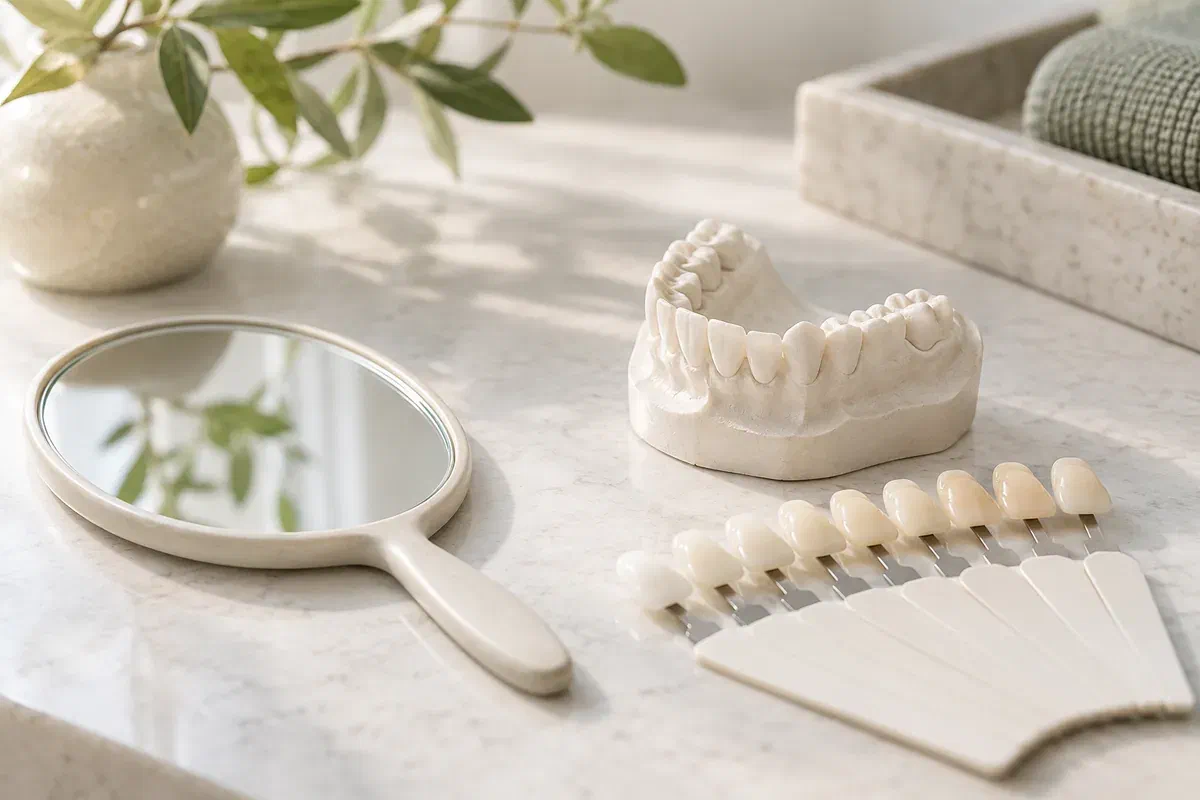
Illustrative consultation mirror, dental study cast, and natural tooth shade samples
Signs worth mentioning

Three things to tell us about your teeth

Explain what you notice and when, perhaps while chewing, in a photo or when you wake up. Say whether appearance, comfort, upkeep or an event is the main reason you're thinking about it.

A chipped or uneven edge

Show us any edge that has chipped, thinned or become jagged. Ask whether a focused repair could improve it. A small area of wear doesn't automatically mean every front tooth needs building up or that a large cosmetic plan is needed.

Clenching, grinding or a changed bite

Mention if you clench, wake with sore jaws, notice sensitivity or feel your bite has shifted. These clues can explain the wear and shape what's sensible. A plan has to protect how your teeth work, or new work may wear in the same way.

Restoring without overdoing it

Tell us how you'd like your teeth to look, and what you'd keep. Longer, brighter teeth in photos can look striking, but may not suit your face or bite. Ask how a proposal would restore what's been lost while still looking like you.

Smile planning gives you information, not a commitment. Bonding, crowns, veneers, orthodontics or any other procedure would each need a full explanation of risks, alternatives and fees before you consent.

Why wear needs a plan

Fix the cause as well as the look.

When wear is part of the picture, a plan should link each step to a specific finding: the worn edge, the bite, the habit behind it. That makes it clearer why some steps are cosmetic and others protective. If you're offered more than you expected, ask which findings support it.

Planning also shows the full commitment up front. Visits, preparation of teeth, protective appliances, home care, repairs and replacement vary between approaches. Knowing these early lets you balance the improvement in appearance against the time and care it will involve.

Goals you've agreed together

Decide which features matter most and any limits. You might want edges evened out without changing colour, a familiar gap kept, or healthy teeth left alone. With priorities clear, it's easier to see which approaches fit.

Protection before cosmetics

Where grinding or bite issues are involved, ask whether protective steps come first and how they relate to later cosmetic work. Some decisions depend on how the bite responds, so planned check-ins matter.

Every option on the table

Request a plain comparison of each approach, including simply monitoring without treatment. Look at the upkeep, the chance of chipping, and the amount of enamel that would be reshaped or covered, not only the finished appearance. A good plan is honest about uncertainty, especially where wear may continue for reasons that can't be fully controlled.

The planning visits

Look closely, then decide slowly.

How many visits you'll need, and which records, varies with the wear and the options discussed. When you book, ask what the first appointment covers and whether it can be combined with other household check-ups.

  1. Describe the change you've noticed

    Explain how your teeth have changed, any earlier dental work and what you'd like to improve. Mention any habits like clenching. An older photo of your smile can help show what's been lost, while the plan centres on your teeth today.

  2. Examine wear, gums and bite

    The dentist checks teeth, gums, restorations and the way your teeth meet, looking for patterns of wear. Further records may be taken. Health and protective findings are explained separately from cosmetic ideas.

  3. Weigh the restoring options

    Go over approaches that could rebuild or reshape worn teeth, their preparation, limits and upkeep. If a mock-up or model is suggested, ask what it shows and its limits. No single preview method is part of every visit.

  4. Agree on stages and protection

    Confirm the treatment, consent, fees and schedule before anything begins, including any guard. If another clinician is involved, clarify roles. Ask when the bite and appearance will be reviewed and what happens if something changes.

Keeping wear in check

Protect the new edges.

Smile design is the planning stage. Aftercare comes with the treatments you choose, and with wear involved it often includes protection, so ask for maintenance guidance for each part.

Guards and daily habits

Ask whether a night guard is recommended and how to care for it. Find out about cleaning around new work and any foods or habits to avoid. If a routine sounds hard to maintain, raise it before you commit.

Regular checks for further wear

Ask how wear and restorations will be monitored over time. Rebuilt edges can chip or need repair, and restorations may eventually need replacing. Treat lifespan and fees as estimates rather than guarantees.

Speak up about changes

A rebuilt edge that catches your lip, a bite that suddenly feels high, or a guard that has started to pinch are all reasons to phone the team. Questions about how things look can wait for your scheduled review. Resist the temptation to sand down or adjust dental work at home, however small the problem seems.

Patient information: British Orthodontic Society — long-term implications of restorative and alignment choices

Campbellville treatment choices

Repair, rebuild or watch the wear

The recommendation might be a focused step, a coordinated plan or monitoring without elective treatment. Ask how each one addresses the wear or concern that brought you in.

For minor, localised wear

Smoothing or repairing an edge

Polishing a rough spot, bonding a chipped edge or a similar focused option may be considered where suitable. You'll want to know how much difference it would make to the look and to the bite. A minor repair is a sensible plan when it fits the findings and what you're hoping for.

When wear, position and restorations interact

Rebuilding with the bite in mind

Restoring several worn teeth can involve the bite, spacing and older restorations together. Ask whether input from an orthodontist or prosthodontist would add value and how stages would be sequenced. Each step should have a clear purpose.

When nothing seems to be getting worse

Monitoring and protecting

You may decide stable wear doesn't need cosmetic treatment once the options are clear. Ask whether a guard or regular monitoring makes sense. A consultation without cosmetic work can still help protect your teeth.

Campbellville smile-design questions

Wear, length and the bite

Ask what's behind each recommendation, how much treatment it involves and what you'll need to look after afterward.

(905) 876-4488
Why are my front teeth getting shorter?
Common causes include grinding, clenching, the way teeth meet, erosion from acids or simply years of use. The dentist can look for the pattern and explain what’s likely, which helps decide whether protection, repair or monitoring comes first.
Can worn teeth be made longer again?
Sometimes, using bonding or restorations, depending on the bite and how much tooth remains. Ask what each option involves, how it would be protected from further wear and what its limits are. The dentist may suggest addressing the cause of the wear before adding length.
Do I need to stop grinding before cosmetic work?
Grinding can damage new work as well as natural teeth, so it’s usually addressed in the plan. Ask whether a night guard is advised and how it fits with any cosmetic treatment you’re considering.
Can my appointments be grouped with my family's?
Ask when you book. Depending on availability and what each person needs, it may be possible to arrange visits close together, which can make planning easier for rural households. It also helps to ask which steps could share an appointment and which genuinely need a separate trip.
Will rebuilding my teeth change how I bite?
It might, which is why the bite is assessed carefully during planning. Any expected change should be explained in advance, sometimes with a trial period first. Tell the team if anything feels different afterward, rather than waiting to see if you get used to it.
Is a mock-up a promise of how my rebuilt teeth will look?
No. A trial or preview can help you react to proposed length and shape, but the final result depends on your bite, the treatment chosen and other practical limits explained in your plan.
Smile design for Campbellville

Worn teeth are worth a conversation.

Book a visit with us on Bronte Street to look at the wear, shade, shape and position of your teeth. We'll explain what assessment is needed and help you weigh repair, protection and cosmetic options.

The recommended approach, records, timing and fees depend on assessment. No specific procedure, appliance or cosmetic result is guaranteed.

Visit Milton Dental Clinic
Unit 1, 342 Bronte St. S, Milton, ON L9T 5B7
Get directions Clinic hours
Monday–Thursday
11am–7pm
Friday–Sunday
By appointment only

Areas we serve

  • Milton
  • Oakville
  • Mississauga
  • Georgetown
  • Halton Hills
  • Acton
  • Campbellville
  • Brampton
  • Burlington
  • Puslinch
  • Rockwood
  • Erin
  • Caledon
  • Etobicoke
  • Old Milton
  • Bronte Meadows
  • Timberlea
  • Dorset Park
  • Dempsey
  • Clarke
  • Beaty
  • Coates
  • Harrison
  • Scott
  • Willmott
  • Ford
  • Bowes
  • Cobden
  • Walker
  • Mountain View
  • Milton Heights
  • Hawthorne Village
  • Valley View
  • Fallingbrook
  • Nassagaweya
  • Trafalgar
  • Esquesing
  • Nelson
  • Brookville
  • Moffat
  • Glen Williams
  • Norval
  • Limehouse
  • Stewarttown
  • Ashgrove
  • Hornby
  • Silver Creek
  • Speyside
  • Scotch Block
  • North Oakville
  • River Oaks
  • Glen Abbey
  • West Oak Trails
  • Palermo
  • Bronte Creek
  • College Park
  • Joshua Creek
  • Uptown Core
  • Preserve
  • Iroquois Ridge
  • Lisgar
  • Meadowvale
  • Meadowvale Village
  • Churchill Meadows
  • Erin Mills
  • Central Erin Mills
  • Streetsville
  • East Credit
  • Creditview
  • Heartland
  • Sheridan
  • Mount Pleasant
  • Credit Valley
  • Huttonville
  • Churchville
  • Springbrook
  • Northwest Brampton
  • Bram West
  • Fletcher's Meadow
  • Fletcher's Creek South
  • Alton Village
  • Orchard
  • Millcroft
  • Headon Forest
  • Tansley
  • Brant Hills
  • Tyandaga
  • Kilbride
  • Lowville
  • Aberfoyle
  • Morriston
  • Arkell
  • Hillsburgh
  • Freelton
  • Carlisle
  • Waterdown
  • Flamborough
  • Mountsberg

How can we help?

Milton Dental Clinic

Have a question about your smile? Choose the option that works best for you.

For urgent dental concerns, please call.
Messages are reviewed during clinic hours.