

Illustrative patient and clinician discussing smile preferences with a mirror and shade guide
Cosmetic Dentistry

Smile Design in Mississauga

If you could change just one thing about your smile, what would it be? Smile design for Mississauga commuters starts with that answer, then checks shade, shape, alignment and gum health so your plan stays focused and fits a full calendar.

Priorities first

One change at the top of the list

Plenty of people have a short list of smile wishes: a little brighter, one crooked tooth straighter, an old filling less obvious. Smile design helps put that list in order. It works out which item matters most to you, which can be addressed, and which might be better left for later or not at all.

Behind the list sits a proper assessment. Tooth colour, outline and position are part of it, alongside existing restorations, gum health and the way your teeth come together. What looks like one simple wish can turn out to depend on the bite or the gums, so the plan follows the findings.

For busy adults travelling from Mississauga, it helps to know there's no pressure to decide on the spot. You can talk through your priorities, take the information home and choose a pace that suits your work and family life, including choosing to change nothing.

Set your smile priorities
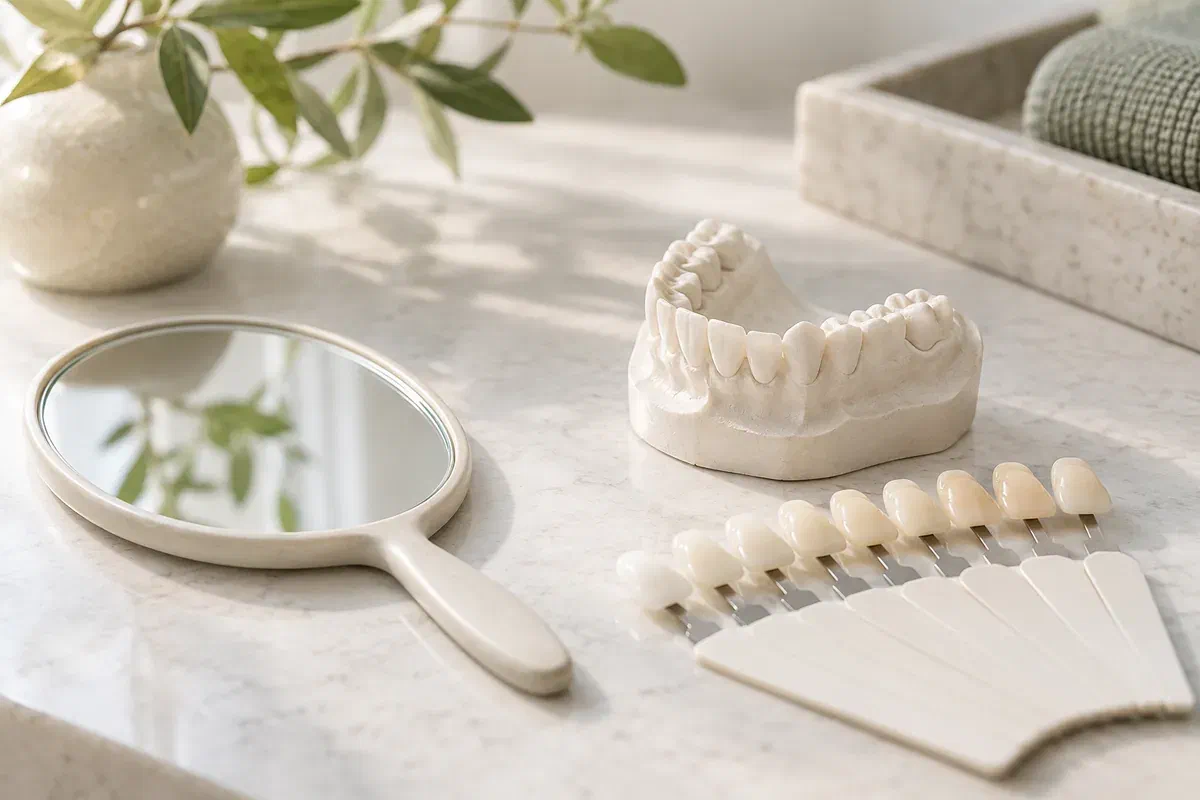
Illustrative consultation mirror, dental study cast, and natural tooth shade samples
Sorting the wish list

Some concerns are about looks. Others hide a health question.

Explain when each concern bothers you, such as in meetings, on camera or when eating. It's useful to say whether appearance, comfort, upkeep or a coming event is pushing it up your list.

The detail that tops your list

Name the single feature you'd change first, whether that's a chipped corner, a stain, a space or a filling that shows. A targeted approach might be enough. Wanting one thing improved doesn't oblige you to have neighbouring sound teeth reshaped as well.

A wish that turns out to involve the bite

Worn tips, sensitivity or chewing that favours one side can sit behind an appearance concern. Mention them, and ask how they change the order of your priorities. Good planning weighs the way teeth function, not only how they look facing forward.

Knowing where to stop

It can be hard to tell when a change would start to look unlike you. Talk about what you'd keep as well as what you'd alter. Sample smiles show a direction, yet their shade and size may not suit your teeth, so ask how a proposal respects your features.

Your planning visit is for information and discussion. Agreeing to any procedure, from whitening to veneers or orthodontic care, comes only after its details, risks, alternatives and cost have been laid out for you.

What ranking your priorities gives you

Fewer surprises, clearer trade-offs

When the plan follows your list, every treatment can be traced back to an item on it or to a finding from the exam. That makes it easy to spot a step that seems out of place. If you're offered more than you asked about, the right response is a simple question: what was found that makes this necessary?

Ranking also shows the cost of each wish in time and effort. Visits, any reshaping of teeth, home care, repairs and later replacement differ from option to option. Seeing them side by side lets you decide which changes earn a place in your schedule and which can wait.

A list you both understand

Agree on what's most important and any boundaries you'd like respected. Perhaps only a small colour change, keeping a gap, or leaving healthy enamel alone. With the order agreed, the dentist can show which options serve the top items.

A logical sequence

If several treatments are involved, find out how they link and which needs to lead. Certain decisions are best made once earlier stages are complete. You keep the option to reassess partway rather than treating the whole programme as fixed.

Room to say not yet

Ask for every reasonable alternative, including doing nothing elective. Compare maintenance and how much tooth structure each option uses, not only the appearance. A plan you can trust tells you plainly where outcomes are uncertain.

From list to plan

How the conversation usually runs

The number of appointments and the records needed vary with your concerns and the treatments discussed. Ask what the consultation covers and whether further tests or specialist input might be recommended.

  1. Go through your list together

    Explain each wish, the dental work you've had and what would make a change feel worthwhile. Mention timing and any treatments you'd rather avoid. A saved photo can help show a style, while the conversation keeps returning to your teeth.

  2. Assess health before cosmetics

    Teeth, gums, restorations and bite are examined before any recommendation. Further records may be suggested. Ask which findings need care for health reasons and which items are elective, so a cosmetic wish never hides a health need.

  3. Match options to priorities

    Look at suitable approaches for the top items, their preparation, limits and upkeep. If a mock-up, model or set of photographs is suggested, ask what it can demonstrate and what it cannot. A digital preview is not a standard part of every visit.

  4. Confirm stages and when to review

    Settle the treatment, consent, fees and appointments before any work begins. Where more than one clinician is involved, clarify responsibilities. Agree on when you'll review the look and the bite, and how a changed priority would be handled.

Keeping it up

Count the upkeep as part of the price.

The planning stage has no aftercare of its own. Each treatment you pick does, and they differ, so ask what maintenance comes with every part of the plan.

Home care that fits your week

Find out about cleaning around new work, recall visits and any retainers, night guards or product instructions. If a routine would be unrealistic with your schedule, say so early. A plan only works if it fits the life you actually lead.

Monitoring and the long term

Ask how results will be checked and what is likely to need attention in years to come. Restorations may eventually need repair or replacement. Expected lifespan and fees are estimates, never a promise that the work will stay unchanged.

Flag changes promptly

Contact the team if an edge catches your tongue, your bite feels different, or cleaning a new area is awkward. Save appearance questions for your review visit. Resist the urge to file or adjust dental work yourself.

Patient information: British Orthodontic Society — long-term implications of restorative and alignment choices

Scope that fits the list

From one item to a full plan, or none at all

You might be offered a single focused step, a linked series of treatments or simply monitoring. Ask how each option answers the priority you put first.

When the priority is self-contained

Tackling the top item only

Whitening, a professional clean, edge bonding or a similar focused step may be suggested if suitable. Find out exactly what it would change and what would remain. Addressing one priority well is a sensible plan when it fits the findings.

When position, colour and restorations interact

Several items planned as one

Alignment, spacing, shade and existing work can affect each other. Ask whether an orthodontist or other specialist should be involved and how stages would be scheduled. Every part of a combined plan should still have a reason you can state.

When the effort isn't worth it right now

Keeping your list on hold

Having heard the options, you might decide your healthy smile can stay as it is for now. Ask about routine care and monitoring. A consultation without cosmetic treatment afterward can still clear up useful questions about your oral health.

Mississauga smile-design questions

Practical questions about planning a smile change

Ask how big the proposed change is, why each step is suggested and what you'll need to maintain once treatment is complete.

(905) 876-4488
Can I fix my top priority first and decide on the rest later?
Often, yes. Ask whether treating one item first would limit options later, especially for shade matching or alignment. The dentist can explain which order keeps the most choices open.
How many appointments does smile planning usually take?
It depends on your concerns and what records are needed. Some people need one consultation; others need further assessment or specialist input. Ask what to expect before you book follow-up visits.
Do I need to have healthy gums before cosmetic work?
Gum health is usually checked and addressed first, since inflamed or receding gums affect both appearance and how well treatment lasts. The dentist will explain any findings and how they change the plan.
Is there a way to change my smile without altering healthy teeth?
Sometimes. Whitening, professional cleaning, bonding or orthodontic movement may involve little or no removal of tooth structure, depending on the case. Ask which options are conservative for you and what their limits are.
Can I still say no after seeing a preview?
Yes. A preview supports the discussion; it isn’t agreement to treatment. You can decline, ask for changes or take time to think. Consent is a separate step after the plan is fully explained.
What should I write down before my first visit?
List the features you’d change, the ones you like and any dental work you’ve had. Note your timing and budget concerns. Photos are optional, and explaining why you like an example helps more than the image alone.
Smile design for Mississauga

Bring your list. Leave with a plan, or just clearer answers.

Set aside time at our Bronte Street practice to go over the colour, outline and position of your teeth, item by item. Together we can decide what needs assessing first and which of your priorities a personal smile plan should serve.

Any plan, preview, schedule or fee is confirmed only after assessment. No technology, procedure or cosmetic result can be guaranteed.

Visit Milton Dental Clinic
Unit 1, 342 Bronte St. S, Milton, ON L9T 5B7
Get directions Clinic hours
Monday–Thursday
11am–7pm
Friday–Sunday
By appointment only

Areas we serve

  • Milton
  • Oakville
  • Mississauga
  • Georgetown
  • Halton Hills
  • Acton
  • Campbellville
  • Brampton
  • Burlington
  • Puslinch
  • Rockwood
  • Erin
  • Caledon
  • Etobicoke
  • Old Milton
  • Bronte Meadows
  • Timberlea
  • Dorset Park
  • Dempsey
  • Clarke
  • Beaty
  • Coates
  • Harrison
  • Scott
  • Willmott
  • Ford
  • Bowes
  • Cobden
  • Walker
  • Mountain View
  • Milton Heights
  • Hawthorne Village
  • Valley View
  • Fallingbrook
  • Nassagaweya
  • Trafalgar
  • Esquesing
  • Nelson
  • Brookville
  • Moffat
  • Glen Williams
  • Norval
  • Limehouse
  • Stewarttown
  • Ashgrove
  • Hornby
  • Silver Creek
  • Speyside
  • Scotch Block
  • North Oakville
  • River Oaks
  • Glen Abbey
  • West Oak Trails
  • Palermo
  • Bronte Creek
  • College Park
  • Joshua Creek
  • Uptown Core
  • Preserve
  • Iroquois Ridge
  • Lisgar
  • Meadowvale
  • Meadowvale Village
  • Churchill Meadows
  • Erin Mills
  • Central Erin Mills
  • Streetsville
  • East Credit
  • Creditview
  • Heartland
  • Sheridan
  • Mount Pleasant
  • Credit Valley
  • Huttonville
  • Churchville
  • Springbrook
  • Northwest Brampton
  • Bram West
  • Fletcher's Meadow
  • Fletcher's Creek South
  • Alton Village
  • Orchard
  • Millcroft
  • Headon Forest
  • Tansley
  • Brant Hills
  • Tyandaga
  • Kilbride
  • Lowville
  • Aberfoyle
  • Morriston
  • Arkell
  • Hillsburgh
  • Freelton
  • Carlisle
  • Waterdown
  • Flamborough
  • Mountsberg

How can we help?

Milton Dental Clinic

Have a question about your smile? Choose the option that works best for you.

For urgent dental concerns, please call.
Messages are reviewed during clinic hours.