

Illustrative patient and clinician discussing smile preferences with a mirror and shade guide
Cosmetic Dentistry

Smile Design in Old Milton

Older crowns and fillings rarely age at the same pace as the teeth around them. Smile design for Old Milton looks at that whole picture, from shade and outline to bite and gum health, so you can decide calmly what to update and what to leave.

Planning around the work you already have

A smile with history deserves a careful second look.

Many adults reach a point where the smile they see is partly their own teeth and partly dental work from years ago. A crown has gone a different colour from its neighbours, a filling edge has darkened, or the gums have shifted slightly. Smile design is a structured talk about which of those details matter to you and why.

That talk covers appearance and health together. The dentist considers tooth colour, outline and position, the state of existing restorations, the gums, and how your teeth come together. It is a way of planning, rather than one procedure, and it can end with a very small recommendation.

In Old Milton, where long-standing households and newer arrivals share the same streets, we meet people at every stage of that story. Come with your concerns, even if they're hard to put into words. You won't be asked to pick a treatment first, and keeping things as they are stays a real option.

Plan a smile review
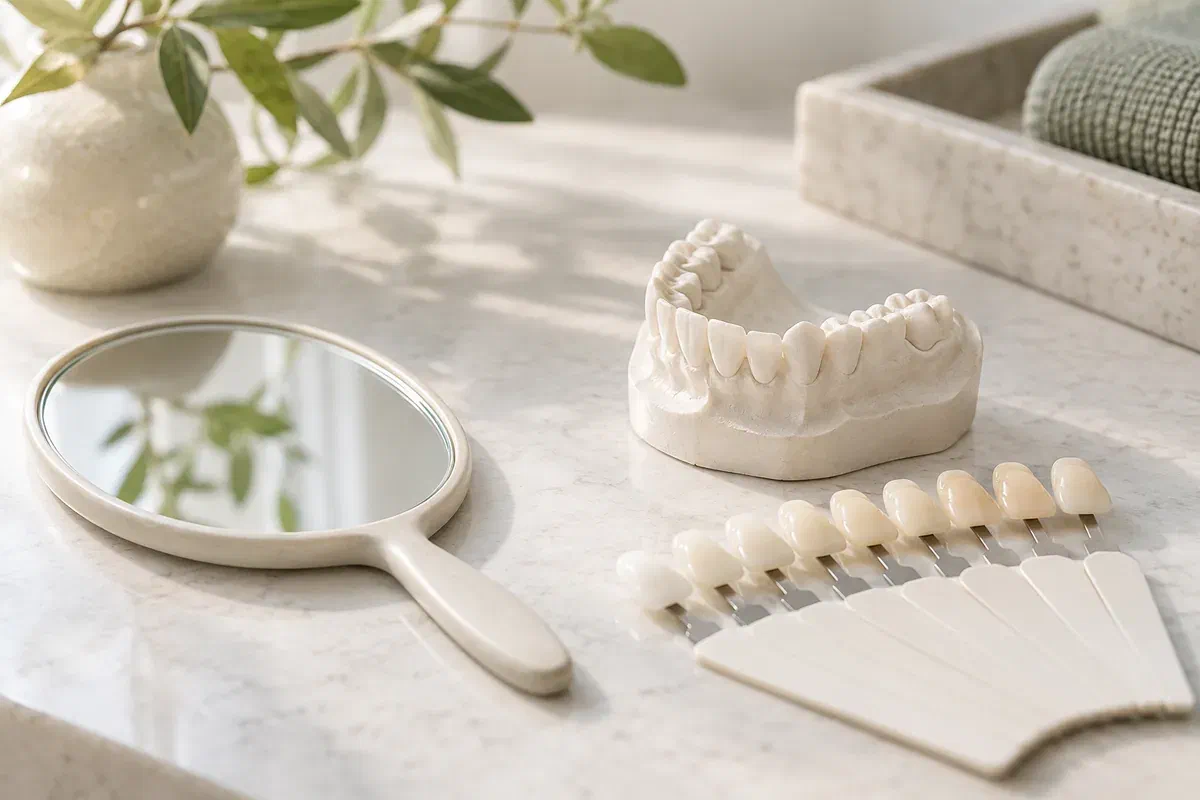
Illustrative consultation mirror, dental study cast, and natural tooth shade samples
Old Milton starting points

What has changed since you last thought about your teeth?

Describe the moments you notice the problem. It might be a crown that looks grey in daylight or a front tooth that seems shorter than it was. Say whether looks, comfort or upkeep is driving the question.

A restoration that stands out

Point to the crown, filling or bonded edge that no longer blends in. Ask whether replacing that one piece would solve the issue, and what it would involve for the tooth underneath. One mismatched restoration does not, by itself, mean the teeth beside it need to change.

Wear, comfort and the bite

Flattened biting edges, chewing that feels uneven, or a sensitive spot are worth mentioning. Ask how these connect to the appearance you'd like to improve. The plan needs to respect the way your teeth meet and carry load, not only how they look head-on.

Wanting a change that still looks like you

Explain which parts of your smile feel familiar and right. Photos of other people can show a direction, though their teeth may differ in size and colour from yours. Ask how a proposal keeps the character you'd miss if it were gone.

A planning visit is for understanding choices. It does not mean you have agreed to new crowns, whitening, veneers, orthodontics or anything else until the plan, its risks, the alternatives and the fees have been set out.

The value of planning ahead

Know why each step is there before it happens.

With older dental work in the picture, it is easy for one replacement to lead to talk of several more. A clear plan ties every proposed step to a concern or a finding. Ask what each one is expected to change, and if the list keeps growing, ask what was seen to justify it.

Planning also brings the practical side forward. Visits, how much tooth may be reshaped, cleaning routines, future repairs and the eventual need to replace restorations all affect the choice. Talking about them at the start helps you balance the improvement you'd see with what you'd be signing up for.

Priorities you've both agreed

Decide together which features come first and what you'd rather not alter. You might want a crown matched to your natural shade, a gap left alone, or healthy teeth kept untouched. Stated priorities make it easier to see where each option fits.

Steps in a sensible order

Where replacement, whitening or alignment might all be involved, ask how they depend on each other. Some decisions make more sense after earlier results are in. Knowing this lets you pause and review rather than treat the whole plan as locked.

Room to weigh alternatives

Ask about each option's practical differences, including leaving older work in place for now. Compare upkeep and how much natural tooth would be affected, alongside the look. An honest plan also names what it cannot predict.

Step by step

How a smile review usually moves forward

What records you need and how many visits are involved will depend on your goals and the options in play. Ask what the first visit includes and whether further assessment or a specialist might be useful.

  1. Start with your story

    Share what you'd like to look different, what dental work you've had and roughly when, and what would make a change worthwhile. Mention timing and what kinds of treatment you're open to. Old photos of your smile can help, as long as the focus stays on your teeth today.

  2. Examine health, restorations and bite

    The dentist checks teeth, gums, existing crowns and fillings, and the way you bite before suggesting anything. Extra records may be taken where useful. Ask which findings are about health and which suggestions are elective, so you can treat them as separate decisions.

  3. Weigh the approaches and any preview

    Review what's suitable, how much preparation each option needs, its limits and its maintenance. If models, photographs or a trial mock-up are suggested, ask what they represent and where they fall short. Previews and particular software are not part of every consultation.

  4. Confirm the plan before care begins

    Agree on the treatment, consent, fees and appointment schedule first. If another practitioner will be involved, be clear on their part. Ask when results will be checked and how a change of heart or an unexpected finding would be handled.

Looking after the result

Today's choice comes with years of upkeep.

The planning itself needs no aftercare, but every treatment that follows does. Ask for a maintenance outline for each part of your plan, since a crown, a whitening routine and a retainer are cared for differently.

Daily care for each treatment

Ask about brushing and flossing around new work, review visits, and any guard, retainer or product instructions. If a routine sounds unrealistic for you, raise it now. How well a plan fits your day matters as much as how it looks in a picture.

Reviews and eventual replacement

Find out how the result will be monitored and what tends to need attention later. Restorations can chip, wear or need replacing in time, so talk about repair. Treat any lifespan or fee figure as an estimate, not a guarantee.

Tell us when something feels off

If a new edge feels rough, your bite seems different, or a spot is hard to clean, let the team know. Bring up appearance concerns at your review. Avoid filing or adjusting dental work yourself, even if it seems minor.

Patient information: British Orthodontic Society — long-term implications of restorative and alignment choices

Possible directions

Replace, combine or simply keep watching.

Your plan could involve one targeted step, a coordinated set of treatments, or no elective work. Ask how each route answers the concern that brought you in.

When one area is the issue

Updating one piece of dental work

Replacing a single crown or filling, polishing, whitening or repairing an edge may be considered where suitable. Ask which choice changes the feature you notice and what it leaves alone. A small plan is sound when it matches the findings and what you hoped for.

When several factors affect the look

A broader plan across several teeth

Position, space, colour and older restorations sometimes need planning as one. Ask whether an orthodontist or other specialist should be consulted and how the stages would be timed. Every step should have its own reason rather than come as a bundle.

When the change isn't worth the commitment

Leaving well enough alone, for now

After the discussion, you may feel a sound restoration or natural feature is fine as it stands. Ask what routine care or monitoring is sensible. Deciding against cosmetic work can still follow a visit that answers your questions about your mouth.

Questions from Old Milton

What people ask about updating an older smile

Ask about the reasoning behind any recommendation, how much treatment it involves and what you'd need to look after afterward.

(905) 876-4488
Can a new crown be matched to my natural teeth instead of making everything whiter?
Often that’s the aim. The dentist can discuss shade matching to your existing teeth and whether whitening first would change the target. Ask how the colour is chosen and what might affect the match over time.
My old fillings are still sound. Do they have to be replaced for the look?
Not necessarily. Replacing sound work removes some tooth each time, so it’s worth weighing carefully. Ask whether the change is cosmetic or needed for health, and what the trade-offs would be either way.
Is it normal for gums to affect how my smile looks?
Yes. Gum shape and health influence how long teeth appear and how restorations blend in. The dentist will check gum health first, since problems there may need attention before any cosmetic planning goes ahead.
Could my smile plan be spread over a longer period?
Raise it early. Ask which steps come first, which are optional and whether the order affects the result. A staged plan still has to make clinical sense and should spell out what your smile will look like between visits.
Does a mock-up show exactly how my teeth will turn out?
No. A preview or trial can help you react to a proposed shape or length, but it has limits. The real outcome depends on your findings, the treatment chosen and practical constraints explained in your plan.
Will smile design change the way I bite?
It shouldn’t do so without discussion. The bite is assessed as part of planning, and any change that could affect it should be explained beforehand. Tell the team if anything feels different after treatment.
Smile design near Old Milton

Bring the questions you've been putting off.

Arrange a visit at our Bronte Street practice, just by Milton's historic downtown, to talk about shade, shape, position or the older work in your smile. We'll explain what assessment is needed and help you weigh the choices.

Scope of care, records, previews, timing and fees depend on assessment. No set technology, procedure or cosmetic outcome is guaranteed.

Visit Milton Dental Clinic
Unit 1, 342 Bronte St. S, Milton, ON L9T 5B7
Get directions Clinic hours
Monday–Thursday
11am–7pm
Friday–Sunday
By appointment only

Areas we serve

  • Milton
  • Oakville
  • Mississauga
  • Georgetown
  • Halton Hills
  • Acton
  • Campbellville
  • Brampton
  • Burlington
  • Puslinch
  • Rockwood
  • Erin
  • Caledon
  • Etobicoke
  • Old Milton
  • Bronte Meadows
  • Timberlea
  • Dorset Park
  • Dempsey
  • Clarke
  • Beaty
  • Coates
  • Harrison
  • Scott
  • Willmott
  • Ford
  • Bowes
  • Cobden
  • Walker
  • Mountain View
  • Milton Heights
  • Hawthorne Village
  • Valley View
  • Fallingbrook
  • Nassagaweya
  • Trafalgar
  • Esquesing
  • Nelson
  • Brookville
  • Moffat
  • Glen Williams
  • Norval
  • Limehouse
  • Stewarttown
  • Ashgrove
  • Hornby
  • Silver Creek
  • Speyside
  • Scotch Block
  • North Oakville
  • River Oaks
  • Glen Abbey
  • West Oak Trails
  • Palermo
  • Bronte Creek
  • College Park
  • Joshua Creek
  • Uptown Core
  • Preserve
  • Iroquois Ridge
  • Lisgar
  • Meadowvale
  • Meadowvale Village
  • Churchill Meadows
  • Erin Mills
  • Central Erin Mills
  • Streetsville
  • East Credit
  • Creditview
  • Heartland
  • Sheridan
  • Mount Pleasant
  • Credit Valley
  • Huttonville
  • Churchville
  • Springbrook
  • Northwest Brampton
  • Bram West
  • Fletcher's Meadow
  • Fletcher's Creek South
  • Alton Village
  • Orchard
  • Millcroft
  • Headon Forest
  • Tansley
  • Brant Hills
  • Tyandaga
  • Kilbride
  • Lowville
  • Aberfoyle
  • Morriston
  • Arkell
  • Hillsburgh
  • Freelton
  • Carlisle
  • Waterdown
  • Flamborough
  • Mountsberg

How can we help?

Milton Dental Clinic

Have a question about your smile? Choose the option that works best for you.

For urgent dental concerns, please call.
Messages are reviewed during clinic hours.