

Illustrative patient and clinician discussing smile preferences with a mirror and shade guide
Cosmetic Dentistry

Smile Design in Rockwood

It's natural to want to see a change before you commit to it. Smile design for people coming from Rockwood explains what models, photographs or a trial mock-up can and can't tell you, alongside a real look at shade, shape, position and gum health.

Seeing before deciding

A preview is a conversation tool, not a promise.

Imagining a different smile is hard. Many people want to see something concrete, whether a model of their teeth, a set of photos or a temporary trial shape, before deciding anything. Smile design can include that kind of visual aid where it's appropriate, as part of a broader planning discussion.

What you see has to rest on what's really there. The dentist considers the colour, outline and position of your teeth, existing restorations, gum health and how you bite. Those findings decide what's achievable, which is why every preview has limits and why no plan is the same for everyone.

Starting out from Rockwood, you can come with a picture in your head or none at all. There's no need to know which treatment you want. A small change, a staged approach, a second view from another dentist, or keeping your natural smile all remain on offer after the first visit.

Ask about planning and previews
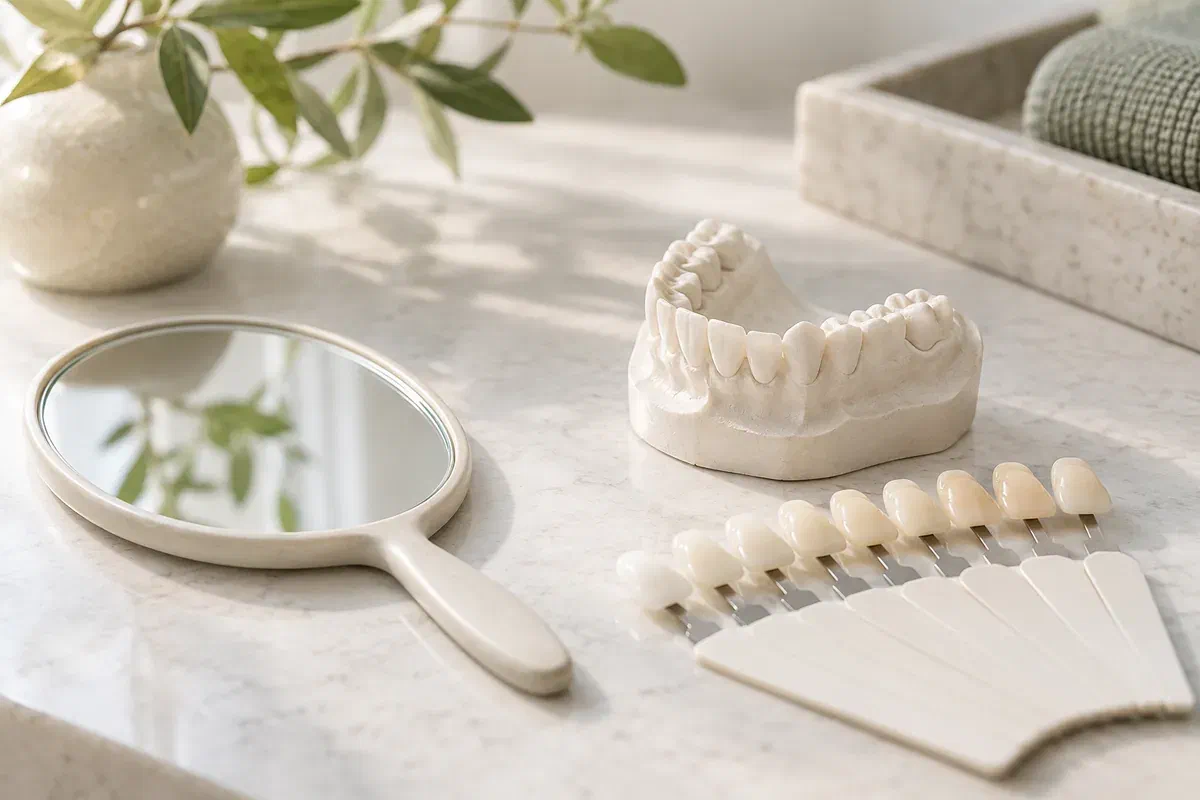
Illustrative consultation mirror, dental study cast, and natural tooth shade samples
Rockwood starting points

What would you want a preview to show?

Describe the detail you'd like to see changed and the moments it bothers you. Let us know whether appearance, comfort, upkeep or an occasion is prompting the visit.

A single feature, visualised

If one edge, shade, gap or restoration is the issue, point to it. Ask whether a focused treatment could deal with it and whether a preview would even be useful. A minor concern rarely justifies reshaping healthy teeth just to match a picture.

Shape changes that affect the bite

Longer or reshaped teeth can change how you bite and speak. Mention worn edges, sensitivity or chewing problems. A preview that only shows the front view can miss these, so planning has to consider function as carefully as appearance.

Wanting to recognise yourself

Share what you like about your smile now. A trial can show whether a proposed shape still feels like you, but images of other people's teeth may not translate to yours. Ask how the plan would protect the features that make your smile familiar.

Seeing a preview isn't the same as agreeing to treatment. Whitening, veneers, bonding, orthodontics or other care would each need its own explanation of the steps, the risks, the alternatives and the cost first.

Why previews need context

Picture it, then understand it.

Visual aids earn their keep when every change in it links back to a concern you raised or a finding from the exam. You should be able to point to each difference and know why it's there. If a mock-up shows more teeth changed than you expected, ask what justifies the extra work.

Planning also makes the less visible parts clear. Previews rarely show the visits, tooth preparation, maintenance, repairs or eventual replacement behind a result. Talking those through lets you weigh the change you'd see against the commitment it represents.

Priorities the preview should reflect

Agree on what matters most and what to leave alone. You might want a subtle shade shift, to keep a gap, or to avoid preparing sound teeth. A preview built around those priorities is far more useful than one showing an idealised smile.

A sequence behind the picture

If the final look depends on several treatments, ask how they relate and what has to happen first. Some decisions can only be made once earlier stages are done. A preview of the end point shouldn't hide the steps in between.

Comparisons beyond the image

Ask for alternatives with their practical differences, including no elective care. Compare upkeep and the effect on natural tooth structure, not only which picture you prefer. A clear plan explains where the preview and reality may differ.

Planning, with or without a preview

How the process typically goes

Records and visits vary with your goals and the treatments being considered. Ask what the consultation involves and whether a preview, further assessment or a specialist opinion would genuinely add something.

  1. Explain what you'd like to see

    Talk about the changes you have in mind, earlier treatment and what would make a result feel worthwhile. Mention timing and comfort with different kinds of care. Photos may help, with the plan grounded in your own teeth.

  2. Assess the foundation

    Before any preview, the dentist examines teeth, gums, restorations and bite. More records may be gathered where useful. You'll learn which findings call for treatment on health grounds and which ideas are elective.

  3. Review options and any visual aids

    Go over suitable approaches with their preparation, limits and upkeep. If photographs, a model or a trial mock-up are offered, ask what each represents and what it can't predict. No particular software or scanning is part of every consultation.

  4. Agree on the plan, not just the picture

    Confirm treatment, consent, fees and appointments before anything starts. Where a specialist shares the work, know who is responsible for which part. Ask when appearance and function will be reviewed and how a change of mind would be handled.

Beyond the preview

The real smile needs real upkeep.

Smile design is planning, and aftercare depends on the treatments you choose. Ask for maintenance details for each part rather than assuming all cosmetic work is looked after the same way.

Daily care for the result

You'll need to know how to brush and floss around new work, how often you'd be reviewed, and whether a retainer, guard or special product comes with it. If a routine seems hard to keep, say so early. A preview can't show whether a plan suits your daily habits.

Change over the years

Find out how results will be checked and what may need attention. Restorations can wear, chip or need replacing, and natural teeth continue to change. Fees and lifespans are estimates, not guarantees.

When something doesn't feel right

Contact the team if a new edge feels sharp, your bite has changed or cleaning is awkward. Talk about appearance at your review, especially if the result differs from the preview. Don't try to adjust dental work yourself.

Patient information: British Orthodontic Society — long-term implications of restorative and alignment choices

What a plan might include

Not every smile change needs a preview.

Recommendations range from one focused step to a coordinated sequence, or no elective treatment. Ask how each addresses the concern you started with, and whether visualising it would help.

When one area is the concern

A simple, focused change

Cleaning, whitening, edge repair or a similar targeted option may be suitable. Some focused changes are easy to picture without a mock-up. Ask how the result would differ from your current smile and what would stay as it is.

When several factors combine

A coordinated plan worth visualising

Where alignment, spacing, shade and existing restorations interact, a preview may help you understand the proposed result. Ask whether orthodontic or other specialist advice would help and how stages would connect. Each step should have a stated reason.

When the picture doesn't justify the work

Keeping what you have

Sometimes seeing a preview helps people realise they prefer their own smile. Ask about the check-ups and cleaning that will keep it healthy. A consultation that ends without treatment can still be time well spent.

Questions about previews

Seeing a proposed smile before deciding

Ask what any preview represents, how much treatment it implies and what upkeep would follow.

(905) 876-4488
What's the difference between a model, photos and a trial mock-up?
Photographs record your current smile, models show the teeth in three dimensions, and a temporary trial can let you see and feel a proposed shape in your mouth. Ask which, if any, would be useful for your concern.
Can I take a preview home to think about?
Ask whether that’s possible for the type of preview used. Some can be shared as images. Taking time to consider a proposed change, and discussing it with people close to you, is reasonable before deciding.
Why might my final result differ from the preview?
Previews have limits. The final outcome depends on your teeth, gums, bite, the materials and treatment chosen, and practical constraints. Ask the dentist to explain where differences are most likely in your case.
Is a preview included in every smile-design consultation?
No. Whether one is useful depends on your concern and the options being considered. For a small, focused change it may not be needed. Ask whether it would add anything for you.
Does trying a mock-up affect my teeth?
Ask how the proposed trial would be made and removed, and whether it involves any preparation. Typically a trial is meant to be temporary, but the dentist should explain exactly what’s involved before you agree.
If I like the preview, am I committed to treatment?
No. A preview supports discussion; consent to treatment is separate and comes only after the plan, risks, alternatives and fees are explained. You can still decline or ask for changes.
Smile design for Rockwood

Bring the picture in your head.

Come and see us on Bronte Street to talk about the colour, outline and alignment of your smile. After an examination, we can tell you whether a model, photographs or a trial would make your options easier to picture, or whether a plain explanation will do.

Previews, records, timing and fees are decided after assessment. A preview illustrates a proposal and isn't a guarantee of any particular outcome.

Visit Milton Dental Clinic
Unit 1, 342 Bronte St. S, Milton, ON L9T 5B7
Get directions Clinic hours
Monday–Thursday
11am–7pm
Friday–Sunday
By appointment only

Areas we serve

  • Milton
  • Oakville
  • Mississauga
  • Georgetown
  • Halton Hills
  • Acton
  • Campbellville
  • Brampton
  • Burlington
  • Puslinch
  • Rockwood
  • Erin
  • Caledon
  • Etobicoke
  • Old Milton
  • Bronte Meadows
  • Timberlea
  • Dorset Park
  • Dempsey
  • Clarke
  • Beaty
  • Coates
  • Harrison
  • Scott
  • Willmott
  • Ford
  • Bowes
  • Cobden
  • Walker
  • Mountain View
  • Milton Heights
  • Hawthorne Village
  • Valley View
  • Fallingbrook
  • Nassagaweya
  • Trafalgar
  • Esquesing
  • Nelson
  • Brookville
  • Moffat
  • Glen Williams
  • Norval
  • Limehouse
  • Stewarttown
  • Ashgrove
  • Hornby
  • Silver Creek
  • Speyside
  • Scotch Block
  • North Oakville
  • River Oaks
  • Glen Abbey
  • West Oak Trails
  • Palermo
  • Bronte Creek
  • College Park
  • Joshua Creek
  • Uptown Core
  • Preserve
  • Iroquois Ridge
  • Lisgar
  • Meadowvale
  • Meadowvale Village
  • Churchill Meadows
  • Erin Mills
  • Central Erin Mills
  • Streetsville
  • East Credit
  • Creditview
  • Heartland
  • Sheridan
  • Mount Pleasant
  • Credit Valley
  • Huttonville
  • Churchville
  • Springbrook
  • Northwest Brampton
  • Bram West
  • Fletcher's Meadow
  • Fletcher's Creek South
  • Alton Village
  • Orchard
  • Millcroft
  • Headon Forest
  • Tansley
  • Brant Hills
  • Tyandaga
  • Kilbride
  • Lowville
  • Aberfoyle
  • Morriston
  • Arkell
  • Hillsburgh
  • Freelton
  • Carlisle
  • Waterdown
  • Flamborough
  • Mountsberg

How can we help?

Milton Dental Clinic

Have a question about your smile? Choose the option that works best for you.

For urgent dental concerns, please call.
Messages are reviewed during clinic hours.