

Illustrative patient discussing tooth sensitivity with a clinician before cosmetic treatment
Cosmetic Dentistry

Teeth Whitening for Sensitive Teeth

If cold drinks or an earlier whitening attempt have made your teeth uncomfortable, start with an assessment. Discuss teeth whitening for sensitive teeth in Milton to understand the cause, whether bleaching is suitable, and how comfort will guide the plan.

A closer look at whitening sensitive teeth

Put comfort into the conversation before choosing a brighter shade.

Wanting a lighter tooth colour and worrying about sensitivity can happen at the same time. The starting point is to understand the discomfort rather than simply choose a product labelled gentle. Sensitivity may have several causes, and some dental problems need attention before any whitening decision.

Teeth whitening for sensitive teeth describes an individualized discussion, not a separate treatment that guarantees no discomfort. Bleaching can itself cause temporary sensitivity or gum irritation. A suitable plan considers your existing symptoms, earlier reactions, oral-health findings, and whether the possible appearance benefit is worth pursuing.

At Milton Dental Clinic, tell us what triggers the feeling and how long it lasts. Bring details of products you have tried and the result you hope for. We can discuss the assessment needed, available options, and the circumstances in which postponing whitening is the more appropriate next step.

Discuss sensitivity before whitening
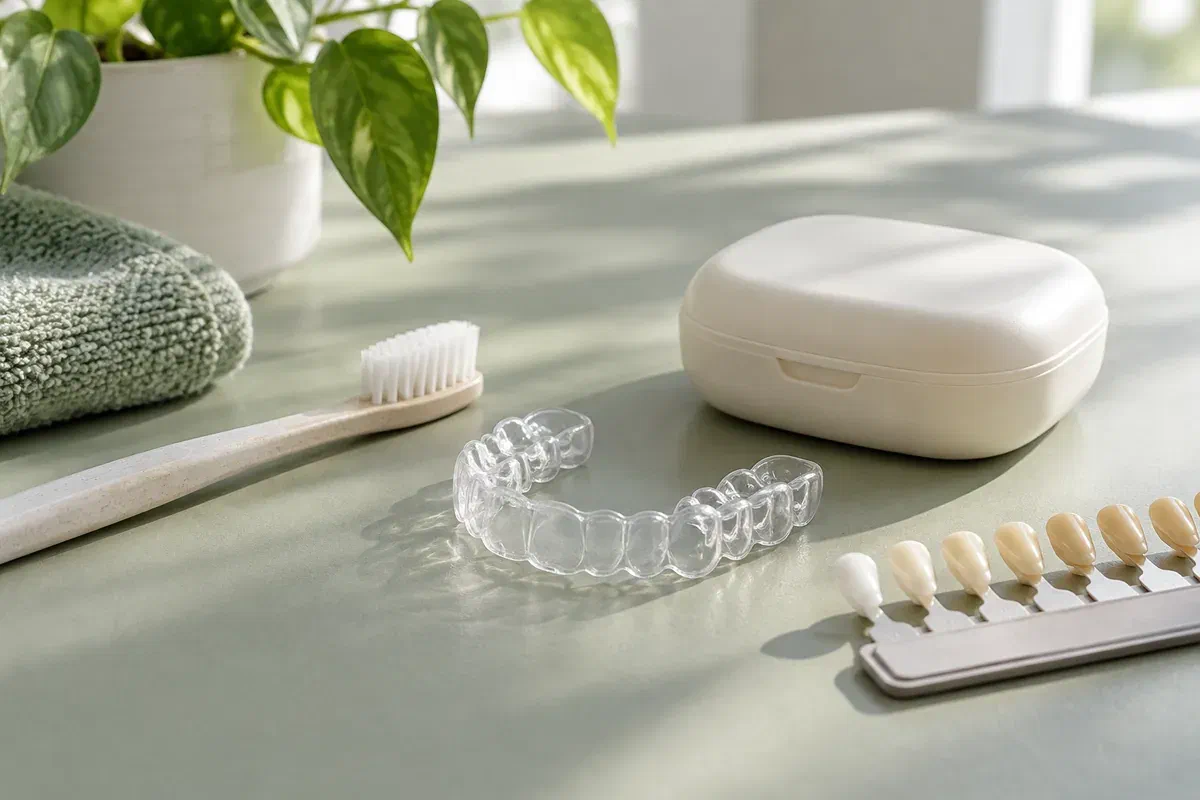
Illustrative soft toothbrush, empty dental tray, protective case, and natural tooth shade samples
What to explain at the assessment

The pattern of discomfort matters more than a product label.

Try to describe where the sensation occurs, what sets it off, and whether it disappears quickly or lingers. You do not need to diagnose the cause yourself.

One tooth feels different from the others

Point to the area and mention pain with biting, a recent filling, a visible crack, or a colour change. Ask whether that tooth needs investigation before general whitening is considered. A localized symptom should not be dismissed as an inevitable part of having sensitive teeth.

Cold, brushing, or sweet foods trigger a reaction

Explain how often it happens and whether the pattern is changing. Sensitivity can be associated with exposed root surfaces, enamel wear, decay, or other conditions. The clinician needs to assess the cause before discussing the most suitable response and any elective bleaching.

A previous whitening course was uncomfortable

Tell the team which product you used, the instructions you followed, and whether the teeth or gums were affected. Bring the packaging or a product photograph if available. That history can make the discussion more useful than simply saying that whitening did not agree with you.

Whitening is elective. Persistent pain, a broken tooth, or untreated gum or tooth problems should be assessed on their own merits before deciding whether a cosmetic course is appropriate.

What an individual plan can provide

A clear decision about suitability and a clear response if symptoms occur.

Professional guidance can help you understand whether the concern is external staining, the natural tooth shade, or a different problem. Those distinctions matter because cleaning, bleaching, and treating sensitivity have different purposes. Ask what the proposed approach is intended to improve and what it will leave unchanged.

If bleaching is suitable, the plan should explain the selected method and how your comfort will be monitored. You should know how to contact the team and what to do if symptoms develop. That is more useful than a promise that a product can never cause sensitivity.

Patient information: Canadian Dental Association — supervised bleaching and adverse effects

An assessment before another attempt

Review the previous experience and current findings before purchasing or restarting a course. Ask whether a dental problem should be treated first and what would indicate readiness to reconsider whitening. The consultation may lead to a different plan from the one you initially expected.

A realistic goal that respects your comfort

Discuss the degree of change you would find worthwhile and any time pressure behind the request. Ask how the plan would change if you could not tolerate the proposed course. A modest result, a delay, or no whitening can be reasonable outcomes of that conversation.

Instructions for the exact product and method

Confirm application, wear time, frequency, and any preparatory care recommended for you. Ask for a demonstration where relevant and repeat the instructions back if that helps. A familiar tray or a similar product name does not mean the instructions are interchangeable.

Planning whitening when sensitivity is a concern

Find the cause first, then decide whether to proceed.

There is no single strength, schedule, or device that suits everyone with sensitive teeth. The sequence should follow the examination, the chosen product, and your response.

  1. Discuss symptoms and your whitening history

    Explain the triggers, affected teeth, duration, and any recent changes. Review previous whitening, dental work, relevant health information, and allergies. Mention pregnancy or breastfeeding so the timing of elective care can be discussed before any product is selected.

  2. Examine oral health and the colour concern

    The clinician assesses the teeth, gums, and restorations and considers any further investigation needed. Ask whether the sensitivity has an identifiable cause and what care is recommended. Discuss whether the appearance concern is likely to respond to cleaning, bleaching, or another approach.

  3. Agree on suitability and a specific course

    If whitening is appropriate, review the proposed method, possible side effects, expected limits, and fees. Ask whether measures for sensitivity are indicated and what they can realistically achieve. Confirm the instructions and the circumstances in which you should stop and contact the team.

  4. Review comfort before deciding on more treatment

    Keep track of any reaction and discuss it at the agreed review or sooner if needed. Ask how the appearance will be assessed once the course is finished or paused. Further applications should be a considered decision, not an automatic response to a slower colour change.

During a supervised course

Do not push through symptoms to reach a deadline.

Keep your product instructions and the practice contact details available. Whitening is an appearance choice, so discomfort should prompt advice rather than pressure to finish at any cost.

Stop and ask when a reaction develops

If sensitivity or irritation occurs, discontinue the product and consult the clinician about the next step. Describe the location and severity, when it began, and the last application. Do not independently increase a desensitizing product or add another whitening system to compensate.

Follow the agreed daily-care advice

Ask which toothpaste, brush, and cleaning approach suit your findings. If a sensitivity product is recommended, clarify its purpose and instructions. Do not assume that using it makes any concentration or duration of bleaching acceptable, or that it treats every possible cause of tooth pain.

Reassess before future whitening

Teeth and restorations can change between courses. Ask whether a new assessment is needed before using stored supplies or arranging a repeat treatment. Discuss the condition of any trays and the current appearance rather than automatically repeating an old schedule whenever colour changes.

Patient information: NHS — tooth-whitening assessment and side effects

Choosing the next step for comfort and colour

Bleaching is only one possible part of the conversation.

The right choice depends on the cause of sensitivity, the type of discolouration, and your preferences. Ask what each option can reasonably change and what ongoing care it involves.

When another issue needs attention first

Address the sensitivity before elective whitening

Treatment or preventive advice may be recommended for the underlying findings. Ask how progress will be reviewed and whether whitening can be reconsidered later. Managing discomfort is worthwhile in its own right, even if you ultimately decide not to change the tooth shade.

When the examination supports proceeding

Consider a suitable supervised bleaching course

Discuss the available method, its limits, and a plan for reporting symptoms. Neither an in-office approach nor a home course is automatically comfortable for every person. Ask why the proposed choice suits your findings instead of selecting solely on speed or advertised strength.

When bleaching is unnecessary or not worthwhile

Review surface cleaning or keep your natural shade

If external deposits contribute to the appearance, ask whether suitable cleaning addresses your concern. You can also choose no elective colour change after understanding the options. Restorations or more extensive cosmetic work should not be assumed to be the next step just because whitening is unsuitable.

Sensitive-teeth whitening questions

Ask how the plan will respond to your symptoms.

Your earlier experience and current examination are more useful than a universal promise of gentle treatment. These questions can help make the consultation specific.

(905) 876-4488
Does a whitening product marked for sensitive teeth replace a dental assessment?
No. A label cannot identify why your teeth hurt or whether bleaching is appropriate. Explain the symptoms and have the cause considered before starting. Ask whether the proposed product and its instructions fit the findings rather than relying on the packaging alone.
Can sensitivity toothpaste guarantee that whitening will not hurt?
No. A clinician may recommend a sensitivity product where appropriate, but it does not guarantee a symptom-free course. Ask what benefit is expected, how it should be used, and what to do if discomfort occurs despite following the advice.
Should I whiten if only one tooth has a lingering reaction to cold?
Have that tooth assessed before choosing general bleaching. Explain how long the feeling lasts and any other symptoms, including biting discomfort or a colour change. A focused problem may need a different response from a general concern about tooth shade.
Can I dilute whitening gel myself to make it gentler?
Do not alter the product or improvise its application. Contact the clinician to discuss the reaction and whether the plan should change. Any adjustment needs to follow professional advice and the instructions for the selected product, rather than a home mixture.
Is faster whitening automatically a better option for someone with sensitivity?
No. Speed alone does not establish suitability or comfort. Ask how the method, product, and your findings influence the recommendation. A deadline should not replace assessment or encourage you to continue a course that is causing symptoms.
What happens if I stop whitening because sensitivity returns?
Tell the clinician what happened and arrange the recommended review. Discuss the symptoms and the appearance achieved before deciding whether to resume, change the plan, or stop altogether. Completing a cosmetic course is not more important than understanding a new dental concern.
Teeth whitening for sensitive teeth in Milton

Bring the sensitivity question before the shade decision.

Contact our Bronte Street practice to discuss discomfort, previous whitening reactions, and the change you hope for. We can explain the assessment needed and help you consider an approach that takes your current oral health seriously.

Whitening suitability and availability require assessment. No method guarantees freedom from sensitivity, and treatment may need to be deferred or stopped.

Visit Milton Dental Clinic
Unit 1, 342 Bronte St. S, Milton, ON L9T 5B7
Get directions Clinic hours
Monday–Thursday
11am–7pm
Friday–Sunday
By appointment only

How can we help?

Milton Dental Clinic

Have a question about your smile? Choose the option that works best for you.

For urgent dental concerns, please call.
Messages are reviewed during clinic hours.