

Illustrative patient discussing tooth sensitivity with a clinician before cosmetic treatment
Cosmetic Dentistry

Teeth Whitening for Sensitive Teeth in Acton

You started a whitening course, your teeth protested, and the trays went back in the drawer. Thinking about a second try from Acton? Start with a visit that looks at what happened last time, what your teeth show now, and whether restarting makes sense.

Thinking about a second attempt

The trays are in the drawer. Now what?

Stopping a whitening course because it hurt is more common than people admit. Often the shade had started to change, which makes it tempting to pick the trays back up and push through. Before you do, it helps to understand why the sensitivity happened and whether anything has changed since.

A second attempt is not automatically safer or riskier than the first. Bleaching can bring on temporary sensitivity and gum irritation in anyone, and an underlying issue such as an exposed root, a cracked filling, or enamel wear can make it worse. Restarting well means sorting out those questions before the gel comes out again.

For people in Acton, the first visit is a chance to bring the trays, the remaining gel, and an honest account of how far you got. Dr. Anjum can look at your teeth, explain what probably caused the trouble, and talk through whether to restart, change the approach, or leave the shade where it is.

Review a stopped whitening course
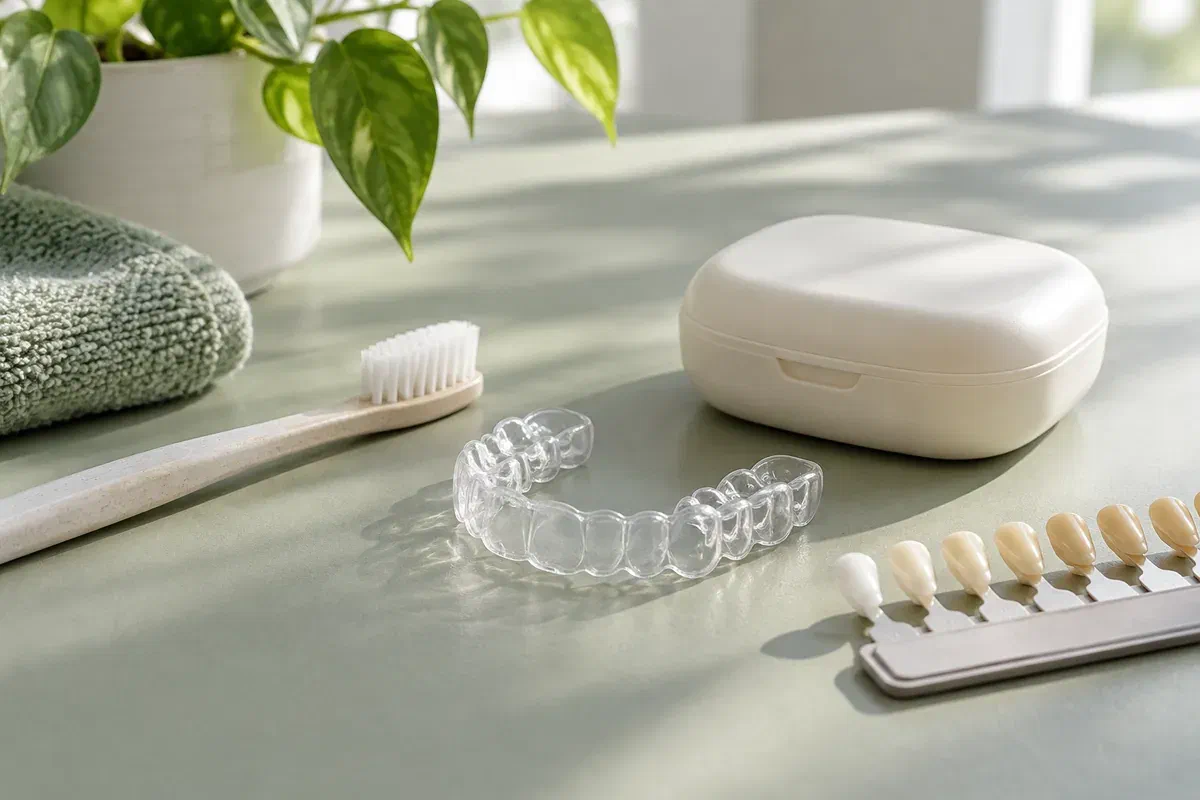
Illustrative soft toothbrush, empty dental tray, protective case, and natural tooth shade samples
Looking back at the last course

When did it start to hurt, and where?

Try to remember the point in the course when discomfort began, which teeth were involved, and how long it lasted after each use. There is no need to work out the cause yourself.

One tooth hurt more than the rest

If a single tooth ached badly, hurt to bite, or still feels different now, point it out. It may have had a problem before whitening started. That tooth should be examined on its own before a second course is considered, rather than blamed on bleaching alone.

Everything became sensitive to cold

Describe whether the general sensitivity faded after stopping or still lingers. Gum recession, worn enamel, decay, and other conditions can sit underneath bleaching sensitivity. The cause needs to be understood before talking about care for it or about restarting.

Your gums became sore or white

Gum irritation can happen when gel touches soft tissue. Tell us where it happened, whether the trays seemed to fit well, and how quickly it settled. Bring the trays if you still have them, since fit can matter as much as the product.

Nobody is obliged to finish a whitening course. A tooth that keeps aching, a crack, or gum or tooth problems that have not been treated should be dealt with first and on their own.

Why a review helps before restarting

Learn from the first try.

Looking at the earlier course together often explains a lot. Perhaps the product was stronger than needed, the trays let gel reach the gums, or a tooth had a problem nobody had found. An exam also confirms whether the colour you want to change is surface stain, natural shade, or something else.

Should a second course make sense, the plan ought to describe the method, how comfort will be tracked this time, and what to do at the first sign of trouble. Having a clear stopping rule and someone to call is more reassuring than being told it will be fine.

Patient information: Canadian Dental Association — supervised bleaching and adverse effects

A fresh exam, not a repeat

Your earlier reaction and current findings are reviewed before you open any stored gel. Ask whether a problem should be treated first and what would show readiness to try again. The new plan may look quite different from the old one.

A goal adjusted to what you learned

Talk about whether the shade you reached last time was close enough, and how much more change you want. Ask how the plan would change if sensitivity returned. Stopping where you are can be a perfectly good decision.

Updated instructions

Even if you use the same trays, confirm placement, wear time, frequency, and any preparation for the new plan. Ask for a demonstration if the details have faded. Old leaflets and leftover gel may not match current advice.

Steps toward a second course

Review what happened, then decide together.

There is no fixed strength or schedule for a second attempt. The plan follows the new exam, the product chosen, and what your teeth did the first time.

  1. Recount the first course

    Explain which product, how long you used it, when sensitivity began, and how it settled. We also review dental work, health history, and allergies. Mention pregnancy or breastfeeding, since elective cosmetic care may be timed differently.

  2. Examine teeth, gums, and trays

    The clinician looks at your teeth, gums, and restorations and checks the fit of your existing trays. Further tests may be suggested. Ask whether a cause for the earlier sensitivity is clear and what care is recommended before any restart.

  3. Agree on whether to restart

    If whitening is reasonable, go over the method, any reactions to expect, the result's likely limits, and the cost. Ask whether a sensitivity measure is advised this time. Settle on clear signs that mean you should stop and phone.

  4. Check in earlier this time

    Note how your teeth feel and bring it to an early review, or call sooner. Ask how the shade will be compared at the end or during a pause. Going beyond the plan should be a decision you make with the clinician, not one you drift into.

During the second attempt

Stopping again is allowed.

Keep your new instructions and our phone number handy. Because whitening is about appearance, a reaction means pausing and asking, even if it feels like a repeat of last time.

Pause at the first familiar twinge

If sensitivity or sore gums return, stop and call for advice. Say where it is, how strong, when it started, and your last application. Please do not try to override it with more desensitizer or by switching to a different whitener.

Follow your updated home care

Ask which toothpaste and brush suit your findings now. If a sensitivity toothpaste is recommended, ask what it is for and how long to keep using it. It does not make any bleaching schedule acceptable, and it will not address every cause of pain.

Ask before any further courses

Teeth and fillings change. Before using leftover gel or arranging another round, ask whether a new exam is needed. Have your trays and shade reviewed rather than going back to the routine that caused trouble.

Patient information: NHS — tooth-whitening assessment and side effects

Options for Acton smiles

Restart, rethink, or stop where you are

The right choice depends on what caused the earlier sensitivity, the type of discolouration, and your own feelings about trying again. Ask what each option offers and what follow-up it involves.

When an issue needs care before restarting

Care for the sensitivity, then reassess

Treatment or prevention advice may be offered for what the exam finds. Ask how improvement will be checked and when a restart could be considered. Comfort is a worthwhile goal on its own, even if you decide the first course was enough.

When the new exam supports it

A revised supervised course

Discuss the method, its limits, and how you will report symptoms this time. Neither in-office nor home whitening is comfortable for everyone. Ask why the new approach suits your findings better than the first rather than simply trying something stronger.

When more bleaching is not worthwhile

A cleaning, or stay at your current shade

If surface stain accounts for some of the remaining colour, a cleaning may help. You can also keep the shade you reached. Further cosmetic treatment is not automatically next just because another whitening course is unsuitable.

Questions about trying again

Second-attempt whitening, explained

What happened last time, and what your exam shows now, are more useful than any promise of gentle results. These questions can help you decide.

(905) 876-4488
How long should I wait after stopping before thinking about restarting?
No single answer fits everyone. Let the sensitivity settle and have your teeth assessed first. The clinician can advise on timing based on what caused the reaction and what the exam shows.
Can I reuse the gel left over from my first course?
Ask before using it. Gel can expire, and the strength may not suit your current plan. Bring it to your visit so the clinician can advise.
Do my old trays still fit well enough to use?
They may not. Teeth can shift and dental work can change. Poorly fitting trays may let gel reach the gums. Bring them so the fit can be checked.
Will I lose the colour I gained if I do not finish?
Whitening results can fade gradually over time, whether or not you complete the course. Ask how your current shade compares with your starting point and whether more change is worth pursuing.
Would a lower-strength product make a second try comfortable?
It might be part of a plan, but no product guarantees comfort. Ask how the method, product, and your findings shape the recommendation.
Can my Acton family dentist's records help with the review?
If you have had recent X-rays or treatment elsewhere, ask about sharing records. It can give useful background, though the clinician will still examine your teeth before advising on whitening.
Restarting whitening, Acton

Bring the trays and the story.

Reach out to our Bronte Street practice to talk through the course you stopped, the sensitivity you felt, and the shade you still hope for. We can explain the assessment and help you decide on a next step that respects your oral health.

Whitening suitability depends on an assessment. A second attempt can still cause sensitivity, and the course may need to be postponed or stopped.

Visit Milton Dental Clinic
Unit 1, 342 Bronte St. S, Milton, ON L9T 5B7
Get directions Clinic hours
Monday–Thursday
11am–7pm
Friday–Sunday
By appointment only

Areas we serve

  • Milton
  • Oakville
  • Mississauga
  • Georgetown
  • Halton Hills
  • Acton
  • Campbellville
  • Brampton
  • Burlington
  • Puslinch
  • Rockwood
  • Erin
  • Caledon
  • Etobicoke
  • Old Milton
  • Bronte Meadows
  • Timberlea
  • Dorset Park
  • Dempsey
  • Clarke
  • Beaty
  • Coates
  • Harrison
  • Scott
  • Willmott
  • Ford
  • Bowes
  • Cobden
  • Walker
  • Mountain View
  • Milton Heights
  • Hawthorne Village
  • Valley View
  • Fallingbrook
  • Nassagaweya
  • Trafalgar
  • Esquesing
  • Nelson
  • Brookville
  • Moffat
  • Glen Williams
  • Norval
  • Limehouse
  • Stewarttown
  • Ashgrove
  • Hornby
  • Silver Creek
  • Speyside
  • Scotch Block
  • North Oakville
  • River Oaks
  • Glen Abbey
  • West Oak Trails
  • Palermo
  • Bronte Creek
  • College Park
  • Joshua Creek
  • Uptown Core
  • Preserve
  • Iroquois Ridge
  • Lisgar
  • Meadowvale
  • Meadowvale Village
  • Churchill Meadows
  • Erin Mills
  • Central Erin Mills
  • Streetsville
  • East Credit
  • Creditview
  • Heartland
  • Sheridan
  • Mount Pleasant
  • Credit Valley
  • Huttonville
  • Churchville
  • Springbrook
  • Northwest Brampton
  • Bram West
  • Fletcher's Meadow
  • Fletcher's Creek South
  • Alton Village
  • Orchard
  • Millcroft
  • Headon Forest
  • Tansley
  • Brant Hills
  • Tyandaga
  • Kilbride
  • Lowville
  • Aberfoyle
  • Morriston
  • Arkell
  • Hillsburgh
  • Freelton
  • Carlisle
  • Waterdown
  • Flamborough
  • Mountsberg

How can we help?

Milton Dental Clinic

Have a question about your smile? Choose the option that works best for you.

For urgent dental concerns, please call.
Messages are reviewed during clinic hours.