

Illustrative patient discussing tooth sensitivity with a clinician before cosmetic treatment
Cosmetic Dentistry

Teeth Whitening for Sensitive Teeth in Caledon

Braces just came off, or aligners are finished, and now you would like a brighter smile, but your teeth feel tender. From Bolton and elsewhere in Caledon, book an exam that checks why they are sensitive and whether the timing is right for whitening.

After orthodontics or recent dental work

New alignment, tender teeth, and a question about colour

The day the brackets come off, or the last aligner goes back in its case, people often look in the mirror and notice colour for the first time in months. Maybe there are faint marks where brackets sat, or the teeth simply look duller than expected. At the same time, they may still feel a little tender.

That combination is a good reason to pause before bleaching. Recent dental work, including orthodontic treatment, new fillings, or a deep cleaning, can leave teeth feeling sensitive for a while, and whitening can add its own temporary sensitivity and gum irritation. The exam helps separate what is settling down from what needs care.

If you are coming from Caledon, the first visit can cover both questions: why your teeth are tender and whether now is a sensible time to whiten. Bring details of your recent treatment and any products you have tried. Dr. Anjum can explain the findings and whether to go ahead, adjust, or give your teeth more time.

Ask about whitening after recent treatment
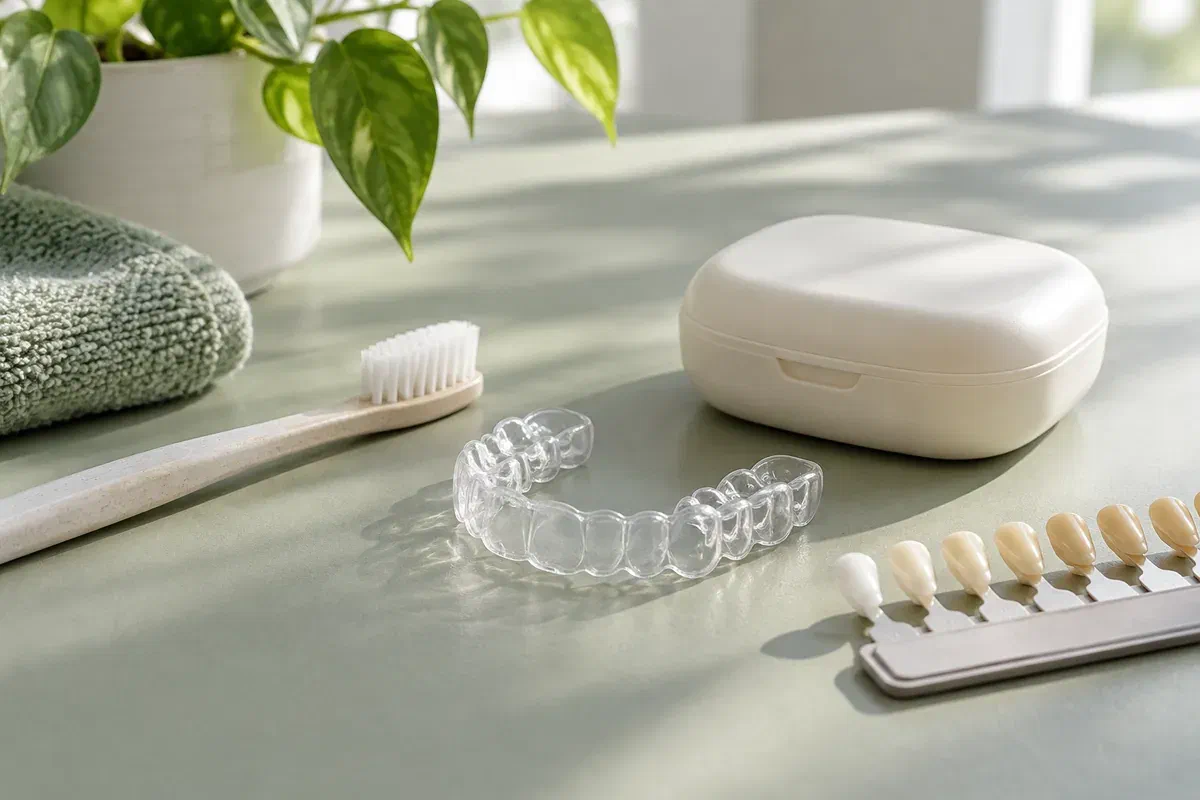
Illustrative soft toothbrush, empty dental tray, protective case, and natural tooth shade samples
What to bring up at your visit

Recent work, new sensitivity, and marks you have noticed

Share what treatment you have had lately, which teeth feel tender, and what triggers the discomfort. The clinician will sort out the causes.

A single tooth is more tender than the rest

If one tooth aches on biting, has a new filling, looks chipped, or has changed colour, point it out. It may need attention apart from general post-treatment sensitivity. A localized symptom deserves its own look before any whitening plan.

Cold or brushing bothers you more than before

Explain whether this started during or after treatment, and whether it is getting better or worse. Gum changes, enamel wear, decay, and other conditions can all contribute. The cause needs to be clear before care or bleaching is discussed.

White or brown marks where brackets were

Spots that appear after braces can have different causes, and some may not respond evenly to bleaching. Mention when you noticed them and any products you have tried. The clinician can explain what they are and which options make sense.

Whitening is optional, and there is no rush after orthodontic treatment. A tooth that keeps hurting or has broken, and any gum condition still waiting for care, should be looked after first.

Why timing matters

Waiting a little can make the result more comfortable.

The exam helps you see whether the colour concern is surface stain, your natural shade, marks left after brackets, or something else. These respond differently. Cleaning, bleaching, and treatments for spots or sensitivity each do their own job. Ask what each option would change for you and what it would leave.

Once your teeth have settled and whitening looks suitable, the plan should explain the method, how your comfort will be checked, and what to do if sensitivity flares. If you have a retainer, how it fits into the plan matters too. Knowing these details is more useful than any claim that whitening will be painless.

Patient information: Canadian Dental Association — supervised bleaching and adverse effects

A check on how your teeth have settled

Your recent treatment and current findings are reviewed before you start anything. Ask whether any sensitivity should be treated or given more time, and what would signal that whitening can go ahead. The answer may be to wait a few weeks.

A goal that suits your new smile

Discuss how much change you want, and whether marks from brackets are the main concern. Ask how the plan would change if a course became uncomfortable. A modest change, a delay, or no whitening can all be good outcomes.

Instructions that account for retainers

If you go ahead, confirm how to place the product, how long to wear it, how often, and whether your retainer affects any of this. Ask for a demonstration. Retainers are not whitening trays, and should not be used as one unless advised.

A sensible order after treatment

Let things settle, then plan the shade.

No single strength or schedule fits every sensitive mouth, and recent treatment adds another factor. The plan follows your exam, any product chosen, and how your teeth respond.

  1. Tell us about recent treatment

    Describe your orthodontic or other dental work, when it finished, and how your teeth have felt since. We review earlier whitening, your general health, current medications, and any allergies. If pregnancy or breastfeeding applies, let us know so elective timing can be discussed.

  2. Examine teeth, gums, and any marks

    The clinician checks your teeth, gums, restorations, and any spots left after brackets, and considers further tests. Ask what is causing the sensitivity and whether it is expected to settle. Discuss whether a cleaning, bleaching, or another approach suits the colour concern.

  3. Choose when, and whether, to begin

    If whitening is suitable, review the method, possible reactions, its limits for marks or spots, and fees. Ask whether waiting or a sensitivity measure is recommended. Confirm the directions and when to stop and call.

  4. Reassess once the course is under way

    Note how your teeth respond and share it at the review appointment, or phone earlier if needed. Check how the colour and any spots will be looked at after the course or a pause. More applications should be a decision you make together, not a default.

While whitening with a retainer in the picture

Comfort before a perfect finish

Keep your instructions, your retainer routine, and our number in one place. Since this is cosmetic, a reaction should prompt a call rather than pressure to finish.

Stop and call if it stings

When sensitivity or gum soreness develops, put the product away and ring the clinic. Describe the area, how strong it is, when it began, and your last application. Please do not add extra desensitizer or try a second whitener to compensate.

Stick to your recommended daily care

Confirm the toothpaste, brush, and cleaning routine that suit your findings, along with retainer care. If a sensitivity toothpaste is advised, know its purpose and how long to use it. It does not make all bleaching acceptable or deal with every source of pain.

Ask before topping up

Teeth and restorations can change between courses. Check whether a fresh exam is needed before reusing gel or booking more. Have your trays, retainer fit, and current shade reviewed rather than repeating an old schedule.

Patient information: NHS — tooth-whitening assessment and side effects

Caledon options after treatment

Wait, whiten, or treat the spots

The right choice depends on why your teeth are sensitive, what kind of discolouration or marks you have, and your preferences. Ask what each can change and what upkeep follows.

When teeth need time or care

Let sensitivity settle or treat it first

You may be advised to wait, or receive treatment or prevention advice for what the exam finds. Ask how progress will be checked and when whitening could be revisited. Comfort is worth having even if you decide against a colour change.

When your exam supports it

A supervised course when the time is right

Find out which method is available, what it cannot change, and how to report any reaction. Neither in-office nor home whitening is comfortable for everyone. Ask why the recommended choice suits your findings rather than choosing on speed.

When bleaching would not help much

A cleaning, or keep your shade

If surface stain is part of the concern, a professional cleaning may be enough. You can also leave your natural colour as it is. Further cosmetic work is not automatically next just because bleaching is not suitable for you.

After-braces whitening questions

Is it too soon to whiten?

What was done to your teeth lately, and what the exam shows now, matter more than any product promise. These questions can help you plan the timing.

(905) 876-4488
How soon after braces come off can I think about whitening?
It varies. The clinician will want to see how your teeth and gums have settled and whether any sensitivity is easing. Ask what timing makes sense for you rather than following a general rule.
Will whitening remove the white spots left by my brackets?
Not necessarily. Some spots may become more or less noticeable with bleaching. Ask what the marks are and which options might help, as some may need a different approach.
Can I use my retainer as a whitening tray?
Do not use a retainer for whitening unless the clinician advises it. Retainers and whitening trays are designed for different purposes.
Is it normal for teeth to feel sensitive after orthodontic treatment?
Some tenderness can happen as teeth settle. Mention it at your visit, especially if it is getting worse or affects one tooth more than others.
Does a whitening product made for sensitive teeth make the exam unnecessary?
No. The label cannot explain why your teeth are tender or whether bleaching is suitable now. Have the cause checked first.
Can a Caledon family member's checkup and my whitening consult be booked together?
Ask when you call. Booking visits back to back is often possible and can help reduce trips, though each person has their own assessment.
Whitening sensitive teeth, Caledon

Check the timing before you start.

Call our Bronte Street practice and mention your recent treatment, any sensitivity, and the colour change you would like. We can explain the assessment involved and help you choose timing and an approach that suit your oral health.

Whitening needs an assessment first. Sensitivity can occur with any method, and you may be advised to wait or stop.

Visit Milton Dental Clinic
Unit 1, 342 Bronte St. S, Milton, ON L9T 5B7
Get directions Clinic hours
Monday–Thursday
11am–7pm
Friday–Sunday
By appointment only

Areas we serve

  • Milton
  • Oakville
  • Mississauga
  • Georgetown
  • Halton Hills
  • Acton
  • Campbellville
  • Brampton
  • Burlington
  • Puslinch
  • Rockwood
  • Erin
  • Caledon
  • Etobicoke
  • Old Milton
  • Bronte Meadows
  • Timberlea
  • Dorset Park
  • Dempsey
  • Clarke
  • Beaty
  • Coates
  • Harrison
  • Scott
  • Willmott
  • Ford
  • Bowes
  • Cobden
  • Walker
  • Mountain View
  • Milton Heights
  • Hawthorne Village
  • Valley View
  • Fallingbrook
  • Nassagaweya
  • Trafalgar
  • Esquesing
  • Nelson
  • Brookville
  • Moffat
  • Glen Williams
  • Norval
  • Limehouse
  • Stewarttown
  • Ashgrove
  • Hornby
  • Silver Creek
  • Speyside
  • Scotch Block
  • North Oakville
  • River Oaks
  • Glen Abbey
  • West Oak Trails
  • Palermo
  • Bronte Creek
  • College Park
  • Joshua Creek
  • Uptown Core
  • Preserve
  • Iroquois Ridge
  • Lisgar
  • Meadowvale
  • Meadowvale Village
  • Churchill Meadows
  • Erin Mills
  • Central Erin Mills
  • Streetsville
  • East Credit
  • Creditview
  • Heartland
  • Sheridan
  • Mount Pleasant
  • Credit Valley
  • Huttonville
  • Churchville
  • Springbrook
  • Northwest Brampton
  • Bram West
  • Fletcher's Meadow
  • Fletcher's Creek South
  • Alton Village
  • Orchard
  • Millcroft
  • Headon Forest
  • Tansley
  • Brant Hills
  • Tyandaga
  • Kilbride
  • Lowville
  • Aberfoyle
  • Morriston
  • Arkell
  • Hillsburgh
  • Freelton
  • Carlisle
  • Waterdown
  • Flamborough
  • Mountsberg

How can we help?

Milton Dental Clinic

Have a question about your smile? Choose the option that works best for you.

For urgent dental concerns, please call.
Messages are reviewed during clinic hours.