

Illustrative patient discussing tooth sensitivity with a clinician before cosmetic treatment
Cosmetic Dentistry

Teeth Whitening for Sensitive Teeth in Puslinch

Years of morning coffee and afternoon tea leave their mark, and bleaching is not always the first fix for it. For sensitive teeth especially, it pays to know whether you are looking at surface stain or deeper colour. From Puslinch, book an exam that sorts out the difference.

Stain, shade, or both

Your coffee habit may need a cleaning, not a bleach.

Brown edges between the front teeth, a dull film near the gumline, a general yellowing that seems to deepen each winter. Much of that can be surface stain from coffee, tea, red wine, or tobacco. For someone whose teeth already flinch at cold, it makes sense to ask whether the stain could be removed before thinking about peroxide.

Bleaching lightens the colour of the tooth itself and can bring temporary sensitivity or sore gums along the way. A professional cleaning, by contrast, takes away deposits sitting on the surface. They solve different problems. And the sensitivity you already have may have a separate cause, from receding gums to an aging filling, that deserves a look on its own.

For a Puslinch household balancing farm work, commuting, or school runs, getting the order right saves trips. Bring a list of what you drink and anything you have tried at home. Dr. Anjum can explain what the exam shows, whether cleaning might be enough, and whether bleaching is worth a careful try or should wait.

Find out if a cleaning is enough
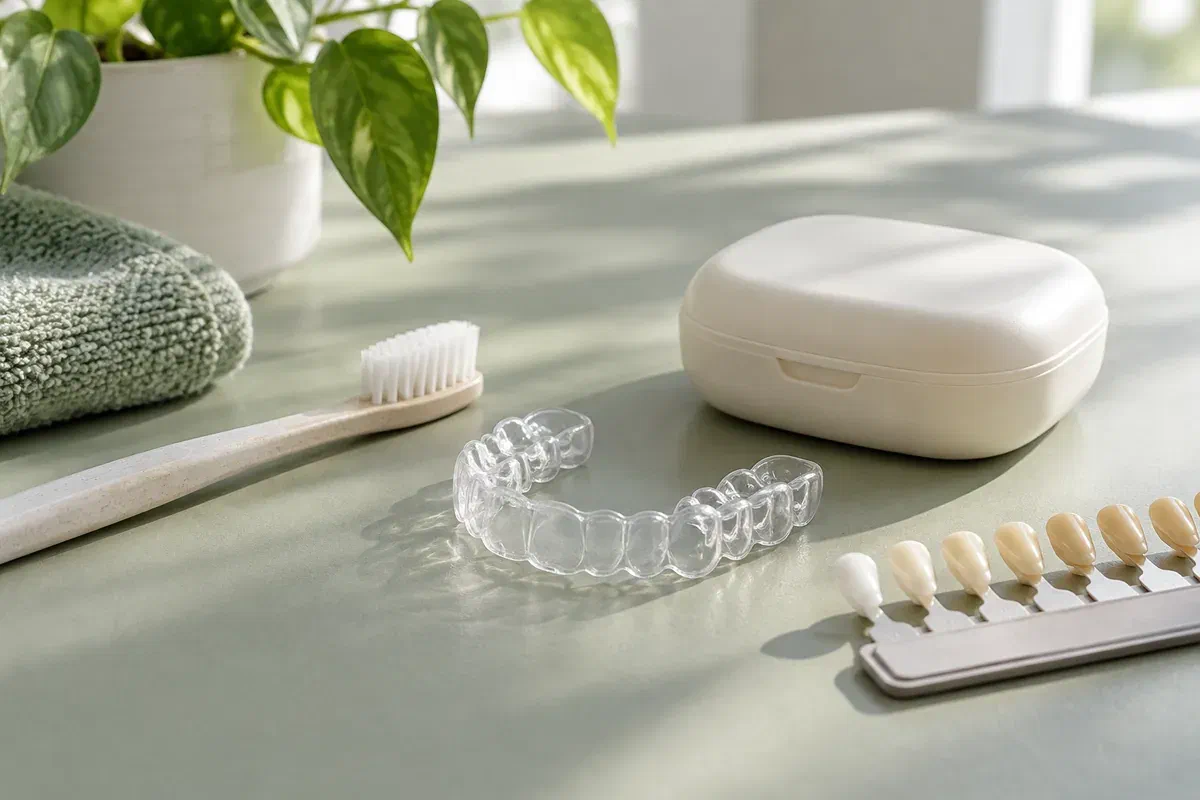
Illustrative soft toothbrush, empty dental tray, protective case, and natural tooth shade samples
Questions the team will ask

Where is the colour, and where is the discomfort?

Point out the stains that bother you and the spots that feel sensitive. Approximate answers are fine, since working out the cause is up to us.

A stained tooth that also hurts

A dark line or spot that feels rough, catches floss, or aches when you bite could be decay or a worn filling rather than stain. Show us exactly where. That tooth should be examined before deciding anything about colour, since a cleaning or bleaching will not address it.

A twinge with cold or brushing

Mention how often it happens and whether it has become more frequent. Exposed roots, worn enamel, and decay are among the possibilities. Understanding which applies helps decide on care for the sensitivity, and whether bleaching should be on the table.

Home stain removers did not agree with you

Whitening toothpastes, strips, or baking-soda mixtures can leave some mouths sore. Share what you used and how your gums and teeth responded, and bring the packaging if you can. That helps the team suggest a gentler path forward.

Removing stain or whitening is always optional. A tooth that keeps hurting, one that has chipped, or a gum problem that has gone untreated should be looked after first.

Why sorting stain from shade helps

The gentlest fix that actually works

Once the exam separates surface stain from your natural shade, the choice often becomes simpler. A cleaning may brighten your smile with no bleaching at all. If the underlying colour is what bothers you, whitening becomes the relevant question, and sensitivity care is planned around it. Ask which situation you are in.

Should bleaching still be worth considering after a cleaning, the plan needs a named method, a way to track comfort, and clear directions for what to do if your teeth begin to hurt. Practical steps like these protect you better than a product that claims to be gentle.

Patient information: Canadian Dental Association — supervised bleaching and adverse effects

Cleaning first, if it fits

Where surface deposits explain the dullness, a professional cleaning may be offered before any bleaching. Ask what improvement to expect and whether that might be enough. Some people find the colour concern largely settled at that point.

A clear sense of what is left

After stain is removed, look again at the shade and decide whether further change matters to you. Ask what bleaching might add and how the plan would adapt if your teeth reacted. Stopping at a clean smile is a sound outcome.

Specific steps for any bleaching

If you go further, be sure of tray or strip placement, wear time, frequency, and any preparation advised. Request a demonstration if it helps. A product that resembles a drugstore version may need very different handling.

A stain-first approach

Examine. Clean if useful. Reassess the shade.

There is no universal strength or routine for sensitive teeth, and stain removal may change what is needed. Each step depends on your exam, any product chosen, and your response.

  1. Describe your habits and symptoms

    Tell us about coffee, tea, and other drinks, plus any smoking, along with the triggers for sensitivity and which teeth react. We review dental work, health history, and allergies. Mention pregnancy or breastfeeding, since cosmetic treatment is usually timed around them.

  2. Look at stain, enamel, and gums

    The clinician distinguishes surface deposits from deeper colour, checks gums and restorations, and considers any tests needed. Ask what is causing the sensitivity and what care is suggested. Discuss whether a cleaning alone might meet your goal.

  3. Decide on a cleaning, bleaching, or both

    If whitening remains a reasonable next step, you will hear about the method, possible reactions, likely limits, and cost. Ask whether a sensitivity measure is advised. Confirm the directions and the symptoms that mean stopping and phoning.

  4. Judge the result calmly

    Track how your teeth feel and bring it up at the follow-up, or call earlier. Look at the colour again with the clinician once the course ends or is paused. Further applications should be deliberate, not a reaction to a slow change.

Keeping the result, and your comfort

A few habits matter more than more bleach.

Keep your instructions and our number in an easy place. Because this is cosmetic, a reaction calls for advice, not a push to finish.

Stop the product if teeth or gums react

Set it aside and call us about the next step. Describe the sore area, its intensity, when it started, and your last application. Please avoid adding more desensitizer or a store-bought whitener on top of the plan.

Rinse and brush the way you were shown

Ask which toothpaste and brush suit your findings, and whether rinsing with water after coffee or tea helps. If a sensitivity toothpaste is recommended, ask about its purpose and duration. It does not justify more bleaching or cure every source of pain.

Plan touch-ups with the clinician

Stain can build up again, and teeth change between courses. Ask whether a cleaning or a fresh exam should come before using stored gel or booking more. Have trays and current shade reviewed rather than repeating an old schedule.

Patient information: NHS — tooth-whitening assessment and side effects

Options for Puslinch smiles

Start with the least invasive choice.

What fits depends on the cause of the sensitivity, whether the discolouration is stain or shade, and your preferences. Ask what each option changes and what upkeep it involves.

When a problem needs care first

Treat the sensitivity before anything cosmetic

Treatment or preventive advice may come first based on the exam. Ask how improvement will be measured and when cosmetic steps might follow. Comfort is a good result on its own, with or without a colour change.

When stain is not the whole story

Supervised bleaching for deeper colour

Hear what method is offered, what it will and will not change, and the plan for reporting any reaction. Neither office nor home whitening suits every sensitive mouth. Ask why the recommendation fits your findings rather than going by speed.

When surface stain is the main issue

A professional cleaning, then decide

If deposits from coffee or tea explain much of the colour, a cleaning may be all you need. You can also choose to stop there. Veneers or other cosmetic work are not automatically next if bleaching is unsuitable.

Stain and sensitivity questions

Do I need bleaching, or just a good clean?

Knowing whether you have stain or deeper colour is more useful than any whitening claim. These questions can help you sort it out.

(905) 876-4488
How can I tell surface stain from the natural colour of my teeth?
It can be hard to tell at home. Surface stain often gathers near the gumline or between teeth, while natural shade is more even. The clinician can examine your teeth and explain which you have.
Will a professional cleaning make my sensitive teeth worse?
Some people feel brief sensitivity during or after a cleaning, especially with exposed roots. Mention your sensitivity so the team can take it into account. Ask what to expect.
Should I cut back on coffee before or during whitening?
Coffee and tea can stain teeth over time. The clinician may give advice about drinks during a course. Ask what suits your plan rather than guessing.
Can baking soda remove stain safely if my teeth are sensitive?
Home remedies can be abrasive and are not a substitute for an exam. Mention anything you use. The clinician can advise on safer ways to manage stain.
Can I water down a whitening gel so my sensitive teeth tolerate it?
Please do not alter a product or how it is applied. Call to discuss the reaction instead. Changes should follow professional advice and the product directions.
Can a cleaning and a whitening consult happen on one trip from Puslinch?
Ask when you book. Discussing whitening at a cleaning appointment is often possible, though any bleaching follows the assessment. Planning ahead can reduce trips.
Puslinch stain and sensitivity visits

Find out what kind of colour you have.

Phone our Bronte Street practice to talk about stains, sensitive spots, and the brighter smile you would like. We can explain what the visit involves and help you choose the gentlest approach that suits your oral health.

Whitening and cleaning recommendations depend on an assessment. Even a careful plan can bring on sensitivity, so treatment may need to wait or stop.

Visit Milton Dental Clinic
Unit 1, 342 Bronte St. S, Milton, ON L9T 5B7
Get directions Clinic hours
Monday–Thursday
11am–7pm
Friday–Sunday
By appointment only

Areas we serve

  • Milton
  • Oakville
  • Mississauga
  • Georgetown
  • Halton Hills
  • Acton
  • Campbellville
  • Brampton
  • Burlington
  • Puslinch
  • Rockwood
  • Erin
  • Caledon
  • Etobicoke
  • Old Milton
  • Bronte Meadows
  • Timberlea
  • Dorset Park
  • Dempsey
  • Clarke
  • Beaty
  • Coates
  • Harrison
  • Scott
  • Willmott
  • Ford
  • Bowes
  • Cobden
  • Walker
  • Mountain View
  • Milton Heights
  • Hawthorne Village
  • Valley View
  • Fallingbrook
  • Nassagaweya
  • Trafalgar
  • Esquesing
  • Nelson
  • Brookville
  • Moffat
  • Glen Williams
  • Norval
  • Limehouse
  • Stewarttown
  • Ashgrove
  • Hornby
  • Silver Creek
  • Speyside
  • Scotch Block
  • North Oakville
  • River Oaks
  • Glen Abbey
  • West Oak Trails
  • Palermo
  • Bronte Creek
  • College Park
  • Joshua Creek
  • Uptown Core
  • Preserve
  • Iroquois Ridge
  • Lisgar
  • Meadowvale
  • Meadowvale Village
  • Churchill Meadows
  • Erin Mills
  • Central Erin Mills
  • Streetsville
  • East Credit
  • Creditview
  • Heartland
  • Sheridan
  • Mount Pleasant
  • Credit Valley
  • Huttonville
  • Churchville
  • Springbrook
  • Northwest Brampton
  • Bram West
  • Fletcher's Meadow
  • Fletcher's Creek South
  • Alton Village
  • Orchard
  • Millcroft
  • Headon Forest
  • Tansley
  • Brant Hills
  • Tyandaga
  • Kilbride
  • Lowville
  • Aberfoyle
  • Morriston
  • Arkell
  • Hillsburgh
  • Freelton
  • Carlisle
  • Waterdown
  • Flamborough
  • Mountsberg

How can we help?

Milton Dental Clinic

Have a question about your smile? Choose the option that works best for you.

For urgent dental concerns, please call.
Messages are reviewed during clinic hours.