

Illustrative patient and clinician discussing tooth contours using a dental model
Cosmetic Dentistry

Tooth Reshaping

A small edge or contour can change how a tooth looks and feels. Discuss tooth reshaping in Milton to assess whether a limited enamel adjustment is suitable, understand its permanent nature, and compare options before changing healthy tooth structure.

A closer look at tooth reshaping

Consider the smallest suitable change, with the tooth's future in mind.

Tooth reshaping, also called enamel contouring, removes a limited amount of enamel to alter a suitable tooth's outline or smooth an irregular edge. It may be considered for a minor appearance concern after examination. It is not a way to rebuild missing tooth structure or move a tooth into a different position.

Because removed enamel does not grow back, the decision deserves care even when the proposed change looks small. The clinician needs to consider the tooth's condition, the available enamel, and the way it meets other teeth. A request to shorten an edge may lead to a discussion about a different option.

At Milton Dental Clinic, show us the exact feature that bothers you and explain whether it catches your lip, feels rough, or simply looks uneven. We can discuss the assessment needed and what a limited adjustment could reasonably achieve. You should understand the boundaries before agreeing to any permanent change.

Discuss a tooth-shape concern
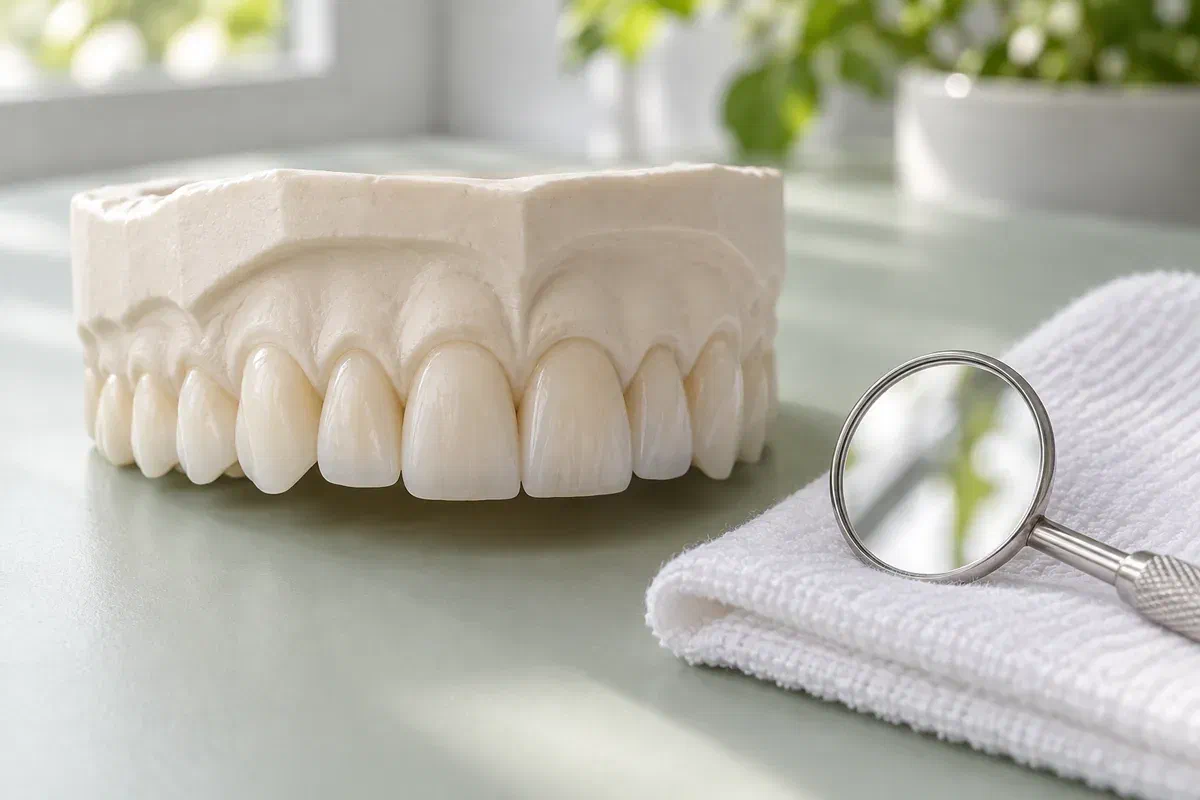
Illustrative dental teaching model with natural incisor edges beside a dental mirror
What is behind the uneven edge?

Look at the cause before choosing to remove enamel.

A naturally pointed tooth, a fresh chip, and an edge worn by repeated contact are different situations. Describe when you noticed the feature and whether it has changed.

A small contour you have always noticed

Point out the shape in a mirror and describe the change you imagine. Ask whether it can be achieved within a conservative limit and what would remain unchanged. Keeping a healthy natural variation may be preferable if the alteration would involve more tooth structure than expected.

A new chip or a rough area

Explain any injury, biting event, or recent dental work associated with the edge. Ask whether the tooth needs repair rather than simply smoothing. A symptom or defect that has just appeared should be assessed before it is treated as an elective cosmetic detail.

Unevenness alongside wear or sensitivity

Mention grinding, clenching, discomfort, or a bite that feels different. Ask whether the apparent length difference relates to wear or tooth position. The plan should consider the reason for the shape rather than repeatedly shortening teeth to match a changing outline.

Do not file or sand a tooth yourself. A professional assessment is needed to judge whether any enamel removal is appropriate and how it relates to the health and function of the tooth.

What a careful contour discussion offers

A focused decision about a feature, not a promise of perfect symmetry.

For a suitable minor concern, reshaping may allow a limited change without placing a covering restoration. Ask whether that advantage applies to your tooth and how it compares with adding material or leaving the feature alone. A conservative description should still include an explanation of what is removed.

The consultation also helps distinguish shape from position. A tooth that looks long may be sitting differently, while a small missing corner may be better discussed as a repair. Understanding that distinction can prevent an appearance goal from being pursued through the wrong type of change.

A clearly defined area and stopping point

Ask the clinician to identify the proposed adjustment and explain its limits in terms you understand. Discuss whether the aim is smoothing, softening a point, or changing an outline. Agreeing on that specific purpose is more useful than a broad instruction to make everything even.

A comparison with options that add or move

Discuss whether bonding or an alignment assessment would address the concern differently. Ask what each route means for maintenance, time, preparation, and the final shape. The best choice is not necessarily the quickest procedure or the one that sounds smallest by name.

Time to decide before an irreversible step

You can ask for an explanation, take time to consider it, or choose no elective change. Bring up concerns about shortening, natural character, or future wear before treatment. Consent should reflect the alteration actually proposed, not an assumption that all minor adjustments are equivalent.

How tooth reshaping is planned

Examine, define the change, and review the contour carefully.

The procedure and appointment length depend on the tooth and whether other care is involved. Ask what is included in the visit and whether the decision can be made separately from treatment.

  1. Identify the feature and its history

    Show the area in question and explain what you would like changed. Review previous repairs, orthodontic treatment, sensitivity, and any injury or wear history. The clinician needs to understand whether the request concerns natural enamel, a restoration, or a newly damaged surface.

  2. Assess suitability and compare the alternatives

    The examination considers the tooth's condition and its relationship to the bite. Additional assessment is arranged where indicated. Ask whether removing enamel is suitable, what risks matter in your case, and whether a different treatment or observation would better meet the goal.

  3. Agree on a limited adjustment before it starts

    Confirm which tooth and contour are included and what the intended change is. Ask how comfort will be managed and tell the clinician if you are nervous. Reshaping should follow the agreed plan; further cosmetic changes require discussion rather than being assumed.

  4. Check the finish, appearance, and tooth contacts

    After the planned adjustment, the surface is finished and the result reviewed. Ask to see the change and explain anything that feels unexpected. Confirm the instructions and follow-up arrangements, including when to call about sensitivity or a bite that no longer feels familiar.

After a contour adjustment

Keep the tooth under ordinary care and report anything that feels different.

Follow the advice given for the treatment actually performed, especially if contouring was combined with bonding or another procedure. Do not assume that all cosmetic appointments have identical aftercare.

Clarify cleaning and comfort advice

Ask how to care for the adjusted area and what sensations should prompt a call. Continue the oral-hygiene routine recommended for your teeth. If a product is suggested for sensitivity, clarify how to use it and when the clinician wants an update.

Mention contact changes or persistent roughness

Tell the team if the edge continues to catch, the bite feels different, or discomfort persists. Describe what you notice during eating and speaking. A review is preferable to experimenting with an abrasive product or asking for more removal without reassessment.

Revisit the cause if the outline changes again

If new wear or another chip appears, ask why it may be happening. Discuss any habit or protective-appliance advice relevant to the findings. Repeated cosmetic smoothing should not become a substitute for understanding a recurring problem and considering its management.

Choosing a response to tooth shape

Removing, adding, and moving solve different problems.

Ask which part of the concern each option addresses. Compare the condition of the tooth, the proposed preparation, and the future care rather than choosing from appearance alone.

When a suitable minor feature can be reduced

A limited enamel contour adjustment

Reshaping may be discussed for an appropriate edge or contour after examination. Ask what the safe limits mean for the change you want. The aim should be proportionate to the concern, with an understanding that enamel removal is permanent.

When missing structure or an uneven outline needs adding to

Bonding or another repair

A material-based repair may be considered where the tooth needs rebuilding rather than shortening. Ask how the added material will be maintained and whether it changes the treatment commitment. Existing restorations should be assessed separately from natural enamel.

When position or personal preference guides the decision

Alignment assessment or no elective treatment

If a tooth's position creates the visual difference, discuss whether orthodontic advice is appropriate. You may also decide to keep a healthy natural contour. Ask about the implications of both choices before treating reshaping as a shortcut to a different tooth position.

Patient information: British Orthodontic Society — comparing alignment and restorative changes

Tooth-reshaping questions

Small appearance changes still deserve clear answers.

Bring the questions that help you decide whether a permanent adjustment is worthwhile, including what would happen if you chose to leave the tooth unchanged.

(905) 876-4488
Can tooth reshaping make a short tooth longer?
Removing enamel cannot add length. If the concern is a short edge or missing corner, ask whether bonding, a different repair, or an assessment of tooth position is more appropriate. The method should match the change you actually want.
How do I know whether an uneven edge needs reshaping or a repair?
An examination is needed to assess the edge and its cause. Explain whether it has always looked that way or changed recently. The clinician can discuss the tooth’s condition and why smoothing, rebuilding, monitoring, or another approach may be recommended.
Can the enamel removed during cosmetic reshaping be restored naturally?
No. The removed tooth structure does not grow back. That is why the scope and alternatives should be discussed before treatment. If you later want a different shape, further care may involve adding restorative material rather than reversing the original procedure.
Is cosmetic tooth reshaping the same as creating space between teeth for braces?
Not exactly. Interproximal reduction is planned enamel reduction between teeth as part of an orthodontic strategy. Cosmetic contouring may have a different aim and location. Ask which procedure is proposed, who is responsible for the plan, and what it is intended to achieve.
Should I have an uneven edge reshaped before my planned orthodontic treatment?
Discuss the sequence with the clinician responsible for alignment before changing the tooth. Ask whether its apparent length or outline may look different after movement. Any contouring should fit the overall plan rather than be arranged independently without considering the later position.
Can I request another adjustment if I am unsure about the first reshaping result?
Arrange a review and explain the specific concern. Further removal is not automatically appropriate, even when the desired difference seems small. Ask about the remaining enamel, tooth contacts, alternatives, and whether observing the result is preferable to another permanent change.

Patient information: British Orthodontic Society — interproximal reduction as a planned orthodontic procedure

Tooth reshaping in Milton

Bring the detail you notice and discuss what a sensible change would involve.

Arrange a conversation at our Bronte Street practice about an uneven contour, small edge, or tooth-shape concern. We can explain the examination needed and help you compare a limited adjustment with other suitable choices.

Reshaping is permanent and suitable only after assessment. The amount of alteration, appointment scope, comfort measures, and fees require individual discussion.

Visit Milton Dental Clinic
Unit 1, 342 Bronte St. S, Milton, ON L9T 5B7
Get directions Clinic hours
Monday–Thursday
11am–7pm
Friday–Sunday
By appointment only

How can we help?

Milton Dental Clinic

Have a question about your smile? Choose the option that works best for you.

For urgent dental concerns, please call.
Messages are reviewed during clinic hours.