

Illustrative patient and clinician discussing tooth contours using a dental model
Cosmetic Dentistry

Tooth Reshaping in Caledon

Some people think about one tooth for years before mentioning it. If that sounds familiar, the first step is putting the concern into words. From Caledon, book an unhurried assessment to describe what you see, learn whether a small enamel contour suits the tooth, and understand its permanence before deciding.

A Caledon conversation about one tooth

Finding the words for what you've always noticed

It is common to carry a quiet dislike for one feature of your smile: a canine that looks sharp, an incisor edge that tilts, a tooth that seems a little too long. Often the hardest part is explaining it. Reshaping may help with that kind of minor detail by removing a small amount of enamel to refine the outline. It does not add tooth or reposition it.

Taking time over the decision is sensible because enamel, once removed, cannot be replaced. A clinician will consider the tooth's health, the enamel available, and how it meets the teeth opposite. Hearing those details can change how you think about the feature, and some people decide afterward that it is worth keeping.

For households in Caledon, from Bolton to the smaller villages, it can be worth planning the visit so there is room to talk. Before you come, notice when the tooth bothers you most: smiling in photos, speaking, or simply looking in the mirror. We will help you describe the change, explain what a modest contour could achieve, and say where it would stop.

Describe the tooth that bothers you
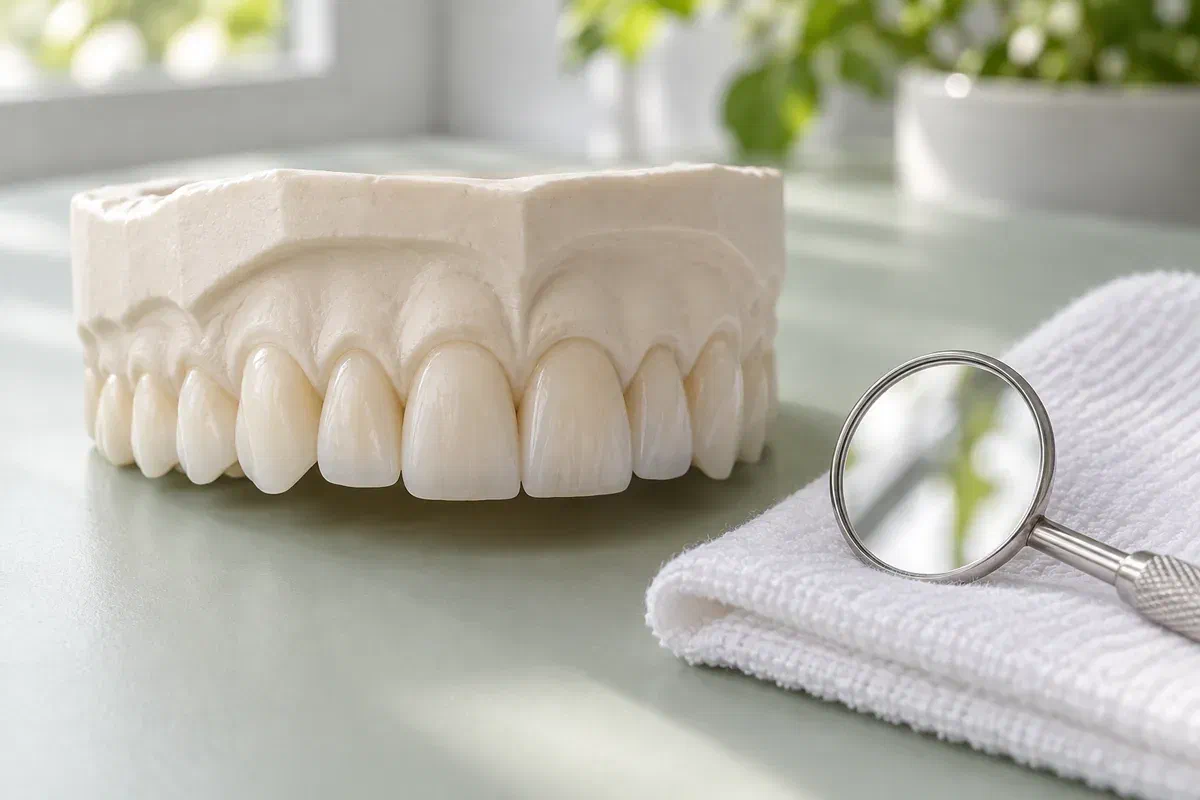
Illustrative dental teaching model with natural incisor edges beside a dental mirror
Getting specific

What exactly is it about the tooth?

Pinning down the feature helps decide whether contouring is relevant. It also helps to think about how long it has looked this way and whether anything has changed.

Its outline has always seemed off

Long-standing features, such as a pointed tip or a flared corner, are often where contouring is discussed. Describe the outline you would prefer. Ask how close a cautious adjustment would come, and whether the enamel involved would make keeping the natural shape wiser.

It has changed or roughened lately

If the tooth looks different after a knock, hard bite, or dental work, that change should be examined first. A new chip or rough spot may need repairing rather than smoothing, so it should not be treated as purely cosmetic.

It looks shorter or longer than it used to

Wear and gradual movement can both alter how teeth compare. Share any grinding, clenching, tenderness, or sense that your bite has shifted. The cause should guide the plan, rather than repeatedly trimming to match a changing outline.

However long the tooth has bothered you, please avoid altering it at home. Only an examination can establish whether enamel removal is suitable and what it would mean for that tooth and your bite.

What you take away from the visit

Clarity, whichever way you decide

Where the concern is small and the tooth suitable, contouring may refine a long-standing feature without a crown, veneer, or other covering. That can be appealing after years of noticing the same detail. Even so, ask how it applies to your tooth, exactly what would be removed, and how that compares with bonding or with simply living with the shape.

The visit can also reveal that shape is not the real issue. A tooth may look long because of where it sits, or a corner may be missing and need building up. Understanding this before committing means a long-considered decision rests on accurate information rather than an assumption.

A shared description of the goal

Work with the clinician to describe the change in specific terms: softening a point, smoothing a ridge, or refining an outline. Ask to have the proposed area shown to you. Agreeing on wording makes it much easier to judge the plan.

A balanced view of alternatives

Discuss how bonding or orthodontic advice would approach the same feature. Compare maintenance, the number of visits, preparation, and the end result. After years of waiting, the right choice is the one that fits, not necessarily the fastest.

Permission to keep the tooth as it is

You can take the explanation home, reflect, and decide later, or decide that the feature is part of your smile. Raise concerns about losing length or character before treatment. Your agreement should cover the exact adjustment described.

Moving from idea to decision

Describe, examine, decide, review

Visit length depends on the tooth and whether any other care is involved. Ask whether the assessment can stand alone, giving you time to reflect before treatment.

  1. Explain the feature in your own words

    Point to the tooth and describe what you have noticed and when it bothers you. Share any history of fillings, braces, sensitivity, injuries, or wear. Whether the edge is natural enamel, older dental work, or newly damaged shapes the advice you receive.

  2. Let the clinician assess and explain

    Tooth health, enamel, and the way teeth meet are all reviewed, with further assessment arranged where indicated. Ask whether contouring suits this tooth, which risks matter in your case, and whether bonding, alignment advice, or no change might serve you better.

  3. Decide on the exact change, or none

    If you choose to proceed, settle which tooth, which part of the edge, and what the finished outline should look like. Talk about comfort and mention any nervousness. Nothing beyond the agreed plan should happen without a further conversation.

  4. See the result and confirm next steps

    Once the agreed adjustment is complete, you will be invited to look at the polished edge and say how it feels. Raise anything unexpected. Confirm your aftercare and what signs, such as lingering sensitivity or an unfamiliar bite, should prompt a call.

Afterwards

Your routine stays mostly the same.

Follow the guidance for the treatment actually carried out, especially if bonding or other work happened at the same appointment. Aftercare varies from one cosmetic procedure to another.

Know which sensations warrant a call

Find out how to clean the contoured area and what feelings are worth reporting. Carry on with the brushing and flossing routine suggested for you. If a toothpaste for sensitive teeth is recommended, confirm how long it should be used.

Tell us if the edge still isn't right

If roughness remains, your teeth meet differently, or discomfort persists, get in touch. Describe what you notice when eating or speaking. A review is better than an abrasive product at home or a quick request for more removal.

Ask questions if the shape changes later

Should new wear or a chip appear, ask what might explain it. A habit, the bite, or the need for a night guard may be worth discussing. Repeatedly smoothing the same tooth is no replacement for understanding a recurring cause.

Approaches to a long-standing feature

Three paths, including the one you've already taken

Ask what each option would actually change. Weigh the tooth's condition, preparation, and long-term care, and remember that living with a natural feature is also a choice.

When a minor feature is suitable for reduction

A modest enamel contour

Contouring may be considered for an appropriate edge or tip once the tooth has been examined. Ask what share of your goal a careful reduction could realistically cover. Keep the change proportionate, knowing that enamel removed will not grow back.

When the tooth needs building up instead

Bonding or another restoration

A short tooth, or one missing a corner, may be better served by adding tooth-coloured material. Find out how it is cared for and what future attention it may need. Existing restorations are looked at separately from natural enamel.

When position or personal preference is the guide

Alignment advice, or keeping your natural shape

If the feature comes from where the tooth sits, ask whether an orthodontic opinion would help. Continuing to keep the natural shape is a valid choice. Consider both before using contouring as a substitute for moving a tooth.

Patient information: British Orthodontic Society — comparing alignment and restorative changes

Caledon questions

Putting a long-held concern on the table

These answers focus on describing what you want, understanding the result, and deciding at your own pace. Raise anything else that matters to you, including the option of changing nothing.

(905) 876-4488
What is the best way to describe the change I want?
Be as specific as you can about which tooth, which part of it, and when it bothers you. Photos showing the feature can help. The clinician can then translate that into the precise area and amount that might be adjusted.
Is it normal to feel unsure after so many years of thinking about it?
Very. A permanent change deserves careful thought, and the assessment is meant to give you information rather than pressure. Many people leave, reflect, and decide later with more confidence.
Could a small contour make my smile look unfamiliar?
Even a modest change can feel noticeable to you at first, because you know your teeth so well. Ask the clinician to describe what would and would not change, so the result feels like an adjustment rather than a new smile.
Can a tooth that has always looked long be shortened safely?
Sometimes a slight reduction is possible, but it depends on the enamel, the bite, and why the tooth looks long. If position is the reason, shortening may not be the most appropriate answer.
Would contouring change how my teeth come together?
It can affect contacts, particularly on teeth that guide your bite. That is why the bite is assessed before and after any adjustment. Mention any jaw discomfort or bite changes you have noticed.
Coming from Caledon, can I keep the assessment and any treatment on separate days?
Yes. Many people prefer to hear the findings first and book treatment later. If you would rather limit trips, ask whether combining steps is reasonable once the plan is clear.

Patient information: British Orthodontic Society — interproximal reduction as a planned orthodontic procedure

Visiting from Caledon

Bring the tooth you've been meaning to ask about.

Arrange an unhurried appointment with our Bronte Street team about a pointed, uneven, or long-looking tooth. We will describe the examination involved and help you weigh a modest contour against bonding, alignment advice, or keeping your natural shape.

Enamel contouring is a permanent step taken only after assessment. Scope, comfort options, visit length, and costs are talked over with you one to one.

Visit Milton Dental Clinic
Unit 1, 342 Bronte St. S, Milton, ON L9T 5B7
Get directions Clinic hours
Monday–Thursday
11am–7pm
Friday–Sunday
By appointment only

Areas we serve

  • Milton
  • Oakville
  • Mississauga
  • Georgetown
  • Halton Hills
  • Acton
  • Campbellville
  • Brampton
  • Burlington
  • Puslinch
  • Rockwood
  • Erin
  • Caledon
  • Etobicoke
  • Old Milton
  • Bronte Meadows
  • Timberlea
  • Dorset Park
  • Dempsey
  • Clarke
  • Beaty
  • Coates
  • Harrison
  • Scott
  • Willmott
  • Ford
  • Bowes
  • Cobden
  • Walker
  • Mountain View
  • Milton Heights
  • Hawthorne Village
  • Valley View
  • Fallingbrook
  • Nassagaweya
  • Trafalgar
  • Esquesing
  • Nelson
  • Brookville
  • Moffat
  • Glen Williams
  • Norval
  • Limehouse
  • Stewarttown
  • Ashgrove
  • Hornby
  • Silver Creek
  • Speyside
  • Scotch Block
  • North Oakville
  • River Oaks
  • Glen Abbey
  • West Oak Trails
  • Palermo
  • Bronte Creek
  • College Park
  • Joshua Creek
  • Uptown Core
  • Preserve
  • Iroquois Ridge
  • Lisgar
  • Meadowvale
  • Meadowvale Village
  • Churchill Meadows
  • Erin Mills
  • Central Erin Mills
  • Streetsville
  • East Credit
  • Creditview
  • Heartland
  • Sheridan
  • Mount Pleasant
  • Credit Valley
  • Huttonville
  • Churchville
  • Springbrook
  • Northwest Brampton
  • Bram West
  • Fletcher's Meadow
  • Fletcher's Creek South
  • Alton Village
  • Orchard
  • Millcroft
  • Headon Forest
  • Tansley
  • Brant Hills
  • Tyandaga
  • Kilbride
  • Lowville
  • Aberfoyle
  • Morriston
  • Arkell
  • Hillsburgh
  • Freelton
  • Carlisle
  • Waterdown
  • Flamborough
  • Mountsberg

How can we help?

Milton Dental Clinic

Have a question about your smile? Choose the option that works best for you.

For urgent dental concerns, please call.
Messages are reviewed during clinic hours.