

Illustrative patient and clinician discussing tooth contours using a dental model
Cosmetic Dentistry

Tooth Reshaping in Campbellville

A tiny chip from a hockey stick, a bike fall, or a hard bite can leave a front tooth with an edge that looks or feels wrong. From Campbellville, have it examined first, then find out whether light enamel smoothing is suitable, what that removes for good, and when a repair is the better call.

Campbellville: after a knock or a chip

A small chip, and a big question about what to do next

Active lives come with the occasional bump. A ball to the face, a slip on the trail, or biting down on something unexpectedly hard can take a sliver off a front tooth. Sometimes the result is a minor rough corner that could be smoothed by removing a little enamel. Other times part of the tooth is missing and needs to be built back.

That is why examination comes before any cosmetic decision. A clinician checks for cracks, looks at the health of the tooth and its enamel, and considers how it meets the teeth opposite. Contouring removes enamel permanently and cannot replace what broke off, so it suits only small, stable irregularities.

From Campbellville, call us after the injury and describe what happened, whether there is pain, and how much of the tooth seems affected. If the chip is small and comfortable, we can arrange a planned assessment. We will explain whether gentle smoothing would help, and when bonding or another repair makes more sense.

Have a chipped edge assessed
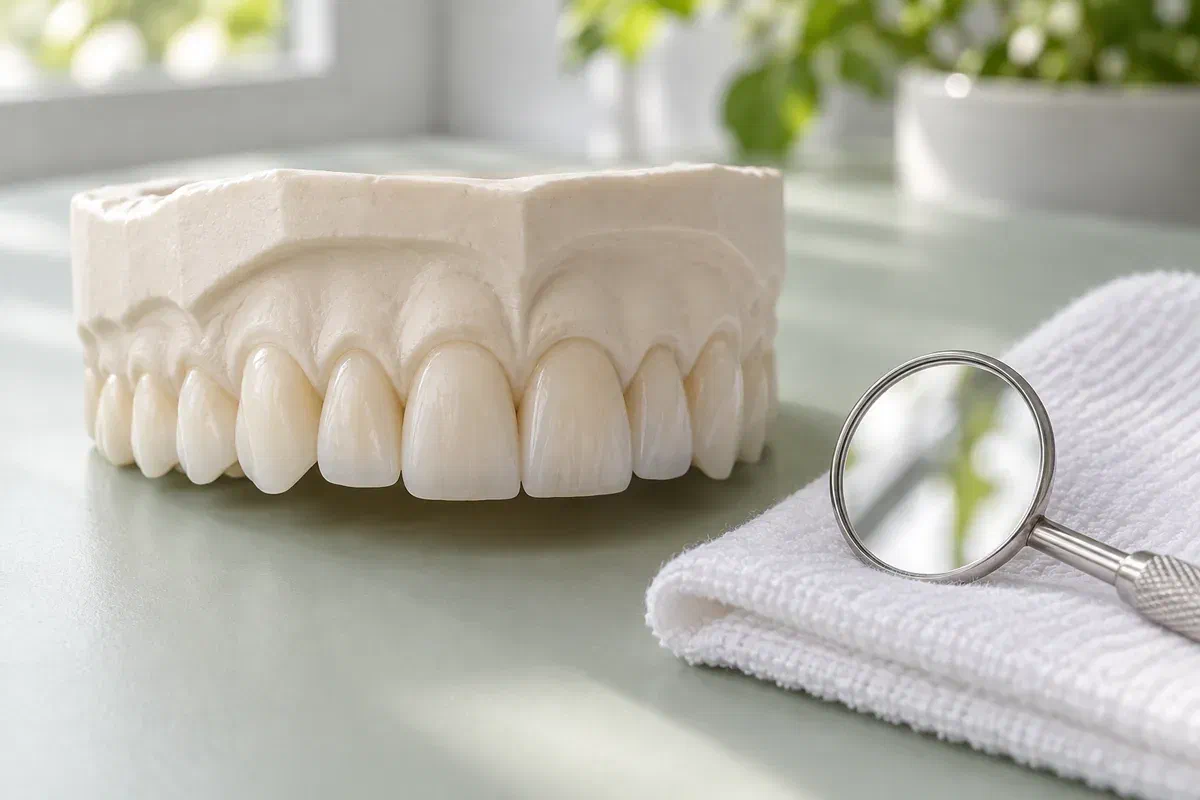
Illustrative dental teaching model with natural incisor edges beside a dental mirror
Not every chip is the same

Size, timing, and symptoms shape the plan.

Minor chips with no discomfort are a different situation from a larger break with sensitivity. Note when it happened and how the tooth has felt since.

An old, tiny chip you'd like tidied

A chip from years ago that has stayed the same may be a candidate for gentle smoothing. Describe the look you want. Ask how much enamel would be involved and whether the change would be noticeable enough to be worthwhile.

A fresh chip after a knock or fall

Recent injuries should be checked before anything cosmetic is considered. Explain how it happened and whether the tooth feels sensitive or loose. A crack or deeper damage may need repair or monitoring rather than smoothing.

Repeated chipping from biting or grinding

If the same edge keeps chipping, mention clenching, grinding, nail-biting, or opening packages with your teeth. Repeated chips suggest the tooth is under strain. Managing the cause matters more than smoothing each new edge.

Please do not file a chipped edge at home. A professional exam is needed to check for cracks and to judge whether removing any enamel is appropriate for an injured tooth.

Why examination comes first

Smoothing when it fits, repair when it doesn't

For a small, stable chip on a suitable tooth, light contouring may soften the rough corner with no crown or veneer involved. The trade-off is a small, permanent loss of enamel. Ask whether that balance suits your tooth and how it compares with bonding the corner back or leaving it as it is.

An assessment also makes sure nothing more serious is going on. A chipped tooth may have a crack that is not visible at first glance, or it may sit slightly differently after the injury. Getting that right avoids smoothing an edge that really needs a different kind of care.

A clear view of the damage

Ask the clinician to explain what they see, including the size of the chip and any signs of cracking. Clarify whether the aim would be smoothing the corner, rebuilding it, or watching it. A specific plan beats a quick fix that misses the full picture.

A straightforward comparison with bonding

Discuss how bonding would restore the missing piece and how smoothing would simply soften what remains. Compare upkeep, visits, and the final look. For larger chips, adding material often keeps more of the tooth intact.

Time to decide once the tooth settles

After a recent injury, it may be sensible to wait before any cosmetic step. You can take time to think, or decide against treatment. Mention any worry about the tooth's look or length so it is part of the plan.

From injury to plan

Check, assess, agree, review

The timing depends on how recent the chip is and whether other care is needed. Ask whether the assessment and any smoothing should happen at separate visits.

  1. Describe the injury and how the tooth feels

    Explain what happened, when, and whether there is pain, sensitivity, or looseness. Mention previous dental work, braces, or wear on that tooth. Whether the edge is natural enamel, a restoration, or freshly broken changes what is recommended.

  2. Examine for cracks and compare options

    The clinician checks the tooth, the surrounding area, and your bite, arranging imaging or further assessment where indicated. Ask whether smoothing is suitable, what risks apply after an injury, and whether bonding or monitoring would be wiser.

  3. Agree on a modest plan

    If smoothing is appropriate, confirm the area and the intended result. Ask how comfort will be managed, especially if the tooth feels sensitive. The work should stay within what was agreed, and anything more needs discussion.

  4. Polish, review, and arrange follow-up

    After the planned adjustment, the surface is finished and checked with you. Look at the result and mention anything unexpected. Ask whether a later review of an injured tooth is recommended, and what changes should prompt a call.

After smoothing a chipped edge

Keep an eye on the tooth as it settles.

Use the instructions that match what was actually done, especially if bonding was also placed. An injured tooth may need different follow-up from a purely cosmetic adjustment.

Watch for changes in how the tooth feels

Ask which sensations, such as lingering sensitivity or tenderness when biting, should prompt a call. Continue the cleaning routine recommended for you, being gentle around the area if advised. Avoid using the front teeth to bite very hard foods until you know how the tooth is coping.

Protect the tooth during sports

When the chip happened during activity, ask whether a mouthguard would help protect your teeth in future, and which kind suits the sport. Tell the team if the edge still catches or your bite feels different, rather than trying to smooth it yourself.

Report any colour change or new discomfort

An injured tooth can change over time. Mention darkening, new pain, or swelling at any point. Repeated smoothing is never a substitute for checking a tooth that is behaving differently.

Choices after a chip

Smooth, rebuild, or simply watch

Ask what each option would mean for your tooth. Compare its condition, the preparation involved, and future care rather than choosing on appearance alone.

For a minor chip on a stable tooth

Light smoothing of a small chip

Contouring may soften a small rough corner after an exam. Ask whether the change would be enough to matter to you, and how the tooth would look beside its neighbours. Keep the adjustment proportionate, since enamel removed is permanent.

When a piece of the tooth is missing

Bonding to rebuild the corner

Tooth-coloured material can often restore the lost section. Ask how it is maintained, how closely it can match the surrounding tooth, and how it may hold up to future knocks. Existing fillings are assessed separately.

When the tooth needs time or position is a factor

Monitoring, or alignment advice

After an injury, watching a tooth for a while may be recommended. If position contributed to the chip, ask about orthodontic advice. Leaving a stable, small chip alone is also a fair decision.

Patient information: British Orthodontic Society — comparing alignment and restorative changes

Campbellville questions about chips

When a front tooth takes a hit

These answers cover chipped teeth, sports injuries, and when smoothing is or isn't appropriate. If you are weighing whether to leave the chip as it is, ask about that too.

(905) 876-4488
Should I come in right away after chipping a tooth?
Call promptly, especially if there is pain, bleeding, swelling, or a large piece missing. The team can advise how soon the tooth should be seen. A small, painless chip may be booked as a planned assessment.
Can a small chip just be smoothed rather than filled?
Sometimes a very small chip can be polished smooth. Larger ones usually need material added to restore the shape, because smoothing them would mean taking away healthy enamel around the break. An exam determines which approach suits your tooth.
Could a chipped tooth have a crack I can't see?
It is possible. That is one reason injured teeth should be examined before any cosmetic work. The clinician can look for signs of cracking and arrange further assessment if needed.
Should I keep the piece of tooth that broke off?
If you have it, keep it clean and bring it with you, and mention it when you call. The clinician can tell you whether it is useful for planning.
Would a sports mouthguard help prevent future chips?
Mouthguards are widely recommended for contact and high-risk sports. Ask which type suits your activity and whether a custom guard is worth considering, particularly if a tooth has already been chipped or repaired.
From Campbellville, can the assessment be combined with my regular checkup?
If the chip is small and comfortable, ask whether it can be looked at during a routine visit. That can save a separate trip, while a painful or larger break should be seen sooner.

Patient information: British Orthodontic Society — interproximal reduction as a planned orthodontic procedure

Booking from Campbellville

Chipped a front tooth? Let's look before anything changes.

Contact our Bronte Street practice about a chipped, rough, or uneven edge. We will explain the examination and help you weigh light smoothing against bonding, monitoring, or leaving a stable chip as it is.

Smoothing removes enamel for good and is offered only after examination. Urgency, scope, comfort measures, visit length, and fees are discussed individually.

Visit Milton Dental Clinic
Unit 1, 342 Bronte St. S, Milton, ON L9T 5B7
Get directions Clinic hours
Monday–Thursday
11am–7pm
Friday–Sunday
By appointment only

Areas we serve

  • Milton
  • Oakville
  • Mississauga
  • Georgetown
  • Halton Hills
  • Acton
  • Campbellville
  • Brampton
  • Burlington
  • Puslinch
  • Rockwood
  • Erin
  • Caledon
  • Etobicoke
  • Old Milton
  • Bronte Meadows
  • Timberlea
  • Dorset Park
  • Dempsey
  • Clarke
  • Beaty
  • Coates
  • Harrison
  • Scott
  • Willmott
  • Ford
  • Bowes
  • Cobden
  • Walker
  • Mountain View
  • Milton Heights
  • Hawthorne Village
  • Valley View
  • Fallingbrook
  • Nassagaweya
  • Trafalgar
  • Esquesing
  • Nelson
  • Brookville
  • Moffat
  • Glen Williams
  • Norval
  • Limehouse
  • Stewarttown
  • Ashgrove
  • Hornby
  • Silver Creek
  • Speyside
  • Scotch Block
  • North Oakville
  • River Oaks
  • Glen Abbey
  • West Oak Trails
  • Palermo
  • Bronte Creek
  • College Park
  • Joshua Creek
  • Uptown Core
  • Preserve
  • Iroquois Ridge
  • Lisgar
  • Meadowvale
  • Meadowvale Village
  • Churchill Meadows
  • Erin Mills
  • Central Erin Mills
  • Streetsville
  • East Credit
  • Creditview
  • Heartland
  • Sheridan
  • Mount Pleasant
  • Credit Valley
  • Huttonville
  • Churchville
  • Springbrook
  • Northwest Brampton
  • Bram West
  • Fletcher's Meadow
  • Fletcher's Creek South
  • Alton Village
  • Orchard
  • Millcroft
  • Headon Forest
  • Tansley
  • Brant Hills
  • Tyandaga
  • Kilbride
  • Lowville
  • Aberfoyle
  • Morriston
  • Arkell
  • Hillsburgh
  • Freelton
  • Carlisle
  • Waterdown
  • Flamborough
  • Mountsberg

How can we help?

Milton Dental Clinic

Have a question about your smile? Choose the option that works best for you.

For urgent dental concerns, please call.
Messages are reviewed during clinic hours.