

Illustrative patient and clinician discussing tooth contours using a dental model
Cosmetic Dentistry

Tooth Reshaping in Erin

When a teenager starts asking about a pointed or uneven front tooth, parents often wonder whether reshaping is sensible at that age. From Erin or Hillsburgh, book an assessment to talk through timing, how enamel contouring would interact with growth or braces, and what it permanently changes.

Erin households · younger smiles

Timing matters when the smile is still settling.

Teenagers notice details in photos and mirrors that adults may not. A canine that looks fang-like, an incisor with a slightly jagged edge, or one tooth that seems longer can become a real source of self-consciousness. Contouring is one possible response. It removes a small, controlled amount of enamel to soften an outline, but it adds nothing and cannot move teeth.

Because enamel removal is permanent, timing deserves a careful conversation. A clinician looks at the health of the tooth, the enamel available, and how teeth meet, and also considers whether orthodontic treatment is planned or under way. Edges that look uneven today can appear quite different once teeth are aligned.

If you are coming from Erin with a teenager, it helps if they explain in their own words what bothers them. Bring any orthodontic notes or plans. We will look at the tooth together, explain what a modest adjustment could achieve, and talk honestly about whether now or later is the better time.

Talk about a teen's tooth-shape concern
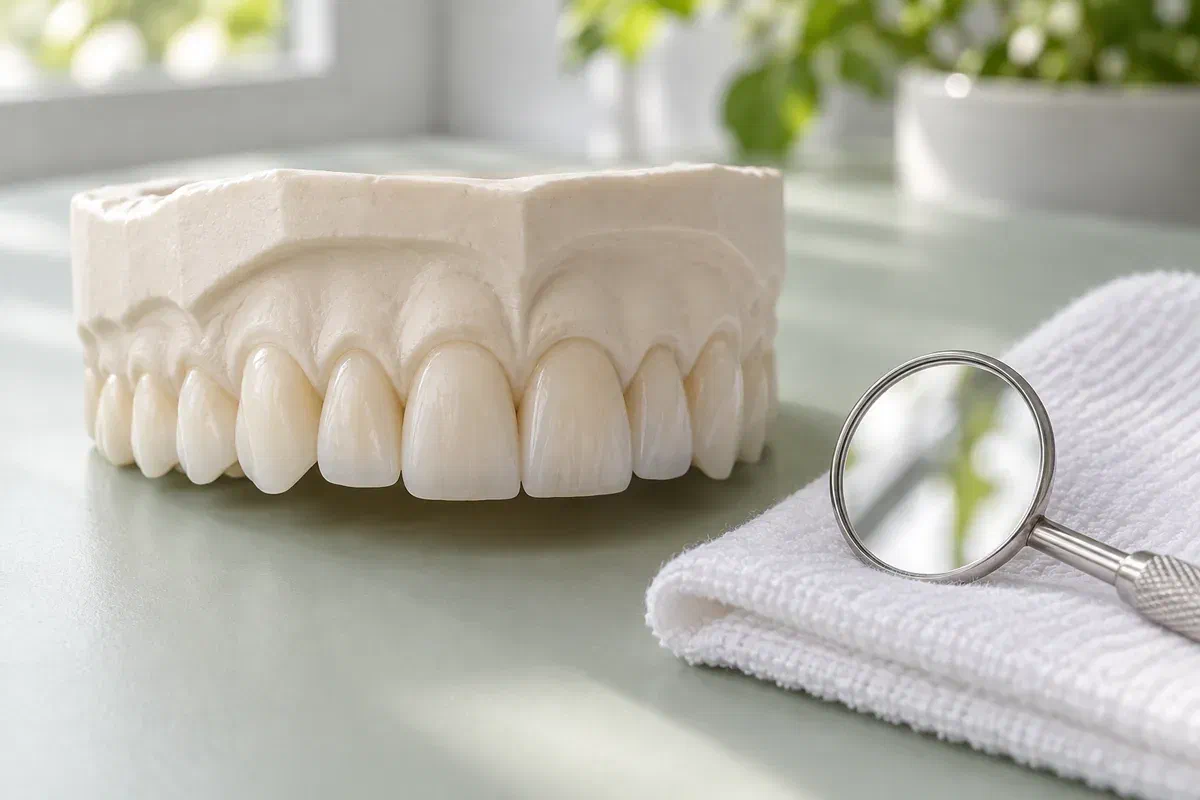
Illustrative dental teaching model with natural incisor edges beside a dental mirror
What's behind the edge in a young smile

Developing, chipped, or crowded?

In younger people, uneven edges can reflect natural tooth shape, a sports or playground chip, or teeth that are still finding their position. Share what has changed and when.

A naturally pointed or ridged edge

Some teeth erupt with small ridges or pointed tips that may change slightly with normal use. Describe the look your teen would like. Ask how much enamel a gentle contour would involve, and whether waiting a while or leaving the shape natural is reasonable.

A chip from sport or an accident

Explain when and how the chip happened and whether the tooth has felt sensitive. Injured teeth should be checked before any cosmetic step, as some need repair or monitoring rather than smoothing.

Edges that look uneven because of crowding

When teeth overlap or tilt, their edges can look mismatched. Mention any orthodontic advice received. Changing a tooth's shape before its position is settled can lead to a result that looks different after braces.

Please don't let anyone file or sand a tooth at home, however minor it looks. An examination is the only way to judge whether removing enamel is appropriate for a young tooth and its future.

Why a careful conversation helps

A plan that fits the years ahead

In the right case, contouring may soften a small feature with no restoration placed on the tooth. With a younger patient, though, the question is often less about whether it can be done and more about when it makes sense. Ask how the timing would affect the result and how it compares with waiting, bonding, or leaving things alone.

The assessment also distinguishes shape from position. A tooth that looks too long may simply be sitting differently, especially in a mouth that is still developing or about to have orthodontic treatment. Sorting that out early prevents a permanent change that later turns out to be unnecessary.

Clear reasoning about timing

Ask the clinician to explain whether now, after orthodontics, or not at all is the most sensible option. If contouring is proposed, confirm the exact area and how much would be changed. A clear rationale helps the whole family feel comfortable.

Coordination with orthodontic plans

If braces or aligners are planned, discuss whether contouring should wait, be handled within that treatment, or not be needed. Compare how each route affects the final shape. Sequencing can matter as much as the adjustment itself.

A decision made together

Your teen can share how they feel, and you can both take time to think. Choosing no elective change is a perfectly sound outcome. Consent should reflect the specific adjustment proposed and the age-appropriate discussion around it.

How we approach younger patients

Listen, examine, plan, and only then decide.

Visit length depends on the teeth involved and any other care. Ask whether the assessment can be separate from any treatment, so there is time to talk at home.

  1. Hear the concern in your teen's words

    Let your teen explain what bothers them and what they hope would change. Share dental history, including fillings, injuries, sensitivity, and orthodontic plans. Whether an edge is natural, recently chipped, or part of a restoration affects the recommendation.

  2. Check the teeth, their position, and the bite

    The clinician reviews tooth health, enamel, and how teeth meet, arranging further assessment where indicated. Ask whether contouring is suitable now, what risks apply, and whether waiting, bonding, or orthodontic advice would be more appropriate.

  3. Agree on a plan the family understands

    If an adjustment is appropriate, go over which tooth is involved, which part of its edge, and what the finished shape should be. Talk about comfort and any nervousness your teen has. Work should stay within the agreed plan, with further changes discussed first.

  4. Review and plan for the future

    When the agreed adjustment is complete, everyone looks at the polished edge together. Your teen can look and say how it feels. Confirm aftercare and whether a review is worthwhile as teeth continue to settle or orthodontic care proceeds.

Looking after a young smile

Normal routines and an eye on change

Use the instructions for the treatment actually performed, especially if bonding was also involved. Aftercare differs between procedures, and orthodontic instructions may apply too.

Keep brushing and flossing on track

Make sure everyone knows how to clean the treated edge and which sensations should prompt a call. Busy schedules with school, sports, and part-time jobs make routines slip, so a simple reminder helps. If a sensitivity toothpaste is advised, check how long to use it.

Speak up about roughness or bite changes

Encourage your teen to mention if an edge still catches, their bite feels different, or discomfort lingers. A review is better than experimenting with abrasive products or asking for more smoothing straight away.

Protect teeth during sports

If a chip came from sport, ask about a mouthguard to reduce the risk of further injury. Fresh chips or new wear are worth reporting. Repeated smoothing should not replace understanding why edges keep changing.

Options for a teen's tooth shape

Now, later, or not at all

Ask which part of the concern each option would address. Compare the tooth's condition, the preparation involved, and how each choice fits with growth and orthodontic plans.

When a minor feature can be safely reduced

A small, carefully timed contour

Contouring may be discussed for a suitable edge after examination and with timing in mind. Ask how much of your teen's goal a cautious change would meet. Keep it proportionate, since enamel removed is permanent.

When material needs to be added

Bonding for a chip or short edge

Tooth-coloured material may restore a chipped corner. Ask how bonding holds up with sports and daily wear, and how often it may need attention. Existing restorations are assessed on their own.

When position or timing is the key factor

Orthodontic advice, or waiting

If edges look uneven because of crowding, ask whether orthodontic assessment would address it. Waiting until teeth are aligned, or keeping the natural shape, are both valid. Consider these before treating contouring as a quick answer.

Patient information: British Orthodontic Society — comparing alignment and restorative changes

Questions parents in Erin ask

Reshaping and younger teeth

These answers cover timing, orthodontics, and what to consider before changing a teenager's tooth. Your family's own questions are welcome too, especially about the option of leaving the tooth as it is.

(905) 876-4488
Is my teenager old enough for tooth reshaping?
There is no single age. The clinician considers the tooth’s development, the enamel present, and any orthodontic plans. Ask whether waiting would make the decision clearer for your teen’s teeth, and what signs would suggest the time is right to look at it again.
Should we wait until after braces to think about contouring?
Often it makes sense to see how edges look once teeth are aligned. Ask both the orthodontic provider and the clinician here how contouring might fit into the overall plan.
Could a pointed canine look different once the other teeth are straightened?
Yes. Position affects how a tooth’s shape is perceived. A canine that seems prominent may look quite different after alignment, which is one reason timing matters. Canines also help guide the jaw during side-to-side movement, so any change to them is planned with the bite in mind.
How do we talk with our teen about leaving the tooth natural?
It can help for the clinician to explain why enamel is precious and what would or wouldn’t change. Many young people feel reassured once they understand the trade-offs and know they can revisit the decision later.
Can contouring be done at the same visit as a regular cleaning?
Sometimes a very small adjustment can be discussed during a routine visit after assessment, but it depends on the findings. Ask when booking so the right time is set aside.
Can siblings from Erin be booked on the same day?
Ask the team when you call. Grouping appointments can sometimes be arranged, which may suit households in Hillsburgh or the village who would rather plan one trip. Each child’s assessment is still individual and focuses on their own teeth.

Patient information: British Orthodontic Society — interproximal reduction as a planned orthodontic procedure

From Erin, for the whole family

Bring your teen's question, and we'll talk timing.

Book an appointment with our Bronte Street team about a pointed, uneven, or chipped front tooth. We will explain the assessment and help your family weigh a small contour against bonding, orthodontic advice, or waiting.

Contouring permanently removes enamel and is offered only after assessment. Timing, scope, comfort measures, appointment length, and fees are discussed individually.

Visit Milton Dental Clinic
Unit 1, 342 Bronte St. S, Milton, ON L9T 5B7
Get directions Clinic hours
Monday–Thursday
11am–7pm
Friday–Sunday
By appointment only

Areas we serve

  • Milton
  • Oakville
  • Mississauga
  • Georgetown
  • Halton Hills
  • Acton
  • Campbellville
  • Brampton
  • Burlington
  • Puslinch
  • Rockwood
  • Erin
  • Caledon
  • Etobicoke
  • Old Milton
  • Bronte Meadows
  • Timberlea
  • Dorset Park
  • Dempsey
  • Clarke
  • Beaty
  • Coates
  • Harrison
  • Scott
  • Willmott
  • Ford
  • Bowes
  • Cobden
  • Walker
  • Mountain View
  • Milton Heights
  • Hawthorne Village
  • Valley View
  • Fallingbrook
  • Nassagaweya
  • Trafalgar
  • Esquesing
  • Nelson
  • Brookville
  • Moffat
  • Glen Williams
  • Norval
  • Limehouse
  • Stewarttown
  • Ashgrove
  • Hornby
  • Silver Creek
  • Speyside
  • Scotch Block
  • North Oakville
  • River Oaks
  • Glen Abbey
  • West Oak Trails
  • Palermo
  • Bronte Creek
  • College Park
  • Joshua Creek
  • Uptown Core
  • Preserve
  • Iroquois Ridge
  • Lisgar
  • Meadowvale
  • Meadowvale Village
  • Churchill Meadows
  • Erin Mills
  • Central Erin Mills
  • Streetsville
  • East Credit
  • Creditview
  • Heartland
  • Sheridan
  • Mount Pleasant
  • Credit Valley
  • Huttonville
  • Churchville
  • Springbrook
  • Northwest Brampton
  • Bram West
  • Fletcher's Meadow
  • Fletcher's Creek South
  • Alton Village
  • Orchard
  • Millcroft
  • Headon Forest
  • Tansley
  • Brant Hills
  • Tyandaga
  • Kilbride
  • Lowville
  • Aberfoyle
  • Morriston
  • Arkell
  • Hillsburgh
  • Freelton
  • Carlisle
  • Waterdown
  • Flamborough
  • Mountsberg

How can we help?

Milton Dental Clinic

Have a question about your smile? Choose the option that works best for you.

For urgent dental concerns, please call.
Messages are reviewed during clinic hours.