

Illustrative patient and clinician discussing tooth contours using a dental model
Cosmetic Dentistry

Tooth Reshaping in Oakville

Trim the tooth or build it up? That is often the real question behind a cosmetic shape concern. If you are coming from Oakville, an assessment can show whether careful enamel contouring is appropriate, how permanent it is, and when bonding or alignment would suit the goal better.

Shape decisions for Oakville smiles

Removing a little versus adding a little

People often arrive having read about both contouring and bonding, unsure which one describes what they want. The difference is simple to state. Reshaping takes away a thin, controlled layer of enamel to refine an outline or smooth an edge, while bonding adds tooth-coloured material. Neither one moves a tooth.

Taking enamel away is a one-way decision because it does not grow back. That is why the clinician looks closely at the tooth's health, how much enamel is there to work with, and how it touches the opposing teeth before recommending anything. A request to shorten one tooth sometimes turns into a conversation about lengthening another.

From Oakville, you can use one assessment visit to sort out which direction makes sense. Describe exactly what bothers you: a point that catches your lip, a ridge you can feel with your tongue, or an outline that just looks off. We will explain what a modest contour could achieve and what it could not.

Discuss which approach fits
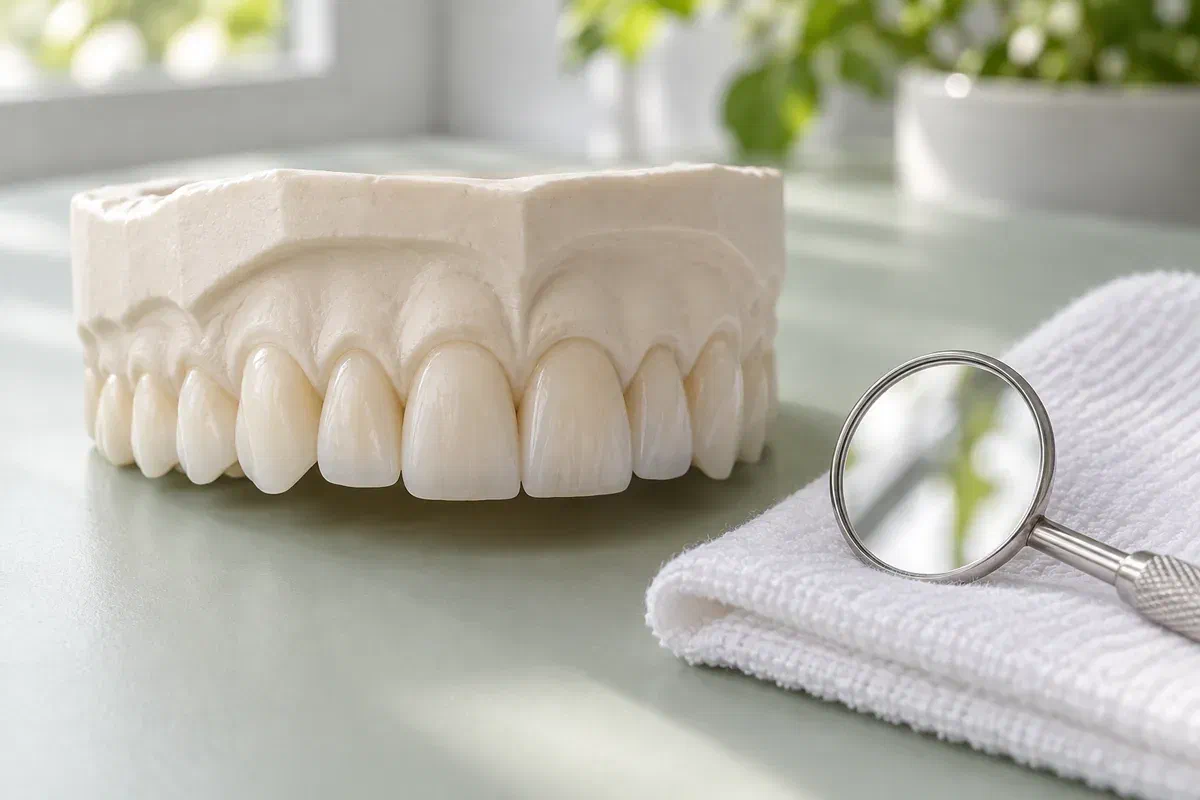
Illustrative dental teaching model with natural incisor edges beside a dental mirror
Before deciding on a method

The cause of the uneven look usually points the way.

A tooth that formed with a pointed tip, one that chipped last month, and one worn down by grinding each call for different thinking. Share when the feature appeared and whether it is changing.

A natural contour you'd like softened

Show the shape and explain the outcome you have in mind. Ask whether a conservative adjustment could get you there and what parts of the tooth would not change. If the plan would remove more than you expected, keeping a natural variation can be the better call.

A chip, ledge, or newly rough spot

Say whether there was an injury, a hard bite, or recent dental work involved. Missing structure often needs to be rebuilt rather than smoothed down. Anything new deserves examination before being labelled a cosmetic detail.

Length differences linked to wear

Mention grinding, clenching, tenderness, or a bite that has started to feel different. Ask whether wear or position explains the mismatch. Repeatedly shortening teeth to keep up with ongoing wear tends to treat the symptom rather than the reason.

Never try to file down a tooth on your own. An examination is the only way to judge whether removing enamel is appropriate and how it would affect the tooth's health and function.

The value of deciding carefully

One feature, handled with a clear purpose

In the right case, contouring can change a minor feature without covering the tooth in a restoration. That benefit only holds if your tooth is suitable, so ask how it applies and how it compares with bonding or with no treatment. Even the most conservative plan should spell out how much is removed.

Separating shape from position is the other big advantage of an assessment. A tooth can look longer because of where it sits, and a missing corner may be better rebuilt than evened off. Knowing which is which keeps you from chasing an appearance goal with the wrong tool.

An agreed area and a clear endpoint

Ask to see exactly where the adjustment would happen and how far it would go. Clarify whether the aim is to smooth, to round a tip, or to change an outline. A defined purpose is much more useful than a vague request to make teeth look even.

Contouring weighed against bonding and alignment

Discuss how each option would address the same concern. Compare maintenance, visit count, preparation, and the final shape. The best fit is not automatically the quickest appointment or the procedure that sounds most minor.

A pause before a permanent step

You can hear the plan, think it over, or decide against elective treatment entirely. Bring up concerns about shortening, natural character, or future wear before anything begins. Consent should reflect the specific change proposed, not a general assumption about small procedures.

Planning a contour adjustment

What happens from the first conversation onward

Visit length depends on the tooth and whether any other treatment is planned. Ask what each appointment covers and whether the decision can be separated from the treatment itself.

  1. Pinpoint the feature and its background

    Show the area and describe the change you want. Go over past fillings, braces, sensitivity, injuries, and signs of wear. The clinician needs to know whether the concern involves natural enamel, an existing restoration, or a surface that was recently damaged.

  2. Judge suitability against the alternatives

    The exam looks at the tooth's condition and how it fits the bite, with further assessment arranged when indicated. Ask directly whether reduction suits this tooth, what risks are relevant, and whether bonding, alignment advice, or simply watching would serve the goal better.

  3. Confirm the scope before starting

    Agree on the tooth, the contour, and the intended result. Ask how comfort will be handled, and speak up if you feel nervous. The adjustment should follow the plan you agreed to; anything beyond it is a new discussion.

  4. Polish, review, and check the bite

    When the planned change is complete, the surface is finished and the result examined with you. Look closely and raise anything unexpected. Confirm your instructions, follow-up, and when to call about sensitivity or a bite that feels unfamiliar.

Once the edge is adjusted

Routine care, plus a quick call if anything feels off

Follow the guidance for the treatment you actually received, especially if contouring was combined with bonding. Different cosmetic appointments can come with different aftercare.

Get specific cleaning and comfort advice

Ask how to care for the treated area and what sensations should prompt a phone call. Keep up the home routine recommended for you. If a product for sensitivity is suggested, confirm how and how long to use it.

Flag catching edges or bite changes

Tell the team if the edge still catches, your teeth meet differently, or discomfort persists. Note what you feel while eating and talking. A review is better than reaching for an abrasive product or requesting more trimming without reassessment.

Investigate if the outline keeps changing

If new wear or a chip appears, ask what might be behind it. Discuss any habit or protective appliance relevant to the findings. Repeated smoothing is not a substitute for understanding a problem that comes back.

Three directions to compare

Reduce, rebuild, or realign

Ask which part of your concern each option actually solves. Compare the tooth's condition, the preparation needed, and the care required later instead of choosing by looks alone.

When a minor feature is suitable to reduce

Careful enamel reduction

Contouring may be discussed for an appropriate edge or tip after examination. Find out how close a safe amount of reduction would get you. The adjustment should be sized to the concern, with full awareness that enamel removal cannot be reversed.

When the outline needs building up

Bonding or a different restoration

A tooth-coloured material may be the better route where structure is missing. Ask how it is maintained and whether it adds a long-term commitment. Existing fillings and crowns are assessed separately from natural enamel.

When position or preference is what matters most

Orthodontic opinion, or no change

If the tooth's position is creating the uneven look, ask whether alignment advice is worth seeking. Keeping a healthy natural contour is also a reasonable choice. Weigh both before using reshaping as a stand-in for repositioning.

Patient information: British Orthodontic Society — comparing alignment and restorative changes

Contour questions from Oakville

Comparing your options, one question at a time

These questions focus on choosing between methods and understanding the limits of each. Bring your own too, including what would happen if you decided to leave the tooth alone.

(905) 876-4488
How do I know if I need contouring or bonding?
It depends on whether the change you want involves removing a little or adding something back. A tooth that looks too long or pointed may suit contouring, while a short or chipped one usually needs material added. An exam confirms which applies to your tooth.
Can contouring and bonding be done on the same tooth?
Sometimes they are combined, for example smoothing one area and building up another. Ask how the plan would be sequenced and what each part involves. Aftercare and maintenance can differ when bonding is included.
Will contouring make a long tooth match its neighbour exactly?
Perfect symmetry is not a realistic promise. The aim is a proportionate improvement within safe limits. Ask the clinician to show you what part of the edge would change and what the teeth might look like side by side.
Is cosmetic contouring the same as the enamel reduction used with clear aligners?
No. Reduction between teeth for aligners or braces is part of an orthodontic plan to create space. Cosmetic contouring usually focuses on visible edges and outlines. Ask which is being proposed and who is responsible for the overall plan.
Can contouring help a tooth that looks dark or stained?
Reshaping changes outline, not colour. A discoloured tooth needs its own assessment, and options such as whitening or a restoration may be discussed separately. Mention colour concerns so the whole picture is considered.
Can I get the assessment done in one trip from Oakville and decide later?
Yes. Many people prefer to hear the findings, compare the options at home, and book any treatment afterward. If you would like to combine visits, ask whether that is reasonable once the plan is clear.

Patient information: British Orthodontic Society — interproximal reduction as a planned orthodontic procedure

Planning a visit from Oakville

Not sure whether to trim or build up? Start there.

Book time at our Bronte Street practice to discuss an edge, tip, or outline that bothers you. We will explain the examination involved and help you compare a limited adjustment with bonding, alignment advice, or leaving things as they are.

Enamel contouring is permanent and only offered after assessment. The scope of change, appointment length, comfort options, and fees are discussed individually.

Visit Milton Dental Clinic
Unit 1, 342 Bronte St. S, Milton, ON L9T 5B7
Get directions Clinic hours
Monday–Thursday
11am–7pm
Friday–Sunday
By appointment only

Areas we serve

  • Milton
  • Oakville
  • Mississauga
  • Georgetown
  • Halton Hills
  • Acton
  • Campbellville
  • Brampton
  • Burlington
  • Puslinch
  • Rockwood
  • Erin
  • Caledon
  • Etobicoke
  • Old Milton
  • Bronte Meadows
  • Timberlea
  • Dorset Park
  • Dempsey
  • Clarke
  • Beaty
  • Coates
  • Harrison
  • Scott
  • Willmott
  • Ford
  • Bowes
  • Cobden
  • Walker
  • Mountain View
  • Milton Heights
  • Hawthorne Village
  • Valley View
  • Fallingbrook
  • Nassagaweya
  • Trafalgar
  • Esquesing
  • Nelson
  • Brookville
  • Moffat
  • Glen Williams
  • Norval
  • Limehouse
  • Stewarttown
  • Ashgrove
  • Hornby
  • Silver Creek
  • Speyside
  • Scotch Block
  • North Oakville
  • River Oaks
  • Glen Abbey
  • West Oak Trails
  • Palermo
  • Bronte Creek
  • College Park
  • Joshua Creek
  • Uptown Core
  • Preserve
  • Iroquois Ridge
  • Lisgar
  • Meadowvale
  • Meadowvale Village
  • Churchill Meadows
  • Erin Mills
  • Central Erin Mills
  • Streetsville
  • East Credit
  • Creditview
  • Heartland
  • Sheridan
  • Mount Pleasant
  • Credit Valley
  • Huttonville
  • Churchville
  • Springbrook
  • Northwest Brampton
  • Bram West
  • Fletcher's Meadow
  • Fletcher's Creek South
  • Alton Village
  • Orchard
  • Millcroft
  • Headon Forest
  • Tansley
  • Brant Hills
  • Tyandaga
  • Kilbride
  • Lowville
  • Aberfoyle
  • Morriston
  • Arkell
  • Hillsburgh
  • Freelton
  • Carlisle
  • Waterdown
  • Flamborough
  • Mountsberg

How can we help?

Milton Dental Clinic

Have a question about your smile? Choose the option that works best for you.

For urgent dental concerns, please call.
Messages are reviewed during clinic hours.