

Illustrative patient and clinician discussing smile alignment at a consultation desk
Cosmetic Dentistry

Treatment for Crooked Teeth in Etobicoke

Coming from the west end of Toronto, it makes sense to know what each appointment is for before you book it. Treatment for crooked teeth in Etobicoke begins with the teeth you’d change, a check of your gums and bite, and a plan for your whole smile that respects your time.

For the trip from Etobicoke

Fewer, better-planned visits, starting with a clear diagnosis

When an appointment takes a chunk out of your day, you want it to answer real questions. With crooked teeth, the first one is simply: what exactly has moved? It could be a front tooth that has rotated, one that leans back behind the line, an edge that sits proud, or a general unevenness. The examination identifies the positions involved and how they connect to the rest of your mouth.

From there, a good plan explains the scope honestly. A single tooth out of line is still part of a chain of contacts, depends on available space and meets the teeth in the opposite jaw. Ask what movement is intended and whether other changes would be needed to support it, so you know early how many visits to expect.

Let us know at booking that you’re travelling from Etobicoke, and we can talk about grouping records and discussion where that’s appropriate. Tell us what bothers you and what you’d keep as it is. We’ll cover the examination, any referral to an orthodontist, and your options, without expecting you to have chosen aligners, braces or bonding.

Plan your first visit around your questions
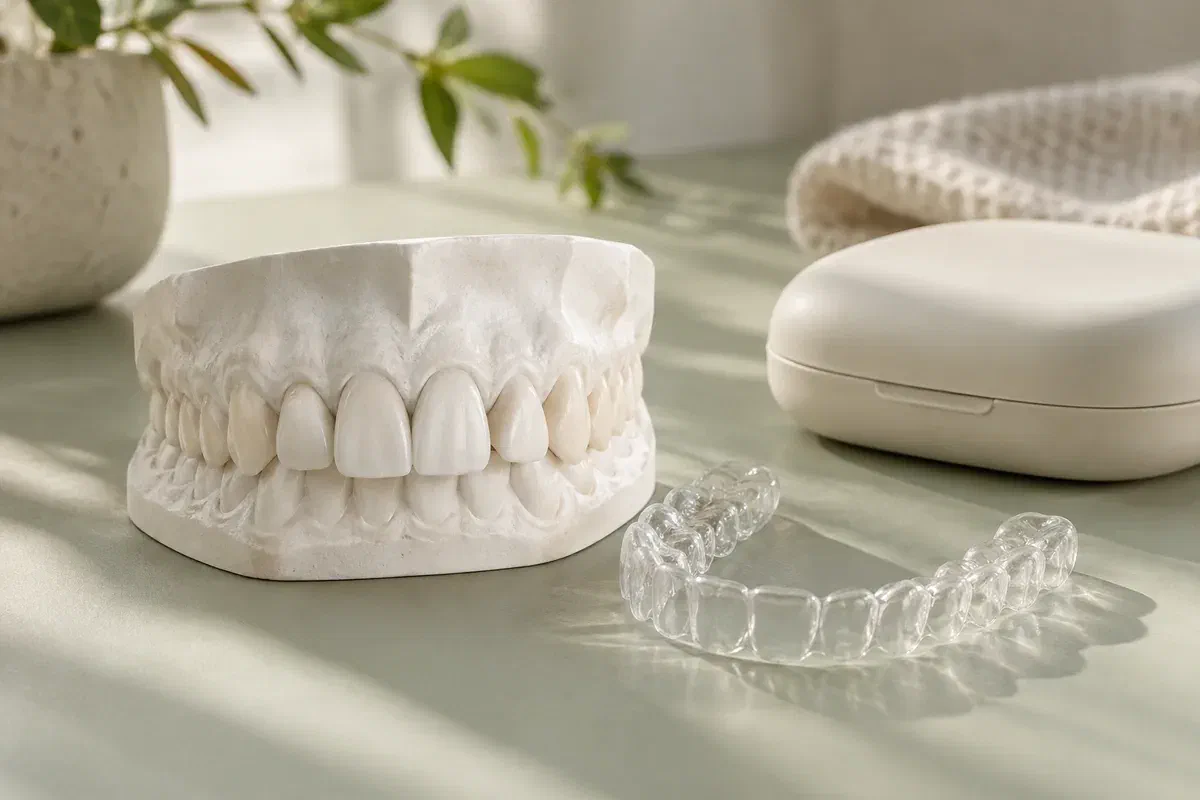
Illustrative dental study cast with a subtly rotated front tooth beside a clear appliance and case
Before the first appointment

Jot down what you see, and when it started.

A few notes or photos taken at home can make the visit more efficient. What you see might be a matter of alignment, a separate dental problem, or a natural quirk you’re happy to keep.

A front tooth that looks rotated or tipped

Note the edge or angle that bothers you most. At the visit, ask whether the look is mainly the tooth’s position or its shape. That helps you weigh real movement against a treatment that alters only the visible surface, and saves time comparing options that don’t fit.

A smile that shifted after past orthodontics

Write down when your treatment ended, which retainers you were given and how long you used them. Pack any appliances you still have. The clinician can then discuss whether alignment should be reassessed and what a renewed retention routine would require.

Recent movement alongside discomfort

If a tooth has started tilting lately, or you have bleeding, tenderness or a loose feeling, mention it when you book. Some of these signs may need attention before alignment is considered at all. A newly crooked tooth is a health question first and a cosmetic one second.

No front-on photo can show the roots, gum and bone support, or how the bite works. An in-person examination with appropriate records comes before any decision to move teeth.

Why a thorough plan saves trips

Know the scope before you commit your calendar.

A clear plan describes what treatment will change and what it won’t. Ask how many teeth are expected to shift, whether your bite is part of the goal, and what limitations might remain. When the expected result is put in plain terms, you can compare it with your original concern and decide whether the journey is worth it.

Just as useful is an honest account of what treatment would ask of you over the months. Different approaches mean different home routines, appointment intervals and maintenance. Make sure the plan treats travel time as a real factor, and give yourself time to think before saying yes.

Patient information: British Orthodontic Society — defining limited treatment goals and responsibilities

A smaller plan or a wider one

Ask whether the proposal sticks to the visible teeth or tackles the broader bite. Discuss what a limited approach might compromise and why a more complete plan may be recommended. Pin down scope before comparing duration, visit count or fees.

An appliance suited to distance

Share your views on appearance, removability and effort, and say plainly that frequent visits are harder for you. Ask how those factors fit the movements needed. The recommendation should suit the plan clinically, with a routine you can manage between appointments.

One sequence for all your dental work

If bonding, crowns, implants or replacement restorations are planned, bring them up now. Ask whether moving teeth would change the order or design of that work. Agreeing on one sequence avoids repeating steps and clarifies what should wait until positions are settled.

A step-by-step outline

What each visit is for

An assessment might lead to treatment, further records, specialist advice, or monitoring. Ask what the first appointment will cover so you can plan the day, and what will need a later discussion.

  1. Share your concern and history

    Start with the tooth or teeth that bother you, and say whether they’ve looked this way for as long as you can remember or only since last year. Braces in childhood, a fall, crowns and retainer habits all belong in the story. A deadline is fine to mention; just pair it with what you’d call worthwhile progress, since no finish date can be promised.

  2. Examination and any records

    The clinician examines your teeth, gums and bite and considers which records are needed to understand the alignment. Ask whether any finding affects suitability for movement. If another issue must be treated first, clarify where that care would happen and when the plan will be revisited.

  3. Review scope, methods and trade-offs

    This is the conversation about how: the movements proposed, which appliance could deliver them, what you’d be doing at home, the risks, and the other routes available. Find out what would stay exactly as it is now and whether an orthodontist should be involved. Any on-screen preview is a planning picture, not a guaranteed end point or calendar.

  4. Progress reviews and retention

    Each review measures where the teeth are against where you both agreed they should go, and the plan can be adjusted. Phone ahead about wear, comfort or appliance trouble rather than saving it for the next trip in. Once active movement ends, settle the retainer routine and how future shifts will be checked.

Between visits

Handle the small things at home; call about the rest.

Instructions should match your appliance and stage of care. If part of the routine isn’t working, call before your next trip instead of improvising.

Stay on schedule with wear and visits

Confirm how to use removable aligners, elastics and other prescribed pieces. If you can’t follow the schedule, tell the clinician before you start the next stage. A lost aligner or missed days of wear needs specific advice, and a quick phone call can help decide whether you need to come in.

Keep routine dental care in the picture

Ask which brushes or floss work well with your appliance while the teeth are moving. Continue your recommended examinations and preventive care. Alignment reviews don’t automatically cover routine dental needs, so be clear about who is checking what.

Protect your retainers

Wear retainers as instructed and arrange a review if the fit changes. Keep a case with you so they aren’t wrapped in a napkin and lost, and bring them to appointments when asked. If a tooth starts to drift again, ask for advice before trying an older appliance.

Patient information: British Orthodontic Society — ongoing retention responsibilities

Comparing approaches

Different routes, different commitments

Ask how each option deals with the tooth’s underlying position and the result you want. Compare preparation, time, upkeep, visits and limits before choosing.

When teeth need to change position

Orthodontic alignment

Once you’ve been examined, clear aligners, fixed braces or a different orthodontic appliance might be proposed. Find out exactly which teeth would move, how your bite figures in, and how often you would need to be seen in person. Neighbouring teeth are sometimes part of the plan, and you should know that from the outset.

When tooth shape is part of the concern

Cosmetic reshaping where suitable

For the right tooth, adding bonding material or gently smoothing an edge may soften the crooked look with no movement involved. Ask where the limits of that are and whether sound enamel would be removed. The tooth itself, and the bite, stay just where they were.

When more information or monitoring is best

A specialist view or no change

A complicated case may benefit from an orthodontist’s opinion. Alternatively, once you understand the findings, you might simply be content with your smile. Ask what is worth watching over time and how to keep teeth and gums healthy. Keeping a natural variation can be a well-considered decision.

Questions from the west end

Planning alignment care at a distance

A concern that looks small doesn’t guarantee a short course of care. These answers help link the detail you notice with what the assessment covers.

(905) 876-4488
How can I keep trips from Etobicoke to a minimum?
Mention your travel when you book. Ask what can be covered at each visit, which steps could be combined, and which questions can be handled by phone. The number of appointments still depends on the plan, but knowing it early helps you organise your weeks.
Can an orthodontic referral be closer to where I live?
If a referral is recommended, ask about your options and how information would be shared between providers. Where you go is your decision, and it helps to know who will manage each part of your care before treatment begins.
What should I do if an aligner cracks between visits?
Call for advice before switching trays or going back to an older one. The right step depends on your plan and the stage you’re at. Keep the damaged aligner so it can be looked at if needed.
If bonding is quicker, why consider moving the tooth at all?
Bonding changes the outline of a tooth by adding material; it doesn’t reposition the tooth or its root. For some concerns that’s enough, and for others it isn’t. Ask what each approach would leave unchanged before deciding which suits you.
My teeth look done. Can I skip the remaining stages?
Check with your treating clinician first. Later stages may be refining contacts or the bite in ways you can’t see from the front. Ask what’s left, why it matters and when retention should start.
Do I still need regular checkups while my teeth are being straightened?
Yes, routine examinations and cleanings remain important. Ask how they fit around alignment reviews and who is responsible for each. Keeping both on track helps protect your teeth and gums throughout treatment.
Booking from Etobicoke

Make the first trip count.

Book time at our Bronte Street practice for teeth that lean, rotate or sit unevenly. Mention that you’re coming from the west end, and we’ll use the visit to gather what’s needed to compare sensible options, sketch the likely scope, and say whether an orthodontist should be involved.

Whether treatment suits you, the appliance, how much is involved, how long it takes and what it costs are confirmed by examination. A small concern can still lead to a larger plan, and the number of visits varies.

Visit Milton Dental Clinic
Unit 1, 342 Bronte St. S, Milton, ON L9T 5B7
Get directions Clinic hours
Monday–Thursday
11am–7pm
Friday–Sunday
By appointment only

Areas we serve

  • Milton
  • Oakville
  • Mississauga
  • Georgetown
  • Halton Hills
  • Acton
  • Campbellville
  • Brampton
  • Burlington
  • Puslinch
  • Rockwood
  • Erin
  • Caledon
  • Etobicoke
  • Old Milton
  • Bronte Meadows
  • Timberlea
  • Dorset Park
  • Dempsey
  • Clarke
  • Beaty
  • Coates
  • Harrison
  • Scott
  • Willmott
  • Ford
  • Bowes
  • Cobden
  • Walker
  • Mountain View
  • Milton Heights
  • Hawthorne Village
  • Valley View
  • Fallingbrook
  • Nassagaweya
  • Trafalgar
  • Esquesing
  • Nelson
  • Brookville
  • Moffat
  • Glen Williams
  • Norval
  • Limehouse
  • Stewarttown
  • Ashgrove
  • Hornby
  • Silver Creek
  • Speyside
  • Scotch Block
  • North Oakville
  • River Oaks
  • Glen Abbey
  • West Oak Trails
  • Palermo
  • Bronte Creek
  • College Park
  • Joshua Creek
  • Uptown Core
  • Preserve
  • Iroquois Ridge
  • Lisgar
  • Meadowvale
  • Meadowvale Village
  • Churchill Meadows
  • Erin Mills
  • Central Erin Mills
  • Streetsville
  • East Credit
  • Creditview
  • Heartland
  • Sheridan
  • Mount Pleasant
  • Credit Valley
  • Huttonville
  • Churchville
  • Springbrook
  • Northwest Brampton
  • Bram West
  • Fletcher's Meadow
  • Fletcher's Creek South
  • Alton Village
  • Orchard
  • Millcroft
  • Headon Forest
  • Tansley
  • Brant Hills
  • Tyandaga
  • Kilbride
  • Lowville
  • Aberfoyle
  • Morriston
  • Arkell
  • Hillsburgh
  • Freelton
  • Carlisle
  • Waterdown
  • Flamborough
  • Mountsberg

How can we help?

Milton Dental Clinic

Have a question about your smile? Choose the option that works best for you.

For urgent dental concerns, please call.
Messages are reviewed during clinic hours.