

Illustrative patient and clinician discussing smile alignment at a consultation desk
Cosmetic Dentistry

Treatment for Crooked Teeth in Oakville

Some people want a crooked tooth to look straighter; others want it to actually be straighter. Treatment for crooked teeth in Oakville starts by separating those goals, checking your gums and the way your teeth meet, and then matching an approach to your whole smile.

Oakville smiles: surface or position

Two very different ways to make a tooth look straighter

One question shapes almost every conversation about a crooked tooth: do you want to change where it sits, or how it appears? A tooth that is rotated, tipped inward or set forward can sometimes be disguised and sometimes needs to be moved. Working out which applies to you begins with an examination of that tooth and the ones around it.

The answer is rarely obvious from the front. Even a lone tooth out of line is held where it is by its contacts, the room on either side and the teeth that meet it from the other jaw. A plan to move it should show you the intended path and any wider adjustment that path might require.

Coming from Oakville, you may have already read about veneers, aligners and everything in between. Bring those questions, plus a clear sense of what you’d change and what you’d keep. We’ll cover the examination, the records likely to help, and when an orthodontic referral is worth considering. You don’t need a decision made before the first visit.

Ask whether moving or reshaping fits
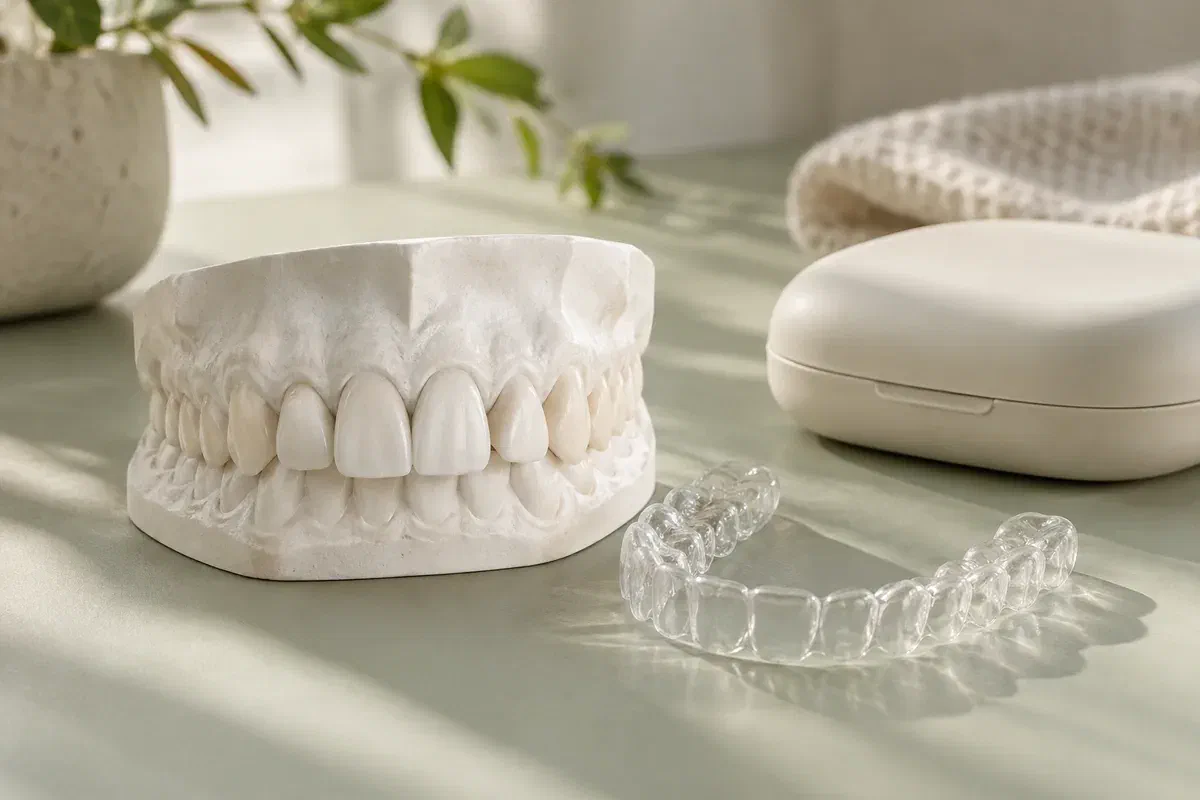
Illustrative dental study cast with a subtly rotated front tooth beside a clear appliance and case
Reading the mirror carefully

Three situations that look alike but aren’t

Point to the detail that bothers you and say how long it has been there. It may come down to alignment, to another dental issue, or to a natural feature that you’re content to keep.

A tooth that looks out of step

Describe the edge or angle you would alter. Then ask the useful follow-up: is this mostly about the tooth’s position, or its shape? The answer decides whether real movement is needed or whether a surface treatment might be considered, and it changes what each option can honestly offer.

A smile that has changed since treatment

Share when your orthodontic care finished, the retainer you received and what you’ve noticed since. If the appliance is still around, bring it in. Your clinician can talk about whether a fresh alignment assessment is sensible and what renewed retention would mean in practice.

A shift that comes with other symptoms

Mention any loose feeling, bleeding gums, tenderness, or a tooth that has only lately started to tip. Ask whether those signs need attention before alignment is discussed. A tooth that has newly moved should be checked as a health question first, not filed under cosmetic concerns.

What you see at the front doesn’t reveal the roots, the surrounding gum and bone, or how your teeth come together. Those need an in-person look and appropriate records before a plan to move teeth is agreed.

Why compare carefully

A clear picture of the change, and the commitment behind it

Careful planning means you can see what treatment is designed to change. Ask which teeth would move, whether improving the bite is part of it, and which limitations may remain afterwards. You should be able to set the described result directly beside the concern that made you book.

Equally, you deserve a frank idea of the work involved on your side. Surface treatments, removable aligners and fixed braces each come with different routines, visits and maintenance. A good plan respects what you can realistically manage and gives you time to weigh the likely benefit before you agree.

Patient information: British Orthodontic Society — defining limited treatment goals and responsibilities

Limited or comprehensive?

Ask whether the proposal focuses only on the teeth you can see or aims to address the broader bite. Talk about the compromises a narrower plan may carry and why a fuller one might be put forward. Scope is worth settling before you compare duration or fees.

An appliance that suits the plan and you

Say what you prefer about visibility, removability, effort and how treatment would sit within your social routine. Ask how those preferences fit the movement involved. Any recommendation should rest on suitability, with expectations you can meet from one day to the next.

Fitting in with veneers, crowns or bonding

If cosmetic restorations are part of your thinking, mention them before deciding on alignment. Ask whether moving teeth first would change their design or timing. Agreeing on an order makes it clear which choices should wait until the positions are known.

Steps toward a decision

Where do you want to end up?

You may leave the assessment with a treatment plan, a request for records, a specialist referral, or a plan to monitor. Ask what the first appointment includes and what will come later.

  1. Share your goal

    Tell us which positions bother you and whether the change is old or new. Mention previous orthodontics, injuries, restorations and your retainer habits. If you have a date in mind, say so, and discuss what you would count as a worthwhile improvement rather than relying on a set completion promise.

  2. Assess teeth, gums and bite

    Your mouth is examined and suitable records are considered to understand the alignment. Ask about any finding that changes whether movement is suitable. If gum health or another issue needs care first, find out what that involves and when the plan will be looked at again.

  3. Compare scope and methods

    Talk through the intended movements, appliance choices, responsibilities, risks and alternatives. Ask what would stay unchanged and whether a referral would help. Any preview you’re shown supports planning; it doesn’t guarantee an exact final position or a fixed timeline.

  4. Monitor movement, then retain

    Progress is measured against the aims you agreed, and the plan may change along the way. Tell your treating team about wear, comfort or appliance problems as they come up. At the end, confirm the retainer routine and how any future changes will be reviewed.

During active treatment

Small routines that keep things on track

Instructions depend on your appliance and the stage you’re at. If part of the routine is a struggle, ask for help rather than adjusting the treatment on your own.

Follow wear times and appointments

Know what to do with removable aligners, elastics and any other prescribed pieces. If the schedule isn’t realistic for you, tell your clinician before starting the next stage. A missed week or a lost appliance needs tailored advice, not an improvised catch-up plan.

Keep your regular dental care going

Ask for the best way to brush and floss while you’re wearing an appliance, since the gaps and contacts between teeth keep changing. Carry on with recommended examinations and preventive visits. Orthodontic progress checks don’t replace all routine care, so confirm who is responsible for each part of it.

Treat retainers as part of the result

Wear them exactly as instructed and ask for a review if the fit feels different. Keep them in their case when out and bring them along when asked. If a tooth starts to rotate again, get advice before reaching for an old appliance.

Patient information: British Orthodontic Society — ongoing retention responsibilities

Comparing the routes

Movement, reshaping, or neither

Ask how each option addresses the underlying position and the look you want. Compare preparation, time, upkeep and limits side by side before you commit.

When the position itself should change

Moving teeth orthodontically

Aligners, fixed braces or other orthodontic care may be discussed after your assessment. Ask what movements are planned and how the bite is handled. The plan may involve more teeth than the one you first pointed to, and you should know why before beginning.

When the tooth’s shape drives the concern

Reshaping in a suitable case

Bonding or contouring can sometimes improve a feature without moving the tooth. Ask what it can and can’t achieve and whether healthy structure would be altered. Changing the surface leaves the underlying alignment and bite as they are.

When observation or more information fits

Specialist input or no elective change

An orthodontist’s opinion may clarify a complex case, or you may decide the current look is fine. Ask what to monitor and how to keep your mouth healthy. Leaving a natural variation in place can be a thoughtful decision once the findings are clear.

Oakville questions about crooked teeth

Before you choose between veneers and aligners

How noticeable a concern is doesn’t set the treatment scope. These answers tie the visible detail to what the examination is looking for.

(905) 876-4488
Can veneers make crooked teeth look straight?
In some situations a restoration can change how a tooth appears, but it doesn’t move the tooth or its root. Ask whether that approach suits your teeth, how much natural structure it might involve, and how it compares with alignment. The choice deserves a careful, unhurried discussion.
Is bonding just a shortcut to the same result as orthodontics?
No. Bonding adds material to alter a tooth’s visible shape, while the tooth itself stays in place. Ask whether a surface change would suit your concern and what it would leave untouched, then weigh it honestly against moving the tooth.
Are clear aligners suitable for every crooked tooth?
Not always. Some movements suit aligners well, and others may be better handled with a different appliance. Ask why a particular option is recommended for your case, what the alternatives would involve, and how each would affect your daily routine.
How long does straightening usually take?
It depends on the movements needed, the appliance and how consistently the plan is followed. Ask for an estimate once you’ve been assessed, and treat it as a guide rather than a promise. Progress reviews help show whether the plan is staying on course.
Why might my plan include teeth that look fine?
Teeth work as a group. Moving one can depend on the space beside it, its contacts and the opposing bite. Ask which teeth are included and why, and what a smaller plan would give up in exchange for being simpler.
Should I whiten before or after straightening?
Ask about the order during planning. Aligners, bonding and restorations can all affect when whitening is most sensible. Agreeing on a sequence helps avoid redoing work and keeps your expectations realistic about how the finished smile will look.
From Oakville to Bronte Street

Decide on the approach after you’ve seen the findings.

Book an assessment at our Bronte Street practice to discuss teeth that tilt, turn or sit out of line. We’ll go over the information needed to compare options, outline the likely scope, and recommend specialist input where it would genuinely help.

Suitability, appliance, scope, timing and fees all depend on examination. A concern that looks small won’t necessarily lead to a small plan.

Visit Milton Dental Clinic
Unit 1, 342 Bronte St. S, Milton, ON L9T 5B7
Get directions Clinic hours
Monday–Thursday
11am–7pm
Friday–Sunday
By appointment only

Areas we serve

  • Milton
  • Oakville
  • Mississauga
  • Georgetown
  • Halton Hills
  • Acton
  • Campbellville
  • Brampton
  • Burlington
  • Puslinch
  • Rockwood
  • Erin
  • Caledon
  • Etobicoke
  • Old Milton
  • Bronte Meadows
  • Timberlea
  • Dorset Park
  • Dempsey
  • Clarke
  • Beaty
  • Coates
  • Harrison
  • Scott
  • Willmott
  • Ford
  • Bowes
  • Cobden
  • Walker
  • Mountain View
  • Milton Heights
  • Hawthorne Village
  • Valley View
  • Fallingbrook
  • Nassagaweya
  • Trafalgar
  • Esquesing
  • Nelson
  • Brookville
  • Moffat
  • Glen Williams
  • Norval
  • Limehouse
  • Stewarttown
  • Ashgrove
  • Hornby
  • Silver Creek
  • Speyside
  • Scotch Block
  • North Oakville
  • River Oaks
  • Glen Abbey
  • West Oak Trails
  • Palermo
  • Bronte Creek
  • College Park
  • Joshua Creek
  • Uptown Core
  • Preserve
  • Iroquois Ridge
  • Lisgar
  • Meadowvale
  • Meadowvale Village
  • Churchill Meadows
  • Erin Mills
  • Central Erin Mills
  • Streetsville
  • East Credit
  • Creditview
  • Heartland
  • Sheridan
  • Mount Pleasant
  • Credit Valley
  • Huttonville
  • Churchville
  • Springbrook
  • Northwest Brampton
  • Bram West
  • Fletcher's Meadow
  • Fletcher's Creek South
  • Alton Village
  • Orchard
  • Millcroft
  • Headon Forest
  • Tansley
  • Brant Hills
  • Tyandaga
  • Kilbride
  • Lowville
  • Aberfoyle
  • Morriston
  • Arkell
  • Hillsburgh
  • Freelton
  • Carlisle
  • Waterdown
  • Flamborough
  • Mountsberg

How can we help?

Milton Dental Clinic

Have a question about your smile? Choose the option that works best for you.

For urgent dental concerns, please call.
Messages are reviewed during clinic hours.