

Illustrative patient and clinician discussing smile alignment at a consultation desk
Cosmetic Dentistry

Treatment for Crooked Teeth in Old Milton

Teeth that were straight at twenty don’t always stay that way at fifty. Treatment for crooked teeth in Old Milton begins by working out which positions have changed, how healthy the gums and supporting bone are, and what a plan for your whole smile could reasonably involve.

Old Milton · gradual shifting

Teeth move slowly, and so can the decision.

A lot of adults describe the same experience: the lower front teeth have bunched together a little more each year, or an upper tooth has slowly turned so its edge catches the light differently. “Crooked” covers all of that, but it isn’t one diagnosis. An examination sorts out exactly which teeth have changed position and how they now relate to everything around them.

It’s tempting to assume that a small change needs a small fix. In practice, nudging even one tooth back can depend on whether there is room for it, how it touches the teeth on either side, and where it lands against the opposite arch. Expect to hear the planned movement explained, along with anything else that may need to change to support it.

If you’ve been around Old Milton for years and wore braces long ago, bring whatever you remember about that treatment. Tell us what you notice now and what you’re happy to leave alone. We can talk through the examination, the records that would help, and whether an orthodontist should be involved, without assuming you’ve already settled on aligners, braces or bonding.

Describe how your teeth have changed
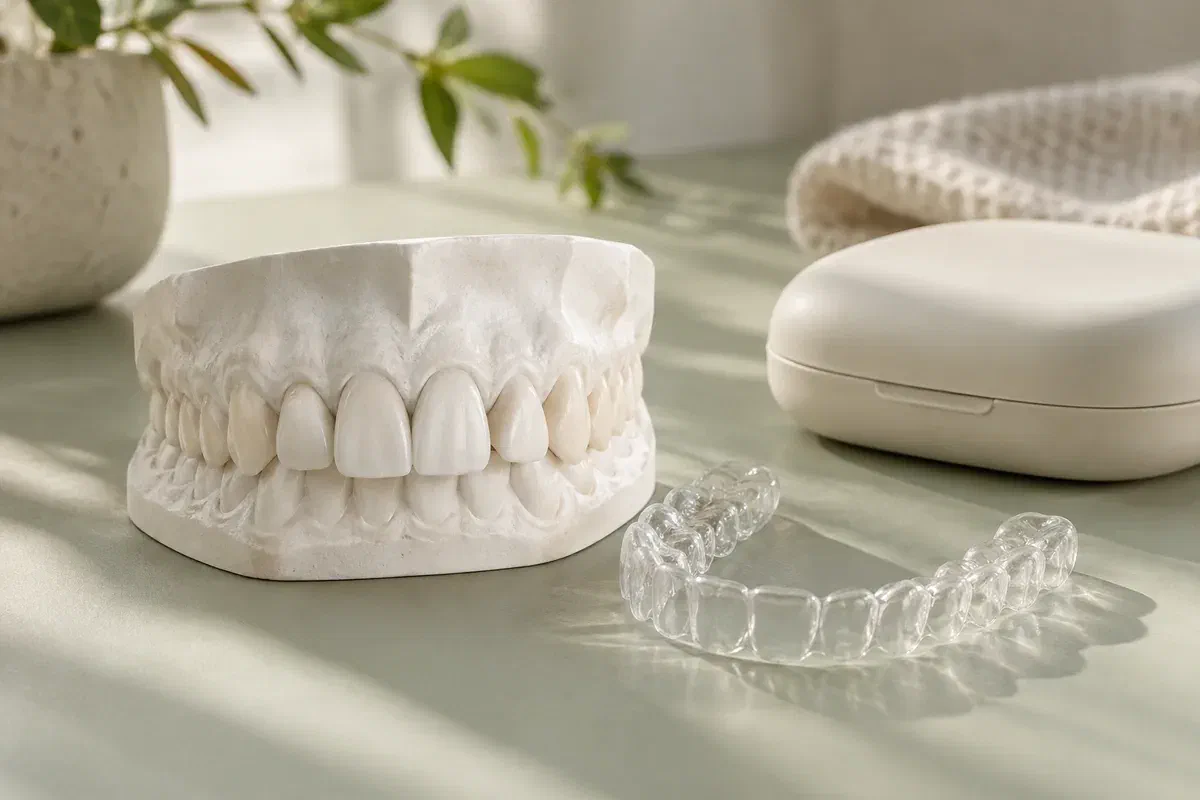
Illustrative dental study cast with a subtly rotated front tooth beside a clear appliance and case
Sorting out the change

Where it sits versus how it’s shaped

Use a hand mirror to show us the tooth, and try to recall when it first caught your eye. What you’re seeing could be alignment, a separate dental problem, or simply a natural feature you prefer to keep.

An upper tooth that has slowly turned

Explain which edge or angle draws your attention. A useful question is whether the effect comes from the tooth’s position or from its outline. That answer separates true movement from treatments that only change what the surface looks like, and it shapes every option that follows.

Crowding years after orthodontics

Let us know roughly when your braces came off, what kind of retainer followed and whether you still wear it. If it’s been tucked away since, bring it anyway. The clinician can discuss whether your alignment is worth reassessing and what a fresh approach to retention would involve.

Shifting alongside gum or comfort changes

Tell us about a tooth that feels loose, gums that bleed, any ache, or a tooth that has only recently begun to drift. Ask whether those issues need care before alignment is even discussed. A sudden change in position deserves a health-first look rather than a cosmetic one.

A neat row at the front can hide differences in the roots, the gum and bone, or the bite behind it. Those are checked in person, with suitable records, before any movement plan is picked.

What a good plan gives you

Clarity about the result, and honesty about the effort.

Planning is worthwhile because it spells out what treatment is meant to achieve. You can ask which teeth are expected to move, whether the way your teeth meet is included, and what might not change at all. That description should be specific enough to compare directly with what you came in hoping to fix.

Just as important is knowing what you’d be signing up for. Removable and fixed approaches carry different daily habits, appointment patterns and long-term upkeep. A plan worth following takes your real routine into account and leaves you time to judge whether the improvement justifies the effort.

Patient information: British Orthodontic Society — defining limited treatment goals and responsibilities

Front teeth only, or the whole bite?

Ask whether the proposal targets the teeth you see when you smile or tackles a broader relationship between the upper and lower teeth. Discuss what a more limited plan might trade away and why something larger could be suggested. Knowing the scope comes before any comparison of length or fees.

A fair match between appliance and lifestyle

Talk about how much the appliance’s appearance matters, whether you’d prefer something removable, and how it would fit your work and social life. Ask whether those preferences suit the movements required. The recommendation should be based on what the plan needs and what you can genuinely keep up.

Timing around crowns, bridges or implants

Older restorations are common, so mention any crowns, bridges, implants or fillings that may need replacing. Ask whether straightening would change when or how that work should happen. Working out the order in advance shows which decisions are best left until the teeth are in their new positions.

The path from concern to plan

Settle on the goal; the method follows.

Your assessment might lead to treatment, more records, a specialist referral, or simply keeping watch. Ask what happens at the first appointment and which choices can wait for a later conversation.

  1. Tell us the history

    Describe what bothers you and whether it has crept in over years or appeared recently. Mention earlier orthodontics, any injury, existing crowns or fillings, and how you used retainers. If there’s a date in mind, say so, but talk too about what improvement would feel worthwhile without leaning on a fixed end date.

  2. A full look at teeth, gums and bite

    The clinician examines your mouth and decides which records would help explain the alignment. Ask about anything that might affect whether teeth can be moved. When gum care or another dental need comes first, find out why it takes priority and how readiness will be rechecked.

  3. Go over options, limits and alternatives

    Discuss the planned movements, the appliance choices, your part in the process, risks, and other routes. Ask what the plan would leave as it is and whether specialist input would help. A simulation, if one is shown, is a tool for planning and does not guarantee a precise finish or schedule.

  4. Check progress and move into retention

    Progress is reviewed against the goals you agreed, and the plan can be adjusted if needed. Let the team know about trouble with wear, comfort or the appliance itself. When the active phase is complete, confirm how and when to wear retainers and how later shifts will be monitored.

Day-to-day care while teeth shift

What helps between appointments

Instructions will vary with the appliance and the stage of treatment. If anything is hard to keep up, ask for help instead of working around it on your own.

Wear and appointments as agreed

Be clear on how to handle removable trays, elastics or other prescribed pieces. If you’re struggling to follow the schedule, raise it before you move to the next step. Missing days of wear or losing an appliance needs particular advice rather than doubling up to make up for it.

Your usual dental care continues

Ask how best to clean around the appliance and between teeth as their contacts change. Keep up the checkups and preventive care you’ve been advised to have. An alignment review isn’t a substitute for every part of routine care, so confirm who is looking after which part.

Retainers as an ongoing habit

Follow your own retainer instructions and arrange a check if the fit changes. Keep the retainer in its case when it’s out and bring it to visits when asked. If a tooth seems to be turning again, ask before forcing an old retainer back in.

Patient information: British Orthodontic Society — ongoing retention responsibilities

Three broad directions

Change the position, change the surface, or wait.

Ask how each choice deals with where the tooth actually sits and with the look you want. Compare preparation, time, maintenance and limits before deciding.

If repositioning is the aim

Orthodontic treatment

Aligners, fixed braces or another orthodontic approach may be discussed once you’ve been assessed. Ask what movements are planned and how the bite fits into them. You may find more teeth are involved than the one that first bothered you, and the reasons should be explained before you start.

If tooth shape adds to the effect

Bonding or contouring

Sometimes adding or smoothing material can improve a feature while the tooth stays where it is. Ask about the limits of that approach and whether it would remove healthy enamel. Masking a tooth leaves the actual alignment and bite unchanged.

If more information or monitoring makes sense

A second opinion, or no change

An orthodontist’s view can help clarify a complicated situation, or you may conclude the current look is perfectly acceptable. Ask what to watch for and how to keep your teeth and gums healthy. Living with a natural irregularity can be a deliberate, informed choice.

Common questions

Questions about teeth that have shifted

A small-looking change doesn’t set the size of the treatment. These questions connect what you notice with what an examination needs to consider.

(905) 876-4488
Why do teeth seem to get more crooked with age?
Teeth can shift gradually over a lifetime, and the reasons vary from person to person. An examination looks at your gums, bite and any past treatment to understand what has changed in your case. Ask what the findings suggest and whether monitoring or treatment makes more sense.
I wore braces as a teenager. Can my teeth be straightened again?
Many adults are assessed again after earlier orthodontics. The clinician will look at your current alignment, gum health and bite before suggesting anything. Ask what a second course would involve and how retention would be handled differently this time.
Why are my gums checked when my concern is how the teeth look?
Healthy supporting tissue matters whenever teeth are moved. Ask whether any gum problem needs treatment or monitoring first. Your cosmetic goal is weighed alongside oral health, not used to skip a proper look at the gums and bone.
Do existing crowns or fillings affect straightening?
They can influence planning, so mention them early. Ask whether any restoration might need changing before, during or after alignment, and why. The order of care is easier to plan when everything is on the table from the start.
Will the worn edges on my front teeth look even once they’re aligned?
Moving teeth changes where they sit, not the shape of worn or chipped edges. Ask how the edges may look after alignment and whether a separate decision could come later. Not every uneven edge needs material added or taken away.
What happens if I decide not to treat a crooked tooth?
That can be a reasonable choice. Ask what, if anything, should be monitored and how to keep the area easy to clean. Your decision can be revisited later if the tooth changes or your priorities do.
Visiting from Old Milton

Bring your old retainer, your questions, or both.

Old Milton, Milton’s historic downtown, sits near our Bronte Street practice. Book an assessment to talk through tilted, turned or crowded teeth, review the information needed to compare options, and hear whether specialist advice would add anything.

Whether treatment is suitable, which appliance fits, and the scope, timing and fees all depend on an examination. A modest concern may still need a broader plan.

Visit Milton Dental Clinic
Unit 1, 342 Bronte St. S, Milton, ON L9T 5B7
Get directions Clinic hours
Monday–Thursday
11am–7pm
Friday–Sunday
By appointment only

Areas we serve

  • Milton
  • Oakville
  • Mississauga
  • Georgetown
  • Halton Hills
  • Acton
  • Campbellville
  • Brampton
  • Burlington
  • Puslinch
  • Rockwood
  • Erin
  • Caledon
  • Etobicoke
  • Old Milton
  • Bronte Meadows
  • Timberlea
  • Dorset Park
  • Dempsey
  • Clarke
  • Beaty
  • Coates
  • Harrison
  • Scott
  • Willmott
  • Ford
  • Bowes
  • Cobden
  • Walker
  • Mountain View
  • Milton Heights
  • Hawthorne Village
  • Valley View
  • Fallingbrook
  • Nassagaweya
  • Trafalgar
  • Esquesing
  • Nelson
  • Brookville
  • Moffat
  • Glen Williams
  • Norval
  • Limehouse
  • Stewarttown
  • Ashgrove
  • Hornby
  • Silver Creek
  • Speyside
  • Scotch Block
  • North Oakville
  • River Oaks
  • Glen Abbey
  • West Oak Trails
  • Palermo
  • Bronte Creek
  • College Park
  • Joshua Creek
  • Uptown Core
  • Preserve
  • Iroquois Ridge
  • Lisgar
  • Meadowvale
  • Meadowvale Village
  • Churchill Meadows
  • Erin Mills
  • Central Erin Mills
  • Streetsville
  • East Credit
  • Creditview
  • Heartland
  • Sheridan
  • Mount Pleasant
  • Credit Valley
  • Huttonville
  • Churchville
  • Springbrook
  • Northwest Brampton
  • Bram West
  • Fletcher's Meadow
  • Fletcher's Creek South
  • Alton Village
  • Orchard
  • Millcroft
  • Headon Forest
  • Tansley
  • Brant Hills
  • Tyandaga
  • Kilbride
  • Lowville
  • Aberfoyle
  • Morriston
  • Arkell
  • Hillsburgh
  • Freelton
  • Carlisle
  • Waterdown
  • Flamborough
  • Mountsberg

How can we help?

Milton Dental Clinic

Have a question about your smile? Choose the option that works best for you.

For urgent dental concerns, please call.
Messages are reviewed during clinic hours.