

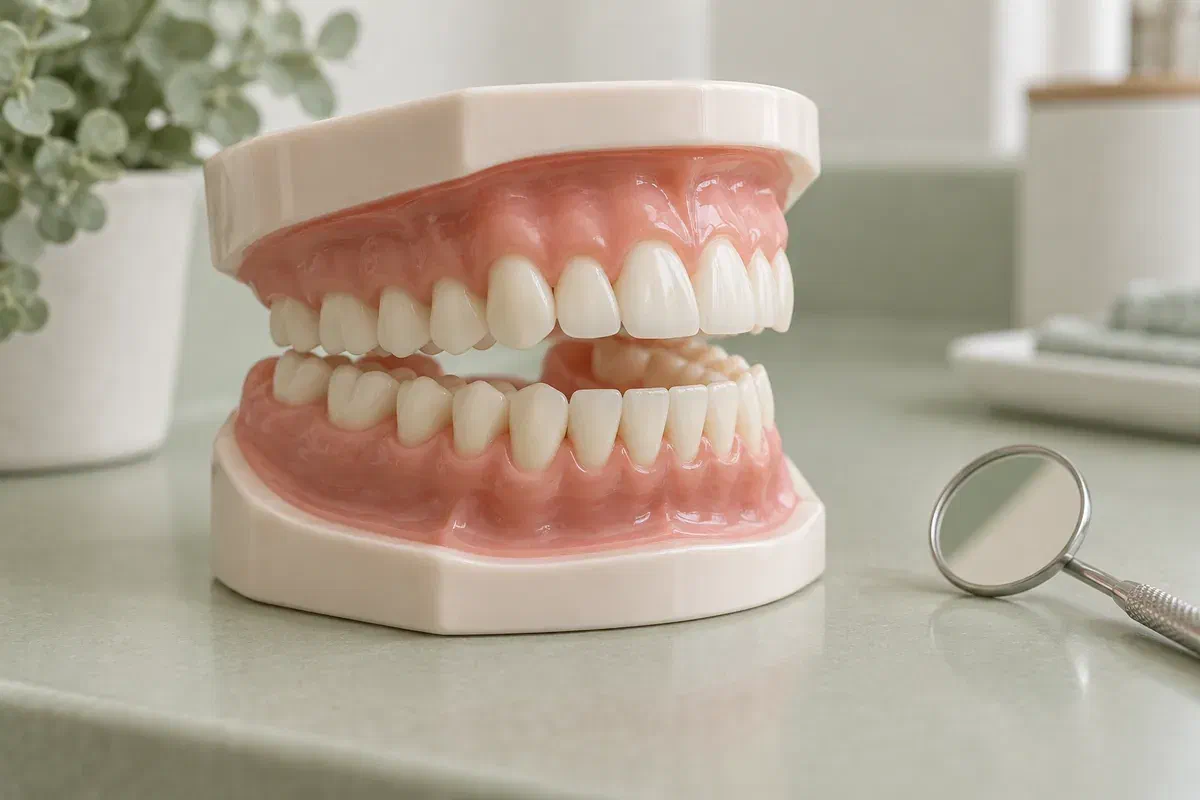
Illustrative patient and clinician discussing the relationship of upper and lower teeth with a model
Cosmetic Dentistry

Treatment for Crossbite in Brampton

A dentist mentioned a crossbite at your child’s checkup, and now you have questions. For households in Brampton, we explain what the note means, how the teeth are meeting and whether watching, early orthodontic advice or treatment fits.

After the checkup

“Your child has a crossbite.” Now what?

Hearing that word at the end of a busy appointment can leave a parent with more questions than answers. Put simply, a crossbite means some upper teeth bite down on the inside of the lower teeth instead of sitting outside them. It might involve a front tooth, several back teeth, one side, or more than one area.

The next useful step is understanding why. Sometimes individual teeth have come in at an angle. Sometimes the width or position of the jaws plays a part, and often it is a mix. We also watch how your child closes, because a jaw that slips sideways to reach the bite matters for planning.

Brampton families often juggle several children’s appointments, so we keep the explanation practical. Tell us what you have noticed at home, and we can show you the contacts, explain whether monitoring is enough for now and say when an orthodontic opinion would be worthwhile.

Ask about your child’s bite
Illustrative paired upper and lower dental teaching model shown from an oblique side view
What Brampton parents often see

Signs you might spot before anyone mentions it

You do not need the right terms. Describe what you have seen, any complaint from your child, and any change in how the teeth touch or the jaw moves.

A front tooth tucked behind the lower ones

This often becomes noticeable as an adult front tooth comes in. Let us know when it appeared and whether it has changed. We look at that tooth alongside the rest of both arches, because its position only makes sense in context.

A jaw that drifts to one side

Kids rarely notice it themselves. Parents may see the chin move slightly off centre when the teeth close, or a habit of chewing on one side. Those details help us work out whether the cause is dental, skeletal or a mix.

A pattern in baby teeth

Crossbites can appear before any adult teeth are in. Bring it up rather than assuming nothing can be done until later. Depending on development, the advice may be to keep watching or to arrange an early orthodontic view.

Knowing there is a crossbite is a starting point, not a deadline. Ask what was diagnosed, whether there is a shift on closing and why a particular timeline is being recommended for your child.

What you gain from a full explanation

A plan you can actually explain at home

After an assessment, you should be able to tell another parent which teeth are involved and what change care would aim for. That might be guiding a single tooth, widening an upper arch or looking more closely at how the jaws relate. Each path raises its own questions, so knowing which one you are on makes decisions easier.

We also keep complaints and causes apart. If your child mentions sore jaws, wears teeth down or finds chewing awkward, tell us, and we will explain how each will be checked. Treating a crossbite should not be promised as a fix for every discomfort around the jaw.

Why we suggest acting or waiting

You should hear what was found and what change, if any, is intended. If watching is the plan, ask how often the bite will be checked and what would change the advice. A visit that ends without an appliance can still answer a lot.

Timing tied to development

Growth can open certain options during childhood that do not apply later. Ask which factors matter for your child right now. The explanation should not rest on the idea that one early step will make later treatment unnecessary.

Clear roles if an orthodontist is involved

Ask who will examine the bite, who fits and adjusts appliances and who continues regular checkups and cleanings. Find out how information will pass between offices so nothing falls through the gaps.

How we work through it

Listen, examine, explain, follow up

Appliances are chosen only after the diagnosis and goals are understood. When booking, ask what records might be needed and whether the visit is for assessment, planning or treatment.

  1. Start with what you have noticed

    Tell us what you see when your child bites and chews, any discomfort and any earlier orthodontic advice. Mention how teeth have been coming in. Thumb-sucking, dummy use or past falls are worth noting, though we will not assume any of them caused the bite.

  2. Check how the teeth come together

    We examine both arches, the contacts between them and the gums. If they would add clarity, images or other records may be suggested. Ask us to show you whether the jaw moves to find the bite, and what that means for when care should start.

  3. Explain options and any referral

    We go through the intended correction, possible appliances, risks, alternatives and what it would ask of your child and family. Jaw-related patterns may need specialist planning. Ask what the approach would accomplish and what might come later.

  4. Stay on top of progress

    Keep review visits and let us know about changes in fit, soreness or the way the teeth meet. Ask how progress is checked, since looks alone do not tell the story. Before active care ends, confirm retention and regular checkups.

Helping at home

Your part while the appliance does its work

Home care depends on the appliance and the stage of treatment. If you will be helping your child, ask for a hands-on demonstration before you head home.

Keep to the schedule you were shown

If the appliance needs turning or must be worn for set hours, follow the treating clinician’s instructions and nothing else. When a step is missed, call for advice instead of doubling up. Never change elastics or adjust parts at home.

Make brushing doable for a child

Ask how to clean around fixed pieces and care for removable ones. Tell us which areas your child struggles to reach. Keep regular checkups and cleanings on the calendar so everyday dental health is looked after alongside the bite.

Encourage your child to tell you

Children may not mention a loose part, a sore spot or a bite that feels strange. Report those, along with any injury, and ask whether they are expected. When active care ends, confirm the retention and review plan.

What treatment might look like

A small tooth problem, a width problem or a jaw question

Ask what part of the bite each method is designed for and why it suits your child. No single appliance is right for every crossbite or every age.

When the crossbite is mostly about teeth

Guiding teeth into position

Fixed or removable appliances may be considered depending on which teeth must move and how the rest of the bite looks. Ask whether space needs to be made or more stages added. Even when one or two teeth are involved, both arches are examined.

When arch width and growth shape the plan

Expansion while a child is growing

For selected cases, expansion may be discussed after assessment. Ask what change is intended, how your child’s development affects suitability and who will monitor it. It may not play the same role if the bite is treated in adulthood.

When the skeletal relationship needs more planning

A specialist view of the jaws

Some children need a broader orthodontic assessment, and in rare, severe cases surgery may be discussed later in life. That is not where most crossbites lead. Ask about available approaches, their limits and what other information is needed.

Patient information: American Association of Orthodontists — when skeletal problems require surgical orthodontic assessment

Parent questions

What families ask us most

No two crossbites are quite the same. These answers offer background, and the exam is what makes them specific to your child.

(905) 876-4488
Do crossbites run in families?
Jaw size and shape can be influenced by family traits, so similar bites sometimes appear in siblings or parents. That does not mean every child will have one. If you have noticed a pattern in the family, mention it so we can check each child’s bite individually.
Can we book siblings on the same day?
Ask when you call. Families with more than one child often prefer to group checkups, and we can try to arrange visits close together. Each child’s bite still needs its own look, and any next steps may differ between them.
Is a crossbite in baby teeth worth worrying about?
It is worth mentioning rather than worrying about. Some patterns are simply monitored, while others may prompt an earlier orthodontic opinion. The decision depends on what we see, including whether the jaw shifts when your child closes.
Will my child be able to eat normally with an expander or other appliance?
Most children adjust, though some foods may be harder at first and certain sticky or hard foods may need to be avoided. Ask the treating provider for specific food guidance for that appliance and what to do if it feels loose after eating.
My child’s front teeth look fine. Could the back teeth still be in crossbite?
Yes. Back-teeth crossbites are easy to miss because the smile looks normal. A full exam checks how every tooth meets its partner on both sides.
If my child has early treatment, could they still need braces as a teen?
They might. A first phase targets a particular problem, and teeth keep developing afterwards. Ask what the early step is meant to achieve, what it leaves for later and how the bite will be watched as your child grows.
Bite visits for Brampton kids

Come in with the question you left the last checkup with

Our Bronte Street practice welcomes children and parents who want a crossbite explained properly. Book a visit to discuss the teeth involved, any shift on closing and whether orthodontic advice or coordinated care should come next.

Diagnosis, timing, appliance suitability, referral and fees depend on an individual assessment. A particular expansion approach or outcome cannot be guaranteed.

Visit Milton Dental Clinic
Unit 1, 342 Bronte St. S, Milton, ON L9T 5B7
Get directions Clinic hours
Monday–Thursday
11am–7pm
Friday–Sunday
By appointment only

Areas we serve

  • Milton
  • Oakville
  • Mississauga
  • Georgetown
  • Halton Hills
  • Acton
  • Campbellville
  • Brampton
  • Burlington
  • Puslinch
  • Rockwood
  • Erin
  • Caledon
  • Etobicoke
  • Old Milton
  • Bronte Meadows
  • Timberlea
  • Dorset Park
  • Dempsey
  • Clarke
  • Beaty
  • Coates
  • Harrison
  • Scott
  • Willmott
  • Ford
  • Bowes
  • Cobden
  • Walker
  • Mountain View
  • Milton Heights
  • Hawthorne Village
  • Valley View
  • Fallingbrook
  • Nassagaweya
  • Trafalgar
  • Esquesing
  • Nelson
  • Brookville
  • Moffat
  • Glen Williams
  • Norval
  • Limehouse
  • Stewarttown
  • Ashgrove
  • Hornby
  • Silver Creek
  • Speyside
  • Scotch Block
  • North Oakville
  • River Oaks
  • Glen Abbey
  • West Oak Trails
  • Palermo
  • Bronte Creek
  • College Park
  • Joshua Creek
  • Uptown Core
  • Preserve
  • Iroquois Ridge
  • Lisgar
  • Meadowvale
  • Meadowvale Village
  • Churchill Meadows
  • Erin Mills
  • Central Erin Mills
  • Streetsville
  • East Credit
  • Creditview
  • Heartland
  • Sheridan
  • Mount Pleasant
  • Credit Valley
  • Huttonville
  • Churchville
  • Springbrook
  • Northwest Brampton
  • Bram West
  • Fletcher's Meadow
  • Fletcher's Creek South
  • Alton Village
  • Orchard
  • Millcroft
  • Headon Forest
  • Tansley
  • Brant Hills
  • Tyandaga
  • Kilbride
  • Lowville
  • Aberfoyle
  • Morriston
  • Arkell
  • Hillsburgh
  • Freelton
  • Carlisle
  • Waterdown
  • Flamborough
  • Mountsberg

How can we help?

Milton Dental Clinic

Have a question about your smile? Choose the option that works best for you.

For urgent dental concerns, please call.
Messages are reviewed during clinic hours.