
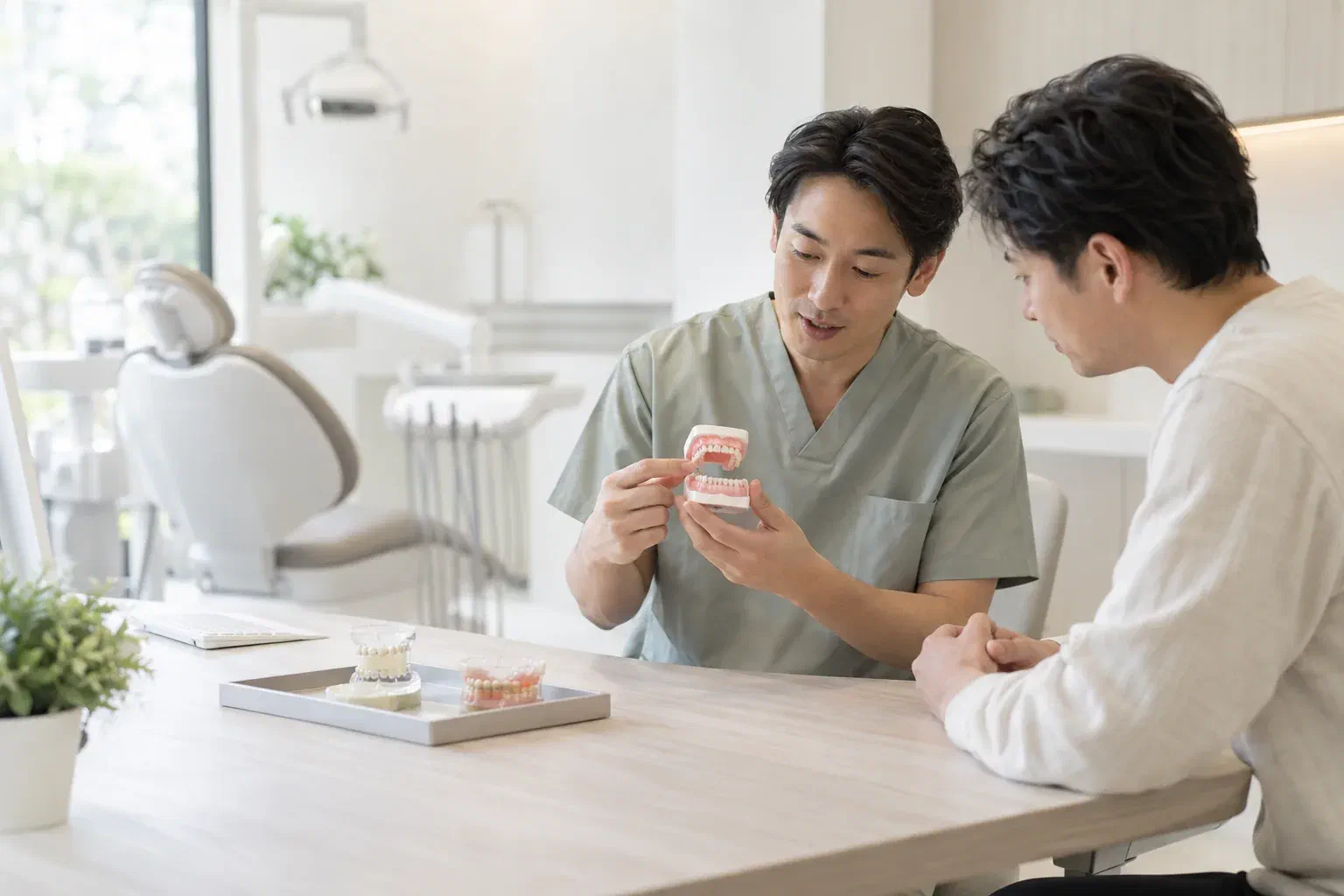
Illustrative patient and clinician discussing the relationship of upper and lower teeth with a model
Cosmetic Dentistry

Treatment for Crossbite in Rockwood

Worried an adult crossbite means jaw surgery? Surgery is not the default. If you are coming from Rockwood, we can show you which teeth are involved, whether tooth movement could be enough and when a specialist opinion on the jaws is worth getting.

Adult options

Surgery is rarely the first word in the conversation

Search online for adult crossbite and the word surgery appears quickly, which understandably puts people off booking. In reality, many crossbites involve tooth position rather than major jaw problems. The term just means that some upper teeth close inside the lower teeth instead of outside, at the front, along the back, on one side or in a few places.

The real question for an adult is where the pattern comes from. If individual teeth are out of position, moving them may be the main discussion. If the upper and lower jaws themselves are mismatched, or there is a mix of both, the options change. We also look for any sideways shift as you close.

Adults coming from Rockwood often have specific worries, such as time off work, visible appliances or surgery. Bring them. Once we have looked at your bite, we can explain what kind of crossbite it appears to be, which approaches are realistic and whether an orthodontic or surgical opinion is worth seeking.

Find out what kind of crossbite you have
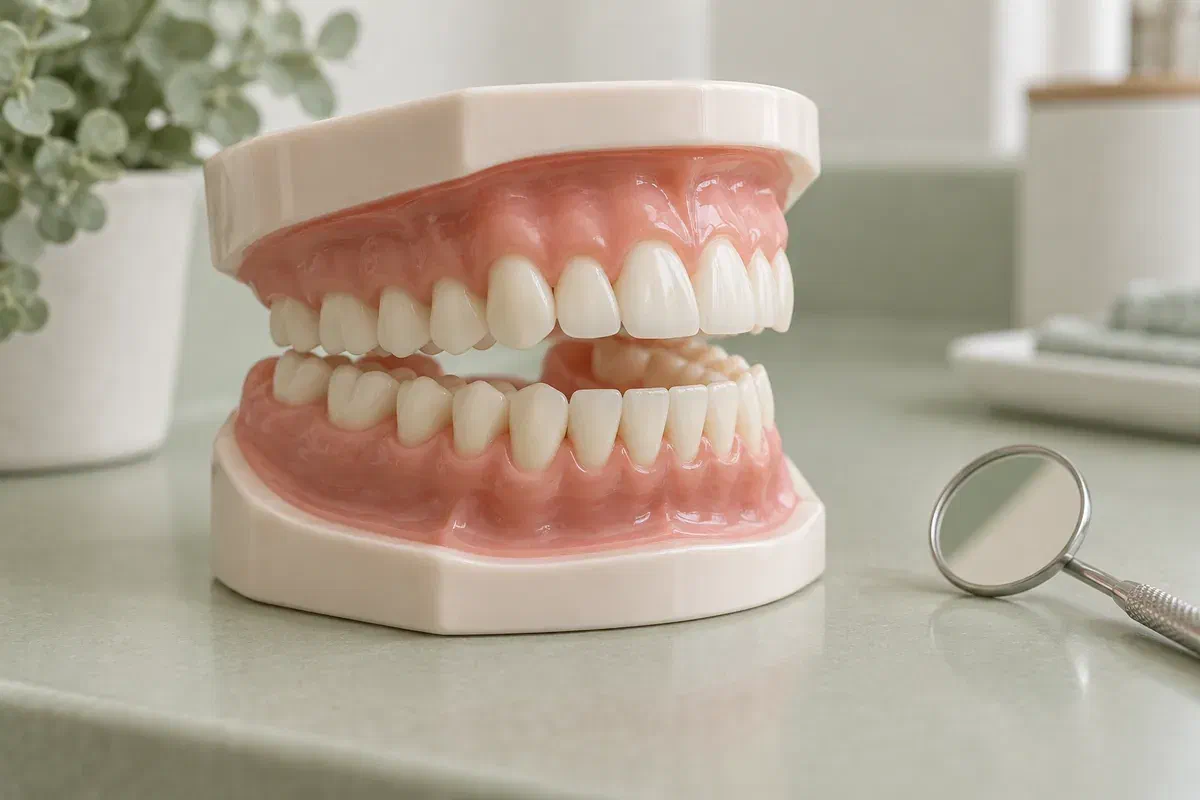
Illustrative paired upper and lower dental teaching model shown from an oblique side view
What adults usually notice

Small signs, often lived with for years

No need to label the bite yourself. Tell us what looks or feels off and whether you have noticed any change in comfort, contact or the way your jaw moves.

A single front tooth behind its lower neighbour

This is often a tooth-position issue, which tends to be more straightforward than a jaw discrepancy. We still check how it relates to both arches. Tell us if it has always been like this or appeared after other dental changes.

Back teeth that close unevenly

Adults may notice heavier contact on one side, a glide into the bite or a habit of chewing on one side. Mention these. They help us work out whether the pattern is dental, skeletal or both, which shapes what options make sense.

A child in the family with a similar look

If your own child shows a similar bite, raise it at their visit instead of waiting until every adult tooth is in. Their development decides whether watching or an early orthodontic opinion is the better path.

Having a crossbite does not mean you must treat it, or treat it now. Ask about the diagnosis, any jaw shift and why a particular plan or timeline suits you.

What an assessment gives you

A proportionate plan for an adult bite

The most reassuring part of an assessment is often simple clarity. You learn which teeth are involved and what correction would aim for, whether that is repositioning a few teeth, addressing a narrow arch or exploring the jaw relationship further. A small tooth-based crossbite and a skeletal discrepancy lead to very different conversations.

We also handle symptoms carefully. If you have jaw aches, wear or chewing discomfort, describe them and we will talk about how they will be looked into on their own terms. Bite correction should not be promised as the solution to every complaint in the jaw area.

Treatment, monitoring or leaving it be

Ask what the exam showed and what any recommendation is meant to accomplish. For some adults, monitoring or no treatment is reasonable. Ask what would happen if the bite is left alone, so you can decide on your own terms.

Options that fit adult biology

Without growth to work with, some approaches used in children do not apply. Ask which ones remain open to you and why. A good explanation describes trade-offs and compromises honestly rather than overselling one route.

A clear chain of responsibility

If an orthodontist or surgeon becomes involved, ask who leads the assessment, who manages appliances and who keeps up your routine dental care. Ask how records and decisions will be shared.

How adult planning works

Start small, then decide whether more is needed

The appliance discussion follows the diagnosis. When booking, ask what records might be taken and how long the appointment is likely to run.

  1. Explain your concerns and history

    Tell us how your bite feels at meals, any discomfort, earlier orthodontic care and existing dental work such as crowns or implants. Mention clenching or old injuries. We consider them without assuming they explain the bite.

  2. Assess the bite and its cause

    We examine the upper and lower teeth, how they meet and the gums and bone supporting them. Records like images or scans may be advised to clarify whether the issue is dental, skeletal or both. Ask whether your jaw shifts as you close.

  3. Weigh realistic options together

    We discuss the intended correction, appliance choices, risks, alternatives and the time each might take. If the jaws are significantly involved, a specialist opinion may be advised. Ask what each option would achieve and where it falls short.

  4. Monitor and maintain the result

    During treatment, keep reviews and let the provider know about changes in fit, comfort or how your teeth meet. Ask how progress will be measured. Before active care ends, confirm the retention plan and ongoing checkups.

Life with an appliance

Fitting treatment into a working week

Care depends on the appliance and the stage of treatment. Ask us to demonstrate anything you will manage at home so that the routine feels familiar before you start.

Wear it as prescribed

Aligners, elastics and other appliances work only when used as the treating clinician directed. If you miss wear time or a step, call for advice instead of improvising. Do not change elastic positions or modify anything yourself.

Keep oral care manageable

Ask how to brush and floss around brackets or attachments and how to clean aligners or other removable parts. Mention any difficult spot. Keep up regular exams and hygiene visits, especially if you have older restorations.

Raise changes quickly

Report a broken or loose part, an injury, soreness that does not settle or a bite that feels wrong. Ask whether it is normal for this stage. At the end of active care, confirm how the result will be retained and reviewed.

Adult treatment routes

From a few teeth to the whole jaw

Whatever is proposed, ask what it is meant to correct and why it suits your bite. No single approach works for every adult crossbite.

When individual teeth are the main issue

Orthodontic movement for tooth-based crossbites

Braces, aligners or another appliance may be considered, depending on the movements needed and your overall bite. Ask whether space must be created or extra stages added. Both arches are assessed even if only a few teeth are involved.

When arch width contributes

Expansion, with adult limits

Expansion is used mainly in growing patients, and its role in adults is more limited. Some adult cases may still discuss it after assessment. Ask what is realistically possible and who would supervise it.

When the skeletal relationship is significant

A specialist opinion for jaw discrepancies

A smaller number of adults have a jaw discrepancy that calls for a broader orthodontic discussion, and sometimes a surgical opinion. That is not the default. Ask what approaches are available, their limits and what further information is needed.

Patient information: American Association of Orthodontists — when skeletal problems require surgical orthodontic assessment

Rockwood adult FAQ

Your questions about treating a crossbite as a grown-up

Adult crossbites vary in which teeth are involved and why. These answers are general, and the exam is what makes them personal.

(905) 876-4488
Do most adult crossbites need jaw surgery?
No. Many adult crossbites involve the position of teeth and can be discussed with orthodontic approaches alone. Surgery is generally considered only when there is a significant jaw discrepancy. Ask what the exam suggests about your bite and whether a specialist opinion is needed.
Can braces or aligners correct my crossbite?
They may, for some tooth-based crossbites. Suitability depends on the movement needed, your overall bite and your teeth and gums. Ask why one appliance is suggested over another and what it can realistically achieve.
Will treatment be visible at work?
That depends on the appliance. Some options are less noticeable than others, but not every one is suitable for every bite, and the least visible choice is not always the most effective for a particular movement. Ask how each option would look, how often it would need adjusting and what trade-offs come with it.
Is it worth treating a crossbite that has never bothered me?
That is your decision, made with good information. Some adults choose treatment because of wear, function or appearance, while others prefer monitoring. Ask what might happen if the bite is left as it is.
How does gum health affect adult treatment?
Healthy gums and bone are important before teeth are moved. If there are gum concerns, they may need attention first. Your regular dentist or hygienist may be part of keeping them stable throughout. Ask how your gum health affects timing and what monitoring would be involved.
If I correct my crossbite, will my jaw headaches go away?
That cannot be promised. Headaches and jaw aches have many possible causes. Describe them so they can be looked at separately, and ask what crossbite treatment is and is not expected to change.
Adults from Rockwood

Get the real picture before you worry

Set aside time with us on Bronte Street to talk about uneven contacts, a tooth that sits back or a shift on closing. We will explain what your bite shows and whether orthodontic or specialist input should come next.

Your diagnosis, options, appliance, referral and fees depend on an individual assessment. No particular result, method or timeline can be guaranteed.

Visit Milton Dental Clinic
Unit 1, 342 Bronte St. S, Milton, ON L9T 5B7
Get directions Clinic hours
Monday–Thursday
11am–7pm
Friday–Sunday
By appointment only

Areas we serve

  • Milton
  • Oakville
  • Mississauga
  • Georgetown
  • Halton Hills
  • Acton
  • Campbellville
  • Brampton
  • Burlington
  • Puslinch
  • Rockwood
  • Erin
  • Caledon
  • Etobicoke
  • Old Milton
  • Bronte Meadows
  • Timberlea
  • Dorset Park
  • Dempsey
  • Clarke
  • Beaty
  • Coates
  • Harrison
  • Scott
  • Willmott
  • Ford
  • Bowes
  • Cobden
  • Walker
  • Mountain View
  • Milton Heights
  • Hawthorne Village
  • Valley View
  • Fallingbrook
  • Nassagaweya
  • Trafalgar
  • Esquesing
  • Nelson
  • Brookville
  • Moffat
  • Glen Williams
  • Norval
  • Limehouse
  • Stewarttown
  • Ashgrove
  • Hornby
  • Silver Creek
  • Speyside
  • Scotch Block
  • North Oakville
  • River Oaks
  • Glen Abbey
  • West Oak Trails
  • Palermo
  • Bronte Creek
  • College Park
  • Joshua Creek
  • Uptown Core
  • Preserve
  • Iroquois Ridge
  • Lisgar
  • Meadowvale
  • Meadowvale Village
  • Churchill Meadows
  • Erin Mills
  • Central Erin Mills
  • Streetsville
  • East Credit
  • Creditview
  • Heartland
  • Sheridan
  • Mount Pleasant
  • Credit Valley
  • Huttonville
  • Churchville
  • Springbrook
  • Northwest Brampton
  • Bram West
  • Fletcher's Meadow
  • Fletcher's Creek South
  • Alton Village
  • Orchard
  • Millcroft
  • Headon Forest
  • Tansley
  • Brant Hills
  • Tyandaga
  • Kilbride
  • Lowville
  • Aberfoyle
  • Morriston
  • Arkell
  • Hillsburgh
  • Freelton
  • Carlisle
  • Waterdown
  • Flamborough
  • Mountsberg

How can we help?

Milton Dental Clinic

Have a question about your smile? Choose the option that works best for you.

For urgent dental concerns, please call.
Messages are reviewed during clinic hours.