

Illustrative patient discussing tooth crowding with a clinician and dental study model
Cosmetic Dentistry

Treatment for Crowded Teeth

Overlapping teeth raise questions about space, cleaning, and the way your bite fits together. Explore treatment for crowded teeth in Milton with an assessment of the full dental arch, the movement needed, and the options appropriate to your oral health.

A closer look at crowded teeth

Make room for a clear plan before choosing how to move the teeth.

Crowding describes teeth that do not fit into the available space in a regular arrangement. They may overlap, turn, or sit in front of or behind neighbouring teeth. The visible overlap is only part of the assessment; the amount of space needed and the relationship between the upper and lower teeth also matter.

A plan should explain where the space for movement would come from and what changes are intended. It should also consider the health of the teeth and their supporting tissues. Choosing an appliance before those questions are answered can leave important parts of the treatment unclear.

At Milton Dental Clinic, tell us whether your main concern is appearance, cleaning access, a changing bite, or crowding that has returned after earlier treatment. We can discuss the assessment needed and whether specialist orthodontic input is appropriate. You should understand the proposed scope before committing to active care.

Discuss overlapping teeth
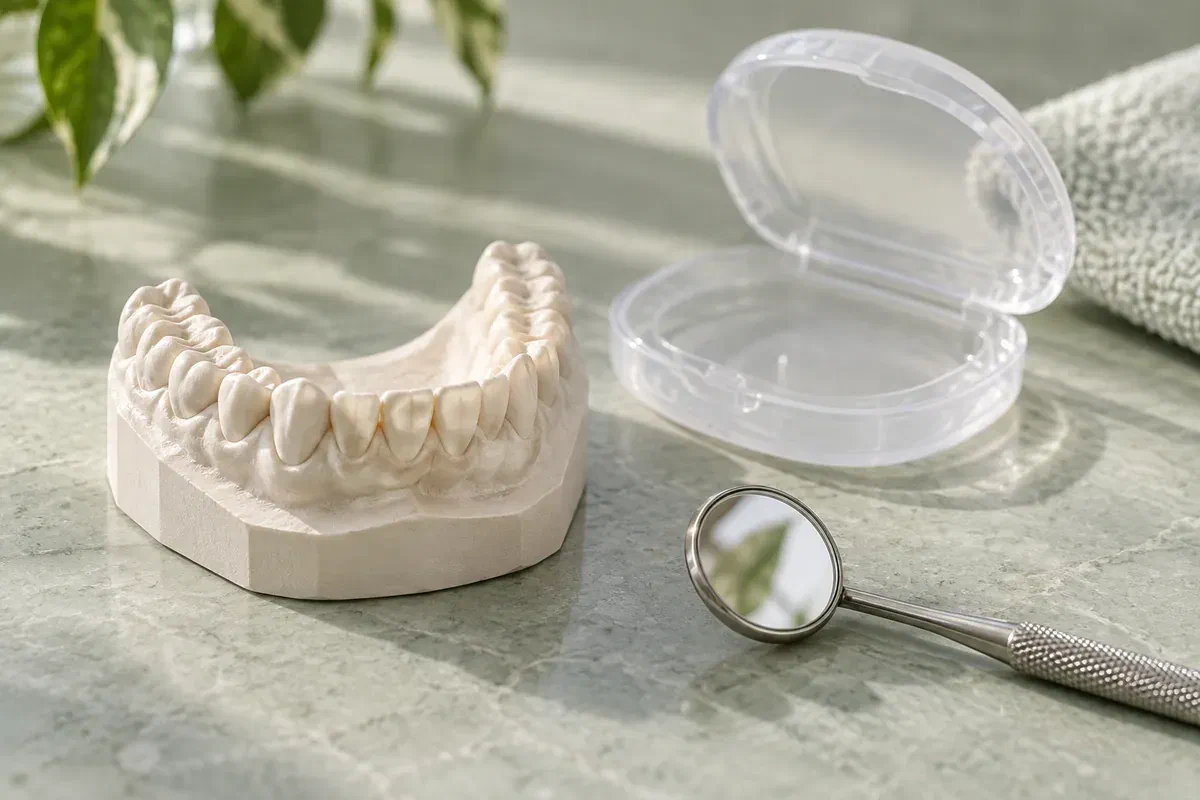
Illustrative lower dental study cast with mild front-tooth overlap beside a case and mirror
What crowding means in daily life

Start with the areas that are difficult to clean, see, or understand.

Explain the changes you have noticed and what you hope treatment would improve. The same visible overlap can be part of different space and bite situations.

Overlapping contacts that are awkward to clean

Show the team where brushing or cleaning between teeth is difficult. Ask for practical advice you can use now, whether or not you choose alignment treatment. Gum health and any active dental problems need consideration before an appliance is selected.

A tooth sitting outside the line of the smile

Point out the tooth and explain whether its position has always been similar or recently changed. Ask how it relates to neighbouring teeth and the opposing arch. Planning should address the space required, rather than only the appearance of that one tooth.

Crowding after earlier orthodontic care

Bring any retainers you still have and describe the earlier treatment and wear routine. Ask what has changed and whether the goal is to maintain the present arrangement or consider correction. A new retainer and a new course of tooth movement have different purposes.

If the overlap seems to be changing quickly, or you notice looseness, bleeding, pain, or a new gap elsewhere, mention those findings when arranging the assessment. Do not assume every change is simply ordinary crowding.

What a space-focused assessment can clarify

Understand both the intended alignment and the way it will be achieved.

A useful crowding discussion makes the space plan understandable. Ask how much movement is proposed, which teeth are involved, and what the result is intended to improve. The explanation should connect the selected method with your examination rather than promise that one appliance suits every crowded smile.

The assessment also gives you a chance to compare the treatment commitment with your priorities. Cleaning routines, visits, appliance wear, and retention all matter. A plan should be practical enough to follow and clear about any limitations that remain after the agreed correction.

An explanation of the space strategy

Ask where room will be created or used and why that approach fits your teeth and bite. If enamel reduction, extraction, expansion, or another measure is proposed, request a separate explanation of its purpose and alternatives. None should be treated as an unspoken detail.

Goals that cover more than a front photograph

Discuss how the planned positions relate to tooth contacts, cleaning, and the rest of the arch. Ask whether the intended treatment is limited or comprehensive. Understanding what will remain unchanged helps you judge whether the proposed result answers your original concern.

A plan for the time after movement

Ask about retainers before starting treatment, including wear, cleaning, review, and replacement responsibilities. Retention is part of maintaining the result rather than an optional extra to consider at the end. Include that ongoing commitment when comparing the available approaches.

Planning care for crowded teeth

Assess the available space before agreeing on the appliance.

The records, visits, and treatment options depend on the extent of crowding and the clinical findings. Ask who will plan, provide, and monitor each stage of care.

  1. Review the concern and earlier dental history

    Describe the overlap, changes over time, and the result you would like. Mention previous orthodontics, missing teeth, restorations, and any planned dental work. Bring existing retainers or records if requested so the clinician can understand the starting point more fully.

  2. Examine the arches, bite, and oral health

    The assessment considers both upper and lower teeth and their supporting tissues. Appropriate records may be recommended to understand positions and space. Ask what each record is for and whether any gum or restorative care should take place before movement.

  3. Compare movement and space-management options

    Review the proposed appliance, the way space would be managed, risks, alternatives, and likely responsibilities. Ask how the plan changes if you decline a particular step. If specialist input is recommended, clarify the referral and who will coordinate any related dental treatment.

  4. Monitor progress and prepare for retention

    During active treatment, attend the planned reviews and report problems with appliances or cleaning. Ask how progress is checked and what may change the timetable. Before finishing, confirm the retention arrangements and what to do if an appliance is lost or no longer fits.

During alignment and afterward

The daily routine supports the work happening between appointments.

Follow the instructions for the appliance and plan actually prescribed. Do not copy another person's wear schedule or use an old appliance to try to make up for missed treatment.

Keep difficult cleaning areas in the conversation

Ask for a demonstration of cleaning around overlapping teeth and any appliance parts. Continue routine dental visits alongside orthodontic reviews. If bleeding, deposits, or discomfort make the routine difficult, explain that early so advice can be adapted to the area.

Report appliance and wear problems promptly

Tell the treating clinician about a broken attachment, an appliance that does not seat, or a schedule you are struggling to follow. Ask what to do next instead of changing stages independently. Clear communication helps the review reflect what has actually happened between visits.

Maintain the agreed retention routine

Once active movement ends, use and care for retainers as directed and attend the recommended reviews. Contact the responsible provider if a retainer is lost, damaged, or uncomfortable. New overlap is a reason to seek advice rather than force an older appliance into place.

Patient information: British Orthodontic Society — retainers and maintaining tooth positions

Choosing an approach to crowding

The amount and source of space guide the choice.

Ask why the recommendation fits your specific crowding and what compromises it includes. Compare the overall plan rather than just the visibility of the appliance.

When active movement is appropriate

Suitable aligner or fixed-appliance treatment

Different appliances may be considered depending on the movements needed and clinical suitability. Discuss the daily responsibilities, monitoring, and expected limits. A preference for removable or less visible treatment is worth sharing, but it does not determine suitability on its own.

When alignment needs an additional space decision

A defined plan to obtain or manage space

Some plans include carefully selected measures to make room. Ask what is proposed, whether it is irreversible, and how the alternative would differ. Enamel reduction or extraction should be explained and consented to within the full treatment plan, not arranged as an isolated shortcut.

When timing, complexity, or preference changes the next step

Monitoring or further specialist assessment

You may need more information before choosing active treatment, or may decide to maintain the current arrangement. In children, development and eruption also influence timing. Ask what should be monitored and when another assessment is recommended if treatment is deferred.

Patient information: British Orthodontic Society — planned interproximal reduction

Crowded-teeth treatment questions

Ask where the space comes from and what the plan includes.

The answer depends on the examination, available space, bite, and oral health. A visible overlap alone cannot establish the treatment needed.

(905) 876-4488
Does treating crowded teeth always require removing a tooth?
No universal extraction rule applies to every crowded mouth. Ask how the space needs were assessed and why any proposed removal is recommended. Compare suitable alternatives and their limits before agreeing to an irreversible step within the treatment plan.
Can clear aligners create room for every level of crowding?
Aligners are not automatically suitable for every case. The clinician needs to assess the required movements and space strategy. Ask whether aligners, fixed appliances, or specialist care best fit the findings, and what additional steps may be needed.
Why assess my lower teeth when the crowding I notice is on top?
The upper and lower teeth meet as a bite, so movement in one arch needs to be considered in relation to the other. Ask which changes are proposed in each arch and whether a limited approach would leave compromises you should understand.
Is enamel reduction between crowded teeth something I can arrange separately?
It should be part of an assessed and coordinated orthodontic plan. Ask the clinician responsible for that plan why it is needed, which surfaces are involved, and who will provide it. Do not arrange irreversible reduction without clear responsibility for the overall treatment.
What can I do about cleaning crowded teeth while deciding on treatment?
Ask for advice and a demonstration suited to the areas you find difficult. Maintain the recommended dental reviews and address active problems. You do not need to wait for an alignment decision before improving cleaning access with appropriate techniques and tools.
Will crowding correction stay stable without retainers?
Teeth can change position after active treatment, so retention needs to be discussed from the start. Ask what appliances, wear schedule, and reviews are recommended for you. A straighter appearance at the final active appointment does not remove that ongoing responsibility.
Treatment for crowded teeth in Milton

Turn the overlap you notice into a clear set of planning questions.

Arrange an assessment at our Bronte Street practice to discuss crowded teeth, cleaning concerns, and the changes you hope for. We can explain the information needed to compare suitable options and any role for orthodontic referral.

Appliance suitability, space management, treatment scope, timing, and fees depend on individual assessment. A particular system or extraction-free outcome is not guaranteed.

Visit Milton Dental Clinic
Unit 1, 342 Bronte St. S, Milton, ON L9T 5B7
Get directions Clinic hours
Monday–Thursday
11am–7pm
Friday–Sunday
By appointment only

How can we help?

Milton Dental Clinic

Have a question about your smile? Choose the option that works best for you.

For urgent dental concerns, please call.
Messages are reviewed during clinic hours.