

Illustrative patient discussing tooth crowding with a clinician and dental study model
Cosmetic Dentistry

Treatment for Crowded Teeth in Burlington

A photo shows one tooth sitting forward of the rest, and suddenly it is all you notice. For people in Burlington, a crowding assessment weighs that front-view concern against space, bite and gum health so you can choose between a limited fix and broader care.

For Burlington smiles with overlap

What would you change if you could change just one thing?

Most crowding conversations begin with a single tooth: the one that juts, twists or hides behind its neighbour. That tooth is real, but it rarely acts alone. It is usually a sign that the arch is short of room for every tooth, and the fix depends on how big that shortfall is and how your bite closes.

That is why a narrow goal still needs a wide look. Moving one tooth can push on others, change how the front teeth meet or open a contact that was tight before. Before any appliance is chosen, it helps to know where the extra space would be found, what else would shift, and whether gums and bone are ready to support movement.

Some people want the smallest change that improves the look; others would rather address the whole arch once. Tell us which way you lean, along with any cleaning trouble, bite changes or relapse after earlier braces. We will explain what a limited plan can and cannot achieve and whether an orthodontist should weigh in.

Discuss a limited or full plan
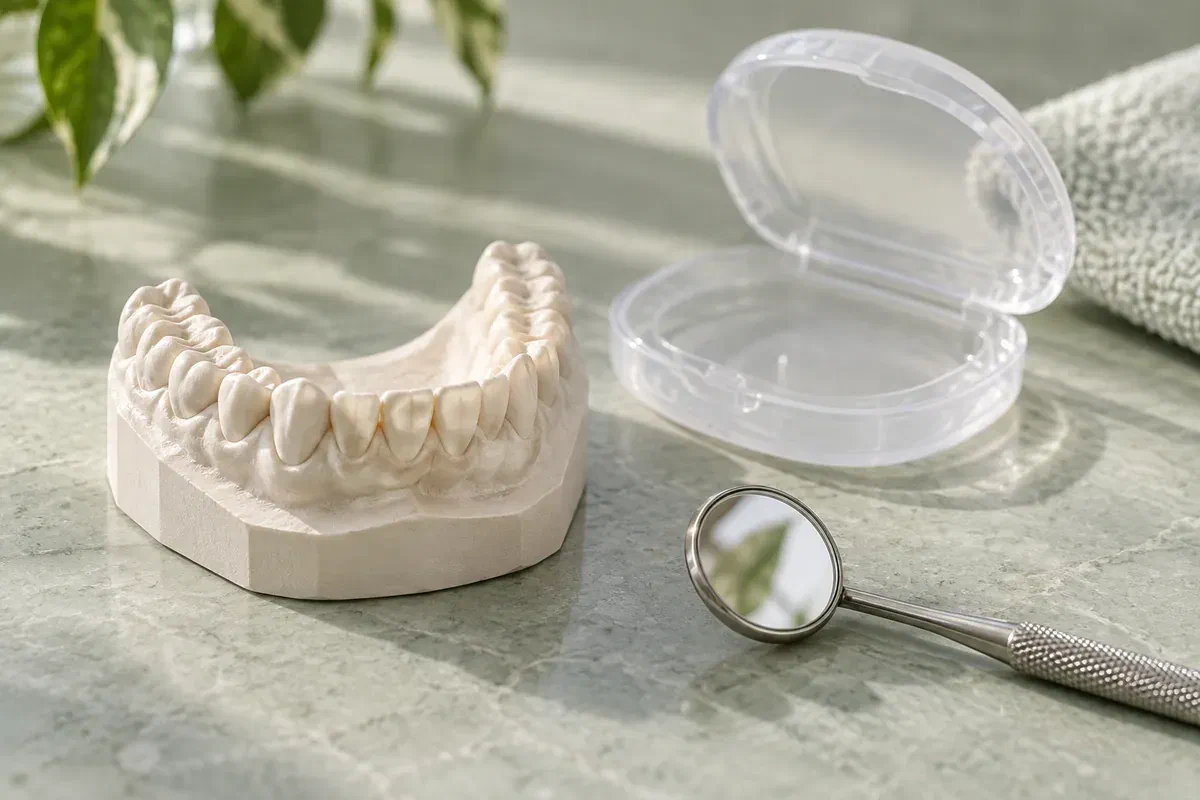
Illustrative lower dental study cast with mild front-tooth overlap beside a case and mirror
Noticing crowding

Three situations we hear about often.

Tell us which of these sounds familiar and what you want to improve. Overlap that looks alike from the outside can hide very different space and bite patterns.

Brushing that misses the same corners

Where teeth overlap, plaque settles into angles a brush cannot quite reach. Show us those spots and you can try better techniques now, with or without alignment. Healthy gums and no untreated decay come first, before an appliance is chosen.

The tooth you see in every picture

Say whether it has always looked this way or moved within the last few years. We check how it relates to the teeth on either side and those it bites against. Making room for it is the real task; changing its appearance follows from that.

Straight once, crowded again

Relapse after earlier orthodontics is common when retainers stop being worn. Bring any you kept. We can look at what has moved and talk about whether to steady things as they are or move teeth again, which are quite different undertakings.

Some changes are not simple crowding. A tooth that feels loose, gums that bleed, pain, a new gap, or overlap that is worsening quickly should all be mentioned when you call to book.

Limited versus comprehensive

See the trade-offs before you pick a scope.

A clear assessment lets you compare a short, targeted correction with a fuller one on fair terms. Each should come with an honest description of which teeth move, roughly how far, and what the change is meant to solve. The method should be chosen for your findings, not because one appliance is fashionable.

Scope also changes the commitment. A targeted plan may mean fewer stages, while broader care can take more time and more reviews. Both need good cleaning and long-term retention. The right choice is the one you can carry through, with any remaining limits named openly at the start.

Where the space will come from

Whatever the scope, ask how room will be found and why that suits your teeth and bite. Enamel reduction, extraction and expansion each deserve their own explanation, with alternatives. None should appear in a plan without being discussed first.

What will stay as it is

A limited plan may straighten the front while leaving the bite or back teeth unchanged. Ask how the planned positions affect contacts and cleaning across the arch. Knowing what remains helps you decide whether the smaller plan truly answers your concern.

How the result will be held

Retention applies to short plans as much as long ones. Ask about retainer type, wear, cleaning, reviews and replacement before you begin. Keeping teeth in position is part of the treatment, so include it when you weigh one option against another.

Our planning sequence

Listen, examine, compare, then follow through.

The records required, number of appointments and options on the table depend on the crowding and the examination. Ask who will plan, provide and monitor each stage.

  1. Start with your goal

    Explain the overlap that bothers you, how it has changed and whether you favour a limited or fuller result. Mention earlier orthodontics, missing teeth, restorations and any planned dental work. Bring retainers or records if requested.

  2. Look at the whole mouth

    Both arches, the bite and the supporting gums and bone are examined. Records may be recommended to understand space and positions. Ask what each is for, and whether gum treatment or restorative work should be done before any movement begins.

  3. Set the options side by side

    Review the appliance suggested, how space would be managed, the risks, alternatives and your part in the plan. Ask what changes if you decline a step. If specialist care is advised, confirm how the referral works and who coordinates related treatment.

  4. Stay on track and plan retention

    Attend reviews during treatment and report trouble with appliances or cleaning. Ask how progress is assessed and what might extend the timeline. Near the end, confirm your retainers and what to do if one is lost or stops fitting.

During and after

Steady habits protect the work.

Use the instructions given for your own appliance and plan. A schedule borrowed from someone else, or an old appliance pressed into service after missed wear, can undo progress.

Clean around overlap and appliances

We can show you how to reach between crowded teeth and around attachments or brackets. Routine dental visits continue alongside orthodontic reviews. If bleeding, build-up or tenderness gets in the way, mention it early so the routine can be adapted.

Flag problems early

A broken attachment, an aligner that will not seat or a routine that is slipping all need a conversation with the treating clinician. Ask before changing stages yourself. Honest reporting helps each review reflect what has happened in between.

Keep retainers in daily life

Once movement ends, wear and look after retainers as directed and keep the recommended checks. Contact the responsible provider if one is lost, damaged or sore. If overlap returns, ask for advice rather than squeezing an old appliance into place.

Patient information: British Orthodontic Society — retainers and maintaining tooth positions

Burlington treatment choices

Room first. Then the right appliance.

Ask why a suggested option suits your crowding and what it leaves out. Compare complete plans instead of focusing only on how noticeable the appliance would be.

When active alignment is appropriate

Clear aligners or braces, as suitable

The appliance considered depends on the movement involved and your clinical suitability. Talk about daily care, monitoring and limits. A preference for something removable or discreet helps the discussion but cannot decide suitability by itself.

When straightening needs a space decision as well

A specific measure to make room

Some plans include a selected step to create space. Ask what it is, whether it is permanent and how the alternative compares. Enamel reduction or extraction should be explained and agreed within the full plan, not added on as a shortcut.

When timing, complexity or preference matters most

Monitoring or orthodontic referral

You may decide to gather more information or keep your current arrangement for now. In children, growth and erupting teeth influence timing. Ask what to keep an eye on and when to return for review if you hold off.

Patient information: British Orthodontic Society — planned interproximal reduction

Burlington crowding FAQs

Straight answers about scope and space.

Your examination, available space, bite and oral health shape every answer. The overlap you can see is only one part of the picture.

(905) 876-4488
Can I straighten just my front teeth?
Sometimes a front-focused correction is possible, but it can leave the bite or other teeth unchanged. Ask what a front-only approach would achieve, what it would not, and whether a broader plan would better address your concern.
Will moving one tooth affect the others?
Teeth sit in a connected arch, so creating room for one usually involves its neighbours. Ask which teeth would move in your plan and how the bite would be checked as they shift.
Is removing a tooth always part of crowding treatment?
No single rule covers every case. Ask how your space needs were judged and why removal is or is not proposed. Compare alternatives and their limits before agreeing to any step that cannot be undone.
How is the final position of my teeth planned?
The clinician uses the examination and records to set out intended positions and the movement needed to reach them. Ask how the plan is reviewed during treatment and what could prompt a change to it.
Can crowded teeth be cleaned well without straightening them?
Often, yes, with the right techniques and tools for the tricky areas. Ask for a demonstration and keep up regular reviews. You can improve cleaning now rather than waiting until you decide about alignment.
Will a short treatment still need a retainer?
Yes, retention matters whatever the length of treatment, because teeth can move afterwards. Ask what retainer, wear schedule and reviews are recommended, and include that commitment when comparing a short plan with a longer one.
Booking from Burlington

Come in with the tooth that bothers you. Leave with the whole picture.

Arrange a visit at our Bronte Street practice to talk about crowding, the scope you have in mind and any cleaning trouble. We will explain what is needed to compare suitable options and whether orthodontic referral would help.

Whether an appliance suits you, how space is managed, how far treatment extends, its timing and its fees all depend on assessment. No system or extraction-free result is promised.

Visit Milton Dental Clinic
Unit 1, 342 Bronte St. S, Milton, ON L9T 5B7
Get directions Clinic hours
Monday–Thursday
11am–7pm
Friday–Sunday
By appointment only

Areas we serve

  • Milton
  • Oakville
  • Mississauga
  • Georgetown
  • Halton Hills
  • Acton
  • Campbellville
  • Brampton
  • Burlington
  • Puslinch
  • Rockwood
  • Erin
  • Caledon
  • Etobicoke
  • Old Milton
  • Bronte Meadows
  • Timberlea
  • Dorset Park
  • Dempsey
  • Clarke
  • Beaty
  • Coates
  • Harrison
  • Scott
  • Willmott
  • Ford
  • Bowes
  • Cobden
  • Walker
  • Mountain View
  • Milton Heights
  • Hawthorne Village
  • Valley View
  • Fallingbrook
  • Nassagaweya
  • Trafalgar
  • Esquesing
  • Nelson
  • Brookville
  • Moffat
  • Glen Williams
  • Norval
  • Limehouse
  • Stewarttown
  • Ashgrove
  • Hornby
  • Silver Creek
  • Speyside
  • Scotch Block
  • North Oakville
  • River Oaks
  • Glen Abbey
  • West Oak Trails
  • Palermo
  • Bronte Creek
  • College Park
  • Joshua Creek
  • Uptown Core
  • Preserve
  • Iroquois Ridge
  • Lisgar
  • Meadowvale
  • Meadowvale Village
  • Churchill Meadows
  • Erin Mills
  • Central Erin Mills
  • Streetsville
  • East Credit
  • Creditview
  • Heartland
  • Sheridan
  • Mount Pleasant
  • Credit Valley
  • Huttonville
  • Churchville
  • Springbrook
  • Northwest Brampton
  • Bram West
  • Fletcher's Meadow
  • Fletcher's Creek South
  • Alton Village
  • Orchard
  • Millcroft
  • Headon Forest
  • Tansley
  • Brant Hills
  • Tyandaga
  • Kilbride
  • Lowville
  • Aberfoyle
  • Morriston
  • Arkell
  • Hillsburgh
  • Freelton
  • Carlisle
  • Waterdown
  • Flamborough
  • Mountsberg

How can we help?

Milton Dental Clinic

Have a question about your smile? Choose the option that works best for you.

For urgent dental concerns, please call.
Messages are reviewed during clinic hours.