

Illustrative patient discussing tooth crowding with a clinician and dental study model
Cosmetic Dentistry

Treatment for Crowded Teeth in Erin

You have a treatment proposal for crowded teeth in hand and a list of questions you did not get to ask. From Erin or Hillsburgh, you can bring that plan for a second look at space, bite and gum health, and leave knowing what it includes and what it leaves out.

Reviewing crowding plans for Erin

A proposal is easier to judge when you know what to ask.

Treatment plans for crowding can arrive with unfamiliar terms: interproximal reduction, expansion, attachments, refinements. Behind them sits one problem. The teeth need more room than the arch provides, so they rotate, overlap or step forward or back, and the bite between the two arches has to be considered too.

Any proposal should answer a short list of questions clearly. How much space is needed, and where will it come from? Which teeth move, and how far? Are the gums and supporting bone ready? Is the plan limited or comprehensive, and what happens afterwards? If those answers are missing, the choice of appliance is hard to evaluate.

Bring your plan and tell us what made you want a second opinion, whether cost, an irreversible step, uncertainty about the appliance, or crowding that returned after earlier braces. We can examine your teeth, explain where our view agrees or differs, and say when an orthodontist’s input would be wise.

Ask for a second look at your plan
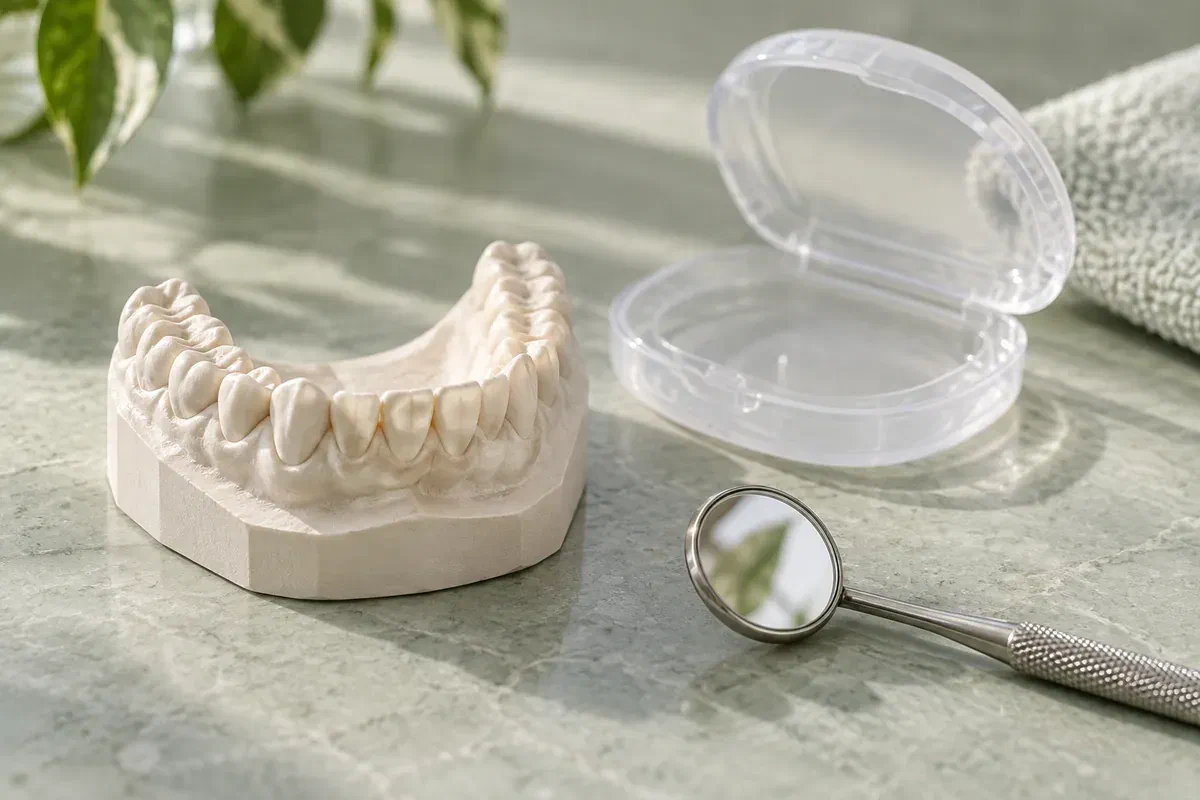
Illustrative lower dental study cast with mild front-tooth overlap beside a case and mirror
What prompts a second opinion

Not sure the plan matches the problem?

Tell us what you were told, what you have noticed yourself and what you hope to improve. Crowding that looks similar can call for different approaches depending on space and bite.

Cleaning trouble the plan did not mention

If brushing or flossing is difficult between certain teeth, show us. Cleaning advice can help now, whatever you decide. Gum health and any untreated decay should be addressed before an appliance, and a plan should account for that.

A tooth the plan seems to overlook

Point out any tooth that worries you and whether its position has changed. We consider its neighbours and the opposite arch. A sound plan explains how that tooth’s space needs are handled, not only how the front will look.

A retreatment proposal after earlier braces

Bring old retainers and any previous records, and describe how retention went. We can talk about whether the proposal aims to hold the present position or correct it, and whether that matches what you want.

If the overlap is changing quickly, or you notice looseness, bleeding, pain or a new gap, say so when booking. Those findings deserve their own examination, whatever any existing plan says.

What a second look adds

Confidence that the plan fits your mouth.

A useful second opinion checks that the space strategy is understandable and that it follows from an examination. You should be able to say roughly how much movement is proposed, which teeth are involved and what the result aims to improve. A plan that relies on one appliance without explaining why deserves more questions.

It also helps you weigh the commitment. Wear, cleaning, reviews and retention all take effort, and for households in Erin, the pattern of visits matters too. A good plan is realistic about that, and it is clear about anything that will stay the same after treatment.

Is the space strategy explained?

Check that the proposal says where room comes from and why that suits your teeth and bite. If it includes enamel reduction, extraction or expansion, each should have its own explanation and alternatives. We can help you see whether anything is missing.

Does the goal go beyond the front teeth?

Look at how the planned positions affect contacts, cleaning and the back teeth. Ask whether the proposal is limited or comprehensive. Knowing what it does not change tells you whether it really addresses your concern.

Is retention part of the plan?

A complete proposal covers retainers: type, wear, cleaning, reviews and replacement. If it does not, ask. Holding the result is part of treatment and belongs in any comparison between plans.

How we review a proposal

We examine first, then read the plan alongside the findings.

Records and visits depend on the crowding, the existing proposal and what the examination shows. Ask who would plan, deliver and monitor each stage if you proceed with any option.

  1. Share the plan and your concerns

    Bring the written proposal, any records you were given and old retainers. Tell us about past orthodontics, missing teeth, restorations and planned dental work, and which parts of the plan you are unsure about.

  2. Examine your teeth independently

    We assess both arches, the bite and the gums and bone ourselves. More records may be suggested if needed. Ask what each one adds, and whether gum or restorative care should come before any movement.

  3. Compare the proposal with the findings

    We go through the suggested appliance, space plan, risks, alternatives and your responsibilities, and explain where we agree or would suggest something different. Ask what changes if you decline one step, and whether specialist input is advisable.

  4. Decide, then plan retention

    Whichever provider you choose, keep to the review schedule and report appliance or cleaning trouble. Before finishing, confirm retainer arrangements and the steps to take should a retainer go missing or stop fitting.

Whichever plan you choose

The daily routine still carries the result.

Use the instructions from whoever is treating you. Mixing advice from two plans, using an old appliance to catch up, or copying someone else’s schedule can cause confusion and setbacks.

Keep cleaning hard spots carefully

Have your clinician show you how to clean around overlap and any attachments. Continue routine dental visits alongside orthodontic reviews. If bleeding or soreness makes the routine difficult, tell your clinician so the advice can be changed.

One clinician, clear communication

Report problems such as a lost attachment, an aligner that does not seat or a slipping routine to the clinician responsible for your treatment. Ask what to do before changing stages. Clear updates keep reviews accurate.

Retainers kept up over time

After movement ends, wear and clean retainers as directed and attend the planned checks. If a retainer is lost or damaged, contact whoever supplied it. Overlap coming back is a reason to ask, not to force an old appliance in.

Patient information: British Orthodontic Society — retainers and maintaining tooth positions

Options to compare

The same crowding, more than one reasonable plan.

For each approach, ask why it suits your crowding and what it compromises. Compare complete plans, including retention and visits, rather than appliance visibility alone.

When active movement is suitable

Aligners or fixed appliances

The appliance suggested depends on the movement needed and clinical suitability, and two clinicians may weigh this differently. Ask about daily responsibilities, monitoring and limits. Preference for a removable option matters to the discussion but does not decide suitability.

When the plan depends on making room

A defined approach to space

If a proposal includes a step to create space, ask exactly what is involved, whether it is permanent and what the alternative would be. Enamel reduction or extraction should sit within the full plan you agree to, with clear responsibility.

When uncertainty suggests pausing

Monitoring, or specialist assessment

If the plans you have seen disagree, more information may help before starting. You can also decide to keep the present arrangement. In children, growth affects timing. Ask what to monitor and when to reassess.

Patient information: British Orthodontic Society — planned interproximal reduction

Second-opinion questions

Checking a crowding plan before you sign.

General answers only: your own examination, space, bite and oral health decide the details, and no plan can be judged from the overlap alone.

(905) 876-4488
Is it reasonable to get a second opinion on an orthodontic plan?
Yes. Asking another clinician to review a proposal is a normal part of informed decision-making, especially when an irreversible step is involved. Bring the plan and any records so the review is as useful as possible.
What should a crowding treatment plan include?
Look for an explanation of the space needed and how it will be found, which teeth will move, the appliance and why it was chosen, risks and alternatives, the review schedule and retention afterwards.
My plan includes enamel reduction. Should I be concerned?
It can be a legitimate part of a coordinated orthodontic plan. Ask why it is needed, which surfaces are involved, how much is planned and who is responsible for the overall treatment.
What if two dentists recommend different appliances?
Ask each to explain why their choice fits your findings and what compromises it involves. Different approaches can both be reasonable; understanding the reasoning helps you choose.
Do I need to bring my records from the first consultation?
It helps. Records you have been given, along with the written plan, let us compare more accurately and may avoid repeating some steps. Ask your original provider for copies if needed.
Can the second-opinion visit from Erin cover everything in one trip?
Ask when booking what to bring and whether records can be taken the same day if needed. Sending information ahead of time can help make the single visit as complete as possible.
Plan reviews for Erin

Bring the paperwork. We will help you read it.

Book a visit with us on Bronte Street to have your crowded teeth examined and an existing proposal reviewed. We will explain what the plan covers, how it compares with other suitable options and whether an orthodontist should be involved.

Suitability of any appliance, the space plan, scope, timing and fees rest on individual assessment. We cannot promise a specific system or that extraction will be avoided.

Visit Milton Dental Clinic
Unit 1, 342 Bronte St. S, Milton, ON L9T 5B7
Get directions Clinic hours
Monday–Thursday
11am–7pm
Friday–Sunday
By appointment only

Areas we serve

  • Milton
  • Oakville
  • Mississauga
  • Georgetown
  • Halton Hills
  • Acton
  • Campbellville
  • Brampton
  • Burlington
  • Puslinch
  • Rockwood
  • Erin
  • Caledon
  • Etobicoke
  • Old Milton
  • Bronte Meadows
  • Timberlea
  • Dorset Park
  • Dempsey
  • Clarke
  • Beaty
  • Coates
  • Harrison
  • Scott
  • Willmott
  • Ford
  • Bowes
  • Cobden
  • Walker
  • Mountain View
  • Milton Heights
  • Hawthorne Village
  • Valley View
  • Fallingbrook
  • Nassagaweya
  • Trafalgar
  • Esquesing
  • Nelson
  • Brookville
  • Moffat
  • Glen Williams
  • Norval
  • Limehouse
  • Stewarttown
  • Ashgrove
  • Hornby
  • Silver Creek
  • Speyside
  • Scotch Block
  • North Oakville
  • River Oaks
  • Glen Abbey
  • West Oak Trails
  • Palermo
  • Bronte Creek
  • College Park
  • Joshua Creek
  • Uptown Core
  • Preserve
  • Iroquois Ridge
  • Lisgar
  • Meadowvale
  • Meadowvale Village
  • Churchill Meadows
  • Erin Mills
  • Central Erin Mills
  • Streetsville
  • East Credit
  • Creditview
  • Heartland
  • Sheridan
  • Mount Pleasant
  • Credit Valley
  • Huttonville
  • Churchville
  • Springbrook
  • Northwest Brampton
  • Bram West
  • Fletcher's Meadow
  • Fletcher's Creek South
  • Alton Village
  • Orchard
  • Millcroft
  • Headon Forest
  • Tansley
  • Brant Hills
  • Tyandaga
  • Kilbride
  • Lowville
  • Aberfoyle
  • Morriston
  • Arkell
  • Hillsburgh
  • Freelton
  • Carlisle
  • Waterdown
  • Flamborough
  • Mountsberg

How can we help?

Milton Dental Clinic

Have a question about your smile? Choose the option that works best for you.

For urgent dental concerns, please call.
Messages are reviewed during clinic hours.