

Illustrative patient discussing tooth crowding with a clinician and dental study model
Cosmetic Dentistry

Treatment for Crowded Teeth in Etobicoke

Straightening crowded teeth usually means a run of appointments over months, so the plan has to work around the trip as well as your teeth. From Etobicoke, start with one well-organised assessment of space, bite and gum health, then decide whether ongoing care makes sense.

Crowding care, planned from Etobicoke

Know the commitment before the first appliance.

Moving teeth is rarely a single visit. There are records, reviews, adjustments and, at the end, retainers to check. For anyone making a longer trip, that rhythm matters almost as much as the clinical detail. So the first job is to understand how big the problem is: how short of space the arch is, which teeth overlap or turn, and how the bite comes together.

With that clear, the rest can be planned honestly. Where would the room come from? How many teeth would move, and how far? Are the gums and bone in good enough shape? Choosing an appliance before answering those points makes it hard to know how many appointments, or what kind of result, you are signing up for.

Tell us what matters most to you, whether that is the look of your smile, cleaning access, a shifting bite or crowding that returned after earlier braces. We can explain the assessment, note when an orthodontist should be involved, and set out the likely pattern of visits so you can decide before active care starts.

Plan a crowding assessment
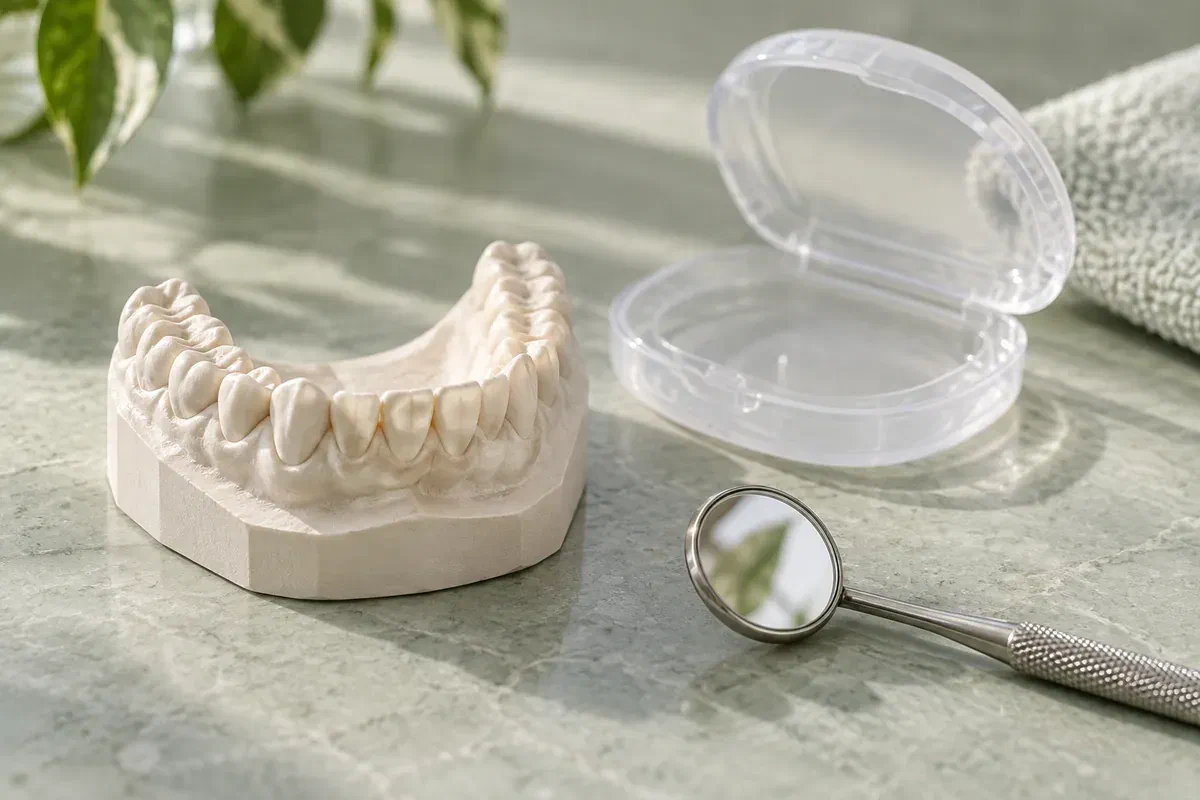
Illustrative lower dental study cast with mild front-tooth overlap beside a case and mirror
What prompts the visit

Overlap you can feel, see or have seen before.

Describe what has changed and what you would like to improve. Overlap that looks similar can arise from different space and bite situations, so the details count.

Spots that floss will not pass cleanly

Show us where cleaning is a struggle. You can leave the first visit with practical advice, whatever you later decide about alignment. Gum inflammation or untreated problems are dealt with before any appliance is chosen.

A tooth set apart from the line

Let us know whether it has always been there or moved more recently. We look at its neighbours and the teeth it bites against. The space it needs drives the plan, more than how that one tooth appears.

Teeth moving again after braces

Bring old retainers and describe how long you wore them. We can look at what has shifted and talk about holding the current position or correcting it. Those goals involve very different amounts of time and travel.

When booking, mention overlap that seems to be changing quickly, a tooth that feels loose, bleeding, pain or a new gap. These signs should be examined rather than put down to ordinary crowding.

Clarity before commitment

A plan that fits your teeth and your calendar.

The assessment should leave you with a clear space plan: roughly how much movement is proposed, which teeth are involved and what it is meant to improve. The method recommended needs to follow from your examination. No single appliance is right for every crowded smile, however convenient it sounds.

Knowing the pattern of care matters when travel is part of it. Ask how often reviews are needed, which can be combined, and how long retainer checks continue. A good plan is realistic about the effort, and it is open about anything that will remain unchanged when active treatment ends.

A space strategy, spelled out

Find out how room would be created or used and why that suits your teeth and bite. If enamel reduction, extraction, expansion or another step is mentioned, ask for its purpose and alternatives to be explained on their own, before anything is booked.

Goals beyond the smile line

Talk about how the new positions would affect contacts, cleaning and the back teeth. Ask whether the plan is limited or comprehensive. Understanding what stays the same helps you judge whether the trip and the effort answer your concern.

Retention included from day one

Ask about retainers before starting: wear, cleaning, review frequency and replacement. They hold the result and are part of treatment. Include that long tail of care, and any travel it involves, when comparing approaches.

Organising the visits

Fewer, better-planned appointments.

Records, visit numbers and suitable options depend on the crowding and the examination. Ask who will plan, deliver and monitor each stage, and which steps can share an appointment.

  1. Prepare for the first visit

    Before you come, note the changes you have seen, any earlier orthodontics, missing teeth, restorations and planned dental work. Bring retainers or previous records if asked. Good preparation helps make one trip count.

  2. Assess both arches and the gums

    We examine the upper and lower teeth, the bite and the supporting tissues. Records may be recommended and can sometimes be taken the same day. Ask what each is for, and whether gum or restorative care must come first.

  3. Compare plans and visit patterns

    Review the appliance suggested, how space would be managed, risks, alternatives and your role. Ask how many reviews each option needs and how the plan changes if you decline a step. If referral is advised, confirm who coordinates related care.

  4. Keep reviews on track, then retain

    Attend the agreed reviews and report appliance or cleaning trouble promptly, by phone first if that saves a wasted trip. Ask what could change the timeline. Before finishing, confirm retention and what to do if a retainer is lost or stops fitting.

Managing treatment from a distance

Good habits mean fewer surprises at each review.

Follow the instructions given for your appliance and plan. Borrowing another person’s routine, or reaching for an old appliance to make up lost wear, can set things back.

Master the cleaning routine early

Ask for a demonstration of cleaning around overlap and any attachments at the first fitting. Keep regular dental visits going as well. If bleeding or soreness gets in the way, call so the advice can change without waiting for the next review.

Call before you improvise

A broken attachment, an aligner that will not seat or a missed stretch of wear should be reported to the treating clinician. Ask what to do rather than switching stages yourself. Often a call can sort out whether a visit is needed.

Keep the retainer routine steady

After movement ends, wear and clean retainers as instructed and keep the planned checks. Get in touch with the responsible provider if a retainer cracks, goes missing or feels sore. New crowding means asking for advice, not forcing an old one in.

Patient information: British Orthodontic Society — retainers and maintaining tooth positions

Choosing a route

The space needed narrows the choices.

Ask why a recommendation suits your crowding and what it compromises. Compare complete plans, including how many visits each needs, not just appliance visibility.

When teeth do need active movement

Aligners or fixed braces, where suitable

Appliances are considered according to the movement needed and clinical suitability. Ask about daily care, monitoring and limits. A wish for removable or discreet treatment is worth sharing, but it does not decide suitability on its own.

When room must be made before alignment

A defined plan for space

Some plans include a selected step to create space. Ask what it involves, whether it is permanent and how an alternative would differ. Any enamel reduction or extraction should be explained and agreed within the full plan, not arranged separately.

When timing or complexity shifts the decision

Watching, or a specialist second look

You may want more information, or prefer to keep things as they are. For children, growth and erupting teeth affect timing. Ask what to monitor and when to book another look if you decide to wait.

Patient information: British Orthodontic Society — planned interproximal reduction

Questions about time and travel

Practical answers for crowding treatment.

Answers depend on your examination, space, bite and oral health. Visible overlap alone does not determine the treatment needed.

(905) 876-4488
How long does treatment for crowded teeth usually take?
It varies with the amount of movement, the appliance and how consistently it is worn. Ask for a realistic range after your assessment, and what could lengthen or shorten it.
Can records and the consultation happen on the same day?
Sometimes, depending on what is needed and scheduling. Ask when you book, so the first trip from Etobicoke covers as much as possible.
What should I do if an aligner stops fitting between visits?
Call the treating clinician before changing stages or going back to an earlier aligner. They can advise whether you need to come in or can safely wait for your next review.
Are aligners suitable for heavily crowded teeth?
Not automatically. The clinician must assess the movements needed and the space plan. Ask whether aligners, fixed appliances or specialist care suits your findings, and what else might be required.
Is enamel reduction something I could have done locally on its own?
It should be part of one coordinated orthodontic plan with clear responsibility. Ask the clinician leading your plan why it is needed, which surfaces are involved and who will provide it.
How long will I need to keep up retainer checks?
Retention is ongoing, because teeth can shift after treatment. Ask what retainer, wear schedule and review frequency are planned, and how checks could be arranged around your travel.
From Etobicoke to our practice

One organised visit to see what is involved.

Reserve time at our Bronte Street practice to talk through crowding, cleaning concerns and the change you would like. We will explain what information is needed to compare options, and when an orthodontic referral may suit you better.

Appliance choice, space management, scope, timing and fees depend on individual assessment. No specific system or extraction-free result is guaranteed.

Visit Milton Dental Clinic
Unit 1, 342 Bronte St. S, Milton, ON L9T 5B7
Get directions Clinic hours
Monday–Thursday
11am–7pm
Friday–Sunday
By appointment only

Areas we serve

  • Milton
  • Oakville
  • Mississauga
  • Georgetown
  • Halton Hills
  • Acton
  • Campbellville
  • Brampton
  • Burlington
  • Puslinch
  • Rockwood
  • Erin
  • Caledon
  • Etobicoke
  • Old Milton
  • Bronte Meadows
  • Timberlea
  • Dorset Park
  • Dempsey
  • Clarke
  • Beaty
  • Coates
  • Harrison
  • Scott
  • Willmott
  • Ford
  • Bowes
  • Cobden
  • Walker
  • Mountain View
  • Milton Heights
  • Hawthorne Village
  • Valley View
  • Fallingbrook
  • Nassagaweya
  • Trafalgar
  • Esquesing
  • Nelson
  • Brookville
  • Moffat
  • Glen Williams
  • Norval
  • Limehouse
  • Stewarttown
  • Ashgrove
  • Hornby
  • Silver Creek
  • Speyside
  • Scotch Block
  • North Oakville
  • River Oaks
  • Glen Abbey
  • West Oak Trails
  • Palermo
  • Bronte Creek
  • College Park
  • Joshua Creek
  • Uptown Core
  • Preserve
  • Iroquois Ridge
  • Lisgar
  • Meadowvale
  • Meadowvale Village
  • Churchill Meadows
  • Erin Mills
  • Central Erin Mills
  • Streetsville
  • East Credit
  • Creditview
  • Heartland
  • Sheridan
  • Mount Pleasant
  • Credit Valley
  • Huttonville
  • Churchville
  • Springbrook
  • Northwest Brampton
  • Bram West
  • Fletcher's Meadow
  • Fletcher's Creek South
  • Alton Village
  • Orchard
  • Millcroft
  • Headon Forest
  • Tansley
  • Brant Hills
  • Tyandaga
  • Kilbride
  • Lowville
  • Aberfoyle
  • Morriston
  • Arkell
  • Hillsburgh
  • Freelton
  • Carlisle
  • Waterdown
  • Flamborough
  • Mountsberg

How can we help?

Milton Dental Clinic

Have a question about your smile? Choose the option that works best for you.

For urgent dental concerns, please call.
Messages are reviewed during clinic hours.